






Sennheiser at InfoComm 2026: A Fresh Look at Voice Lift, Wireless, and Classroom Audio
Some InfoComm conversations work best when they are less about a product checklist and more about asking whether the assumptions behind a standard still hold up.
That was the center of the Sennheiser conversation.
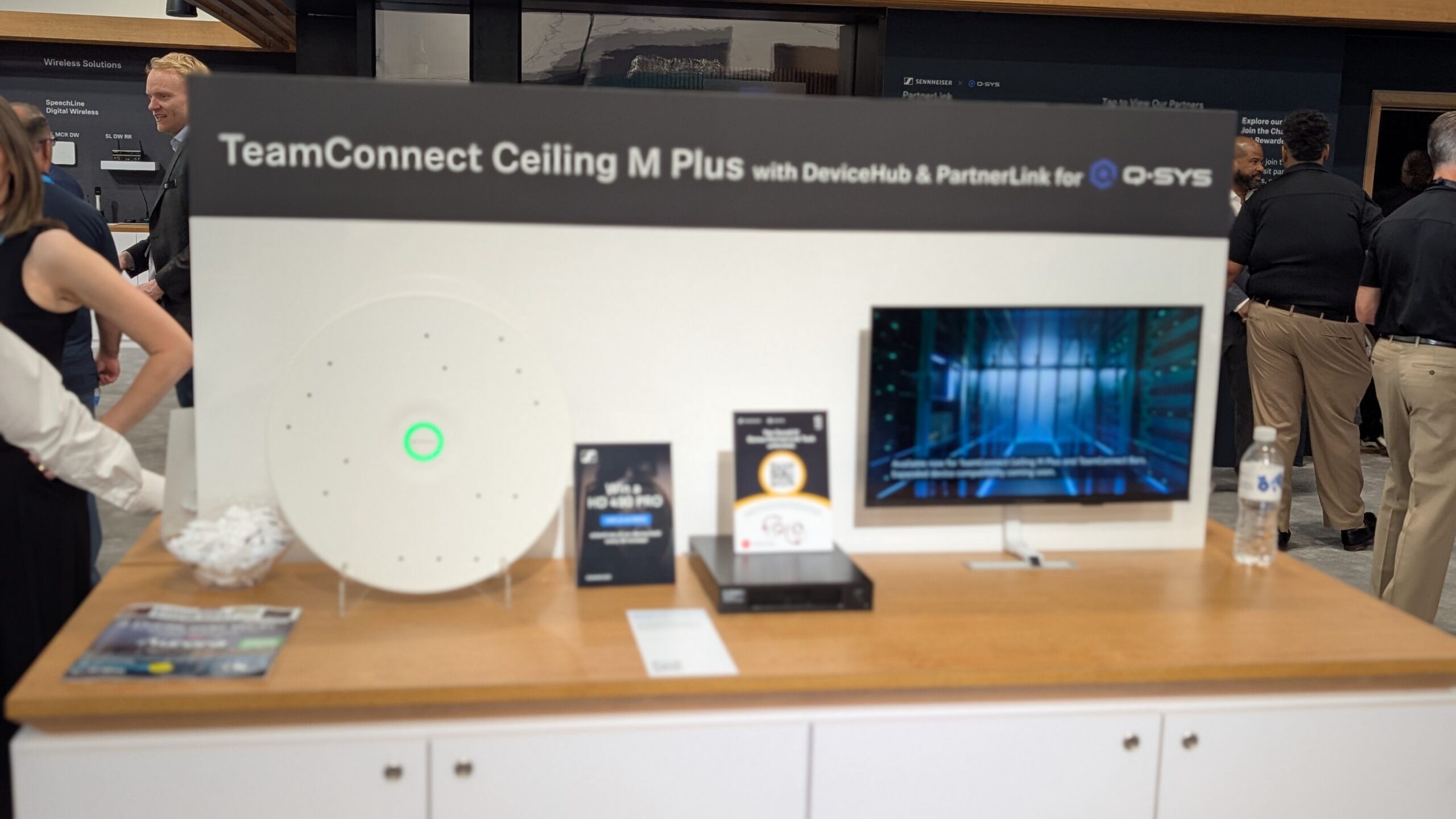
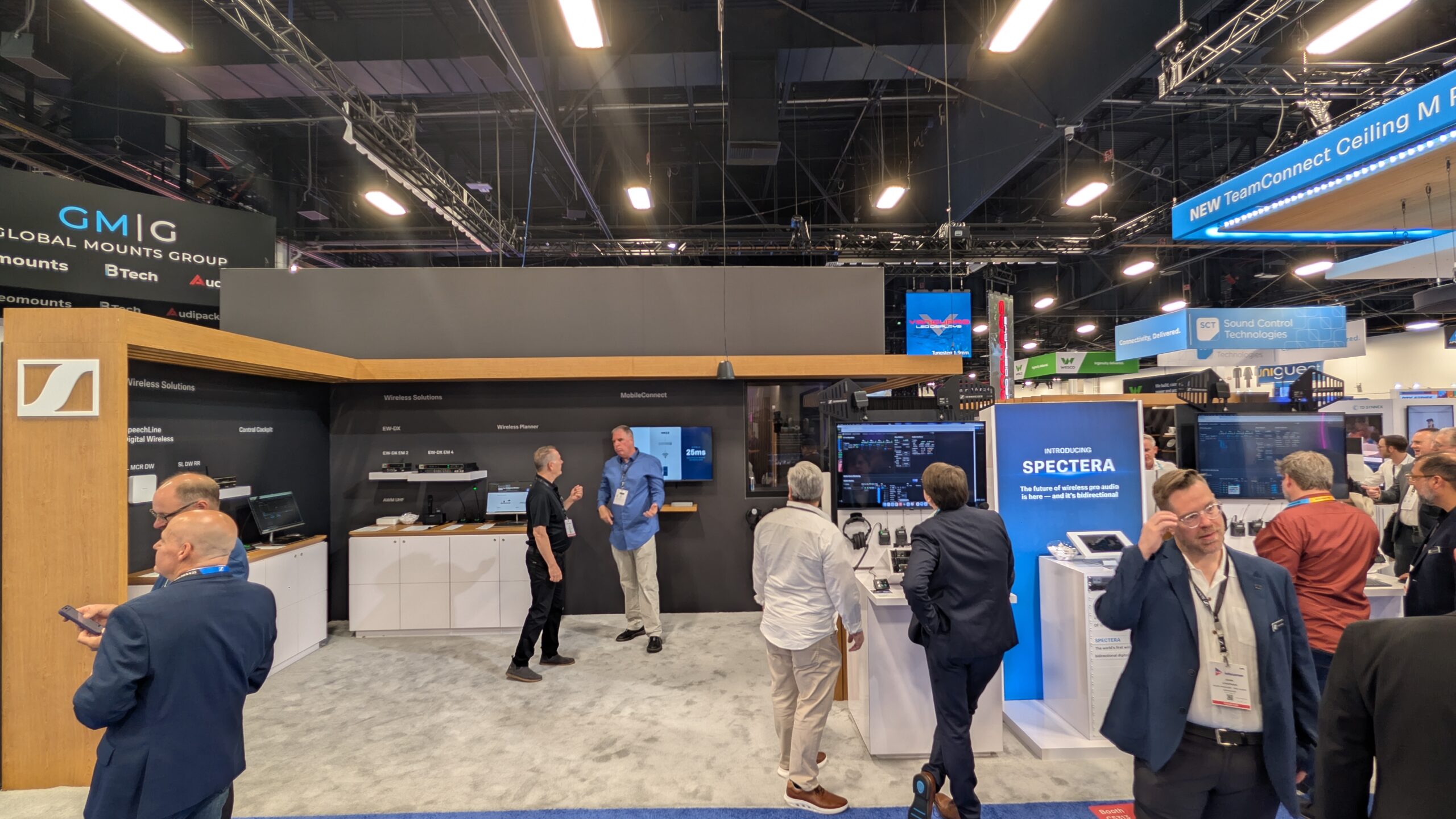
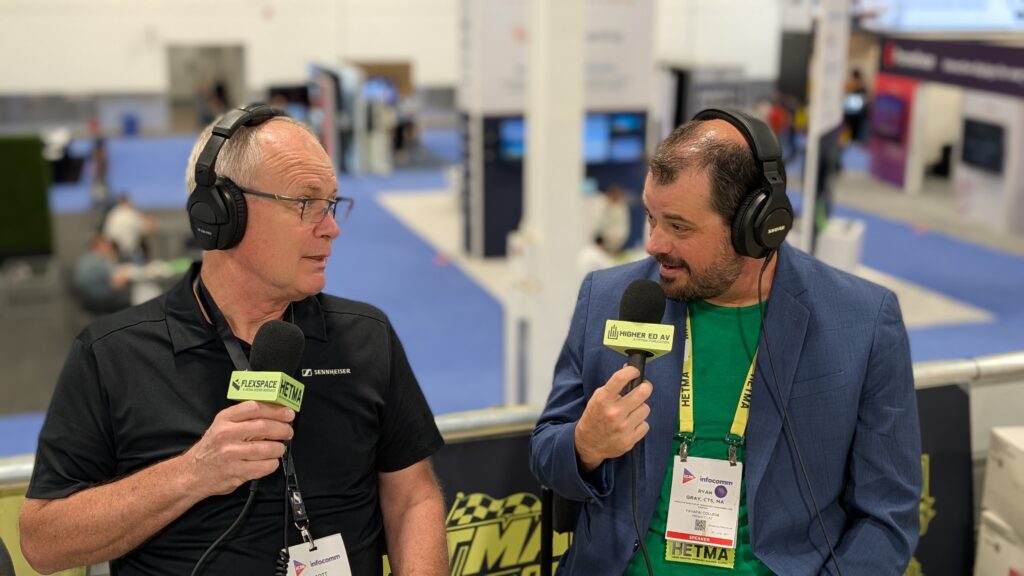
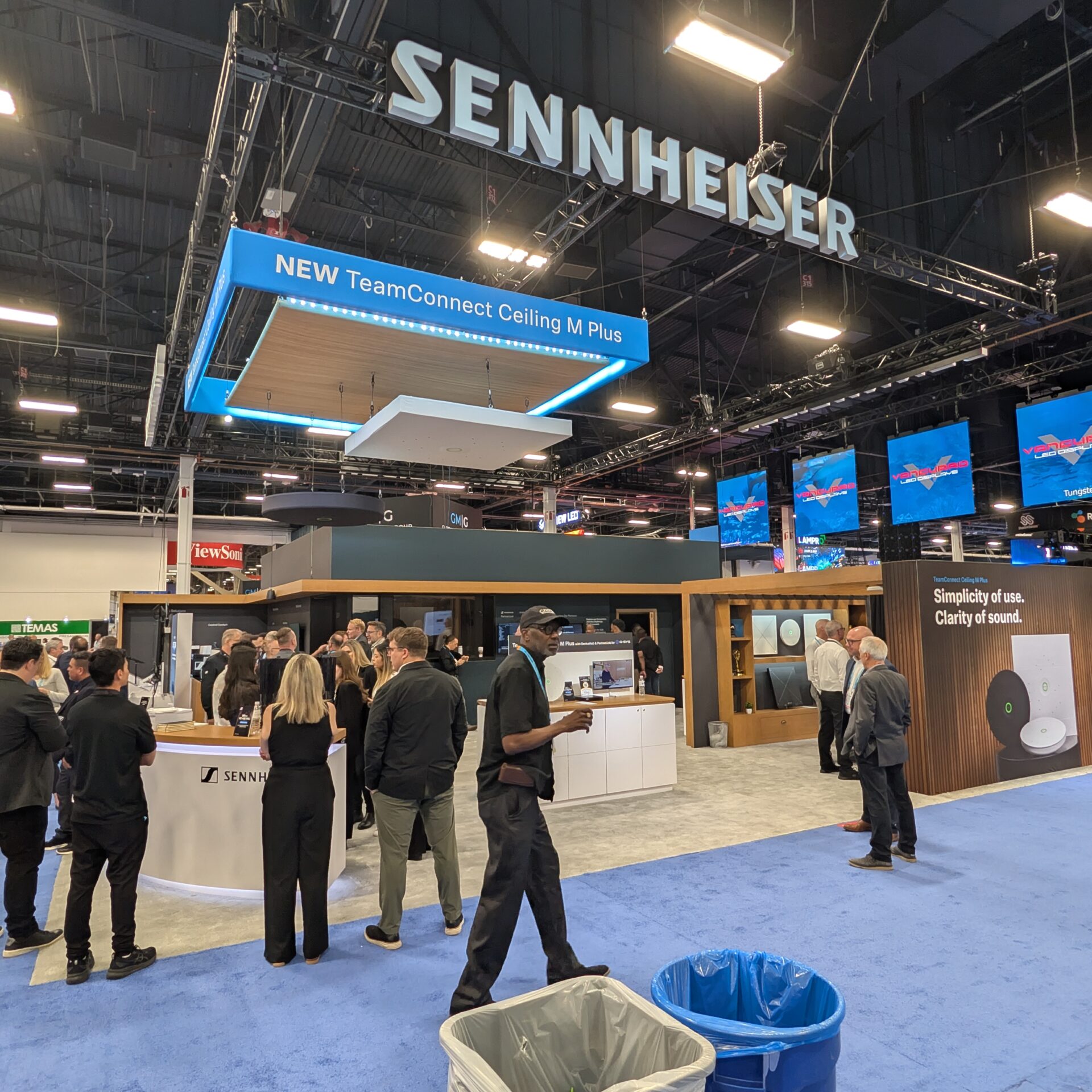
In the interview, Scott Sanders, Business Development for Sennheiser’s Business Communications Division, talked about Spectera, spatial voice lift, ceiling microphone expectations, Q-SYS integration, and the way higher ed AV teams should revisit the “why” behind the audio systems they keep choosing. Sennheiser’s InfoComm 2026 booth was C5313, where the company showed the new TeamConnect Ceiling M Plus, DeviceHub expansion, PartnerLink integration, Spectera updates, and partner workflow demonstrations.
Scott described the takeaway he wanted higher ed visitors to leave with.
“an entirely fresh perspective of Sennheiser.”
That is the right way into this one. Sennheiser is a familiar name, and familiar names can carry old assumptions. Premium audio. German engineering. Touring and performance. Wireless. Ceiling microphones. Some of those associations are useful. Some may be due for a refresh.
The better question for campuses is not whether they already know the brand. It is whether they are using the right tools for the room, the teaching model, the student experience, and the support environment.
Start With the Worst Room
One of the strongest moments in the interview came when Scott talked about voice lift. Not traditional handheld or lavalier-based reinforcement, but spatial voice lift from ceiling microphones.
His offer to campuses was direct.
“Give me your worst room.”
That line matters because every campus has that room. The room that looks great in photos but does not work well for people. The room where speech does not carry evenly. The room where students in the back cannot hear students in the front. The room where the instructor can hear some questions but not others. The room where the architecture won the design meeting and the audio team inherited the consequences.
Scott said Sennheiser is still finding people who do not believe voice lift works effectively from ceiling microphones. The company’s point at InfoComm was not just that it can work, but that it can change the way a large space feels when people can speak naturally and still be heard.
That matters in higher ed because the learning model has changed. Discussion, collaboration, student questions, peer interaction, and remote capture all depend on intelligible human speech. If a room still behaves like only the instructor’s voice matters, the technology is reinforcing an older teaching pattern.
Human-to-Human Audio
The most useful part of the Sennheiser conversation was the way Scott connected audio to human interaction in the room.
He described a lecture hall where someone sitting in the back on one side of the room can have a conversation with someone in the front on the other side, while everyone else can still follow along. That is not a minor feature. That is a different kind of room.
“No longer, we’re having an intimate conversation in a very large space.”
That is the higher-ed value of spatial voice lift. The goal is not to make the room louder. It is to make the room more usable for the kinds of interactions campuses keep asking learning spaces to support.
Scott also named the shift in instructional direction.
“Instruction is omnidirectional.”
That is a quote worth carrying because it gets past the gear. For a long time, many rooms were designed around one person speaking and everyone else listening. Higher ed has moved well beyond that, even when the room infrastructure has not fully caught up. If the student question, peer comment, or group discussion cannot be heard, captured, or shared, the room is still fighting the pedagogy.
TeamConnect Ceiling M Plus and PartnerLink
Sennheiser’s new TeamConnect Ceiling M Plus was one of the key InfoComm 2026 launches. The product is a new ceiling microphone designed for medium and large spaces, with features intended to simplify deployment, configuration, and management. Sennheiser highlights dynamic beamforming, enhanced exclusion zones, flexible installation options, single-cable connectivity, centralized management, and suitability for meeting rooms, classrooms, and divisible environments.
For higher ed teams, the Q-SYS piece may be especially important. TeamConnect Ceiling M Plus includes PartnerLink, and the first implementation allows the microphone to be configured directly in Q-SYS Designer Software. Sennheiser says PartnerLink is intended as a scalable framework for additional platforms over time.
That aligns with what Scott emphasized in the interview. For a campus that is already a Q-SYS house, bringing Sennheiser devices natively into that workflow changes the support conversation. Q-SYS describes the extension as bringing key setup steps into the Q-SYS workflow without separate plugins, Dante configuration, or tool switching.
That is not just integration for integration’s sake. It can reduce the number of places a campus team has to go to configure, monitor, and understand a room. In higher ed, where AV/IT staff may be responsible for many spaces across many buildings, that kind of workflow simplification matters.
Spectera and the Wireless Conversation
Scott also pointed to Spectera as one of Sennheiser’s major technology stories.
“Spectera is a technology that is literally the light bulb to the candle when it comes to wireless.”
That is intentionally big language, but Spectera is a major shift in Sennheiser’s wireless direction. Sennheiser describes Spectera as the world’s first wideband, bidirectional digital wireless ecosystem, with up to 64 channels in a single unit, 32 in and 32 out. It supports mic and line signals, in-ear monitoring, and control data through a bidirectional system, with multiple audio link modes for balancing latency, quality, and use case.
The immediate campus application may vary. Not every classroom needs Spectera. But higher ed includes more than classrooms. Universities support performance venues, athletics, events, broadcast and production spaces, commencements, board meetings, student media, houses of worship, and multipurpose rooms where wireless reliability and RF management matter.
The key question for campuses is where wireless complexity is creating support risk. Spectera’s broader promise is a different wireless architecture for environments where the old model of separate systems, manual frequency planning, and crowded RF can become a limiting factor.
DeviceHub and Managing More Rooms
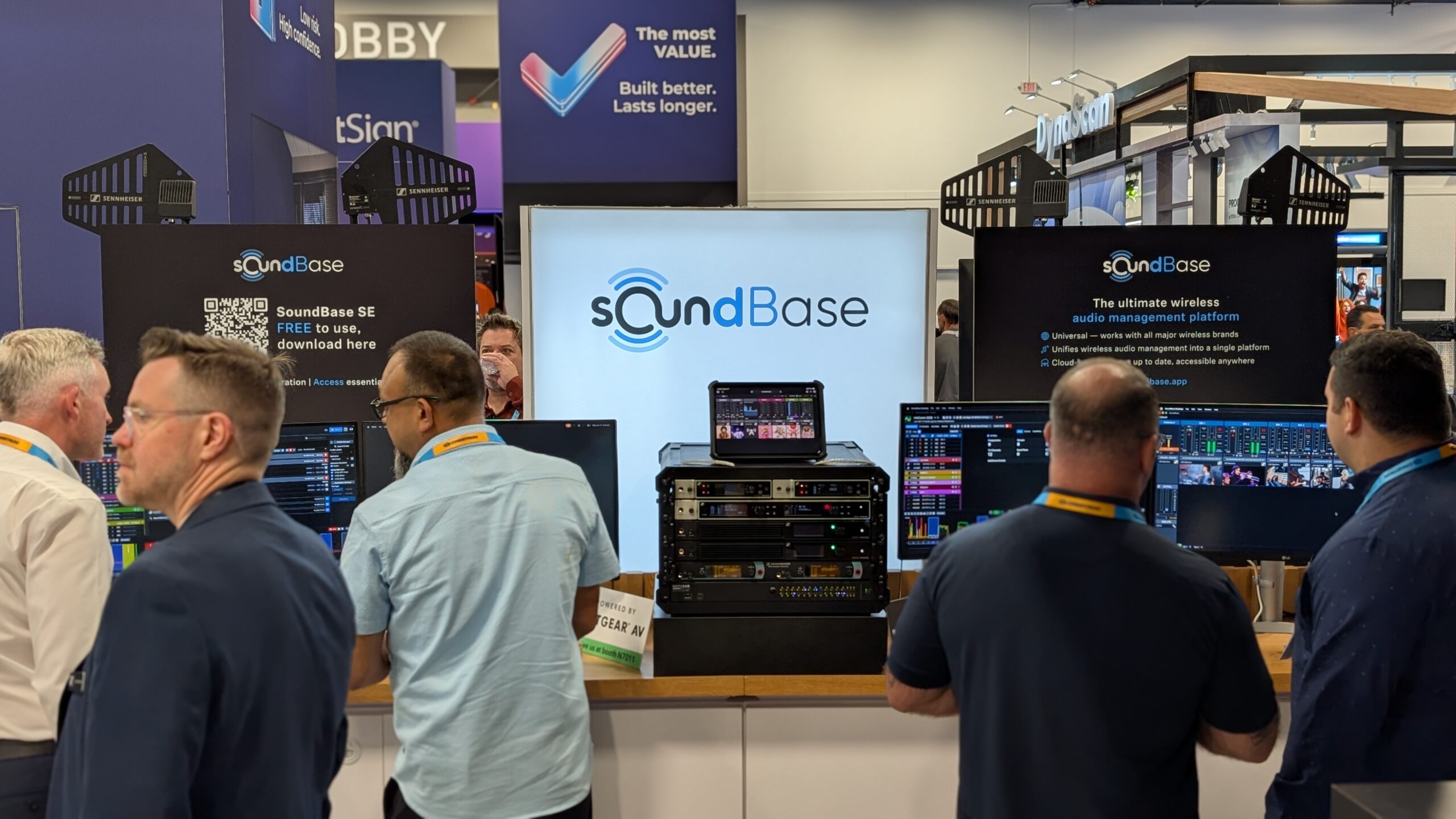
Sennheiser is also expanding DeviceHub, its cloud-based management platform. At InfoComm 2026, Sennheiser highlighted DeviceHub support for TCC M Plus and described the platform as a browser-based environment for monitoring, configuring, and managing Sennheiser devices across enterprise, education, and corporate deployments from any location.
That has a clear higher-ed fit. Campus audio deployments are distributed by nature. Classrooms, lecture halls, conference rooms, event spaces, labs, and hybrid rooms may be spread across multiple buildings or campuses. Room-by-room troubleshooting does not scale well, especially when issues need to be identified before the next class or meeting begins.
DeviceHub’s value is not flashy. It is operational. Visibility, remote diagnostics, configuration, role-based access, and centralized management become more important as audio systems move from specialty deployments into campus standards.
The Perception Problem
Another strong thread in the interview was perception. Scott described a customer who did not need to be convinced Sennheiser would sound good, but assumed it would be too expensive.
His point was that the assumption may be dated.
That is a practical higher-ed issue. Some brands get placed into mental categories and stay there for years. Too premium. Too expensive. Too complex. Not for classrooms. Not for this budget. Sometimes those assumptions are accurate. Sometimes the product line, warranty, compliance, support model, and integration story have changed.
Scott’s challenge to campuses was to ask why they are using the ceiling microphones or wireless systems they use now. That is not a call to change for the sake of change. It is a call to revisit the standard with current information.
For higher ed AV/IT teams, that is a healthy exercise. Campus standards should be durable, but they should not become automatic. If the rooms, platforms, teaching models, support expectations, and products have changed, the evaluation should change too.
The Higher Ed Takeaway
Sennheiser at InfoComm 2026 is a worthwhile conversation for campus teams because the company is tying audio back to the shape of learning spaces. The booth story includes TeamConnect Ceiling M Plus, PartnerLink for Q-SYS, DeviceHub, Spectera, and broader partner integrations. The interview story is about voice lift, human interaction, and whether campuses are still making audio decisions from assumptions that may no longer fit.
The line that sits at the center of it is Scott’s comment about the changing learning environment.
“I’m glad to see the environment, the learning environment is changing.”
If learning spaces are more conversational, more hybrid, more flexible, more student-centered, and more dependent on capture, then audio has to support more than the instructor’s voice. It has to support the room as a shared space.
Make sure to check out Sennheiser at InfoComm 2026, or visit Sennheiser.com to learn more.