





Lumens at InfoComm 2026: Classroom Capture, Tracking, and the Connectivity Work Behind It
Some of the most useful InfoComm conversations start with a product, then move quickly into the room problems higher ed teams are actually trying to solve. Lumens Integration Inc. is one of those stops this year. At Booth C9115, the company is showing camera, tracking, AV over IP, capture, and routing tools, but the more relevant story for campus AV teams is how those pieces fit together in teaching spaces that have to work every day, across many rooms, with limited time to troubleshoot.
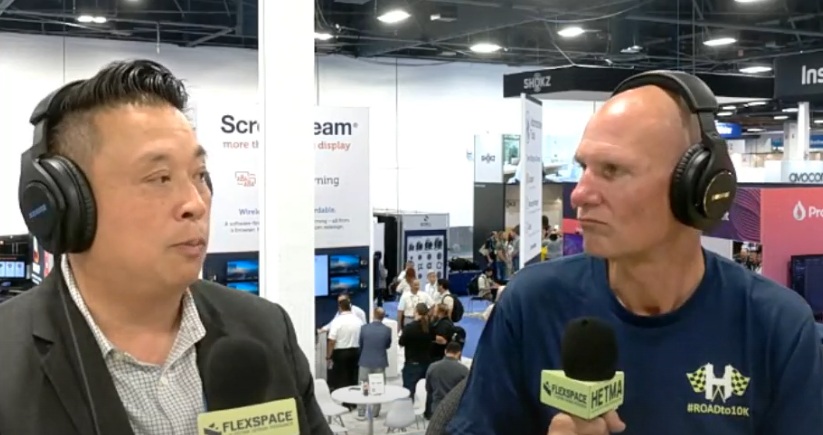
Chester Lee from Lumens framed the shift clearly during the HETMA Quick Hit conversation.
“we are a camera manufacturer but we’ve become a solution provider”
That matters because cameras by themselves are only one part of the classroom equation. Higher ed teams are rarely just asking whether a camera can make a good image. They are asking how that camera connects, how it tracks, how it supports HyFlex instruction, how it hands content into capture or conferencing workflows, and how much complexity it adds behind the rack.
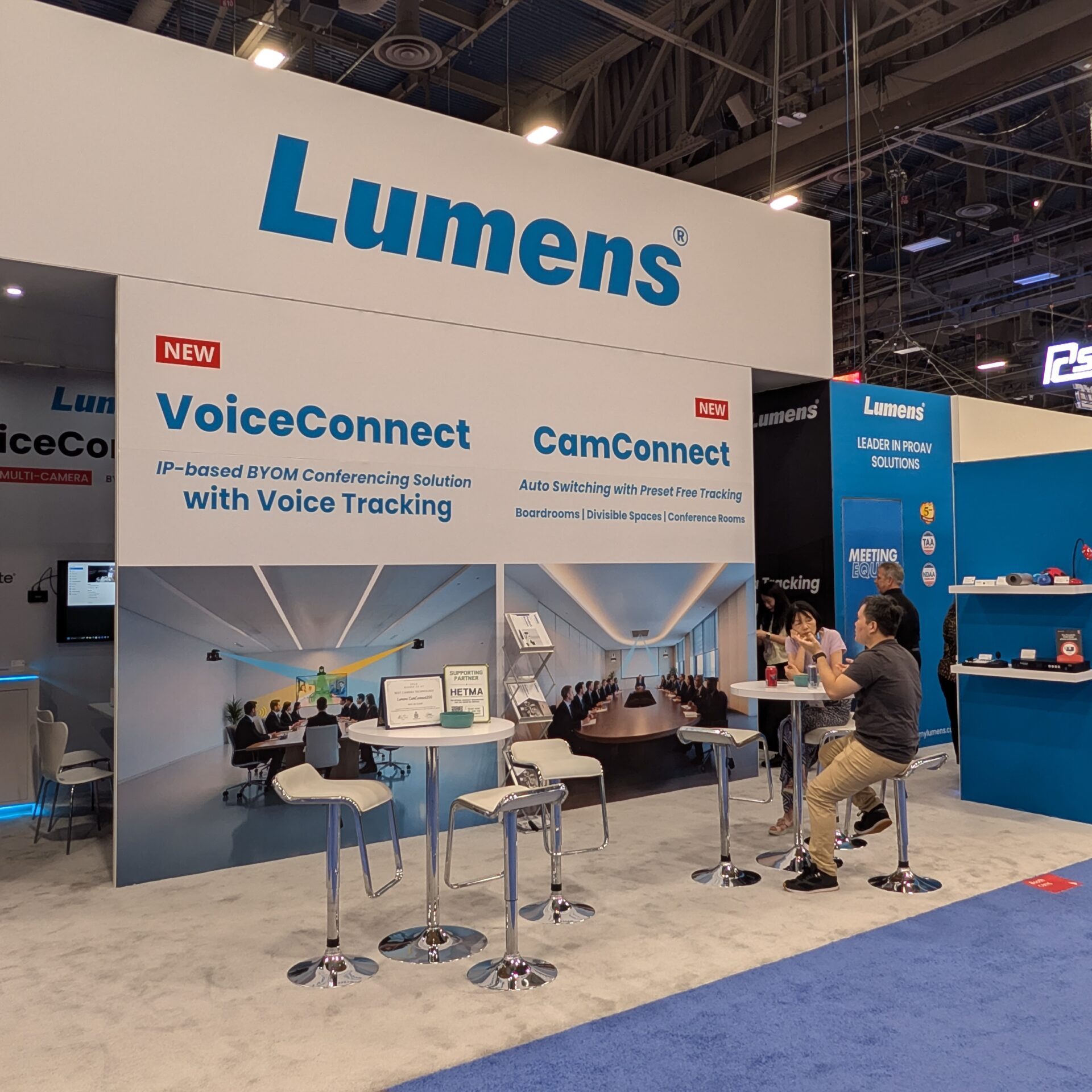
Lumens is using InfoComm 2026 to show where its portfolio is heading: preset-free speaker tracking with CamConnect Pro 200, OIP Bridge IP & USB Routing Station, Voice Connect for intelligent audio-based camera switching, and a broader ecosystem that includes PTZ cameras, Dante AV-H, NDI, AV over IP, and CaptureVision media processing.
Central Hall, Booth C9115
Lumens is exhibiting in Central Hall at Booth C9115. The booth focus is straightforward: CamConnect Pro 200 for preset-free speaker tracking, OIP Bridge IP & USB Routing Station, and Voice Connect for intelligent audio-based camera switching.
For higher ed, that is a practical mix. Speaker tracking affects how remote students experience a class. IP and USB routing affect how cleanly rooms connect to the platforms faculty already use. Capture and streaming affect whether live teaching can become useful recorded content without adding another manual process for the instructor or support team.
HyFlex is Still a Room Workflow Question
Lumens describes higher education as a primary market, with products aimed at lecture capture, remote learning, classroom engagement, and HyFlex environments. Chester tied that directly to a project focus.
“We really wanted to make a high flex lecture capture system.”
That phrase is worth staying with. A HyFlex classroom is not just a camera pointed at the front of the room. It has to preserve the instructor, the content, and the interaction. Chester described a teaching space where a professor can move across the stage while the system still keeps content visible for students watching live or later.
That is where tracking becomes more than a feature demo. Stage tracking, speaker tracking, and content capture all have to work together in a way that does not ask faculty to become operators. For campuses trying to support live instruction, asynchronous review, hybrid participation, or overflow scenarios, that coordination is where the value is.
Chester put it in more human terms.
“The flexibility and the interaction is important.”
That is the higher ed lens. Flexible does not mean adding every possible mode to every room. It means giving students and faculty a room experience that can handle the way teaching actually happens, without making the room fragile.
Connectivity is the Pain Point
The strongest part of the conversation was not the product list. It was Chester’s answer when asked what Lumens is hearing from higher ed customers.
“I think the biggest pain point is also the simplest pain point, connectivity.”
That is a familiar answer for campus AV/IT teams. The front of the room may look clean, but the support burden often lives behind the scenes: adapters, converters, protocol decisions, USB paths, network dependencies, routing, and the failure points created when a room needs too many separate pieces to behave like one system.
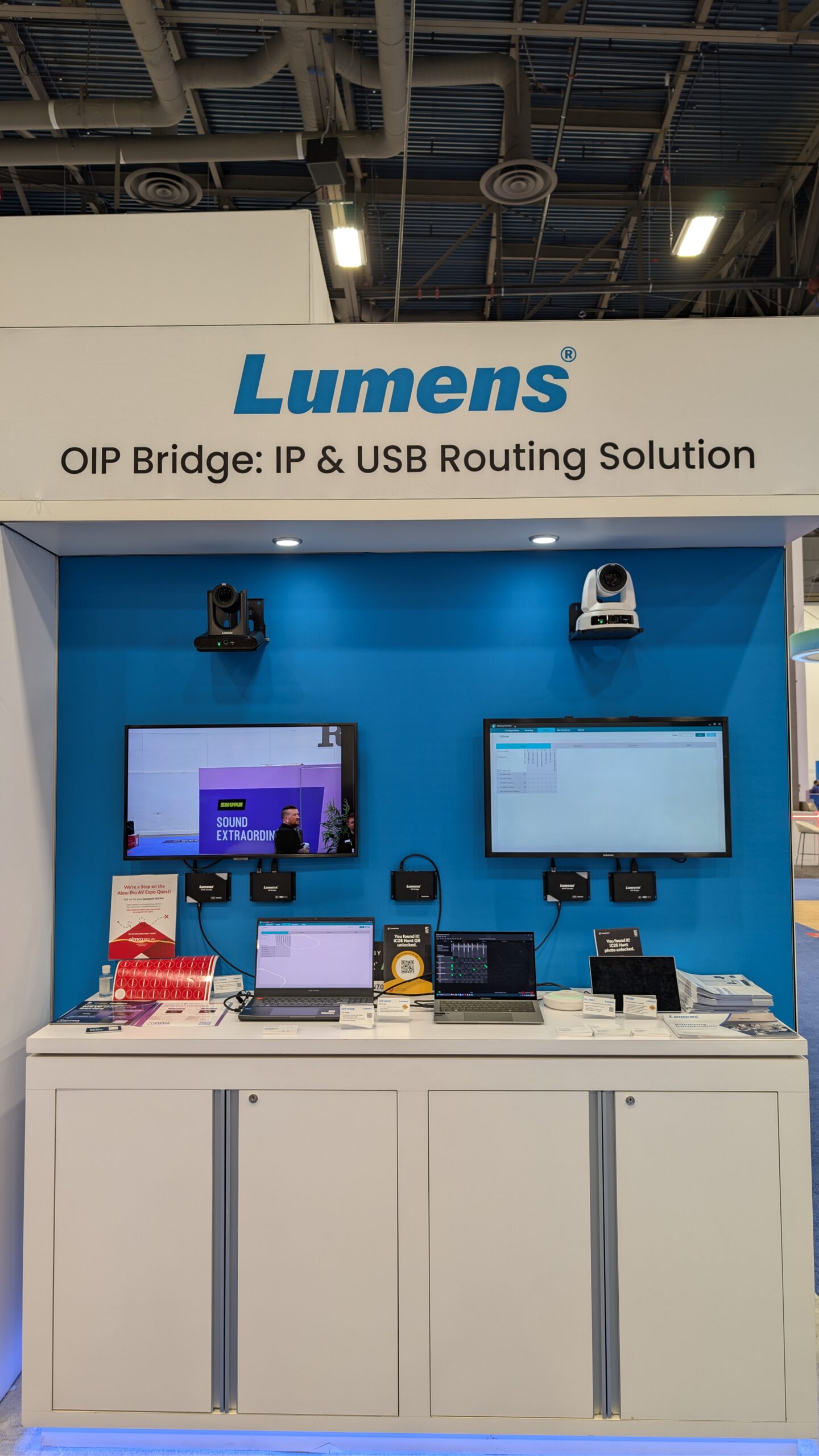
Lumens is positioning its OIP work around that issue. They have OIP bridges, encoders, decoders, and an OIP-N60C controller intended as a single point of control for multi-unit AV over IP deployments. They are also showing Dante AV-H, NDI, RTSP, and USB-C workflows.
For campuses, the protocol story matters because institutions do not all standardize the same way. One campus may be leaning into NDI. Another may be looking at Dante AV-H. Another may be balancing room refreshes across generations of infrastructure. Lumens is presenting its OIP approach as a way to reduce the number of translation points between source, network, room system, and user device.
That is not glamorous, but it is exactly where classrooms become supportable.
Preset-Free Speaker Tracking and Voice Connect
CamConnect Pro 200 is one of the main InfoComm features for Lumens this year. The company describes it as preset-free speaker tracking, which is important because preset-heavy rooms can become difficult to maintain as layouts, furniture, teaching styles, and microphone plans change.
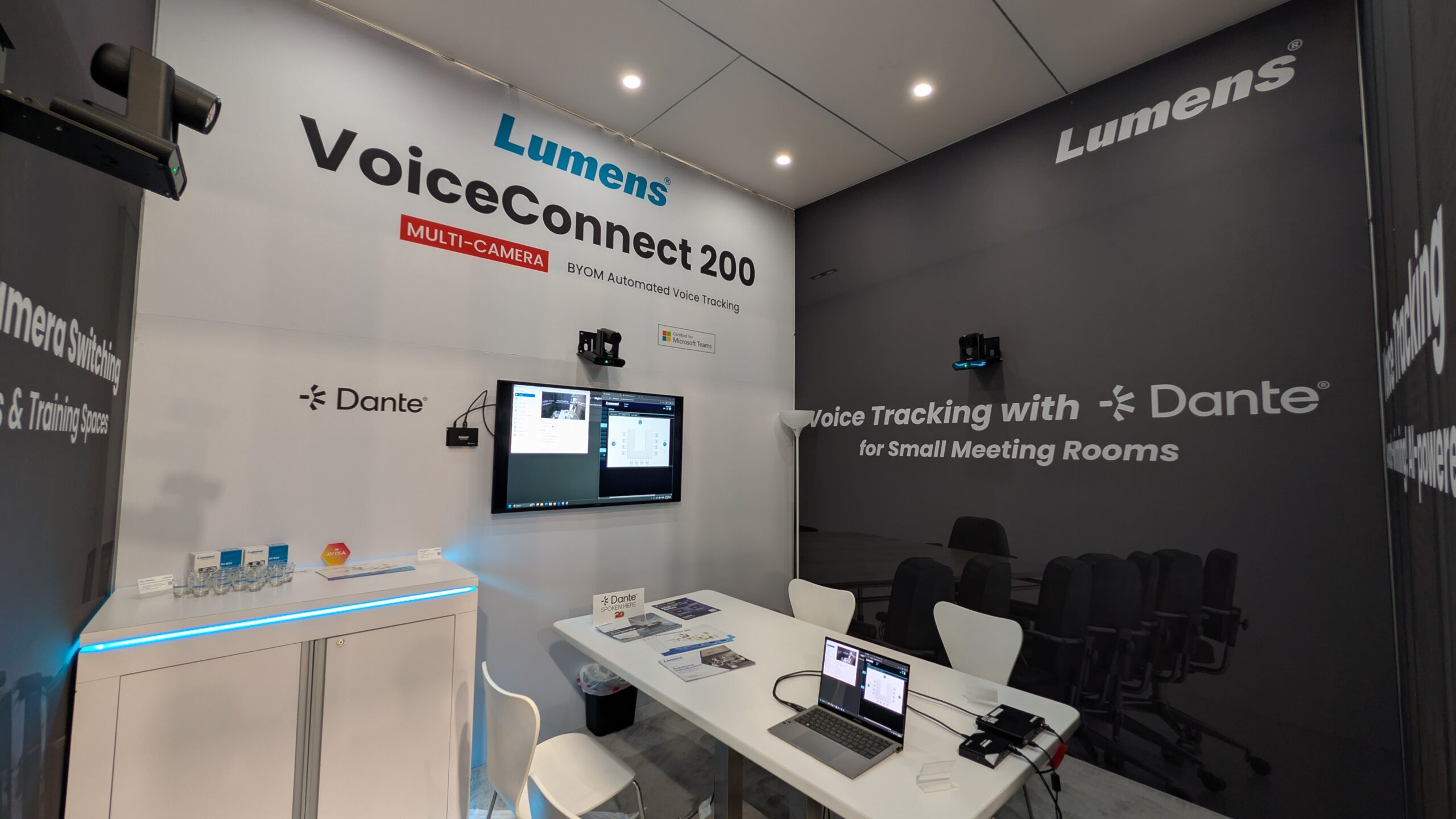
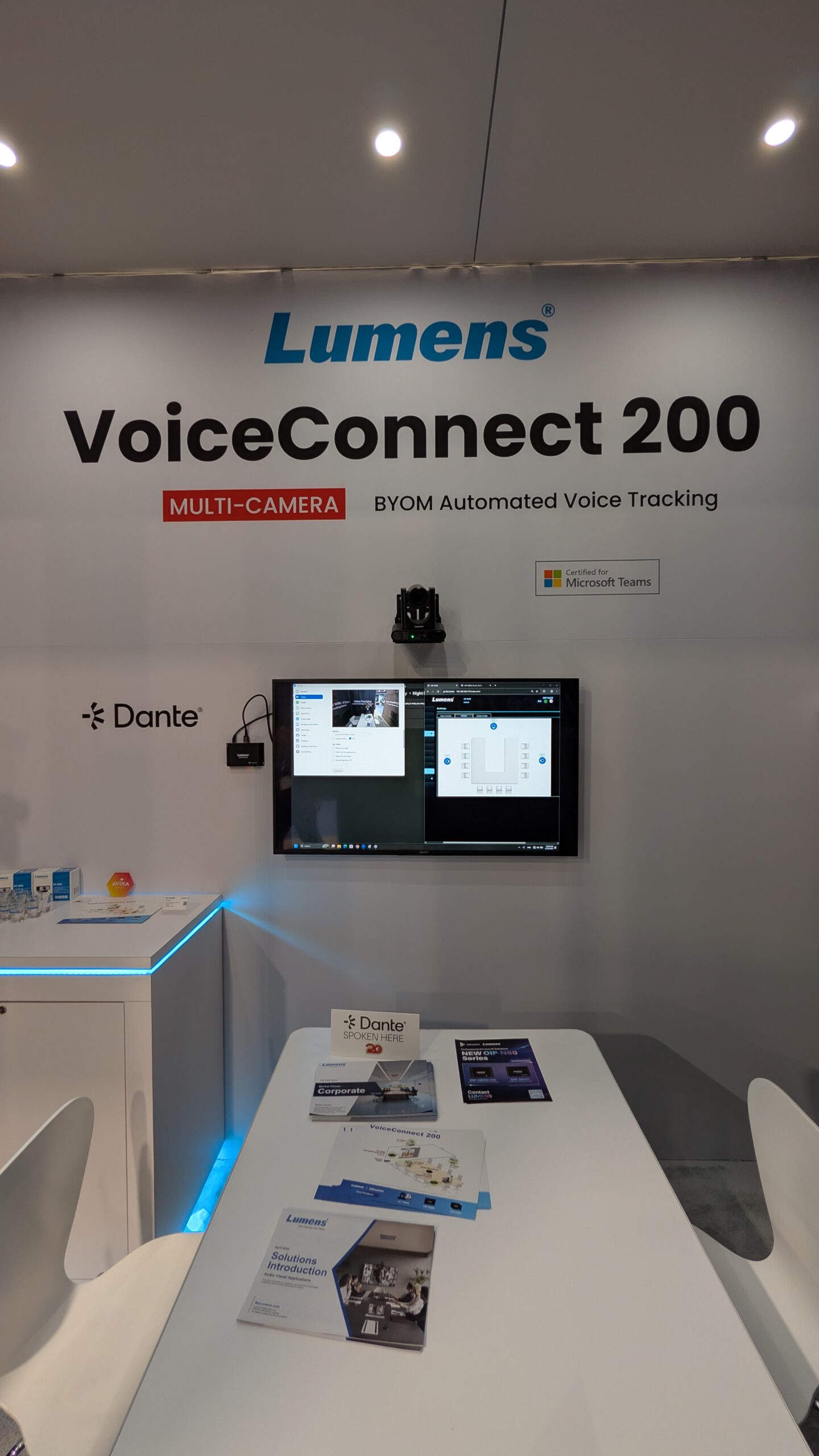
Lumens is also highlighting Voice Connect for intelligent audio-based camera switching. In the expanded submission, Lumens describes AI-driven Voice Connect using the built-in mic array in the VC-TR60A Dante AV-H to determine speaker direction while connected to the OIP-N60D Dante bridge. The stated benefit is a speaker tracking path that does not require a third-party microphone system and is supported by a software purchase rather than an ongoing subscription.
For higher ed, the operational question is not only whether the demo tracks well. It is whether the workflow reduces setup time, avoids overbuilding smaller rooms, and gives support teams a repeatable design pattern for spaces where discussion and presentation both matter.
The Workflow Has to Survive the Schedule
The conversation also landed on a point every classroom support team knows: the window between classes is short. When something fails, there may be ten minutes to diagnose it before the next instructor walks in.
Chester’s response was direct.
“it’s all about the workflow”
That is the better way to read the Lumens booth. Cameras, tracking, capture, and routing are useful only if the workflow holds together under the pressure of a class schedule. A professor needs to return to the few settings that matter. Support staff need to know where the issue is. The room needs to be simple enough that a small failure does not become a full-room outage.
Lumens is also emphasizing support and lifecycle confidence with product engineer access, online live chat, and a five-year unlimited advanced replacement warranty. Much of the portfolio is TAA and NDAA compliant. For public institutions and campuses with procurement constraints, those details can matter as much as the feature set.
The Higher Ed Takeaway
The Lumens story at InfoComm 2026 is not just about better cameras. It is about whether capture, tracking, USB, IP, and control can be made easier to deploy and easier to support across real teaching spaces.
For higher ed AV/IT teams, Booth C9115 is worth a stop if you are looking at HyFlex refreshes, lecture capture upgrades, automated camera tracking, AV over IP routing, or ways to simplify the connection path between classroom systems and the platforms faculty use every day.
Make sure to check out Lumens at Booth C9115 at InfoComm 2026, visit www.mylumens.com, or reach Chester Lee at chester.lee@lumensus.com.