





In this episode of the Higher Ed AV Podcast, Joe goes solo for a recap of the third annual **SAVe Global Conference**, held October 13–14 at UCLA.
After three years of hosting the conference, this year felt different. The conversation around sustainability in AV is maturing — moving beyond awareness and good intentions toward measurable action, collaboration, procurement decisions, and real accountability.
Joe walks through the conference sessions, shares some of the biggest ideas that stood out, and reflects on what higher education can do to help drive meaningful change across the AV industry.
In This Episode:
The conference opened with a series of keynote conversations exploring sustainability from several different perspectives — from AV manufacturing and global events to population health, materials science, electronic waste, procurement, and the environmental impact of the technology we deploy.
One of the major themes was the growing responsibility of manufacturers to think beyond the product itself. Packaging, shipping, materials, energy consumption, recycling, supply chains, product lifecycle, and end-of-life planning are all becoming part of the sustainability conversation.
Joe also shares highlights from his students’ sustainability research, including their work examining procurement practices, SAVe certification, and how higher education institutions can use research and data to influence technology decisions on campus.
Collaboration Changes Everything:
Across the conference, one idea continued to surface:
**Sustainability cannot happen in a silo.**
Higher education technology teams need to work alongside facilities, procurement, manufacturers, integrators, industry associations, nonprofits, and other institutions.
The conference included conversations around:
- Sustainable manufacturing and the role manufacturers can play in reducing environmental impact
- SAVe certification and creating measurable sustainability practices
- Partnerships between nonprofits and industry organizations
- How universities can leverage their purchasing power to influence manufacturers
- Adding sustainability expectations to RFPs and procurement processes
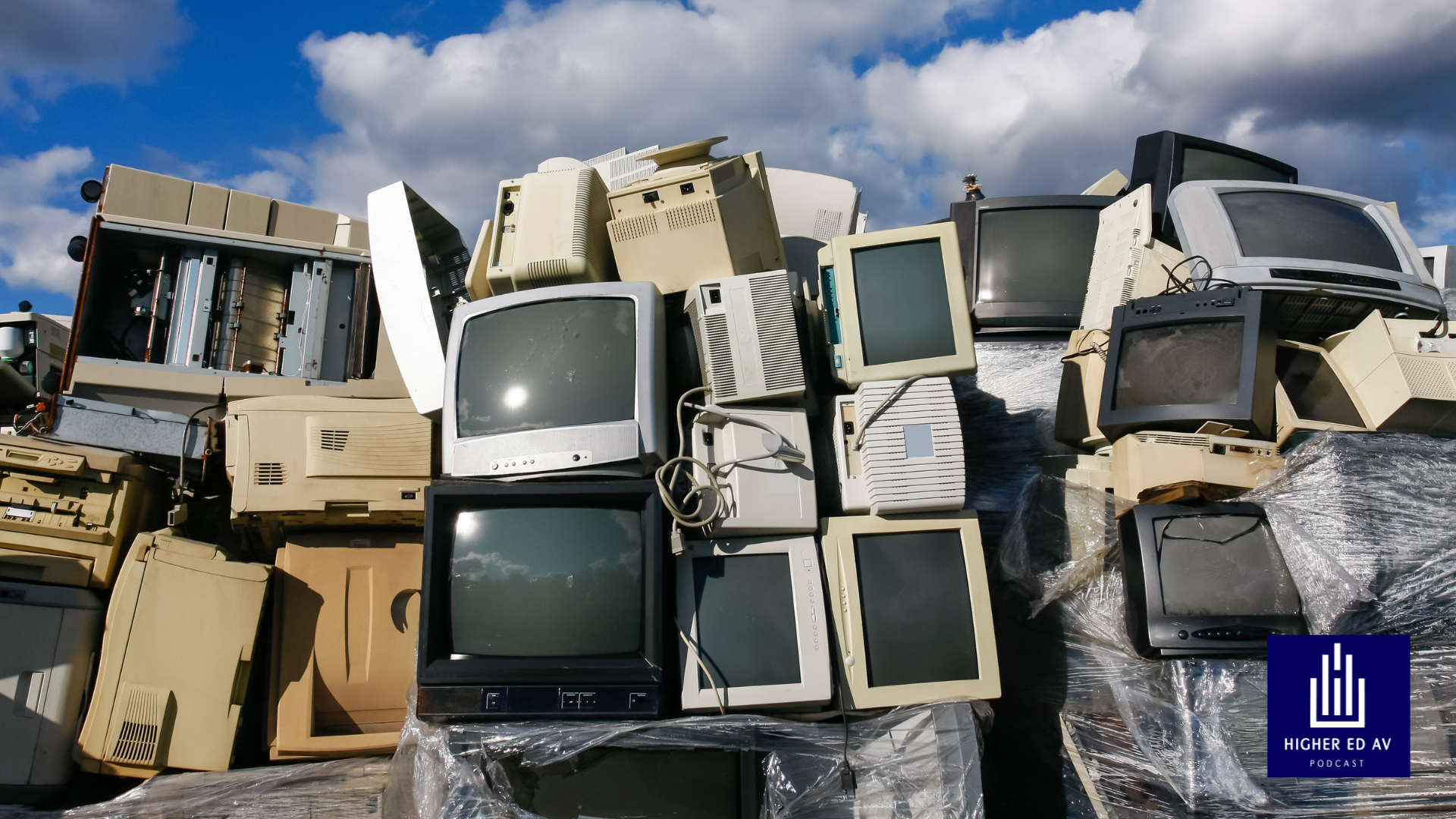
- Extending the useful life of AV technology
- Finding new homes for equipment instead of automatically sending it to waste
- Balancing innovation and standardization with responsible technology lifecycle management
- Identifying institutional policies that may unintentionally prevent reuse or sustainable practices
Are We Innovating Too Quickly?
One of the most thought-provoking conversations came during the higher education sustainability discussion featuring representatives from institutions including Bard College, Northwestern, and USC.
Higher education loves innovation. We want the newest classrooms, newest platforms, and newest technology.
But that raises an important question:
**Does innovation always require replacing technology that still works?**
The group explored ways institutions can continue advancing technology while also becoming better stewards of existing equipment — including reuse, redistribution, partnerships with other schools, and developing better institutional processes for extending the life of AV systems.
Higher Education Has More Influence Than We Think:
Universities purchase technology at enormous scale.
That gives higher education tremendous potential to influence the AV industry.
What happens if sustainability becomes part of every RFP?
What happens if institutions begin asking manufacturers about packaging, supply chains, product lifecycle, repairability, energy use, recycling, and end-of-life strategies before making purchasing decisions?
When institutions begin asking those questions consistently, sustainability moves from being an industry talking point to becoming a business requirement.
The Big Takeaway:
After three years of the SAVe Global Conference, Joe’s biggest takeaway is simple:
It is no longer enough to say sustainability matters.
We have to build it into the way we operate.
That means asking better questions, examining our own practices, challenging existing policies, working across organizational boundaries, and partnering with others who share the same goals.
And perhaps most importantly, it means recognizing that no single institution, manufacturer, integrator, association, or nonprofit is going to solve the problem alone.
**Real change happens when we stop working in silos and start working as a community.**
Coming Up:
More content from the SAVe Global Conference will be released through SAVe, including recordings of the keynote sessions.
Learn more about Sustainability in AV (SAVe):
Web: https://www.saveav.org