

I was recently talking with one of our UCLA student workers, Taha Jamshidi, who is completing his Masters degree in Architecture degree while working with our AV/IT Solutions team under Chi Hang Lo. We were discussing the work he’s been doing around BIM modeling, room documentation, renderings, infrastructure planning, and even 3D printing custom solutions for our classrooms. At some point in the conversation, I realized he was describing something much bigger than the projects themselves. He was describing where AV is actually headed. I don’t think he even realized it, because I didn’t until that moment.
For years, the AV industry has talked about convergence, and most of the time we mean AV and IT, and recently UCC. That conversation has been important because networked systems, cloud platforms, software-based control, cybersecurity, data, and AI have fundamentally changed the technology stack for sure. But there is another convergence happening that may be just as important. AV is converging with the physical environment itself… AV isn’t simply peripherals in the space, it is the space coming to life. It is the building itself working for the experience in a holistic way that extends across multiple addict verticals. And that fact changes when our work actually begins.
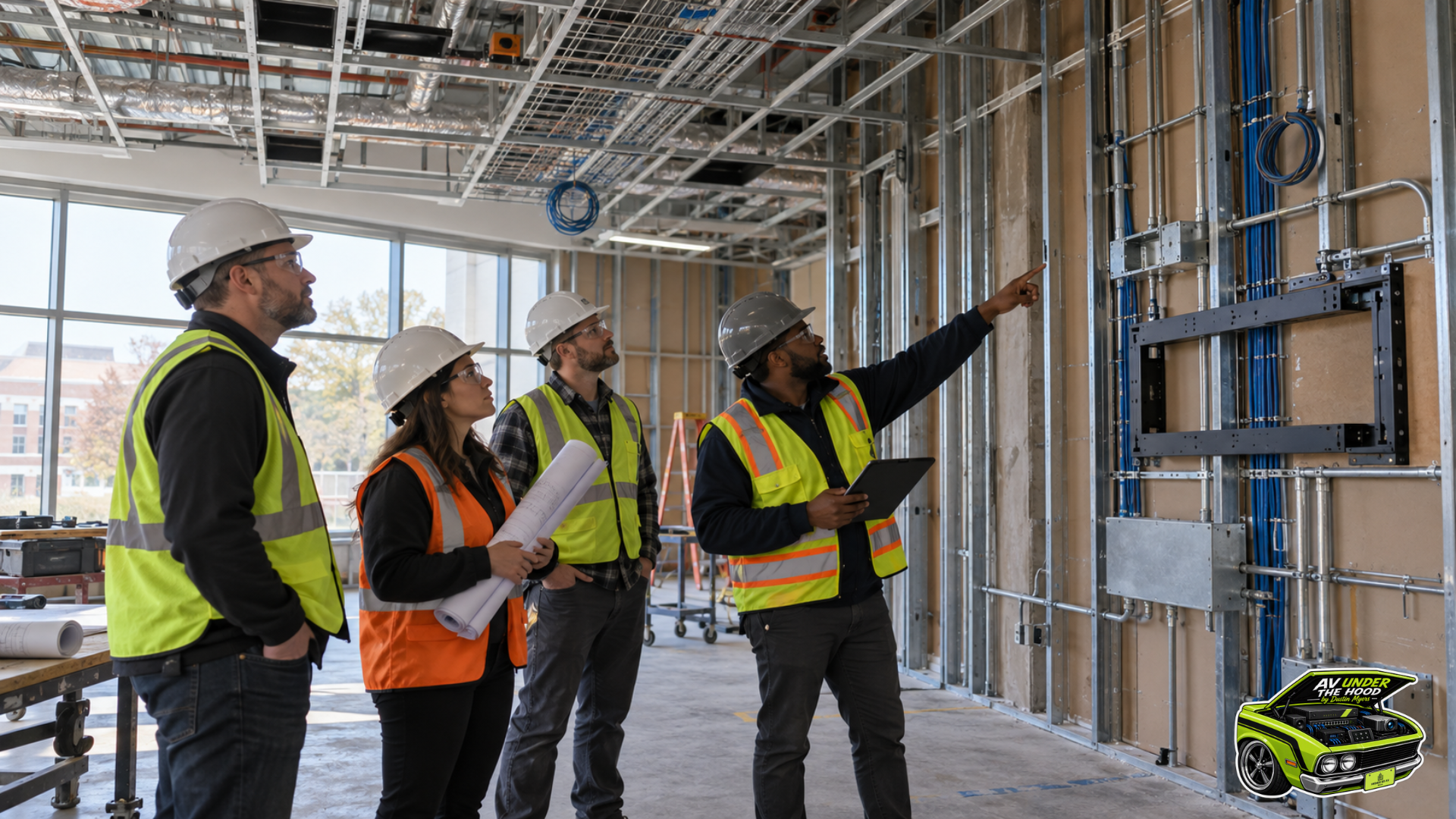
Too often, we still think of AV as something that gets added to a space. The architect designs the room, facilities builds it, furniture goes in, and then the technology team arrives to figure out where everything is supposed to fit. Yes, hopefully thing are changing with us getting in earlier in the process, but the linear thinking of order of events is still very legacy. Everyone knows what happens first, what happens next. Historically that has lead to glass walls where a displays need to go, power missing where equipment should live, network pathways with no way to even get to an IDF, ceiling conditions complicating mic coverage, cameras with poor sightlines, and furniture that limits accessibility needs. That’s when the technology ends up adapting to decisions that were made months or sometimes years earlier.
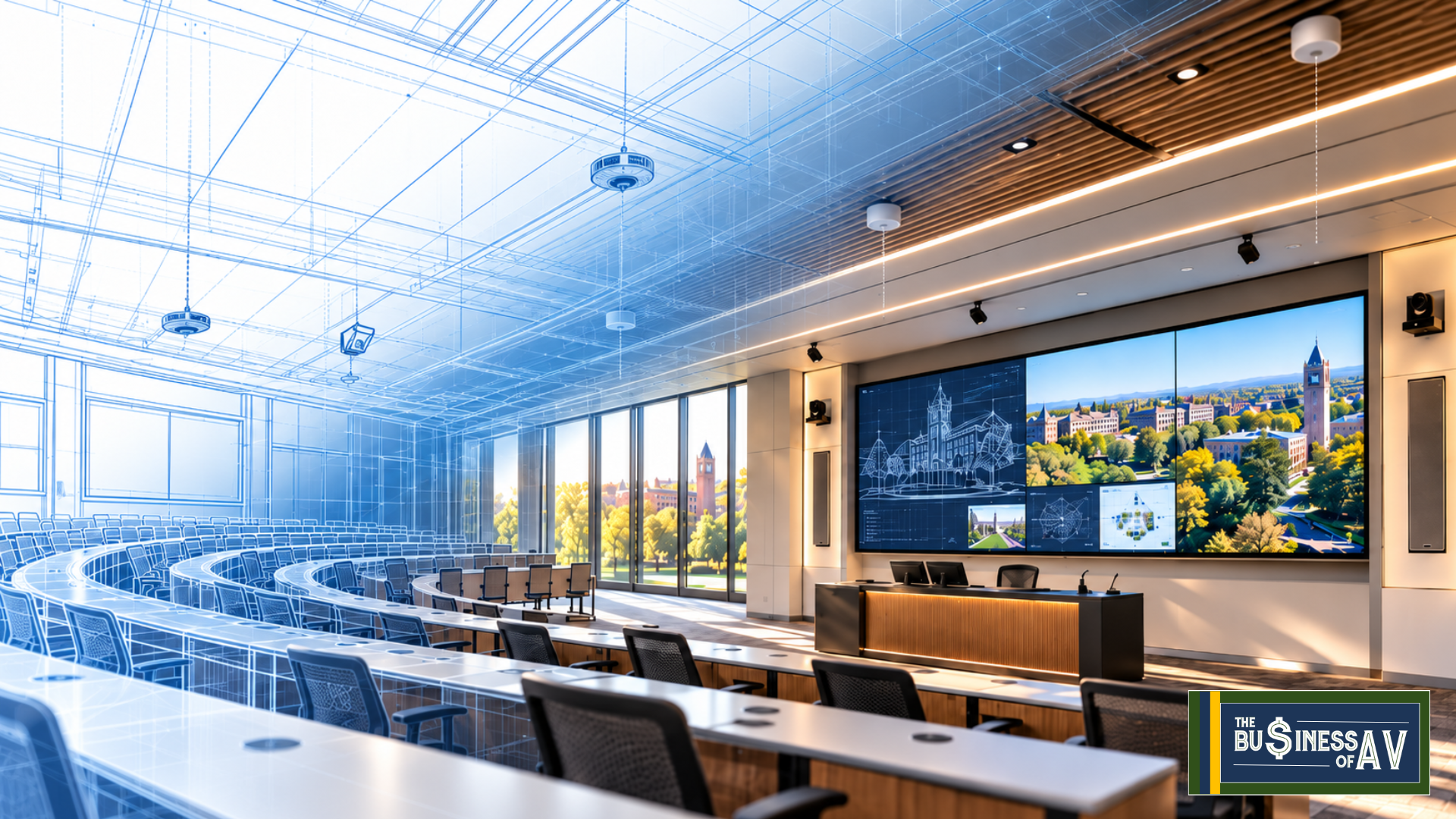
We often blame the room when the real problem is the process. The best AV systems I have seen do not begin with equipment selection. They begin with understanding the environment long before the first purchase order is written. That is what caught my attention while listening to Taha describe his work and the way his architectural training intersects with the technology team. Long before a room gets transformed, his process begins by documenting the space exactly as it exists. Exactly. Not based on previous renderings or as-builts, but with every nuance that got shaped over time That means photos, measurements, 360-degree imagery, building information modeling, floor plans, elevations, sections, and reflected ceiling plans. Eventually, that becomes a digital representation of the room that the broader team can work from, and from there, technology starts becoming part of the architecture rather than something placed inside it. That is much more than a site walk or needs analysis where we as technologists come to the meeting already assuming the technology we will put in place.
That distinction matters because when the room exists digitally before it exists physically, you can begin asking better questions. Where should the displays actually go? What does the instructor see? What does the student see? Where should the cameras positioned? What happens with lighting? How does someone move through the room? What does accessibility look like? Where are the infrastructure conflicts before anyone discovers them during construction? You can make mistakes before mistakes become expensive.
That is one of the biggest advantages technology gives us today, yet many organizations still treat visualization as something intended primarily to impress stakeholders. Yet, it should be viewed fundamentally different. Visualization is a decision-making tool because a rendering is not just a pretty picture… it is an opportunity to find the problem early and make a better decision before concrete, drywall, wiring, or equipment lock that problem into place.
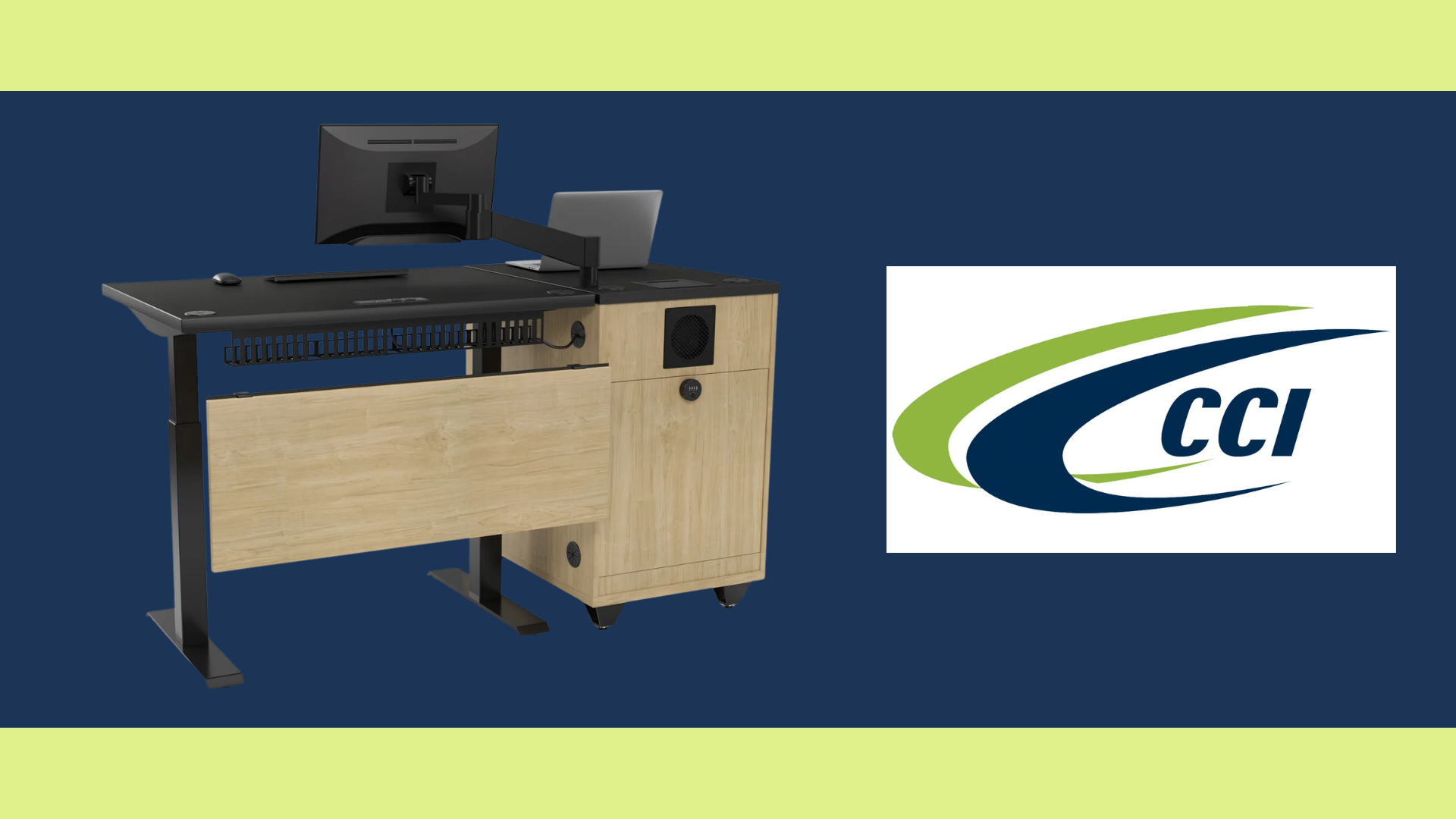
One of my favorite examples from Taha’s work had nothing to do with a massive building project. It involved a much smaller problem with one of our classroom credenzas. In some larger lecture environments, we needed to incorporate Catchbox charging equipment, but there was not an elegant place to put it without compromising the functionality or appearance of the minimalistic existing design. The easy answer would have been to live with an imperfect solution or move to another lectern option that conflicts with our standard SOP. Instead, the team decided to design the solution instead. Taha modeled a custom structure that could attach to the credenza, support the charging equipment, preserve ventilation, handle the required weight, and still look like it belonged there. They created digital models, 3D printed prototypes, tested them, refined the design, and ultimately created the part themselves. The first time I saw it, I assumed it had come from the manufacturer because it solved the problem so cleanly that it looked like it had always been part of the system.
That is what good design looks like, and there is a larger lesson in it. We sometimes equate innovation with scale, whether that means AI platforms, cloud infrastructure, enterprise deployments, or entirely new product categories. Those things matter, but innovation can also be found in a small piece of hardware designed because someone refused to accept an awkward user experience. The mindset is the same in both cases: understand the problem, understand the environment, design intentionally, prototype, test, improve, and deploy. That is architecture in a nutshell… But it is also AV. Or at least should me. The line between the two will continue to get thinner as spaces become more intelligent and the technology inside them increasingly influences the architecture around them. We are seeing the shift from AV systems to building (and campus) management ecosystems. The technology doesn’t go away or really even change, but it’s purpose and usefulness does… cameras generate intentional sightlines through intelligent auto-production, sensors inform building behavior, AI changes how rooms respond to the way people engage, cloud platforms connect individual spaces into larger campus ecosystems where silo’ing is no longer acceptable, and data from those spaces will influence how facilities are operated and how future environments are designed.
We will not be able to separate the digital experience from the physical one, and that means the AV professional of the future will need a broader vocabulary. Knowing signal flow will still matter, as will understanding acoustics, networks, cloud platforms, programming, and control. But increasingly, the best people in our industry will also understand architecture, construction, human behavior, accessibility, furniture and aesthetic choice, building management systems, and experience design. Likewise, architects will need to understand technology in ways they historically may not have, and that was perhaps the most encouraging part of my conversation with Taha. His experience working around AV has changed the way he thinks about architecture. He is not approaching technology as something another discipline will add later… AV itself is the architectural building design.
Check out the Higher Ed AV Podcast episode featuring Taha Jamshidi that inspired this article: https://higheredav.com/?p=12998.