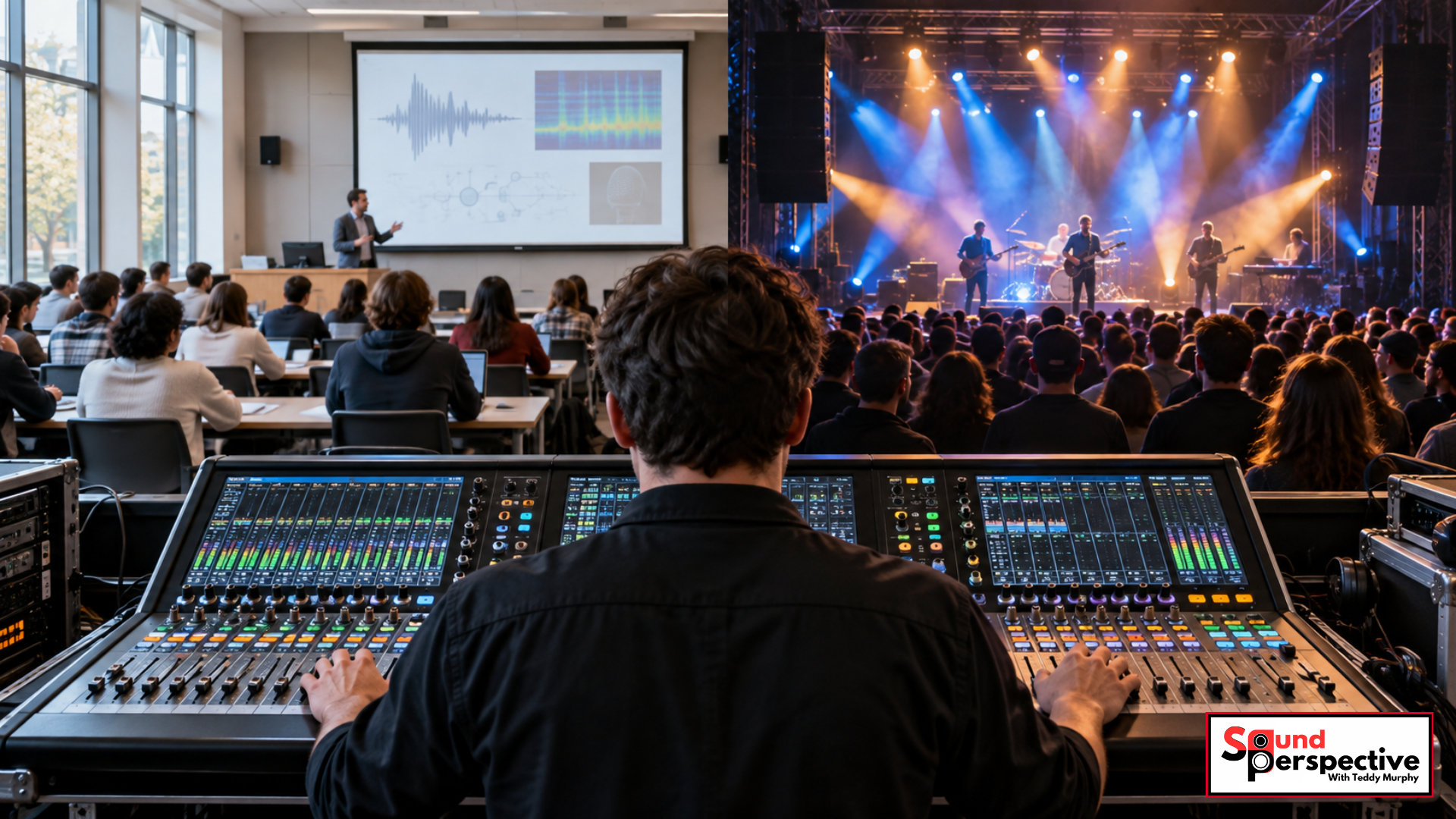
Recently, I stepped back into doing audio on the road in a part-time role while staying full time in higher education. That makes for some interesting weeks. One night on the bus after a show, someone asked me whether all those years of concerts and festivals had prepared me for working at a university. I said yes without really thinking about it. That answer has been stuck in my “monitor mix” ever since, and going back and forth between a stage on the weekend and classrooms during the week has made the truthful version a lot messier than a simple yes.
For a long stretch before I ever set foot in a classroom at the University of Pikeville, my weekends were load-ins, line checks, and stage plots that had very little to do with what actually showed up in the trailer. I loved it. I also showed up to higher ed thinking the hard part was behind me.
A classroom is a lot smaller than a festival field. How bad could it be? Some of that confidence was earned. Some of it was not.
The Changeover Brain
The most useful thing live sound ever gave me is the ability to troubleshoot while somebody is staring at me. On a festival stage, a changeover is a controlled panic. One band is clearing gear, the next one is plugging in, the stage manager is looking at a watch, and the vocal channel that worked during line check is suddenly dead.
You do not have time to theorize. You walk the signal: mic, cable, stage box, snake, console input. Find the last place it was good. Fix what is after it.
For example, I was mixing monitors for a main support act at a large festival, and at changeover, we didn’t have his electric guitar. I ran onto the deck, started at the mic, checked the patch to the drop snake, then followed the drop snake to the split. I found that the stagehand who helped me patch at changeover had put it into the wrong channel. A quick fix, and we were off and running.
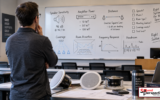
I did not realize how much that habit had become muscle memory until my first semester on campus. A faculty member called because there was no audio in a room, class was starting in five minutes, and there were 40-some students sitting there watching me walk in. My heart rate did the exact same thing it used to do at side stage. My hands did the exact same thing too, which was the part that mattered. The gear was different, but the process was not.
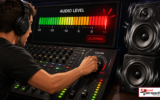
Gain structure came with me the same way. On a big rig, a front end that is driven too hard does not stay hidden for long. You hear it, and so do a few thousand other people. That fear of a clipped input never really left me, and honestly, I think it has made me a better DSP programmer.
What I Got Wrong That First Year
I would like to say I walked in and adapted right away, but I did not. My first instinct with a weak-sounding room was to give it more. More level, more gain, a little more top end so the voice would cut. That is a perfectly reasonable instinct when your job is making a crowd feel a show.
It is a terrible instinct when your job is making sure a student in the back row can follow a lecture for 75 minutes without getting tired. I had to retrain myself to ask whether people could understand what was being said before asking whether they could hear it. Usually, the fix was a microphone in a better spot or coverage that actually reached the back rows, not a fader going up.
The other thing I got wrong was designing for me. On the road, the person running the system is someone like me. They know what a gain knob does, they know what a mute group is, and if something looks strange, they will figure it out.
In a classroom, the person running the system is a faculty member who has a few minutes between classes, a laptop that may or may not want to share its screen, and zero interest in audio. That is not a criticism. It is not their job to care. It is mine. It took me longer than I would like to admit to stop building rooms that made sense to an audio engineer and start building rooms that made sense to someone who just wants the microphone to work when they walk in.
Nothing Gets Torn Down
A live rig has a lifespan of about one night. You build it, tune it, run the show, and roll it back onto the truck. If something about the setup is a little weird, you live with it for three hours and never see it again.
A classroom system might be in that ceiling for 10 years. It has to work at 8 a.m. on a Monday, during a night class in February, and long after the person who commissioned it has moved on. Every shortcut I would have happily taken for a single show is now something someone else has to support, sometimes years later, with no idea why I did it that way.
That is a big part of why I care so much about standards now. On the road, every rig could be its own animal. On a campus, if every room has a different microphone, a different DSP layout, and a different touchpanel, you spend your whole week remembering exceptions instead of fixing problems. A lot of our work moving to AV-over-IP has really been about making rooms behave the same way, not just about the technology itself.
The Listener I Never Had to Think About
When I mixed live shows, the audience was in front of me. Sometimes there was a broadcast or a recording feed, but somebody else usually handled that.
Lecture capture changed that for me in a big way. When we started rolling out capture appliances across campus, I quickly learned that a room I thought sounded great in person could sound distant and hollow on a recording. Questions from students that everyone in the room heard just fine would disappear entirely for the person watching later.
That person might be at home, listening on a laptop speaker two days after class, trying to study for an exam. Nothing in my live sound background had prepared me to mix for someone I would never see, who was listening at a different time, on gear I did not control. I still check recordings with headphones at my desk because of it.
Stuff That Came With Me Anyway
Not everything is a big lesson. Some of it is just habit.
I still wrap cables over-under, and I still notice when someone else does not. I still label everything with board tape and a Sharpie, even though the network can tell me what is plugged in where. There is still a spare XLR cable and a flashlight in my bag at all times. I have used the flashlight above more ceiling tiles than I ever did on a stage.
And I still get a little knot in my stomach right before a big event on campus, the same one I used to get before doors opened. I have decided that is a good thing. It means I still care whether it goes right.
If You Are Making the Same Jump
If you are coming into higher education from touring, theaters, churches, or event production, you are bringing more with you than you probably think. Your ears, your troubleshooting skills, and your ability to stay calm when things go sideways will all serve you well. Just go in expecting to unlearn a few things too. I did, and I am still working on some of them.
Find somebody who has already made the move and ask them what they got wrong their first year. There are plenty of us in HETMA and other organizations, and most of us are happy to talk about it, especially over coffee.