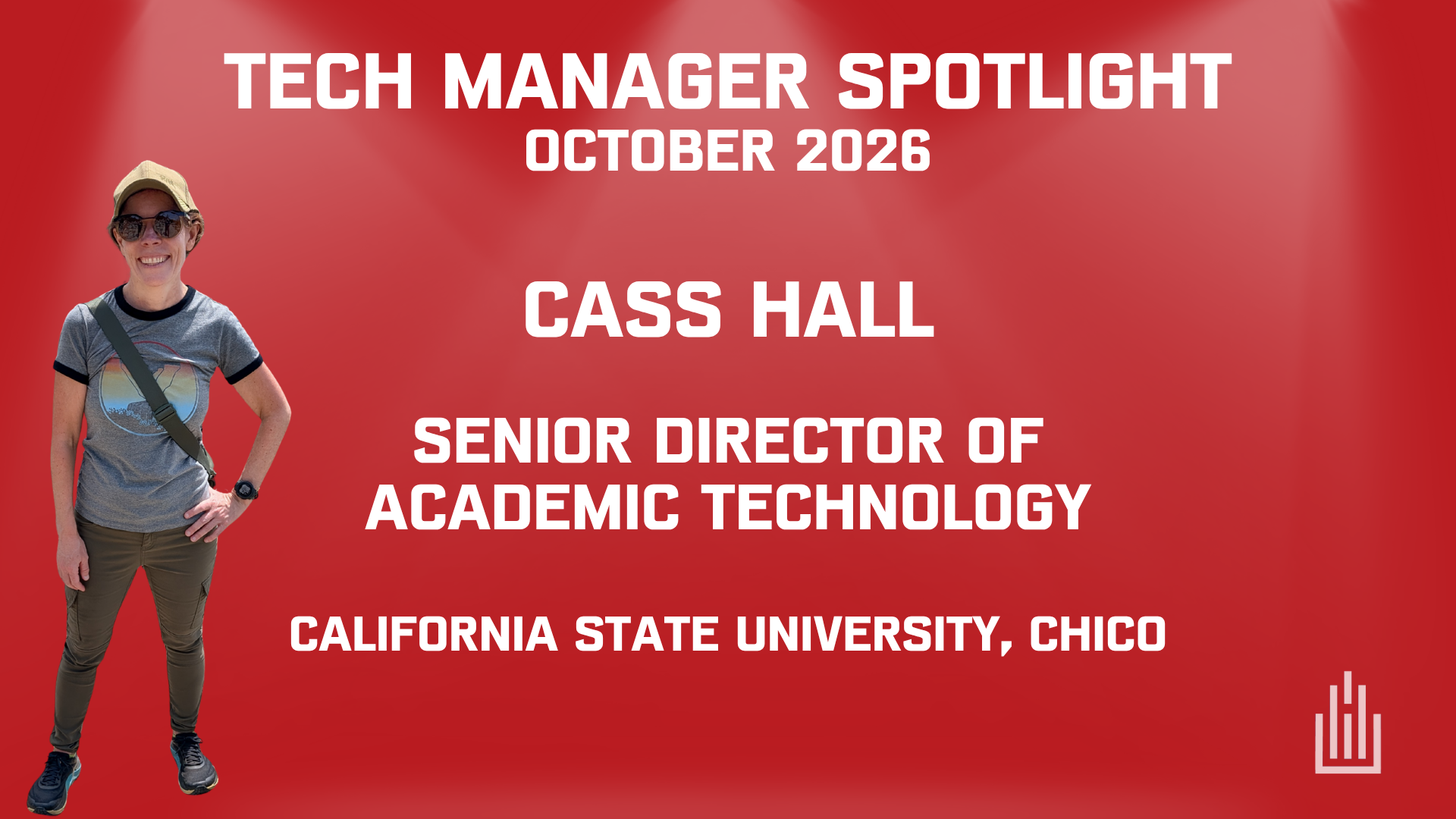

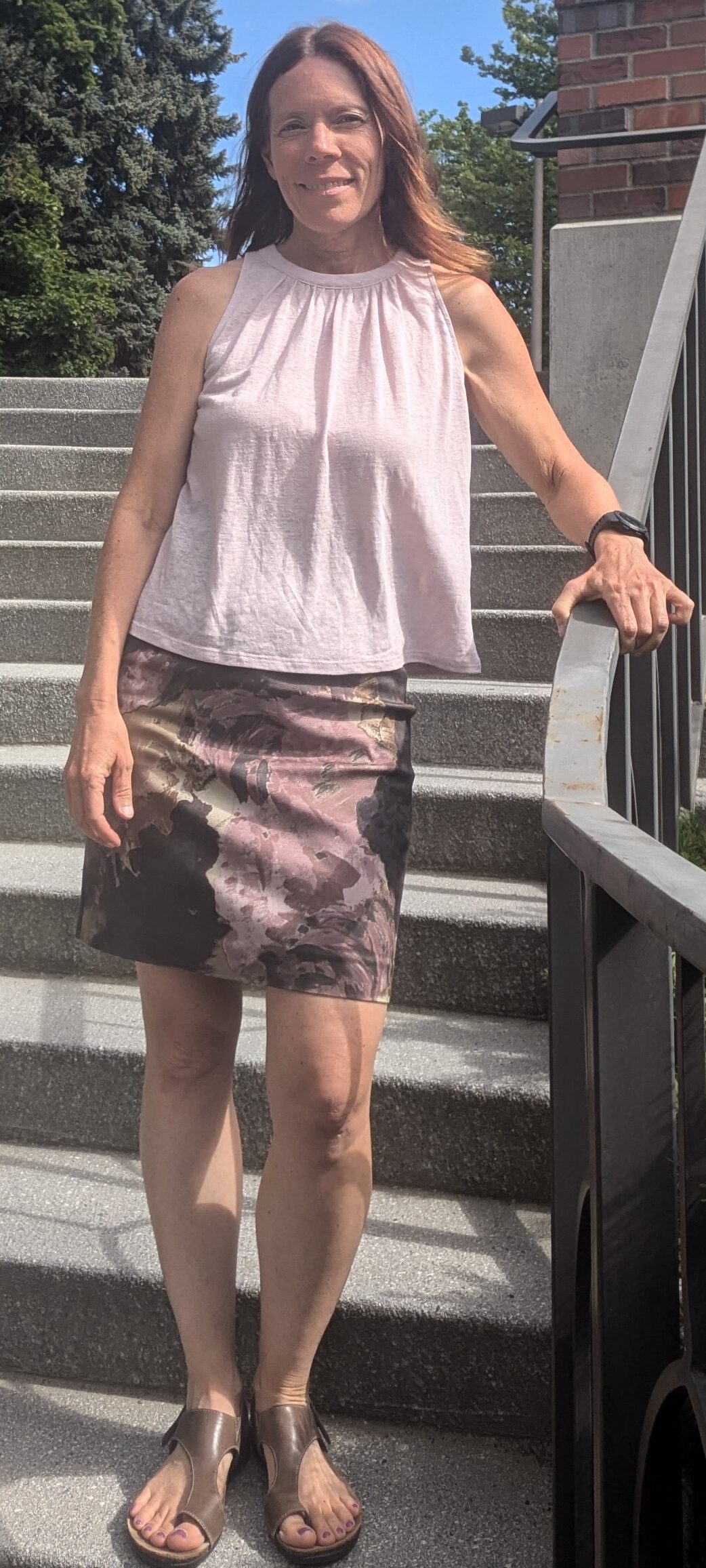
Cass Hall is the Senior Director of Academic Technology at California State University, Chico, where she serves on the Executive IT Leadership Team for the Division of IT, helping make decisions and drive strategy to improve coordination and clarity across the division. She also oversees all Academic Technology units, including:
- Classroom Technology Services: A well-rounded group of seven who design, install, maintain, and support about 300 classrooms and 100 meeting spaces.
- Learning Technology Services: A three-person team that administers Canvas and the university’s other academic technology tools while also managing the Cornerstone training platform.
- Technology & Learning Program: A team of five instructional designers who serve as front-line support for faculty needs related to academic technologies.
Beyond her work at Chico State, Cass also serves as President of the Educational Technology Collaborative (ETC), extending her leadership and commitment to collaboration into the broader higher ed technology community.
Within her own teams, Cass describes her leadership style as being about empowering others. She focuses on finding out what staff do best and what they enjoy doing, then supporting them, removing barriers, making sure their work gets recognized, and getting out of their way.
With three separate teams under Academic Technology, collaboration is also central to that approach. Cass coordinates projects and meetings so the teams know what others are working on and have the opportunity to benefit from knowledge sharing between them. For Cass, shared knowledge is much more powerful than individual knowledge when it comes to successfully supporting campus customers.
Have you always worked in AV? What did the path look like for you to get to where you are now?
I had a sort of false start in AV in West Virginia and Pennsylvania. I have a bachelor’s degree in broadcast journalism that included internships and work at multiple radio and television stations. Then I became a K-12 teacher, where I taught broadcast journalism in addition to language arts, theater, and gifted/talented programs. So, I was always tech-heavy in my teaching.
Then I earned a master’s degree in information technology and school library. With that, I became a K-12 library media specialist and picked up training and titles as a Technology Coach and Instructional Coach. I was hired into higher ed as a faculty member to teach learning technologies for the College of Education, Health and Human Sciences at the University of Idaho, but the dual role also included Technology Integration Specialist for the Doceo Center for Innovation + Learning.
With that, I traveled around the state of Idaho and helped teachers integrate technology into their classrooms. Once in higher ed, I took the opportunities that came my way and found myself serving in many different capacities before transitioning to IT. Other roles have included Director of the Doceo Center for Innovation + Learning, Manager of Classroom Technology, Director of Academic Technology, and now Senior Director of Academic Technology.
What is your morning routine?
I’m a creature of habit, and I require immense amounts of activity to keep me going. I wake up between 4:30 and 5 a.m., work out, and then get ready for work. I live 5 miles from campus, and I typically walk three days a week and bike two days. By the time I’m on campus, I’m fully ready to go. No caffeine needed.
What does an average weekday look like for you?
I typically work from 7:30 a.m. to 5 p.m. and stop somewhere for happy hour after work. It’s rare for me to stay at the office late, but I often need to do some work in the evening to keep up with large projects.
What does your busiest day look like? What are the challenges your role faces, and how do you overcome those?
My busiest days are when outages or other tech emergencies occur, and I need to arrange troubleshooting and communications. Such things never happen at a convenient time, so you just shift gears and accept that you’re here to help minimize the impact during these incidents.
The biggest challenge in this role is staying on top of all the trends in academic technology. Luckily, I have an amazing network of colleagues across the globe who do what I do, so I am able to reach out for support and hear how others are solving the same issues at other institutions. Being part of California State University also gives us many built-in networks to support each other across campuses.
Tell us about a project you are currently working on now?
I am the lead for a Fall Intentional AI event, a full-day campus convening that brings together students, faculty, and staff to share practical, purposeful, and responsible uses of AI. Through lightning talks, demonstrations, interactive sessions, and discussion, participants will explore approaches to learning, teaching, productivity, process improvement, AI literacy, ethics, equity, and the thoughtful use of AI tools.
They’ll also hear from a vendor panel, watch a live podcast, and join ongoing communities of practice. I enjoy overseeing projects and events that reach beyond academic technology and support the entire campus community.
What do you enjoy doing on weekends? How do you spend your time outside of work?
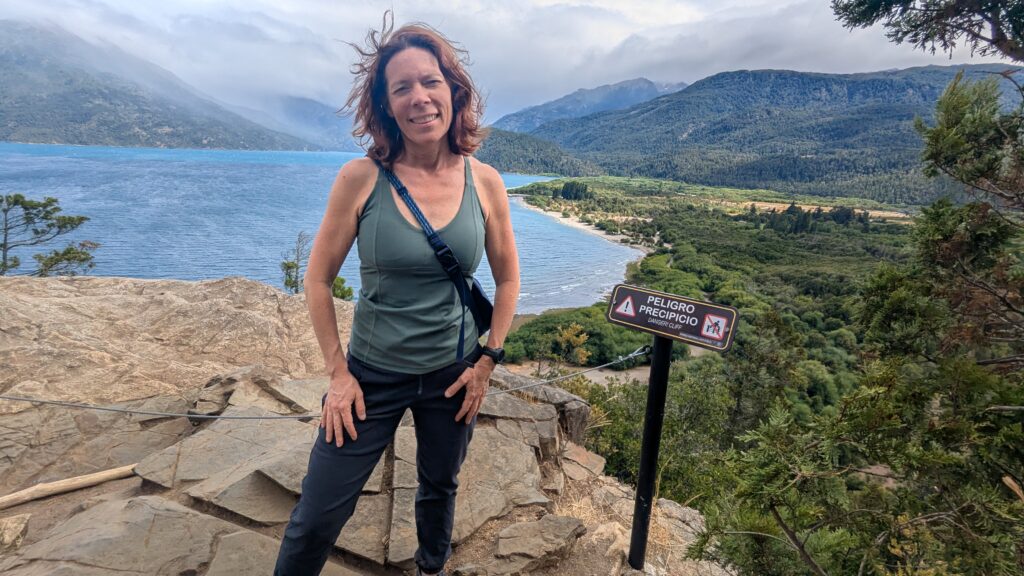
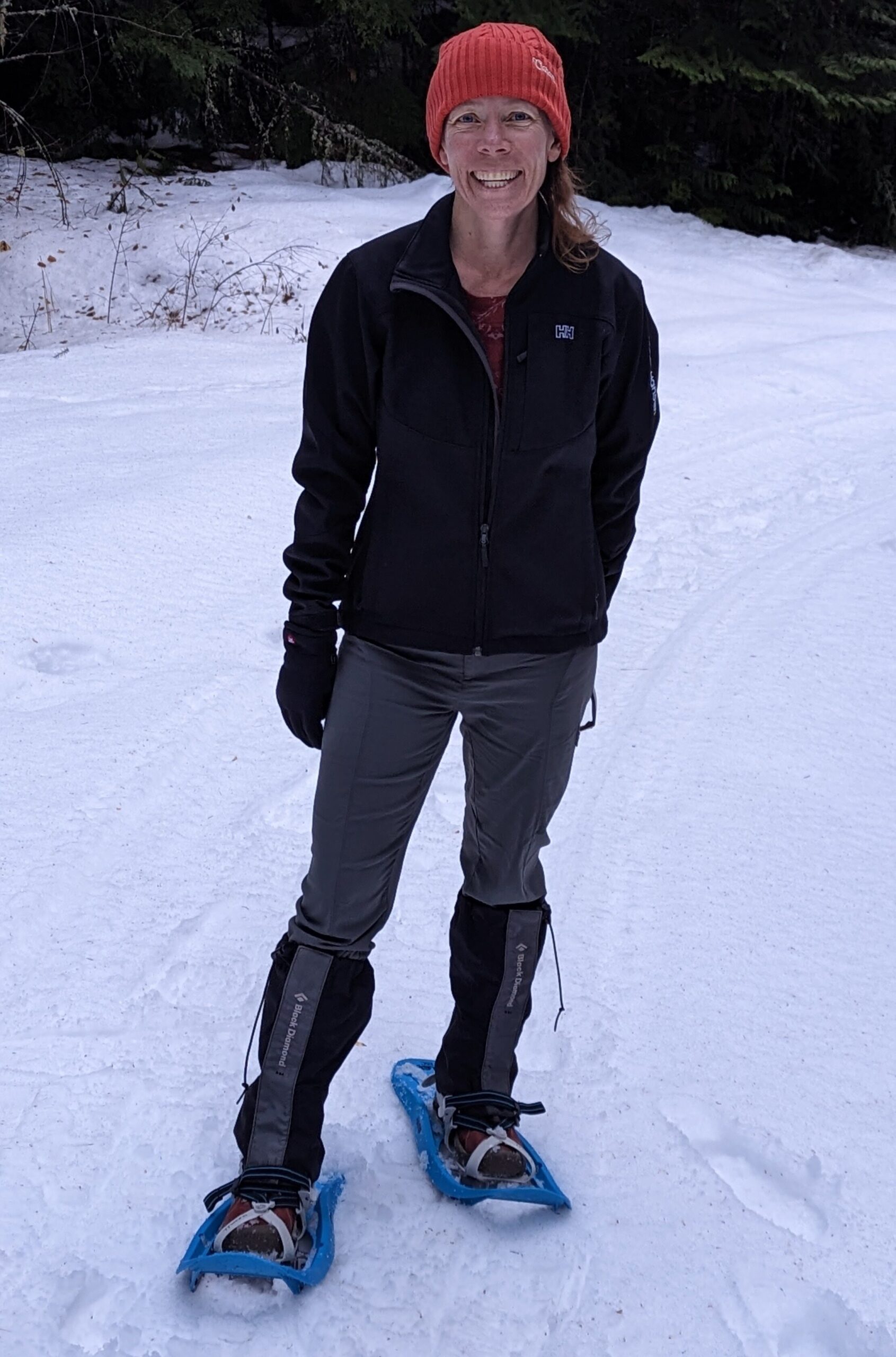
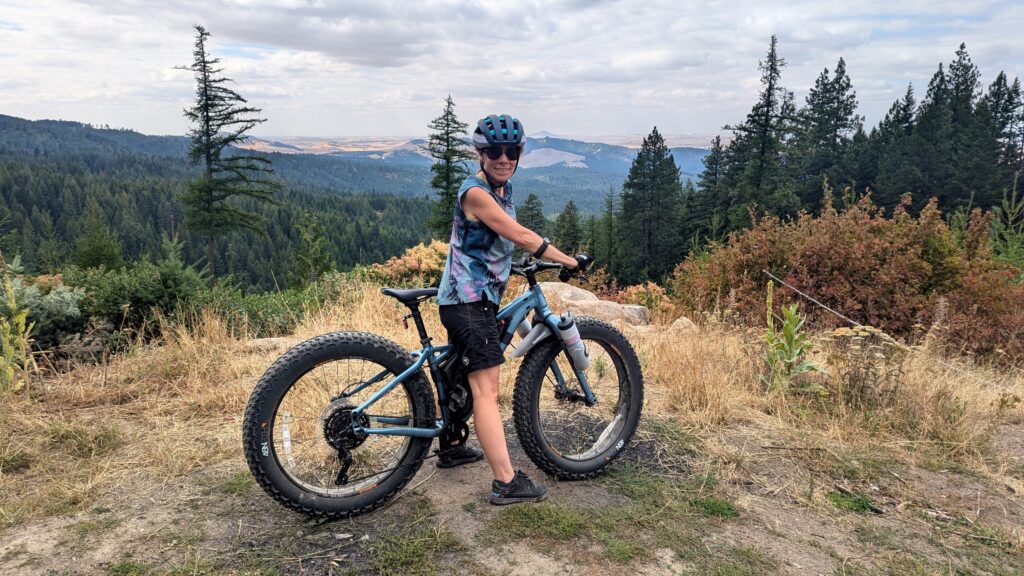
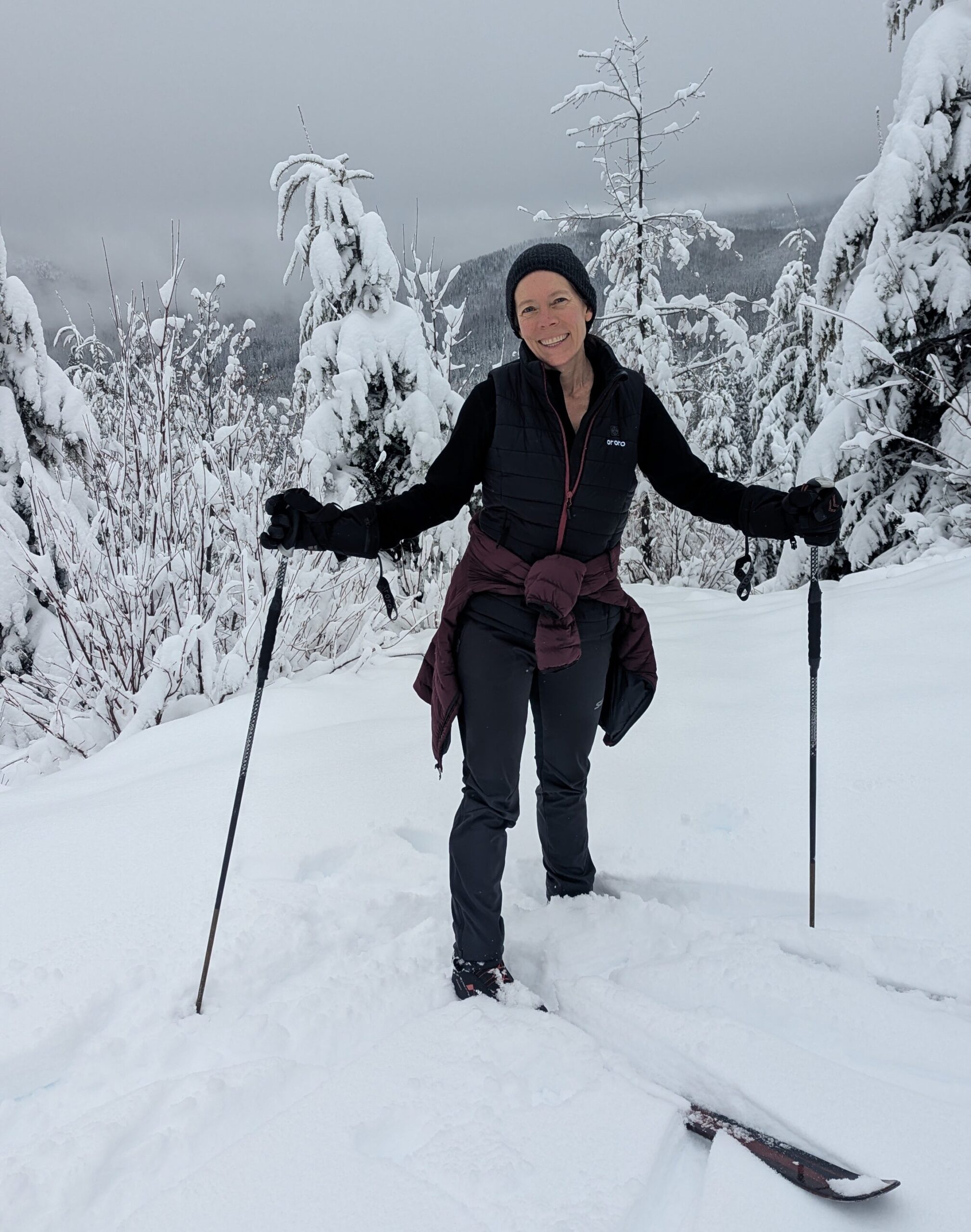
I enjoy the outdoors and remain extremely active. Hiking, biking, cross-country skiing, paddle boarding, and more are my joys in life, and experiencing those activities in new places just adds to the excitement. I take advantage of the opportunity to take a few weeks off about every 18 months to explore the outdoors in another country. I also enjoy visiting breweries while out on these adventures.
What’s your favorite way to unwind or recharge?
Putting on some miles by foot, bike, or both is my main way of recharging. That might seem counterproductive, but it keeps me going. I also love disconnecting from technology whenever I have the opportunity.
What inspired you to get involved with HETMA, AVIXA, and other higher-ed orgs?
I made a huge leap from K-12 to higher ed, and I needed a support network. I started attending different conferences and found my people. I did this out of necessity. Learning together is always more productive, and having colleagues to reach out to at any time for advice and support is priceless.
Where do you see your career trajectory going in the next five years? Where do you envision yourself?
I enjoy my current position and the opportunity to help guide the Division of IT as part of the Executive IT Leadership Team. I’ve only been in this position for just over a year, so I expect I’ll spend the next five years becoming more knowledgeable about the needs of this institution and its community. Undoubtedly, I’ll also continue to serve beyond my role at the institution and give back to the AV and IT communities that have supported my growth for more than a decade.
What is your life motto and how do you apply it to your daily routine?
Exploration is my preservation. In order to stay on top of things at work and in my personal life, I absolutely require a lot of outdoor activity. My physical, mental, and emotional health are all directly tied to how much time I am able to spend outdoors doing my favorite things: hiking, biking, cross-country skiing, paddle boarding, and more. Walking those five miles to work is a perfect way to get me in the right mindset for the day.
Comparing your career path over time, what are some of the moments, accomplishments, or projects that you’re most proud of?
I’m most proud of the fact that I was able to build the ladder as I climbed it because many of the positions I’ve had didn’t exist before me. I was able to mold each position into what it needed to be. Sometimes I did so with permission and other times without because I enjoy change and believe that it’s necessary and possible, no matter where you find yourself in an organization.
I’ve always taken the risk to find a solution or revisit how I was doing things, and why, so that the work didn’t get stale. I never shied away from doing things differently and shaking things up.
Moving across the country from Pennsylvania to Idaho to take a position based on grant funding and help establish a first-of-its-kind center for tech innovation was a dramatic choice, but those 12 years in Idaho were a wild ride that opened so many doors for me. Who knew I’d end up in Information Technology? I took that leap after eight years as faculty and later took the opportunity for another major move to California when my heart told me it was time to leave Idaho.
How do you see the role of AV evolving in higher education?
Embracing AI and the power of programming to make data-informed decisions about AV is already here, but I believe everyone in the industry will move toward shared services to learn from one another and benefit from open-source tools.
What’s a lesson you’ve learned the hard way in your career?
“Choose your battles” is a lesson I feel everyone learns at some point. For me, it came early in my K-12 teaching career. Some things just aren’t worth your time or energy, so knowing when to let them go is really important to your success.
What advice would you give to someone just starting out in AV or higher ed tech?
“Lead from where you are” is what I would recommend. Leaders are everywhere within our teams, and not having a leadership title doesn’t mean that you aren’t a leader. You have the ability to make a real difference, so own that. Don’t be afraid to be a change agent and share your ideas.
What’s something people often misunderstand about your work?
Honestly, most people have no idea what I do. Titles reveal very little about our actual work. Many people assume that I must have a lot of general tech knowledge because I work in IT, but my expertise is very much within the realm of academic technology. I can speak to other areas and support initiatives beyond academic technology, but it means I need to do my homework to fill in the blanks as needed.