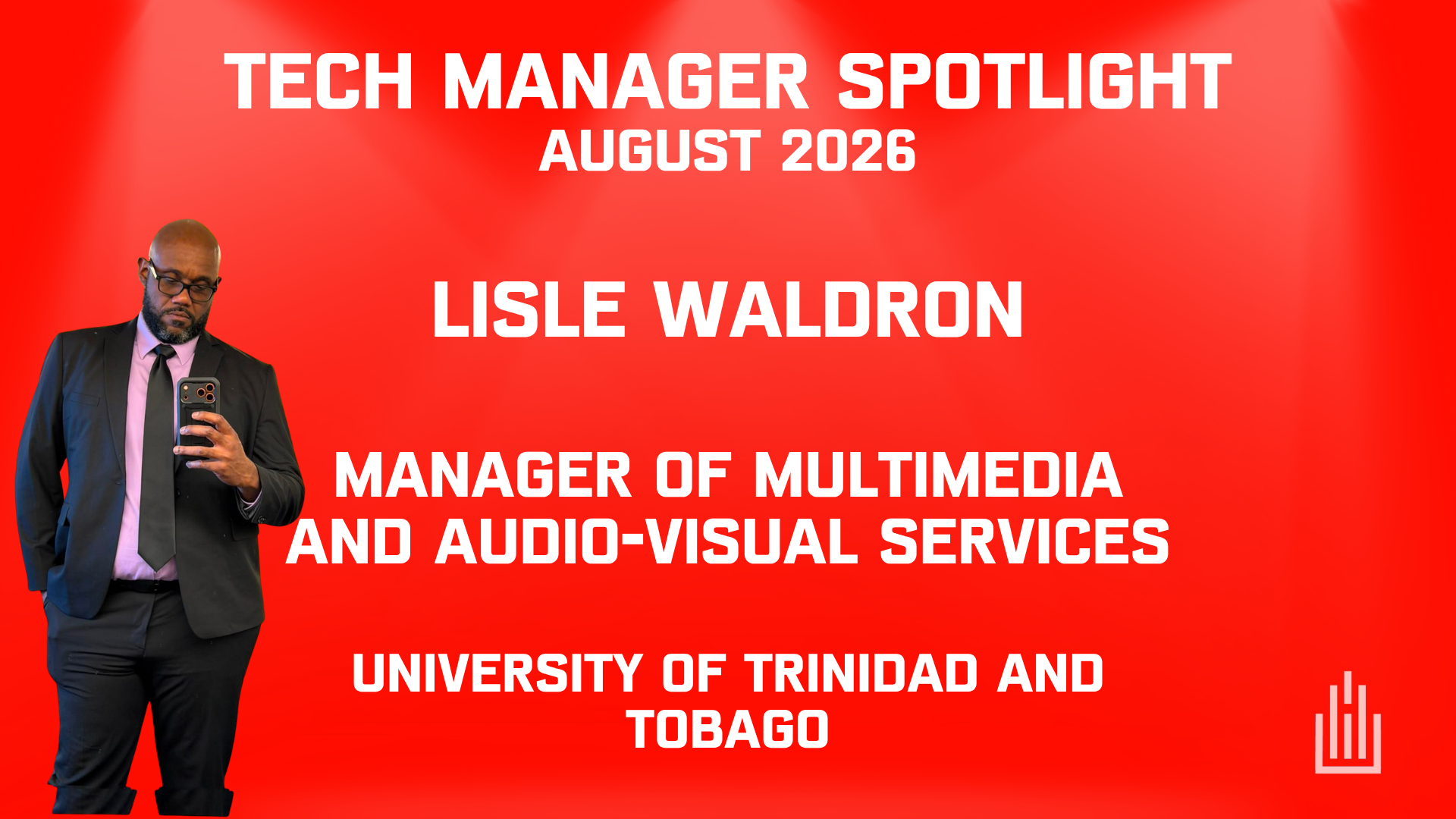

Lisle Waldron serves as the Manager of Multimedia and Audio-Visual Services at the University of Trinidad and Tobago (UTT), where he helps lead the technology environments that support teaching, learning, and institutional operations. He also serves as acting head of the Centre for Teaching, Learning, and Instructional Support. In addition, he is pursuing a Ph.D. in Education focused on the governance and operational sustainability of technology-enabled teaching spaces in Caribbean higher education. Beyond UTT, Lisle serves as Scholarship Chair for HETMA.
As a multi-campus institution serving students across the two islands of Trinidad and Tobago, UTT depends on technology to support learning, collaboration, and institutional operations across a geographically distributed environment. Within that setting, Lisle’s work sits at the intersection of technology, learning, service, and strategy, helping ensure that technology investments support both the university’s mission and its long-term sustainability.
Known for a leadership style that blends transformational, democratic, servant, and delegative approaches, Lisle believes people should be heard, trusted with responsibility, and given room to learn through both success and failure. His philosophy of putting the right people in the right spaces, sharing strategic thinking, and creating opportunities for growth has helped shape both his team and his approach to higher ed technology leadership.
For this edition of Tech Manager Spotlight, Lisle shares his unconventional path into higher ed AV, his thoughts on leadership and sustainability, and why he believes higher education technology managers play a critical role in the future of colleges and universities.
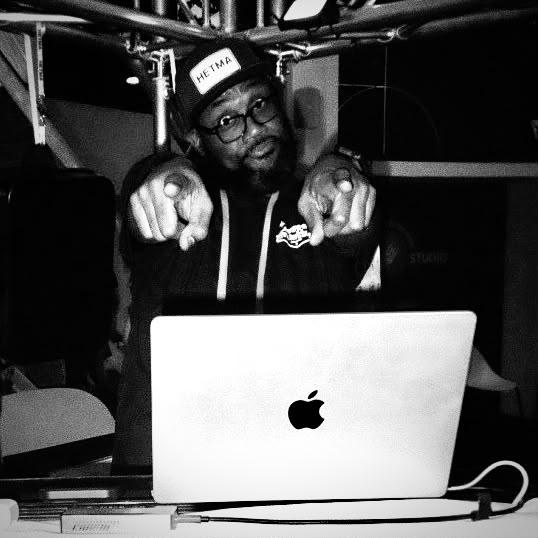
Have you always worked in AV? What did the path look like for you to get to where you are now?
Not at all. When I was seven, if you asked me what I wanted to be, the answer was pilot through and through. In 1998, 1999, and 2000, I was post-high-school, pre-college, answering phones, creating filing systems, and doing clerical work at The University of the West Indies. I am still exceptionally proud that the filing system I designed there was reportedly in use about two decades later.
Near my office was the Chief Electronic Technician, Chris. He had a staff of zero, so in practice he was doing much of what we would now recognise as both IT and AV support. I started helping because I was tall, big, and could lift JBL EON 15s and those 27-inch Sharp CRT televisions; the “big back” TVs as the internet calls them now. That led to helping with the Mac lab, the Apple Quadras and PowerPCs, the AppleTalk network over PhoneNet/RJ11, and just about everything except the mysterious UNIX server running Pine. Eventually my boss said, “Lisle, you’re spending more time helping Chris than me, so maybe a transfer would make sense.”
That became my first career move: Clerical Assistant I to Laboratory Assistant in the Mac lab. The real secret sauce in that job description was “perform all other related duties.” Anyone in higher-ed AV knows how much classroom AV assistance can fit under “all other related duties.” The practice came first. I later backfilled my formal education in IT because the work had given me questions and curiosities that I wanted to understand more deeply. The rest, as they say, is history. I still intend to get my pilot’s licence one day, find myself a Cessna 172, and fly around the southern Caribbean. Until then, I am a higher-education technology manager, and I am here to stay.
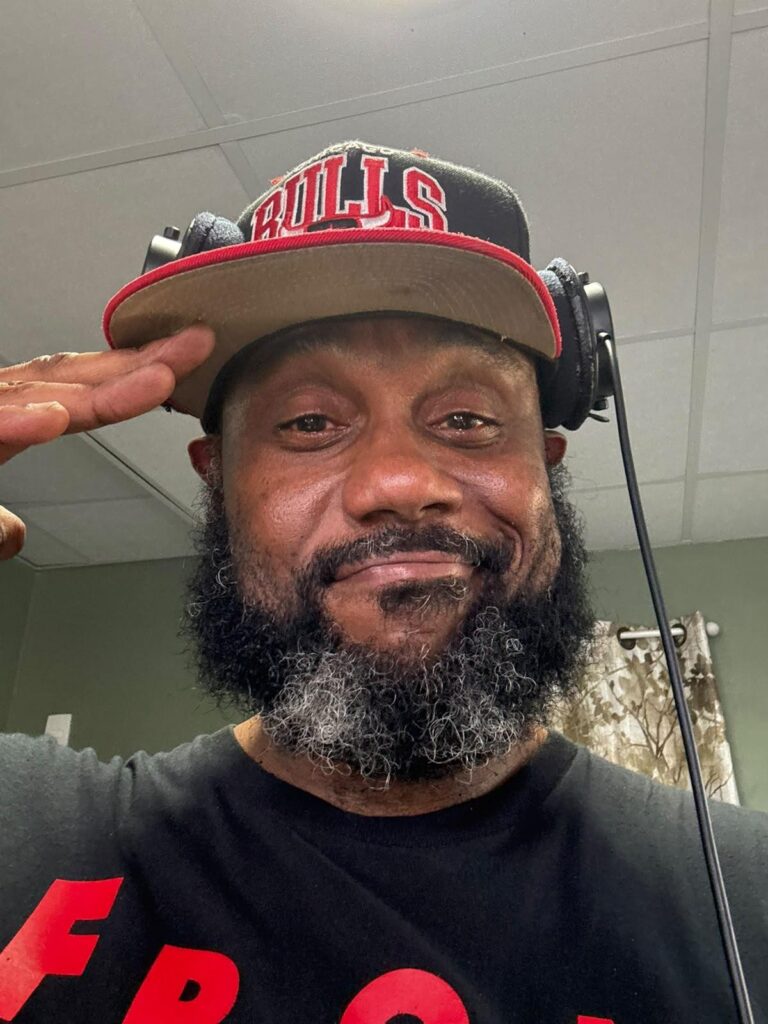
What is your morning routine?
I map today, tomorrow, the week, and “the broad,” then test that thinking with my second-in-command. Staff and team matters are usually the primary focus. We are only as good as the people supporting us, so development, competence, process deficiencies, fairness, and sustainability have to be considered alongside outputs.
What does an average weekday look like for you?
My day moves between planning, operations, staff matters, institutional meetings, and fires, then at the end of the UTT day, academic writing and HETMA.
What does your busiest day look like? What are the challenges your role faces, and how do you overcome those?
The busiest days are when “the broad” suddenly becomes “the now” while the planned work still has to happen. With a very small team and an even smaller budget, survival depends on resisting the temptation to solve every request through heroics.
Tell us about a project you are currently working on now?
I do not think there is one project that underpins my work right now, because the individual projects are treatments for symptoms. The deeper project is changing the operating environment itself. Higher-ed technology managers are too often left off the table, the plan, or the discussion and then brought in later as an add-on. I have been chasing the “why” behind that for years.
For us, it comes back to one principle: do the right thing for the right reason. Operationally, that means the right people in the right places, rightly resourced to do the right work. That can sound cliché until you use it as a test for every active project: what is the right thing in this particular case, and are we building something sustainable or just producing another short-term output that we will rinse, wash, and repeat?
Since 1 May, that philosophy has been tested in several major pieces of work at once: stewarding an LMS migration that came with effectively no handover aka build the plane while it flies but do not touch the plane, integrating a new team into a new leadership posture, redesigning work and culture, continuing organisational restructuring, and supporting the Office of the Executive Chairman where our capabilities can help advance the wider institutional vision. I believe the restructuring and people work may be the most consequential of these, because the university is only as good as its people if its people are positioned and supported to be good.
What do you enjoy doing on weekends? How do you spend your time outside of work?
I DJ for people I care about, love math and driving, discovered I was autistic at 40, and insist 2011’s MW3 is the GOAT.
To recharge, I try to be still. With too many inputs, being alone with my thoughts is the reset.
What inspired you to get involved with HETMA, AVIXA, and other higher-ed orgs?
I sought answers I could not find in isolation as I literally live on an island. Professional communities taught me that the answer is us, not I: we build each other’s knowledge.
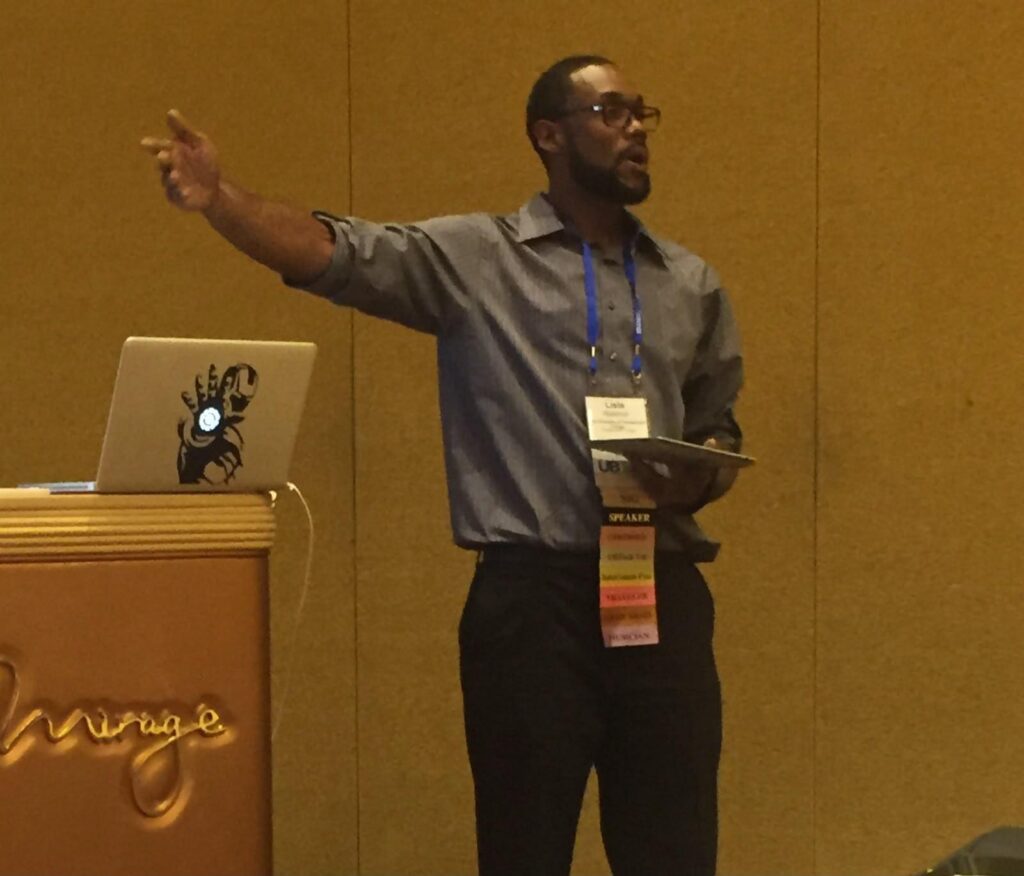
Where do you see your career trajectory going in the next five years? Where do you envision yourself?
I want earned influence globally that I can bring home to serve Trinidad and Tobago and Caribbean higher education: service for the world, to serve my world.
What is your life motto and how do you apply it to your daily routine?
At this point in my life, my motto is, “Do the right thing for the right reason.” A broken clock can be right twice a day, but it cannot reliably repeat that result. The reason and process behind an outcome are what make success repeatable and failure useful for learning and improvement. That principle shapes how I approach people, systems, projects, and decisions.
Comparing your career path over time, what are some of the moments, accomplishments, or projects that you’re most proud of?
I am not particularly motivated by prestige. What I am proudest of is elevating my team into positions and spaces where they can be heard, contribute, develop, and ultimately be elevated themselves. I am especially proud of making succession planning and staff development part of normal operations rather than an emergency activity.
The System Analyst (Education Technologies) is my second-in-command and is involved in our strategic planning and work across the teams, allowing for a seamless handover when I am away. He has acted as Manager of Multimedia and Audio-Visual Services because succession planning begins long before an acting assignment is needed. More broadly, the right staff member is included in the right meeting or committee space, while continuous training and certification strengthen the team. Succession planning is not a separate activity; it is built into how I assign work and make decisions.
How do you see the role of AV evolving in higher education?
I do not think “AV” is still a large enough frame for what higher-education technology managers do. I increasingly think in terms of digital spaces: the physical and digital environments through which the university teaches, learns, collaborates, researches, and operates. I am also cautious about pretending we can see ten years into this field. Three to five years is already speculative; for real planning, I am usually thinking closer to eighteen months to three years in this age of AI.
The larger conversation, in my view, is the sustainability of the higher-education institution itself. I do not mean sustainability only in the environmental sense. I mean the ability to deliver the business of the university, teaching, learning, research, and institutional operations, reliably and affordably over time. We have lived through periods when AV systems could become feasts of technological wonder: impressive solutions sometimes looking for a teaching framework or champion. The next phase has to be much more disciplined. We need the right technology to support the moving target of teaching and learning, in the most cost-effective manner possible, and with the broadest sensible campus-wide application.
My doctoral work is pushing this thinking further. Technology-enabled teaching spaces are now core academic infrastructure, and their reliability can expose whether strategy, governance, workforce capacity, lifecycle planning, and resourcing are actually aligned. If the institution depends on heroic troubleshooting and informal workarounds to keep teaching going, that may look like resilience at the surface while hiding a deeper sustainability problem. AV and technology management therefore have to be intertwined with teaching and learning and become a central part of institutional technology governance.
I think the change also has to start with us. We need to change how we present AV and technology management to the institution, how we design systems (from technology-oriented to learning-driven), and how we see ourselves in higher education.

What’s a lesson you’ve learned the hard way in your career?
That the process is more important than the outcome. An outcome can be right by accident; a broken clock proves that. A sound process gives you something repeatable when things go well and something diagnosable when they do not.
If I could say something to the Clerical Assistant I carrying those 27-inch CRTs in 1999, it would be: You’ll be okay. You will even be proud of yourself. You may not always get it right, but you sure as hell will do a great job.
What advice would you give to someone just starting out in AV or higher ed tech?
Something will be invented today that neither of us knows. We will get tomorrow done together, drawing on my experience wherever we can while you build your own professional database.
What’s something people often misunderstand about your work?
The importance of the higher-ed technology manager to the university. Technology is now a central enabler of almost every business and academic function, and technology decisions can materially strengthen or weaken the organisation. Yet technology managers can still be treated as peripheral support rather than participants in institutional direction.
I think we have to own our importance before we can expect anyone else to recognise it. We need to demonstrate our value, understand the business of higher education, and show through good governance, sustainable systems, and service to teaching and learning, that our contribution is not an add-on. We have to make that value so clear that administration and the rest of the institution cannot try to deny it.
Connect with Lisle on LinkedIn.