
Recently, I have been watching the Apple TV series Silo. While this piece isn’t an analysis of the show itself, its unique premise sparked a thought that is highly relevant to our industry. For those who haven’t seen it, there is no need to worry; I won’t be sharing any plot-ruining spoilers.
The premise of Silo involves 10,000 people living in a massive, self-contained underground bunker. Like any community, it features a distinct hierarchy, as well as factions that believe their specific department is the most vital to survival. The governance of this community is structured exactly as you would expect, featuring a sheriff, a mayor, and a judge who oversees a judicial team akin to a federal government. Alongside leadership, the operational departments, such as supplies, engineering, farming, and IT, each report to a departmental head. Given this layout, one would naturally assume that the judge holds the ultimate authority.
In reality, however, the most powerful individual in the entire ecosystem is the head of IT. While that dynamic might seem unexpected to viewers, and likely feels just as jarring to the citizens within the story, it underscores a profound truth about our world.
This narrative choice beautifully illustrates the absolute necessity of IT in contemporary society. Because AV and IT have fully converged, audiovisual systems are explicitly included in this definition. If you pause to audit your daily routine, consider how an absolute absence of technology would impact your workflow. This isn’t to say humanity cannot survive without digital tools, but rather that technology has become so deeply ingrained in our lives that nearly every modern task relies on it. From the moment we wake up until we go to sleep, we interact with technology continuously through our phones, vehicles, and workspaces.
The Afterthought Dilemma
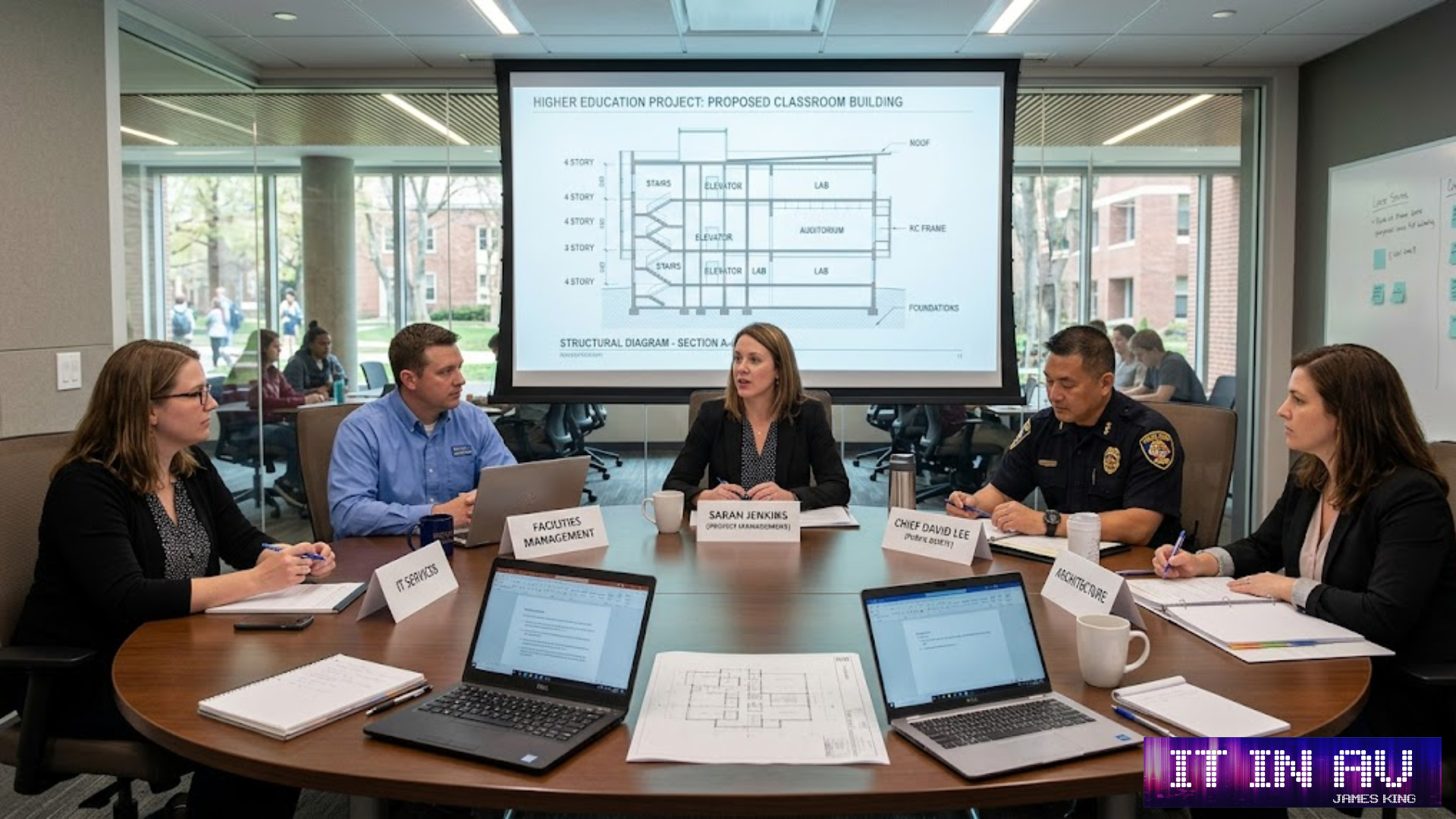
Given that technology is ubiquitous and foundational to modern operations, why does IT remain chronically excluded from critical project discussions? It is a common frustration voiced across our professional community, and one I witness regularly in my own workplace: teams will meticulously plan an entire initiative, and then, if we are lucky, involve IT at the absolute last minute.
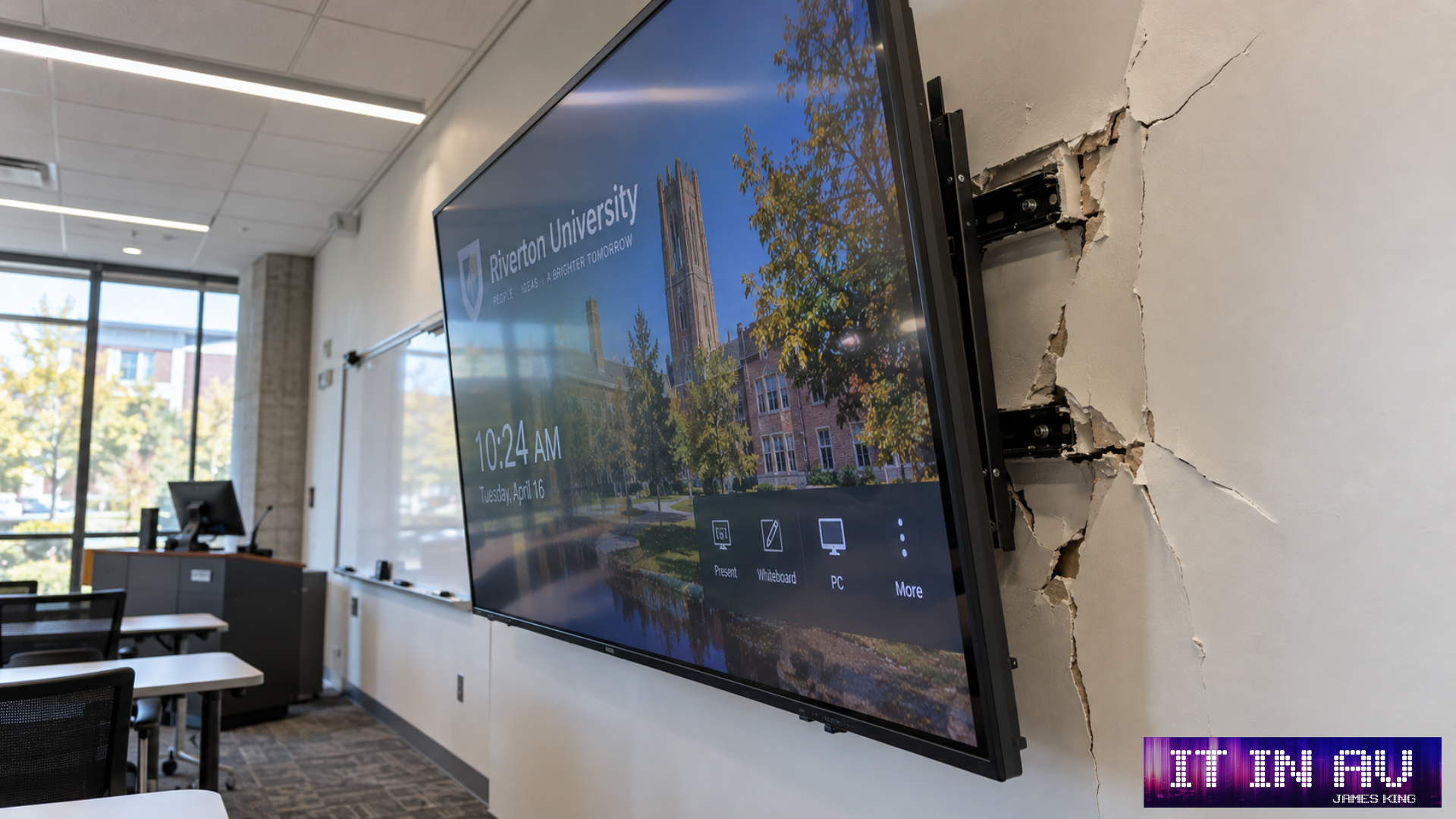
Most IT professionals have experienced a scenario where a new hardware widget suddenly appears on campus with an immediate demand that it be connected to the corporate network or the local AV infrastructure. Because we were omitted from the procurement process, the deployment inevitably hits a snag due to compatibility or security constraints, which unfairly frames IT as the bottleneck. When we begin asking fundamental questions, the friction becomes apparent.
These inquiries are frequently met with blank stares or the classic response, “Why does that matter? Just plug it in.” If our department is so vital to every operational layer, why are we continually treated as an afterthought? There are a few core reasons for this paradox:
- We Deliver Under Pressure: IT is traditionally the department known for saving the day. Even when brought into a project late, we manage to work within compressed timelines, decipher unfamiliar equipment, and somehow deliver a functional solution for the end-user. While we must maintain this standard of reliability so our customers know they can depend on us, this efficiency can inadvertently mask the chaos caused by poor planning.
- We Have Become Invisible: In the technology sector, invisibility is often the hallmark of success. When our infrastructure stops being a hindrance to the user, the technology seamlessly fades into the background and “just works.” Because our users never have to think about the underlying mechanics, they naturally fail to understand the sheer effort and complexity required to maintain that stability.
- The Sales Disconnect: While this does not apply to every vendor, certain sales professionals do not make our jobs easy. In an effort to close a deal, some representatives will tell an end-user exactly what they want to hear without providing critical technical nuance. For example, if a user asks whether a platform is HIPAA-compliant, a salesperson might readily say yes, omitting the fact that compliance is restricted to a premium tier or requires highly specific, manual configurations. Other vendors assure clients that a device is entirely “plug-and-play,” completely disregarding the strict authentication and security protocols enforced on an enterprise-grade corporate network.
Strategic Solutions for IT Leadership
To shift this paradigm and ensure IT is engaged at the inception of organizational changes, we must implement several proactive strategies:
- Maintain Excellence, But Educate Your Users: We should absolutely continue delivering high-quality results, but we must pair that execution with transparency. Take the time to actively educate stakeholders on what it actually takes to achieve those results. This shouldn’t be done in a complaining or boastful manner, but rather as an educational partnership. Pull back the curtain to show project managers the backend tasks and dependencies required to integrate a new asset safely.
- Prioritize Personal Visibility: While our corporate technology should remain seamlessly invisible, our technical personnel must remain highly visible. It is easy to fall into the trap of staying in the office, managing systems entirely from behind the scenes. To counteract this, walk the floors, attend classes, and actively embed yourself in the broader campus environment. If you catch wind of an upcoming initiative, proactively invite yourself to the planning session; it is far better to be told your department isn’t needed yet than to discover down the line that you missed a critical architecture window. Consistently ask other departments how IT can help streamline their upcoming projects. Remember: out of sight is out of mind.
- Forge Proactive Vendor Partnerships: We must actively bridge the gap with sales teams and vendor networks. By establishing strong relationships with trusted vendors, we can request that they proactively include an IT representative in client consultations from the very first meeting, even if technical validation seems premature. Virtually every IT leader shares the same sentiment: “I would much rather sit in a room and discover I am not needed than be left out of the conversation and later be forced to support an unmanageable system”. Vendors often argue that IT departments rarely answer cold calls, which is frequently true for good operational reasons. However, if a vendor explicitly asks the client to bring IT to the table and the technical team fails to respond, the responsibility properly shifts to us.
Will IT ever become the literal governing authority of our organizations? No, and that shouldn’t be the goal. However, we are undeniably a vital foundational layer of modern business, and securing an early seat at the planning table is essential to the security and success of the entire enterprise.