

Picture this: you are sitting in a coffee shop with a friend. You receive a text from your kid saying they forgot their key. You open your phone, launch the smart lock app, and unlock the door from 20 miles away. This used to be something we only imagined in sci-fi, but scenarios like this happen every day.
Now, let’s look at another scenario with a higher education twist. You are attending a trade show while your team is finishing a new classroom installation. The classroom needs to be commissioned before the first day of classes. Your team contacts you, and you run an AI commissioning agent. The agent powers on the system and completes a full commissioning of the classroom, making it ready for the first day of classes while you are in a completely different state.
These two scenarios demonstrate how technology can streamline our lives. In fact, that is the foundational purpose of technology: to make our lives easier. This article is not about how to leverage new technology, nor is it about evaluating security risks or judging whether a specific tool is right or wrong. Instead, it poses a critical question: What happens when the technology we count on fails? Are we stopped dead in our tracks, or can we pivot and keep moving forward?
Let’s re-examine the higher education scenario. Suppose you open your laptop and connect to the trade show Wi-Fi, only to find it running extremely slowly, preventing you from connecting to the system and allowing the AI agent to do its job. You then pull out your phone to use cellular service, either directly or as a hotspot, only to discover there is no signal on the trade show floor. You hunt for a spot with reception but come up empty-handed. Eventually, you manage to get a message through to your team explaining that the AI agent is unavailable, so they will need to commission the room manually. Unfortunately, your team has never commissioned a room manually before. Do they know what to look for? Do you have documentation that clearly outlines the manual commissioning process?
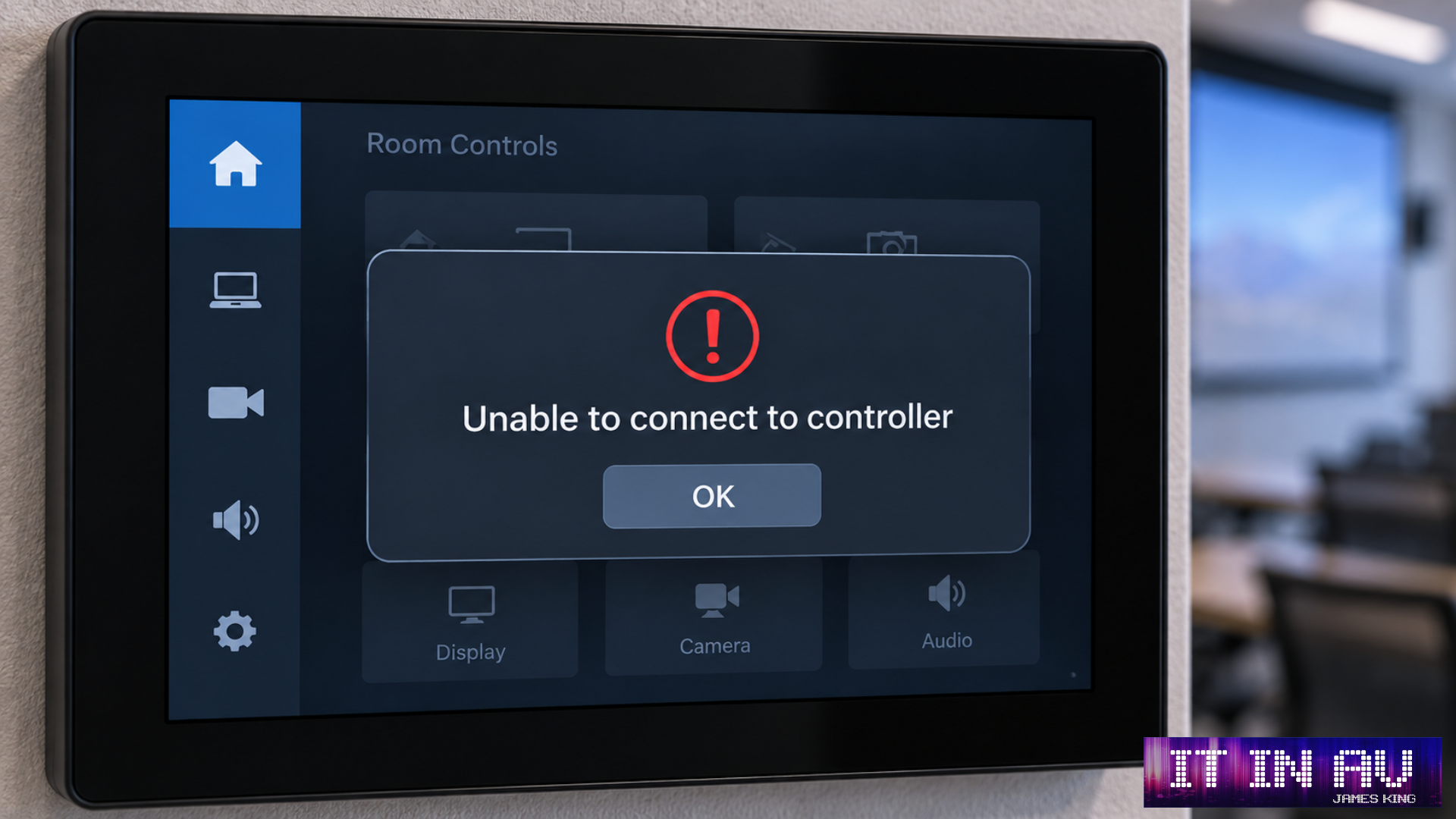
Let’s face it: technology fails. As mentioned above, technology exists to make our lives easier, but we ultimately have jobs because technology is fallible. When systems fail, that is precisely where we, as tech managers, shine: we step in, troubleshoot the issue, and find a solution. Unfortunately, we have become so reliant on automated systems that when they break, many of us forget the fundamentals.
I have lost count of how many times I have seen someone pick up a remote, press the power button, and get no response. First comes the confused look, followed by repeatedly mashing the power button. Next, they smack the back of the remote, hit the button again, and throw their hands up, exclaiming, “This junk never works!” They submit a support ticket. A technician arrives, replaces the dead batteries, and instantly the display turns on with a single press.
To eliminate that single point of failure, we might install a programmed control system. The system is hardwired and coded to power on the display, meaning we no longer have to worry about dead batteries. But then another ticket comes in reporting that the system won’t turn on. The control system has locked up, and a tech needs to reboot it. Meanwhile, a meeting that should have started 10 minutes ago is delayed while everyone waits for the processor to cycle. In neither situation does anyone think to simply press the manual power button on the back of the display.
Granted, we do not want users reaching behind displays to hit power buttons every day, but if it gets a presentation or class up and running immediately, it is a practical workaround. We can always address the underlying technical issue once the room is clear.
As we move toward cloud-based management, full AI automation, and increasingly sophisticated tools, we must not lose the ability to function when technology inevitably fails. Technology should simplify our work, but a technical breakdown cannot mean that campus operations come to a halt. Classes still need to be taught, education still needs to be supported, and operations must press on.
Take a close look at your own systems and ask yourself: What would I do if key technology failed mid-class? Would teaching grind to a halt, or could your team keep things running with a reliable temporary solution?