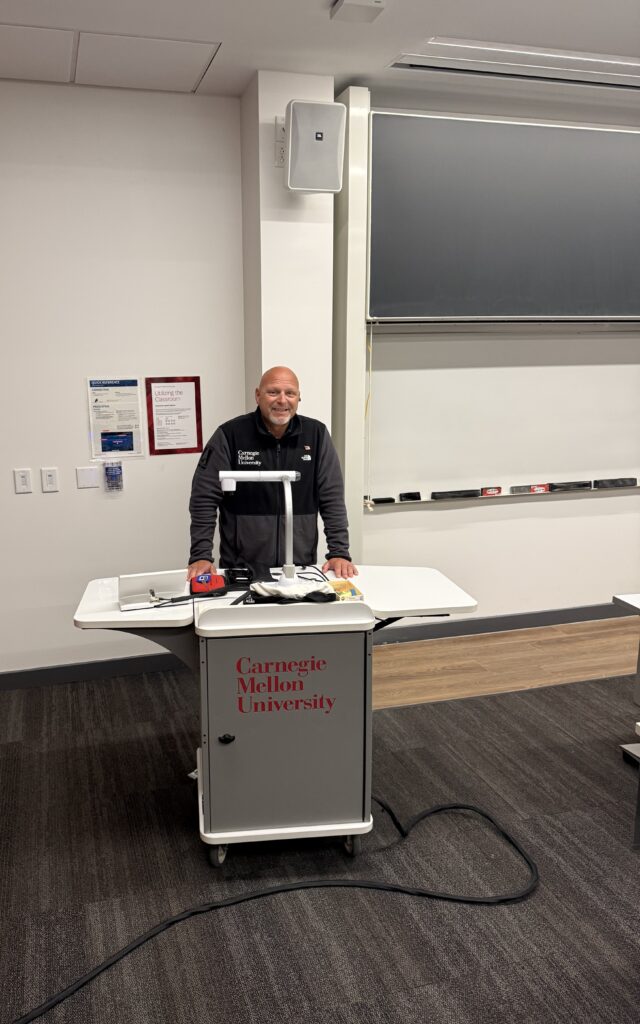
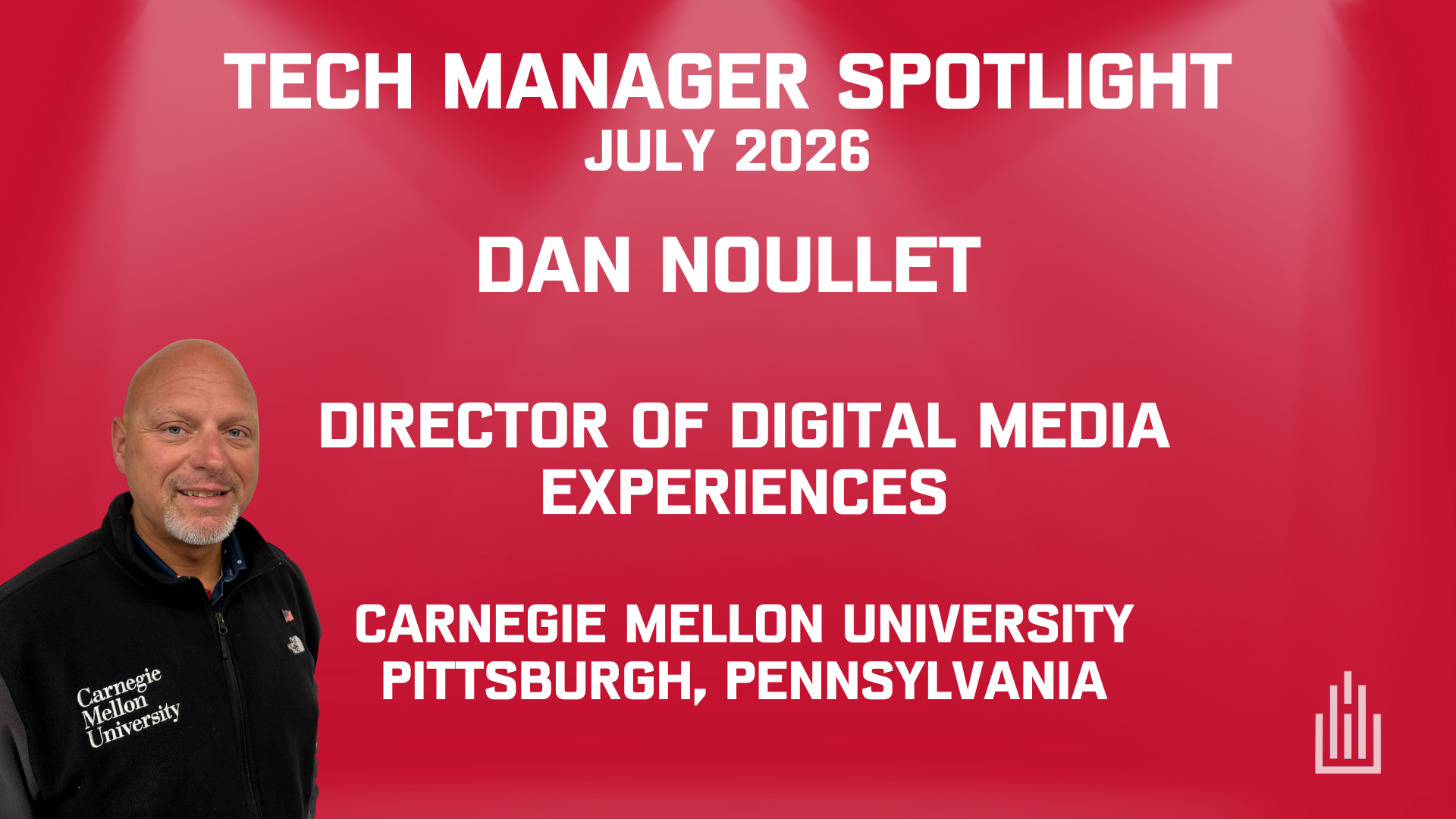

Dan Noullet is the Director of Digital Media Experiences at Carnegie Mellon University and a director-level AV/IT leader with more than 25 years of experience building, scaling, and sustaining enterprise audiovisual and digital media ecosystems within higher education. His leadership focus is on standards-based AV systems, lifecycle design, and service models that deliver consistent, high-quality experiences while remaining operationally efficient and financially sustainable.
In 2013, Dan founded and led a pilot AV service model to provide school-level support equivalent to central IT services. Despite early skepticism, the model scaled over 10 years from 13 supported spaces to more than 350 campus-wide environments. The initiative brought non-central spaces under shared AV standards for design, programming, and deployment, improving reliability, simplifying support, and driving long-term cost efficiencies.
Today, Dan partners closely with CIO leadership, IT, Facilities, academic stakeholders, integrators, and manufacturers to align systems, workflows, and expectations across the full AV lifecycle. He leads and mentors managers and technical professionals, establishes service metrics and multi-year roadmaps, and manages multi-million-dollar sustain and operating budgets supporting teaching and learning environments.
Dan is especially interested in work centered on scalable, standards-based AV ecosystems, client experience and long-term relationship value, AV lifecycle management and operational excellence, cross-functional collaboration across technical and business teams, and leadership development and mentorship.
Collaboration is also central to how Dan leads. He says collaboration is a must because the groups support each other in so many ways, and the teams are always working together. Whether it is daily operations or thinking about the next best thing they can do, he makes sure staff have time to pitch in.
That collaborative approach is shaping one of the projects Dan and his leadership team are currently working on: moving from separate support models for Registrar classrooms, departmental spaces, and event services into a zone-based support model across the university. The goal is for staff to better understand the spaces in their zones, handle break/fix needs more effectively, and build stronger relationships with the users they support.
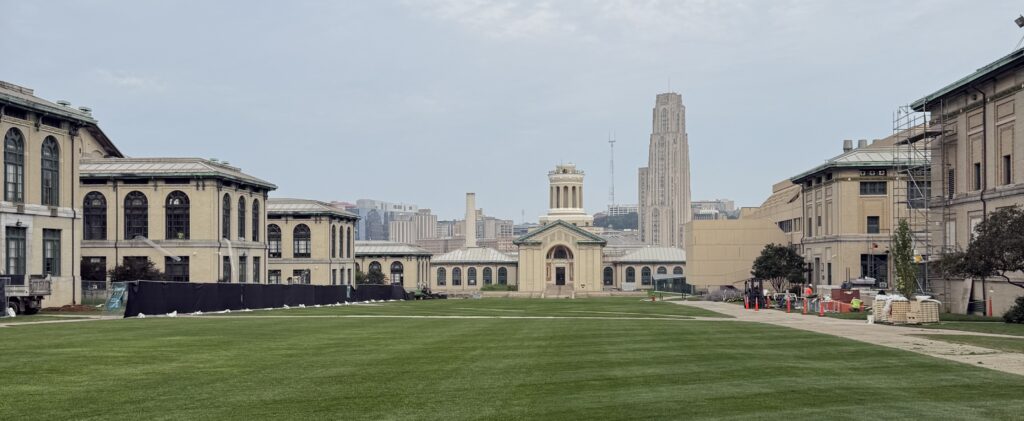
Have you always worked in AV? What did the path look like for you to get to where you are now?
Have I always worked in AV? I have always been in the technical field of IT. After I graduated from tech school, I worked with a company that handled network backbones, telephone systems, and satellite headends for cable TV. Then I moved to be with my now-wife, and that is where it all started.
At the time, I was looking to move across the state to be with her, so I reached out to my family in western Pennsylvania to see if anyone knew of any job opportunities. My cousin, who works at Carnegie Mellon University, said, “Send me your resume.” That was January 1999, and on March 1, 1999, I started as a Media Technology Specialist.
This is where my AV journey really began. At that point, the only thing I knew was car stereos, but I was always eager to learn. For the next few years, I learned and stepped up where I saw gaps. During that time, a few of us from the university started a company called LSE Controls, where we developed a controller that could turn projectors on and bring screens down in a cost-effective way.
About 10 years into my career, I had a choice to make between the management track and the technical track. I opted to travel down the road of management, and this wasn’t just leading teams. It was project management as well, which allowed me to keep up with the technical side of things while testing the management side.
Needless to say, I chose the management side long term because I started to see more opportunity to help not only move the university in the right direction, but also support staff growth in various areas. As time passed and things changed, I was given opportunities to take on more responsibilities, including computer labs, printing, events, and media production teams as part of the larger portfolio that supports AV/IT across campus.
During this growth, I also saw an opportunity the university was missing, which was supporting departmental spaces the way we supported Registrar spaces. So, we started a cost recovery team that now supports over 350 departmental spaces.
What is your morning routine?
Some say I’m a little insane, but I get up every day at 2:30 a.m. to go to the gym with my wife. After that, I go home, get ready for the day, and head into the office, usually arriving around 5 a.m. This allows me to get my day started and take care of any important items that need immediate attention before the team arrives.
What does an average weekday look like for you?
After the day gets started, it’s usually 1:1 meetings, committee meetings, and a lot of strategic planning, from one-year plans to multi-year plans for various groups across the larger division, not just my teams. I then head home in the early afternoon and continue my day as Zoom calls carry into the late afternoon. I also make myself available by phone until 9 p.m., as we have team members on campus from 4 a.m. to midnight, Monday through Friday.
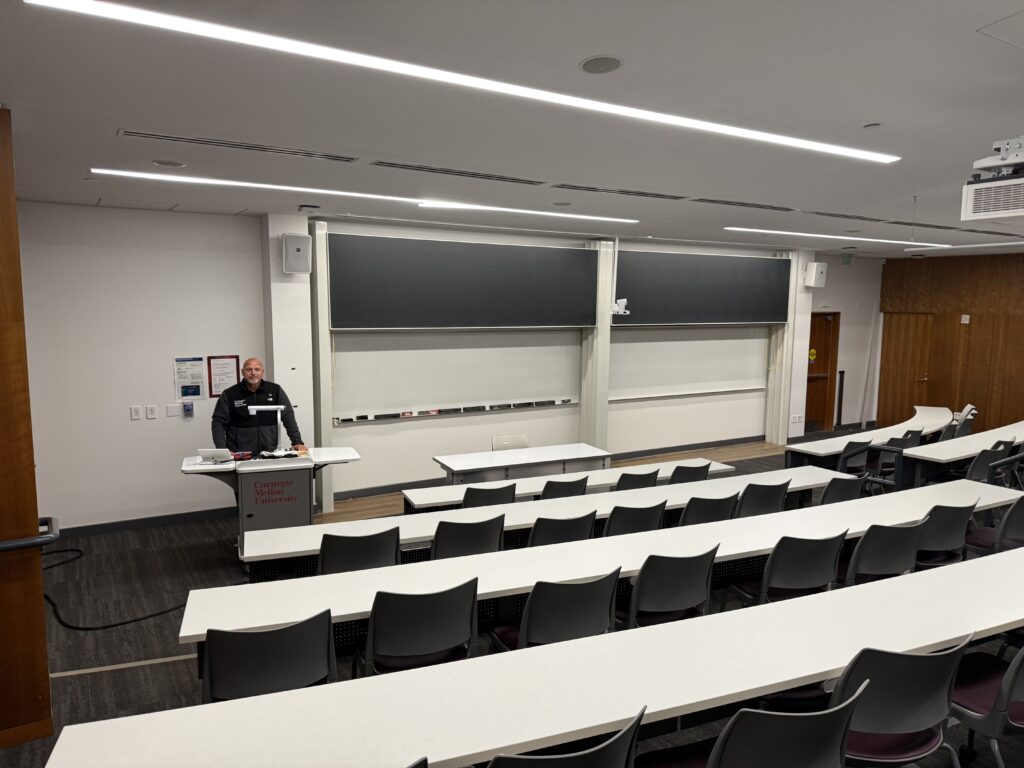
What does your busiest day look like? What are the challenges your role faces, and how do you overcome those?
My busiest day now is having back-to-back meetings for about eight hours straight, and every meeting has a different topic or problem we are trying to solve. With the team leaders I have, that makes my job easier, as they all do a great job knowing what we need to do.
The toughest thing I currently have to deal with is the annual renewal of our departmental SLAs. We need to confirm they are all being renewed and, if not, determine how we handle staffing with fewer contracts in place. To help with this, we start working on renewals about six months in advance, which helps us understand our year-to-year staffing needs.
What do you enjoy doing on weekends? How do you spend your time outside of work?
What do I do outside of work? I enjoy spending time with my wife and my daughters whenever we can. We love camping, riding motorcycles, hunting, fishing, and going to the beach.
What inspired you to get involved with HETMA, AVIXA, and other higher-ed orgs?
Getting involved, I feel, is beneficial because, in higher ed, we are not competing with each other the way dealers are. I feel that others should not reinvent the wheel if you have started it or have something in place that could help them. I enjoy listening to how others are doing things, and I find it very inspiring.
Where do you see your career trajectory going in the next five years? Where do you envision yourself?
This is a tough question. As I look at the next five years, my goal is to complete the strategic plans I currently have in place. Beyond that, I’m hoping for an opportunity to help the higher ed community as a whole, either as a higher ed representative or with one of the higher education organizations that are out there.
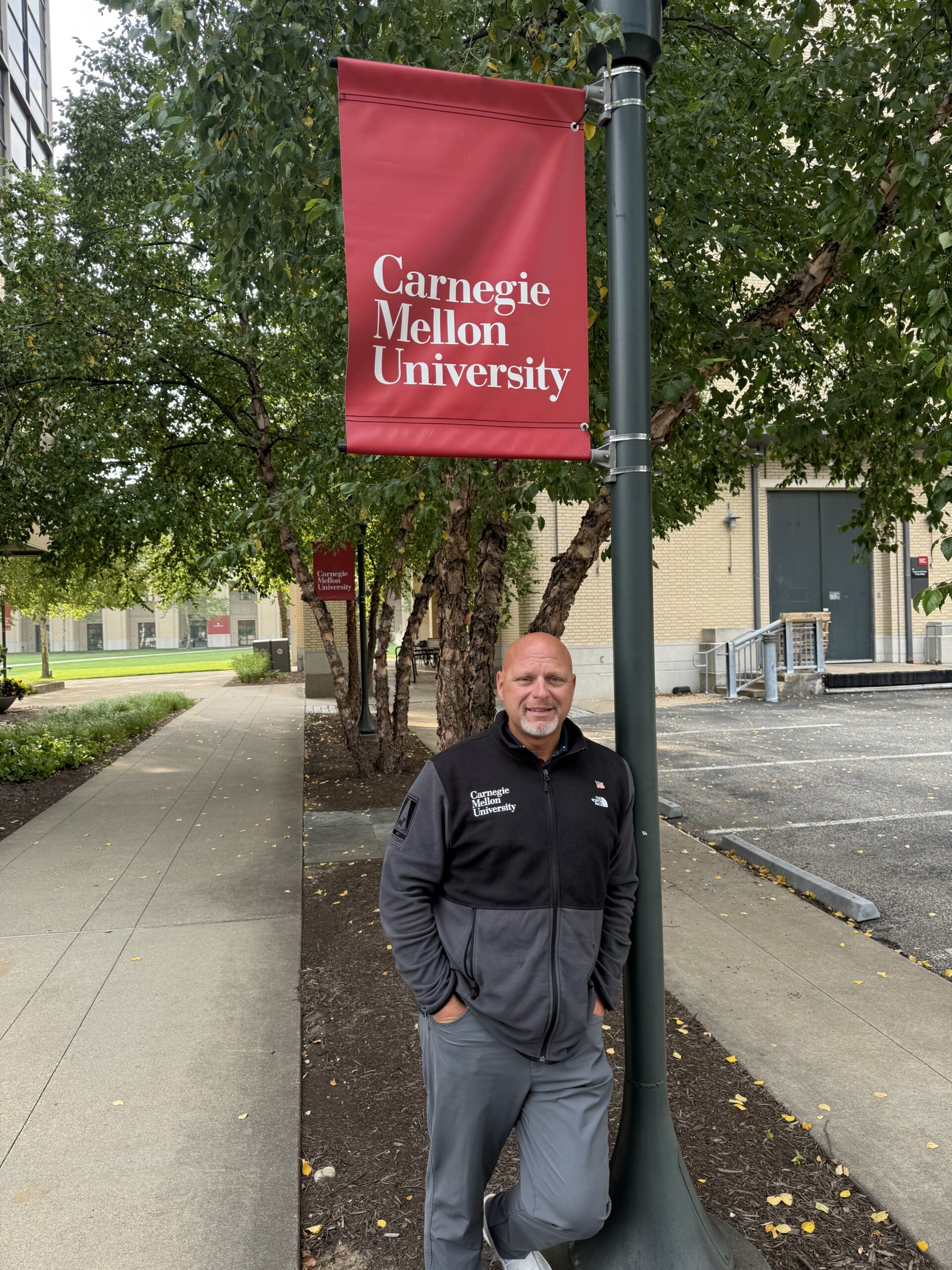
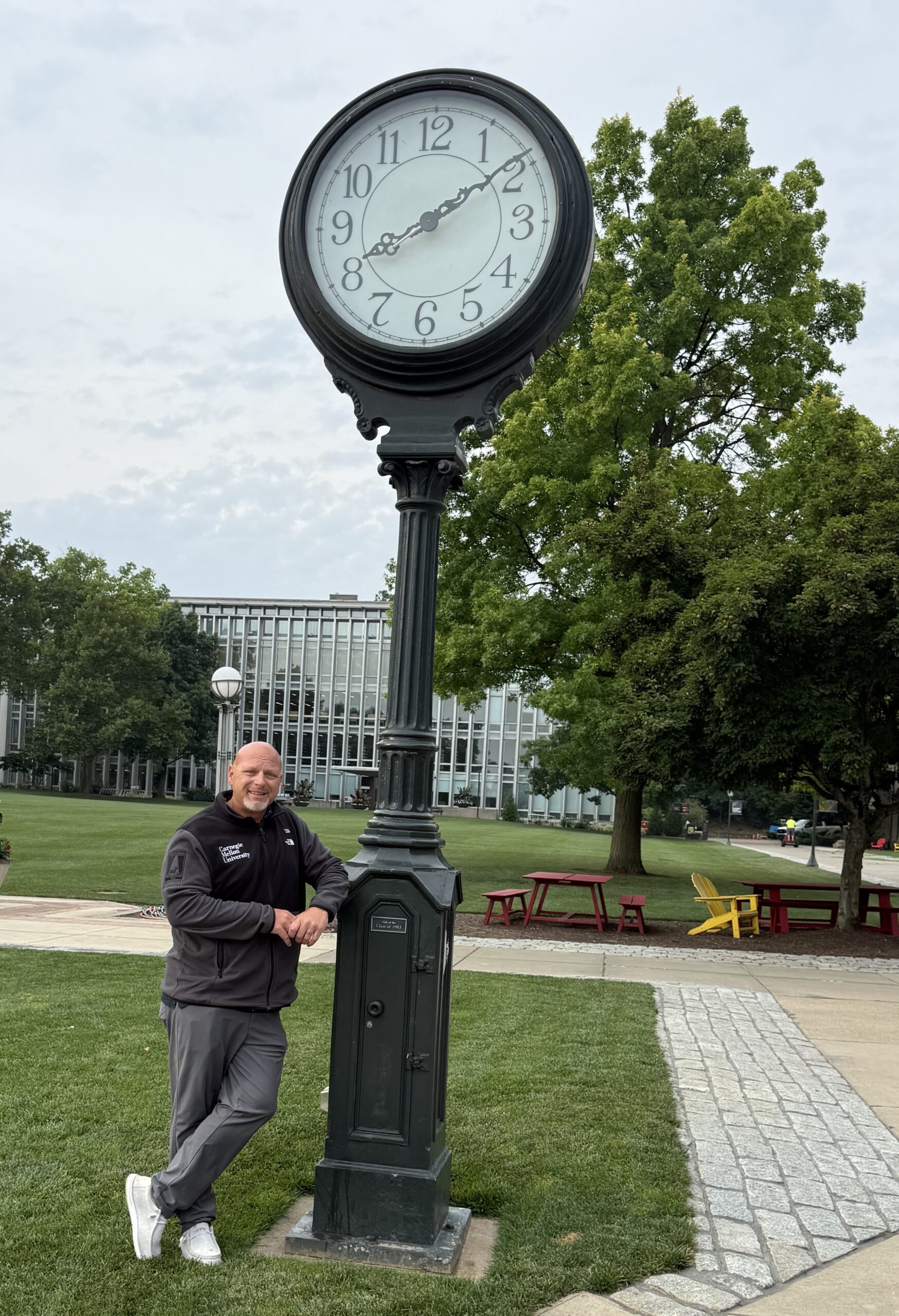
What is your life motto and how do you apply it to your daily routine?
I follow a couple of different mottos that are on my phone as reminders.
“You don’t need a title to lead.”
I tell my teams this every chance I get when they ask what they can do and how to do it. This helps them feel empowered to take something on without the title, which helps them shine.
“Get up, dress up, show up, and never give up.”
I have looked at this one throughout my career because I have often been told, “You’re not cut out for that.” I take that to heart and follow that motto to keep moving forward and prove that I can do it.
Comparing your career path over time, what are some of the moments, accomplishments, or projects that you’re most proud of?
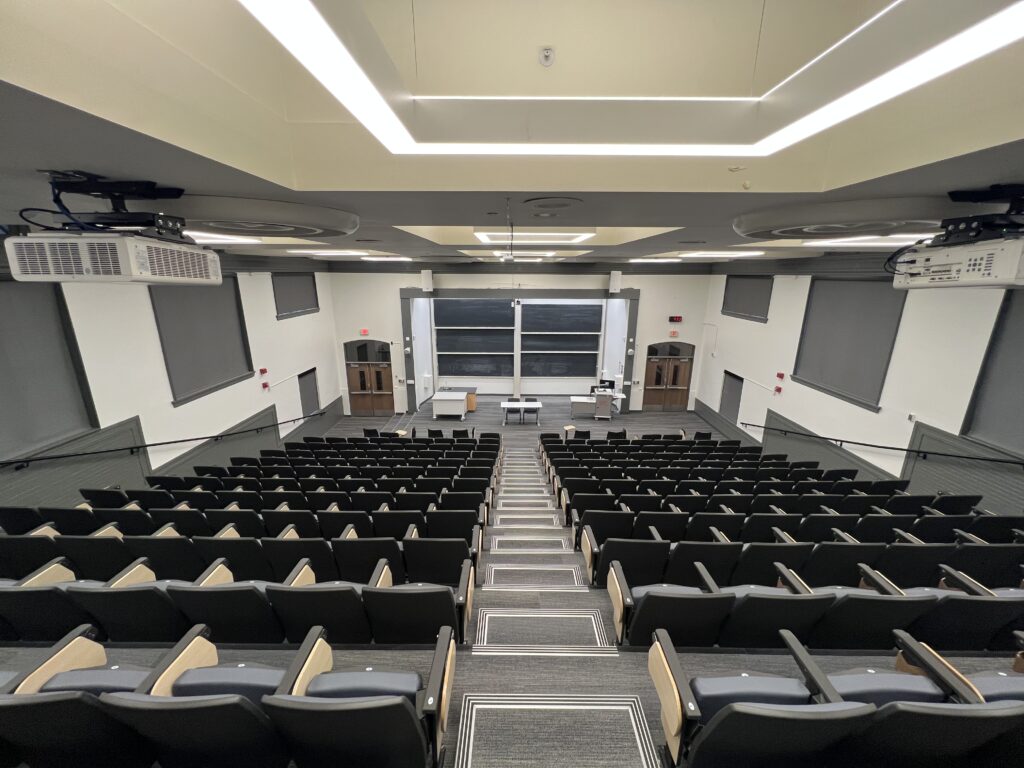
Some of the things I’m proud of that we have accomplished over my career. The first would be developing all in-house AV services from concept to reality without depending on outside dealers. Another would be identifying gaps in AV services and starting a team to support our departments, with the understanding that departments must implement our standards in their spaces for us to support them. This started with 13 rooms, and we are now supporting more than 350 spaces after about 12 years.
Another accomplishment was developing committees to support the mission of classrooms by bringing together our Registrar’s Office, Facilities, Campus Design, Computing Services, and the Eberly Teaching Center for Excellence for discussion and guidance on classroom standards. This is still in place today.
Another big win was taking the basic EDUCAUSE grading system and making it our own. We now have a grading system that allows us to annually score each space and provides a way to see what is still relevant and what is not. This grading system takes into account the standards we review each year, including AV systems, furniture, flooring, boards, and basically anything in a teaching and learning environment.
How would you describe your leadership style?
My leadership style is to trust the people in leadership roles to handle their services, and I allow them to run with them unless they run into a roadblock, at which point I help them get past it.
I also try not to let senior management issues or concerns get to them, as I don’t want them worrying about things that I should be handling. They should be aware of what is going on, and I share as much as possible because my team knows that the more communication we have, the better we are. Even if something doesn’t directly pertain to us, at least everyone is aware.
What’s a lesson you’ve learned the hard way in your career?
Never assume; always gather as many facts as possible before moving forward. It doesn’t mean you need all of them, but you do need enough facts to make a decision that has meaning behind it.
What advice would you give to someone just starting out in AV or higher ed tech?
Learn as much as you can, from project management to software engineering. Understand flow diagrams, but most importantly, find a mentor who can guide you in the right direction for what you are trying to accomplish.
What’s something people often misunderstand about your work?
That’s a good one. Being in higher ed, everyone thinks you have summers and winters off, not knowing that those are prime times for work in our spaces.
People also misunderstand what we do. Computers are part of it, but I’m always explaining that it’s more than that. I usually tell people,
“You know the stuff at Best Buy, TVs, projectors, and sound systems? We do that, but for classrooms and meeting spaces.”
Connect with Dan: LinkedIn