

HETMA has a certain presence about us at events, whether our own or someone else’s. We tend to be loud, somewhat chaotic, and seem to draw people into whatever we have going on. Between fun themes, live DJs, happy hours, podcast recordings, and countless other activities, there is usually something happening around HETMA.
This year, HETMA had the opportunity to work directly with EDUCAUSE to establish an officially sanctioned space in the Partner Pavilion, along with helping lead tours and contributing ideas for the conference Neighborhoods. Being invited to participate in the conference in this way was an incredible honor, and hopefully some validation that we must be doing a few things right.
So, what was EDUCAUSE 2026 like, and how did HETMA fit into it?
A Different Kind of Booth
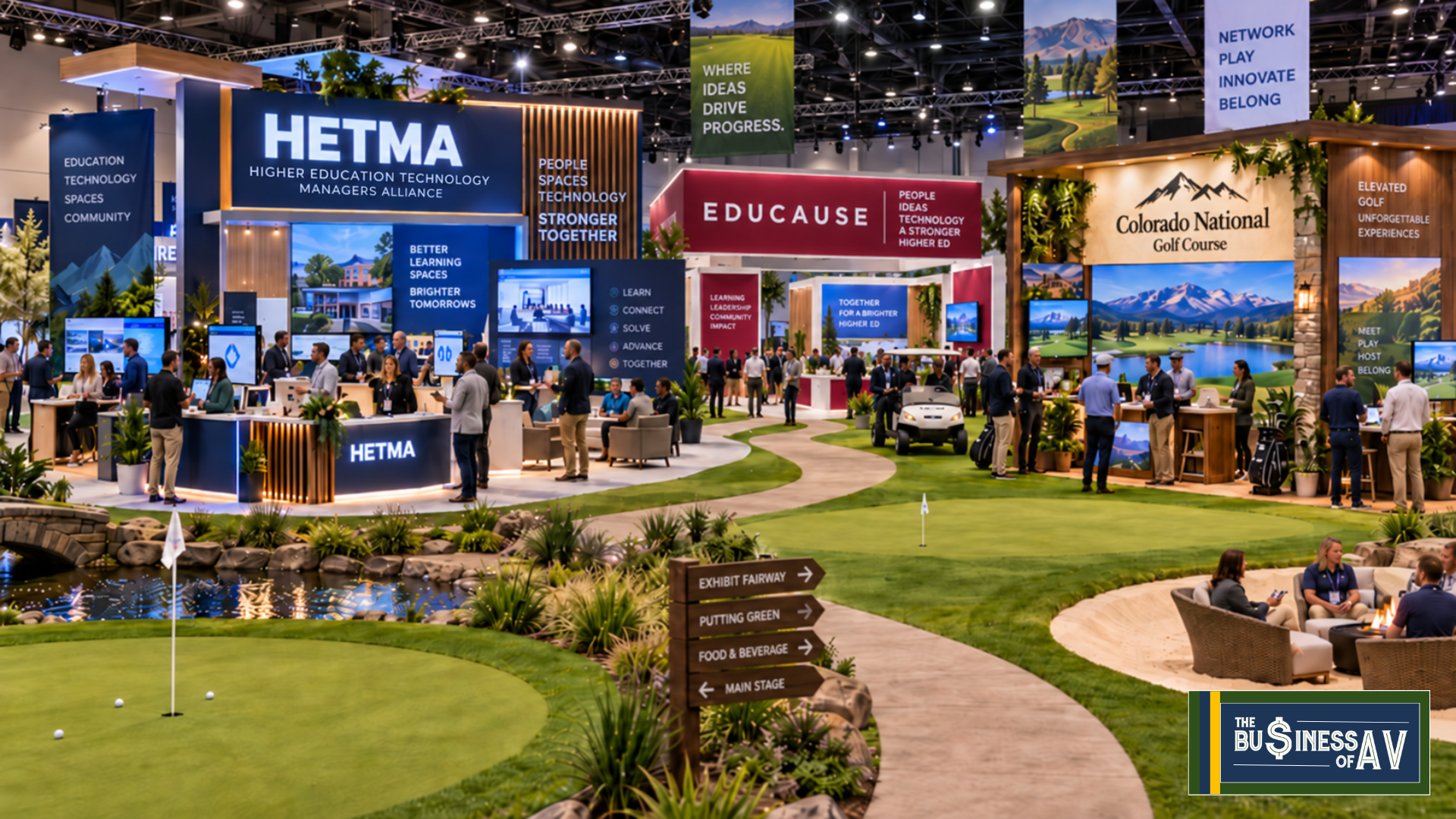
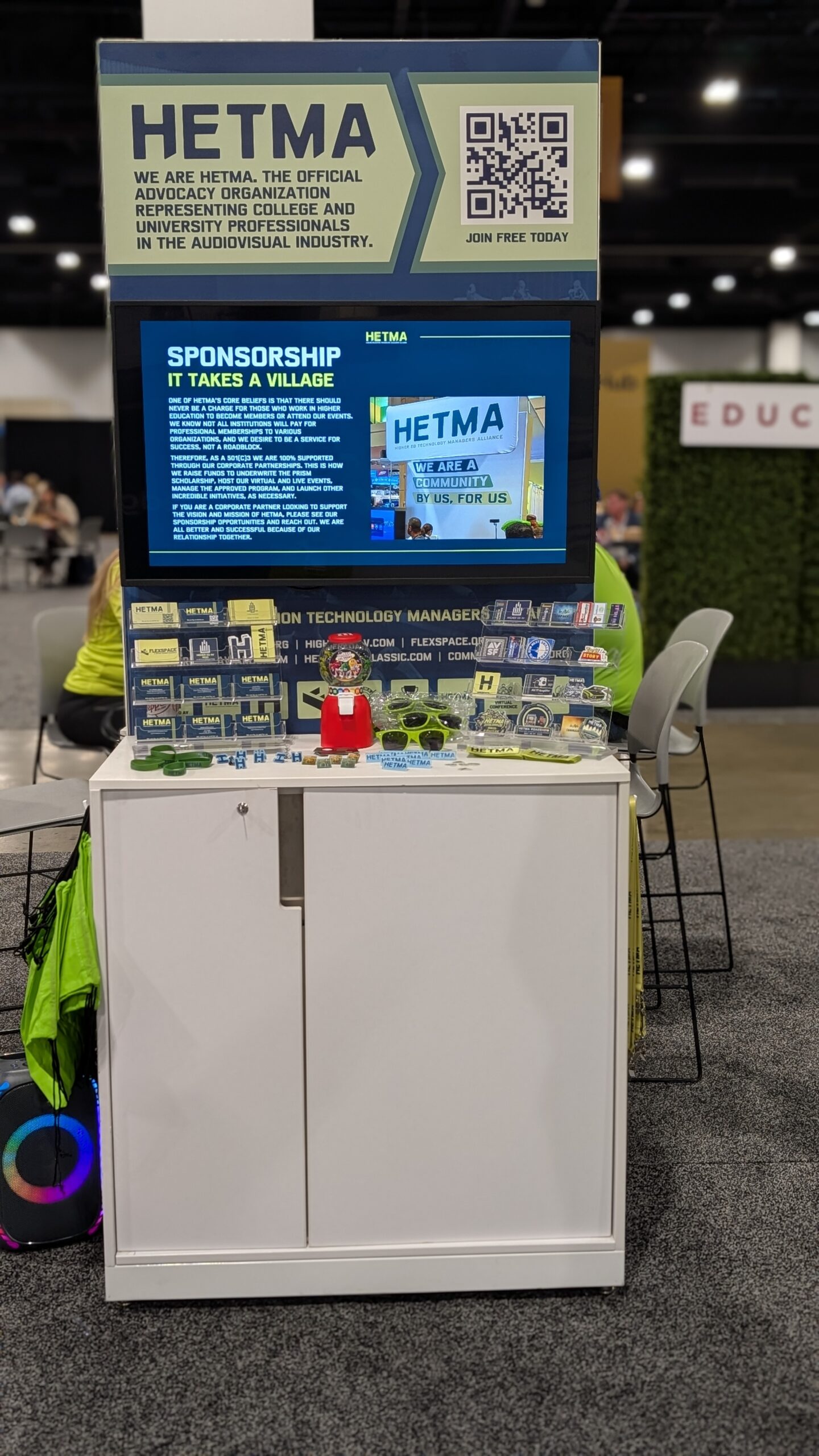
Our space in the Partner Pavilion wasn’t exactly a traditional booth. We had a television displaying HETMA signage with a small shelf underneath holding stickers and some swag, a speaker playing music, a roughly five-by-three-foot table that doubled as our podcast studio, and a bowl of candy. We even managed to get a noise complaint about the music.
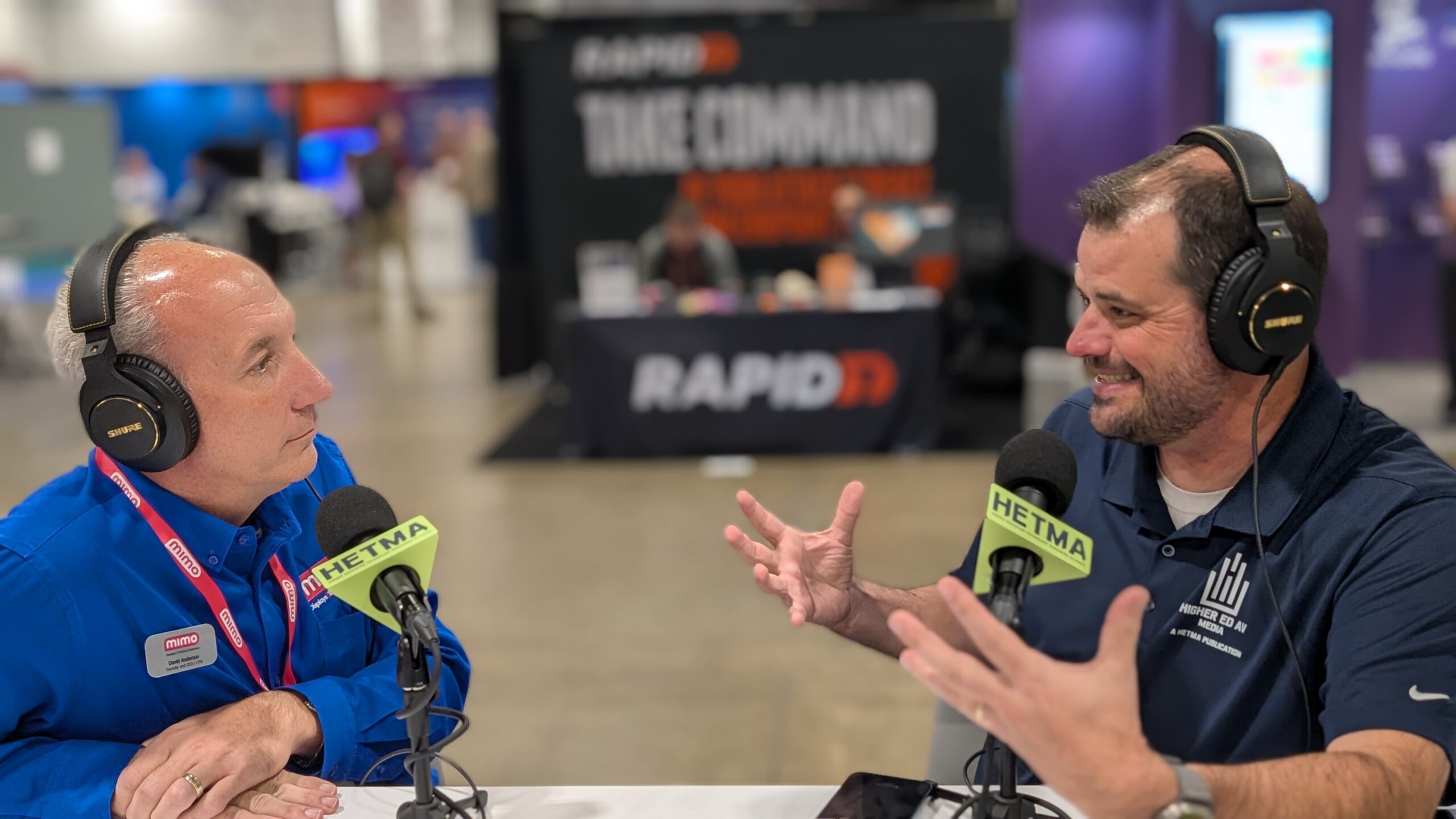
We kept busy throughout the conference, completing four live recordings for the HETMA community, three additional 10-minute sponsor interviews, and other recordings, including a full-length episode with MIMO. We also helped lead a dozen tours and did some traditional badge scanning, collecting nearly 200 unique scans during the event.
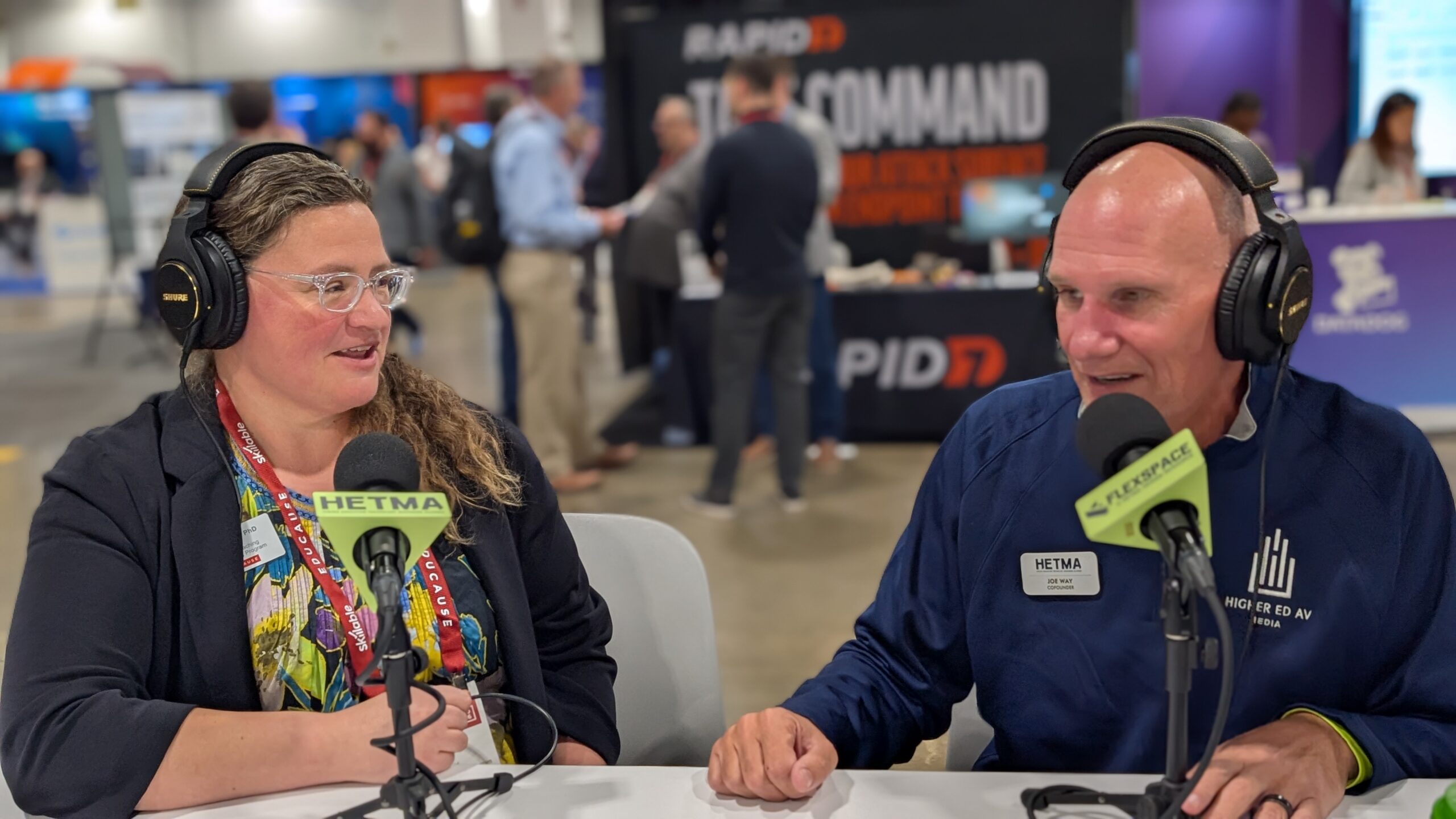
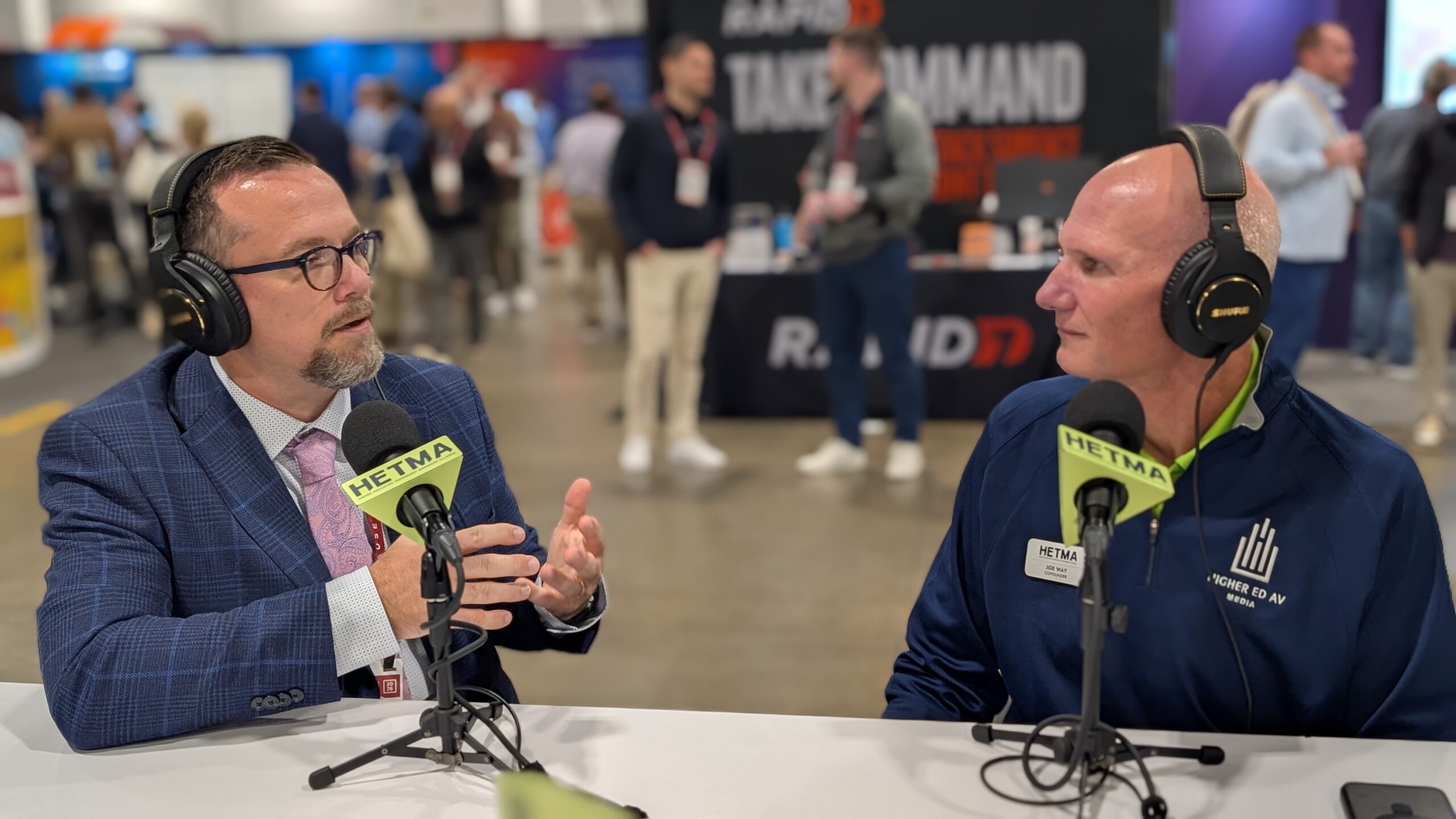
We had the privilege of sharing the Partner Pavilion with Internet2, 1EdTech, and the National Cybersecurity Alliance. These organizations represent different areas of higher education technology, and we enjoyed getting to know the people representing them throughout the conference. We made some great connections and hope to find opportunities to collaborate with them in the future.
Not Quite InfoComm
EDUCAUSE brought thousands of higher education technology professionals to Denver for several days of education, networking, and exhibits. As of this writing, EDUCAUSE has not yet released an official attendance figure. The trade show floor was open September 30 and October 1. Overall, EDUCAUSE has a noticeably different feel from InfoComm or ISE.
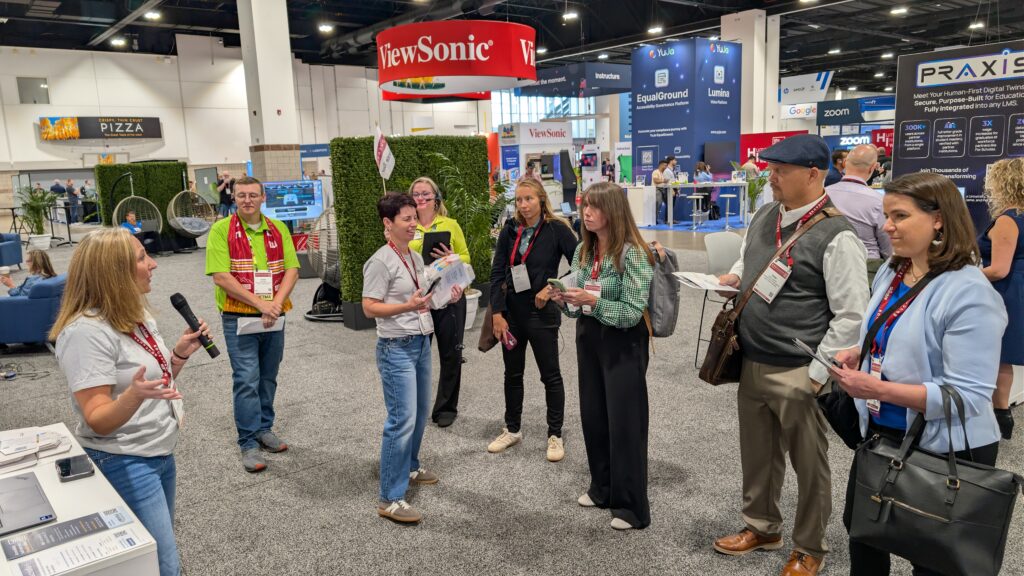
InfoComm and ISE both offer extensive educational programming, but their exhibit floors are a major focus of the events. EDUCAUSE feels more focused on its educational sessions, while still offering a sizable trade show floor.
EDUCAUSE offers a wide range of educational sessions covering cybersecurity, infrastructure, AI, leadership, teaching and learning, and plenty of other topics. There were certainly time slots where I struggled to find sessions directly applicable to AV technicians, designers, or installers, but that makes sense considering the broader audience the conference serves.
One observation I heard repeated during the conference was that InfoComm attendees are often the people evaluating products and making recommendations that require higher-level approval. At EDUCAUSE, you’re more likely to encounter the institutional decision-makers who manage larger budgets and can approve those purchases. There are exceptions at both events, of course, but the distinction helps explain some of the differences between the shows.
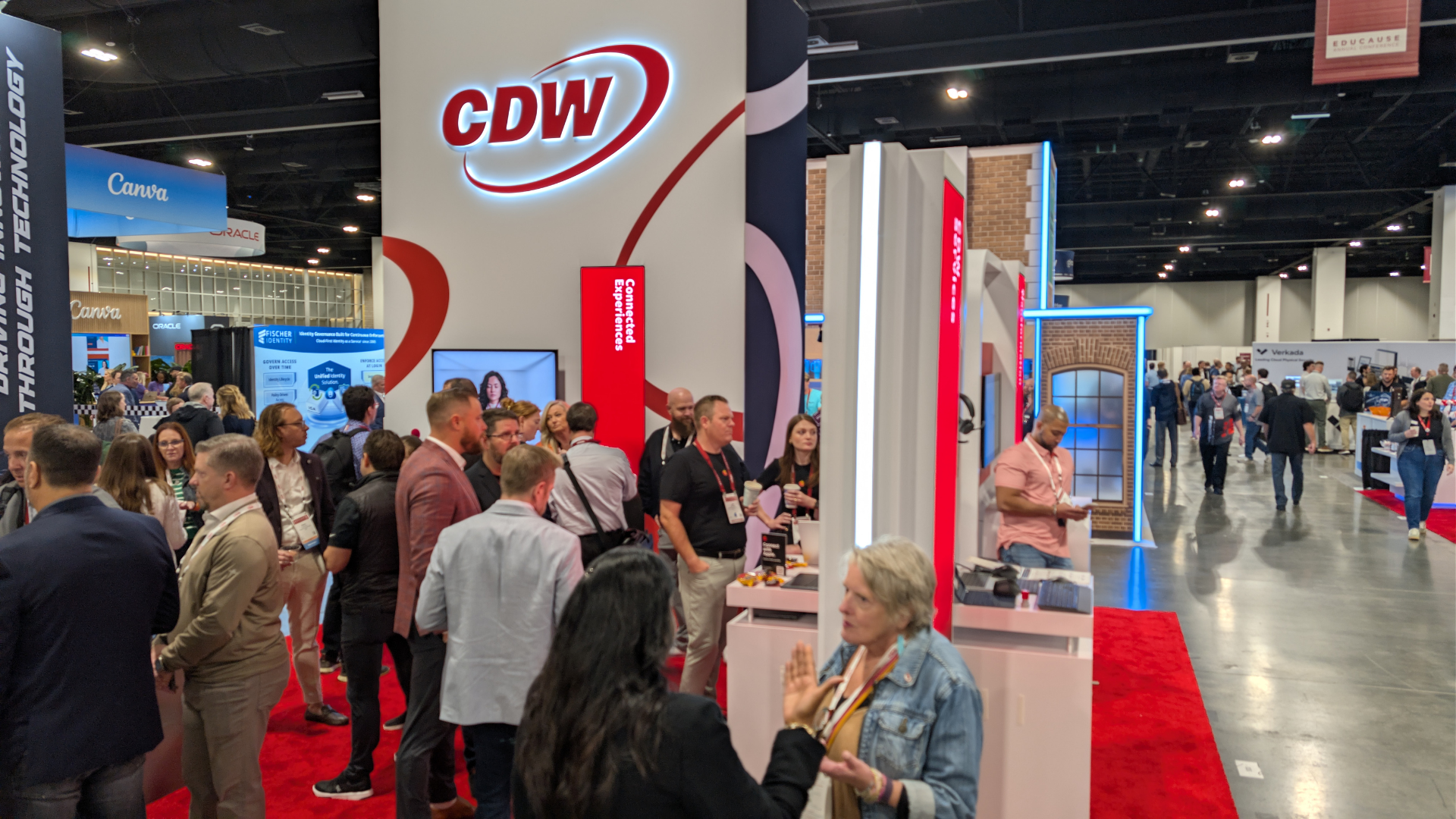
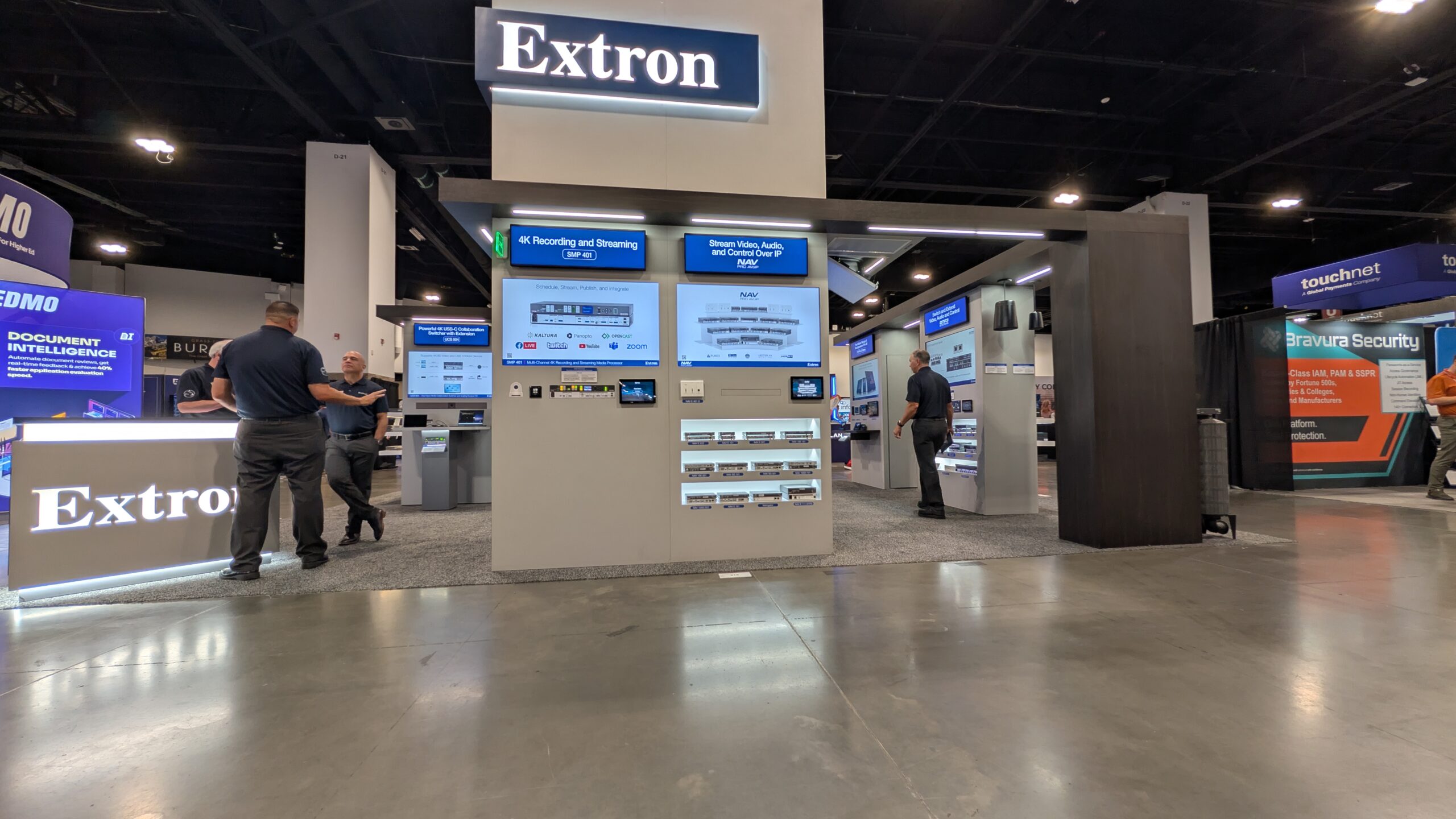
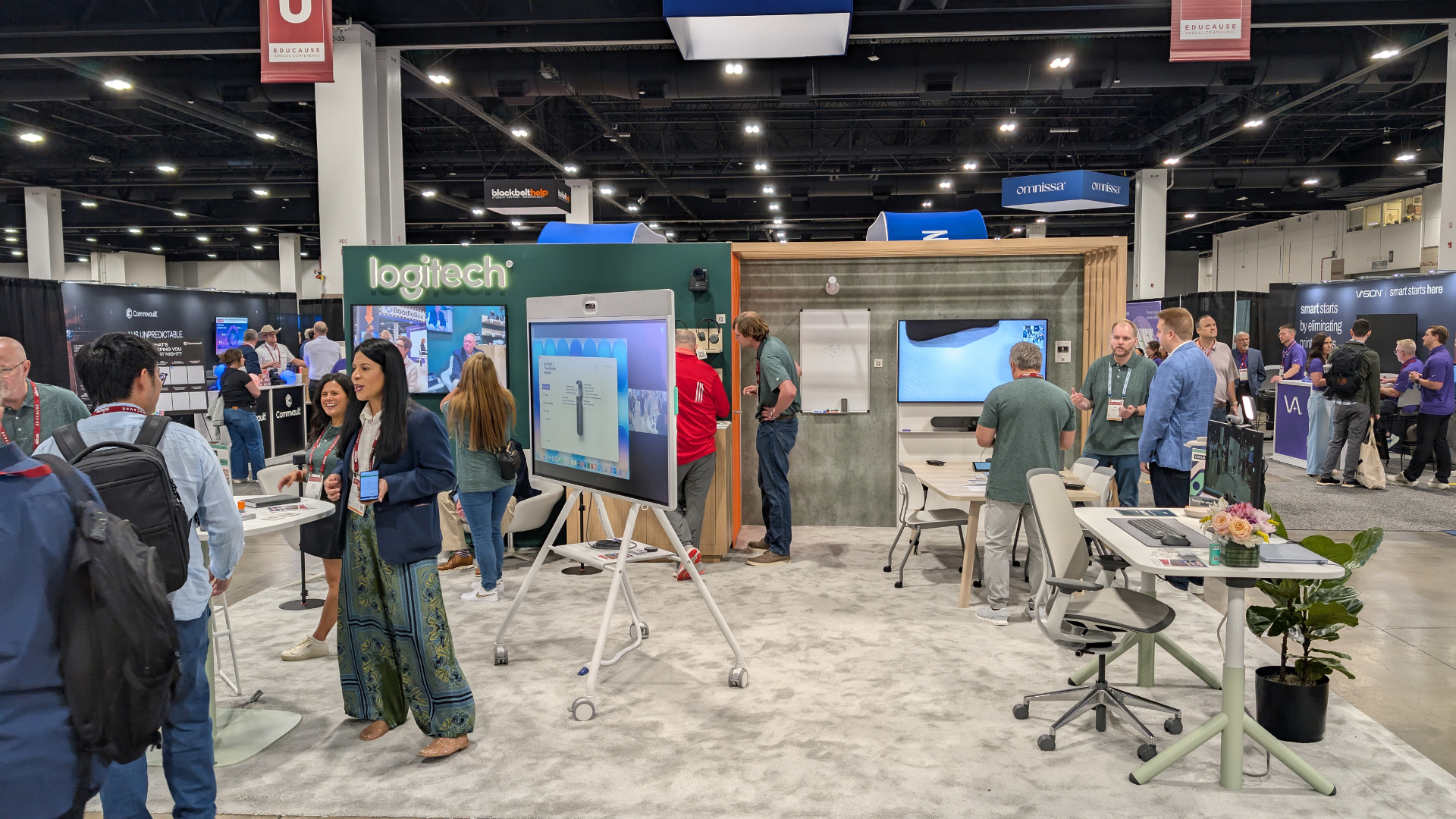
The differences were also noticeable on the exhibit floor. Familiar AV manufacturers including Crestron, Logitech, and Epson were present, although generally with smaller booths than at AV-focused shows. There was also a significant presence from companies offering software, cloud platforms, and enterprise services, including Panopto, Zoom, Cisco, and Pathify.
For those of us working in higher education AV, there is value in attending all three events. InfoComm and ISE offer a much larger concentration of AV technology to explore, but EDUCAUSE still has some great AV products and demonstrations. EDUCAUSE also gives us a chance to see what is happening across the rest of campus IT, much of which has a direct impact on the work we do every day.
After Hours at EDUCAUSE
There was no shortage of things to do once the exhibit floor closed. There were more after-hours events packed into those few days than anyone could realistically attend, many at fantastic venues around Denver.

Among the events were a dinner with Epiphan, a hockey game with Diversified, and a CDW party featuring AI-generated caricatures, including one of me complete with a photobomb by Ryan Gray. Despite attending several events, I still wish I could have made it to more.
The General Sessions Are Worth Attending
One area where EDUCAUSE really stands out is its main stage presentations. Unfortunately, I had to leave early on Friday and missed the final day’s sessions and closing presentation.
The Opening Session
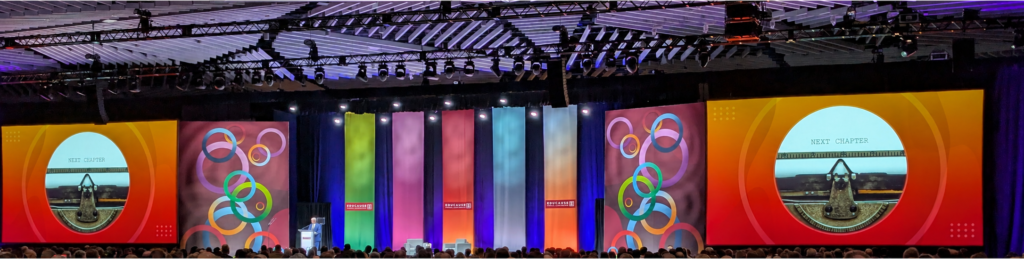
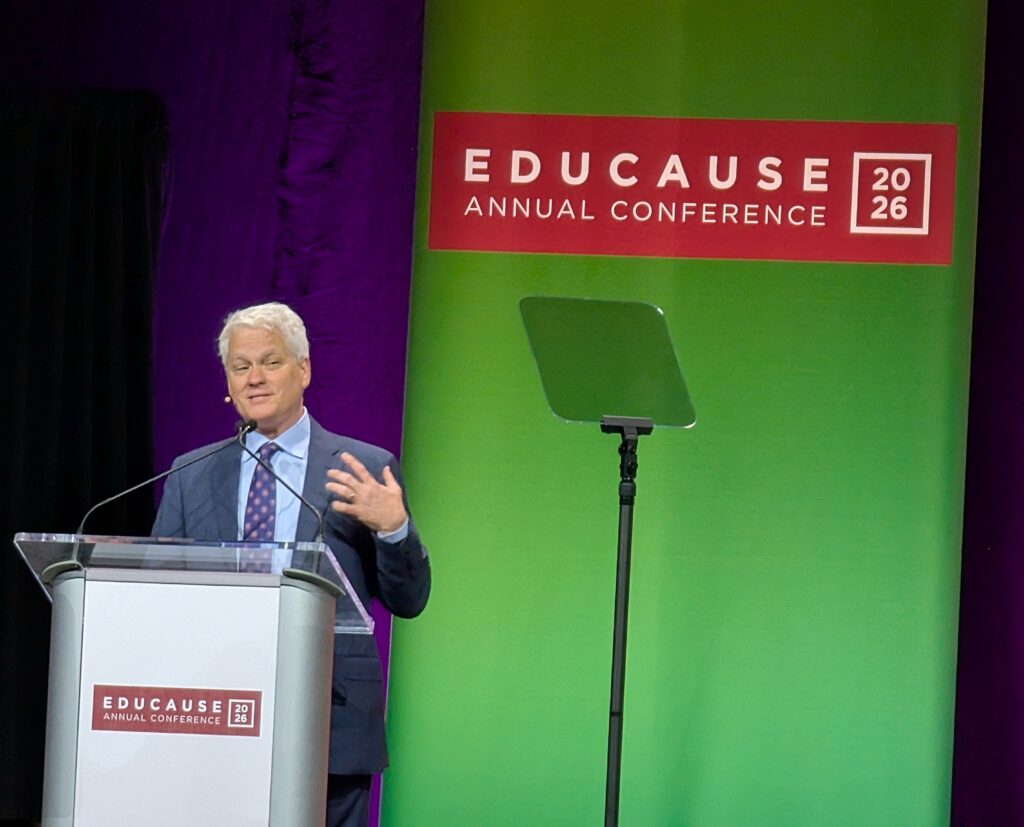
The opening discussion addressed the constant change facing higher education and how COVID brought technology leaders into conversations at the highest levels of university administration. We regularly hear that we’re living through unprecedented times or approaching another inflection point. Perhaps perpetual change is simply what we should expect.
Emily Dickinson’s words, “We never know how high we are till we are called to rise,” were quoted during the session. It seemed fitting considering the role technology professionals played in keeping institutions operating during COVID and the increased responsibilities many have taken on since then.
Leading in the Age of Uncertainty
Heather McGowan’s presentation, Leading in the Age of Uncertainty: The Curiosity Advantage, gave me quite a bit to think about. She explored how our brains crave certainty, how technology influences human relationships, and why being challenged and questioning what we already know are important parts of learning.
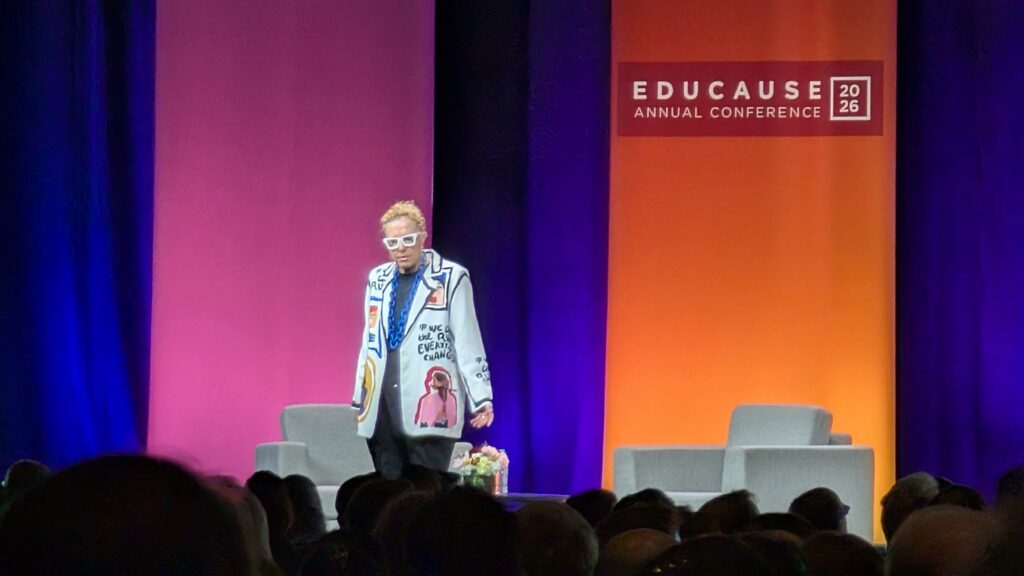
McGowan shared an example of a bicycle modified so that turning the handlebars left makes the bicycle go right, and vice versa. Adults who have spent years riding bicycles struggle to adapt because they have to unlearn something that has become second nature. Children, on the other hand, can often figure it out more quickly because those habits aren’t as firmly established.
I suspect most of us have experienced something similar when trying to introduce a new approach to someone who has been doing things the same way for 20 years.
McGowan also discussed how AI can reinforce our existing beliefs instead of challenging them. Ask ChatGPT whether your idea is good, and you may get an enthusiastic response telling you exactly what you want to hear. What you might actually need is someone willing to challenge your thinking and point out what you’re overlooking.
Another point McGowan raised was the decline in spoken communication as texting and other digital interactions have increased. We may have more ways to communicate than ever, but that doesn’t necessarily mean we’re understanding one another better.
Toward the end of her presentation, McGowan had the audience participate in a wave. She closed by emphasizing that we choose how, and whether, we show up, with one of her final slides stating, “Community is the Ultimate Operating System.”
That certainly seemed relevant to what we were doing with HETMA.
The EDUCAUSE Top 10
Mark McCormack presented the 2027 EDUCAUSE Top 10, followed by a panel discussion exploring the issues facing higher education technology leaders.
The list covered everything from AI and cybersecurity to enrollment challenges, data governance, and designing more human-centered technology experiences. Several of these issues relate directly to our work in AV, particularly reducing friction for users and making sure technology is actually solving the problems people face.
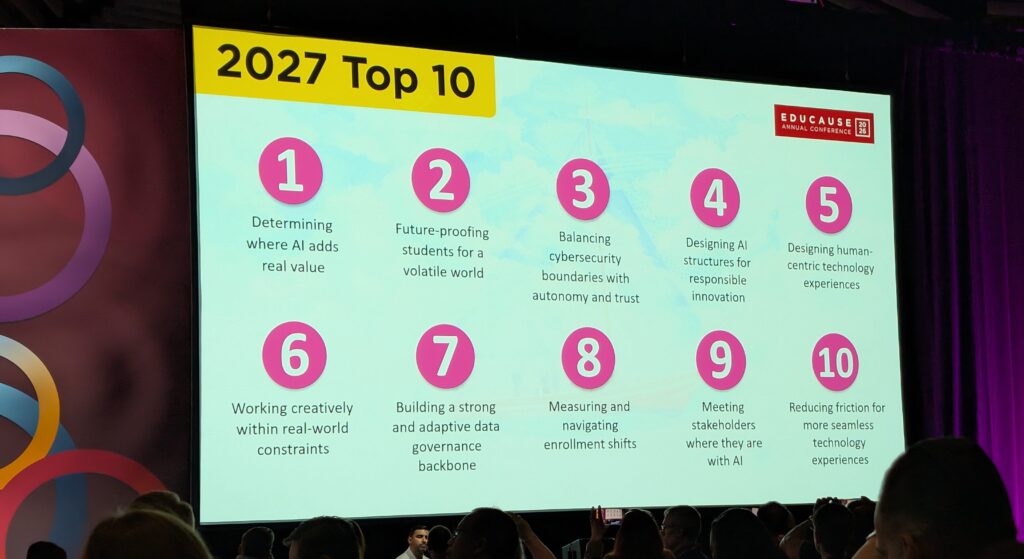
The panel discussion touched on several important points, including the idea that you can only move forward at the speed of trust and that going fast doesn’t necessarily mean making progress. There was also an emphasis on listening to different perspectives, finding trusted partners, and understanding what problem we’re actually trying to solve for students before deciding on a solution.
That last point is particularly relevant to our work in AV. We’re often quick to offer a technical solution, sometimes before fully understanding what someone is trying to accomplish.
What I Took Away
One thing I appreciated about EDUCAUSE was hearing more about the challenges facing higher education beyond the AV systems and spaces we support every day. Understanding those challenges can help us make better decisions about the technology and services we provide on our own campuses.
For HETMA, having the opportunity to participate in conversations across the broader higher education technology community was a great experience. We were able to bring a little of our usual HETMA personality to the conference, even if the music was occasionally a little too loud.
I don’t know exactly what our presence at EDUCAUSE will look like next year, but I hope our involvement continues to grow. We’ll probably come up with a few new ideas, add some more activities, and create a little more chaos.
For those who couldn’t attend in Denver, the EDUCAUSE Annual Conference Online takes place October 14–15, featuring additional educational sessions and content from the in-person conference. I’m particularly excited about the closing general session, Hidden Potential, featuring Adam Grant, organizational psychologist and bestselling author. I’ve really enjoyed his work over the years, and I’m looking forward to hearing what he has to share.