





PlexusAV at InfoComm 2026: Open Standards, IPMX, and the Next Step for Campus AV-over-IP
Some InfoComm conversations are useful because they get past the product category and into the architecture question. PlexusAV is having that kind of conversation this year.
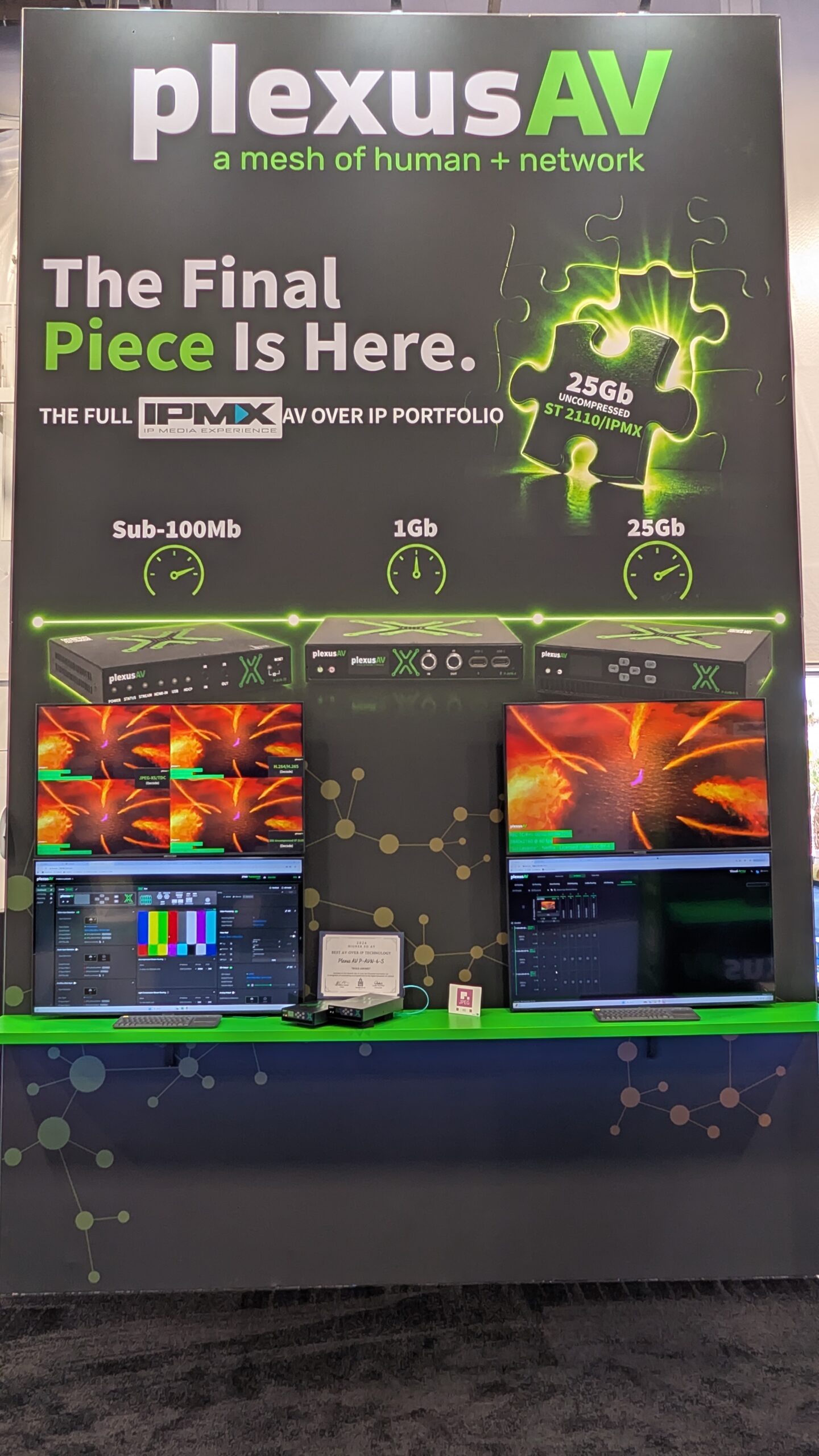
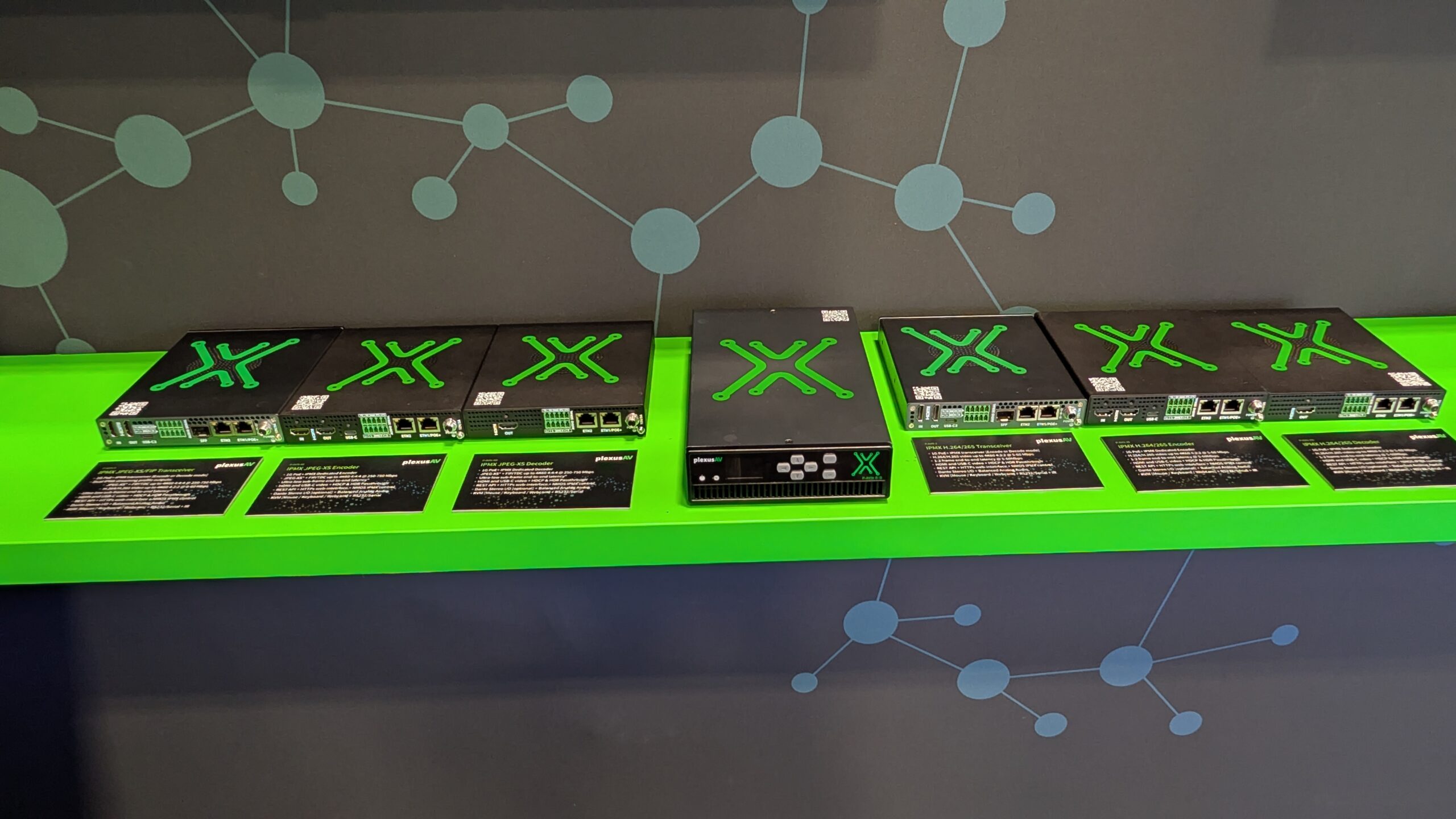
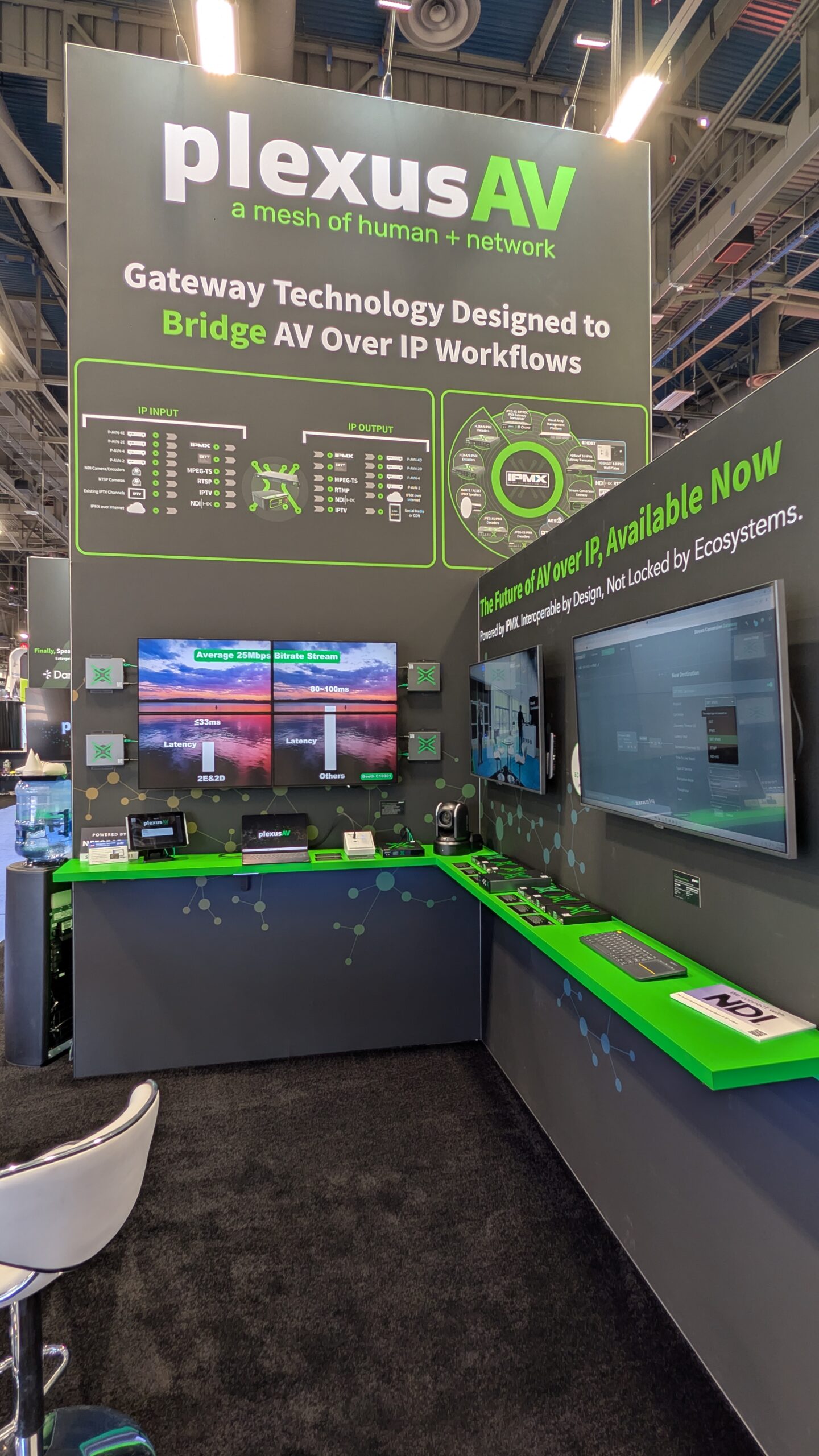
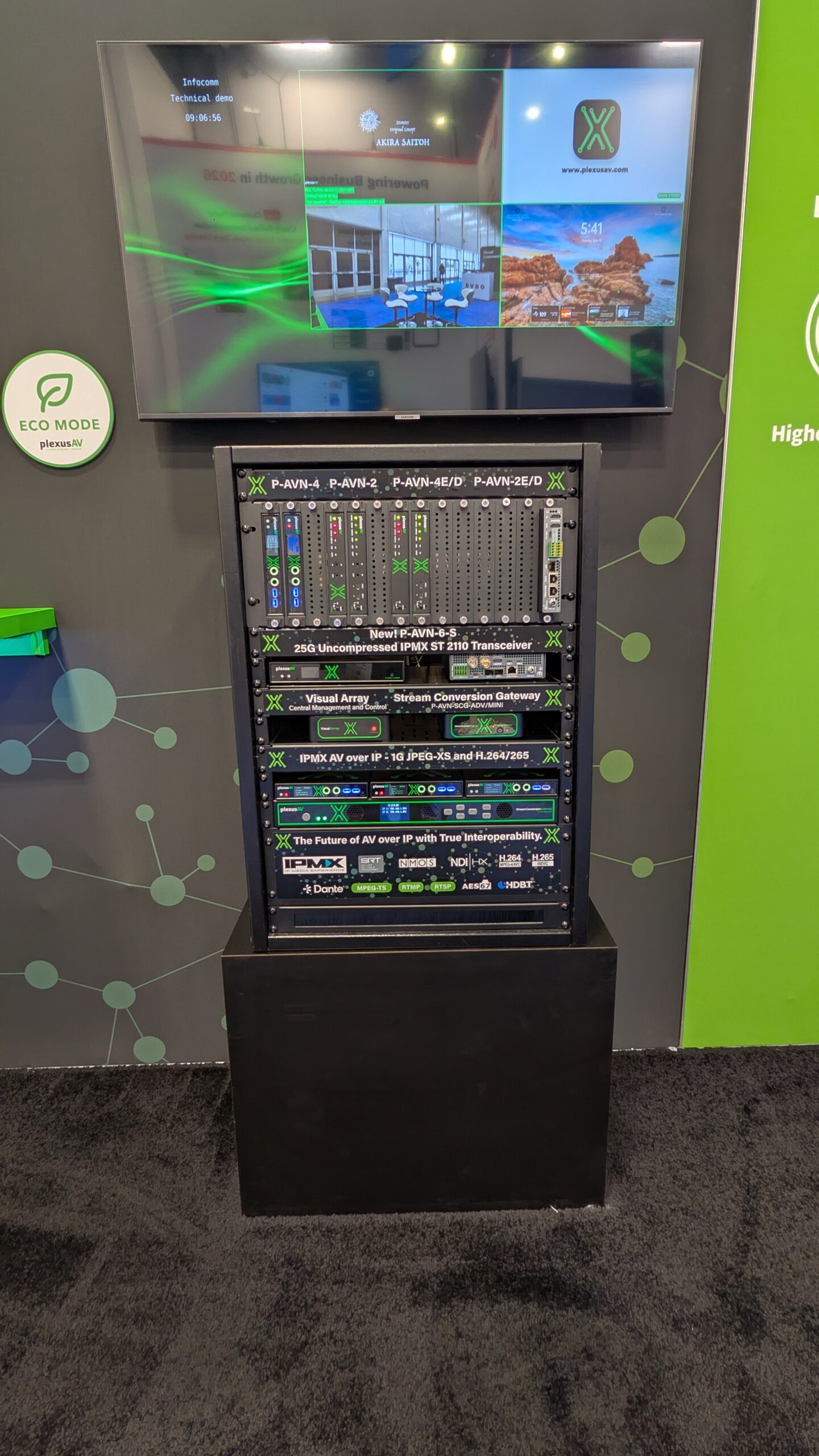
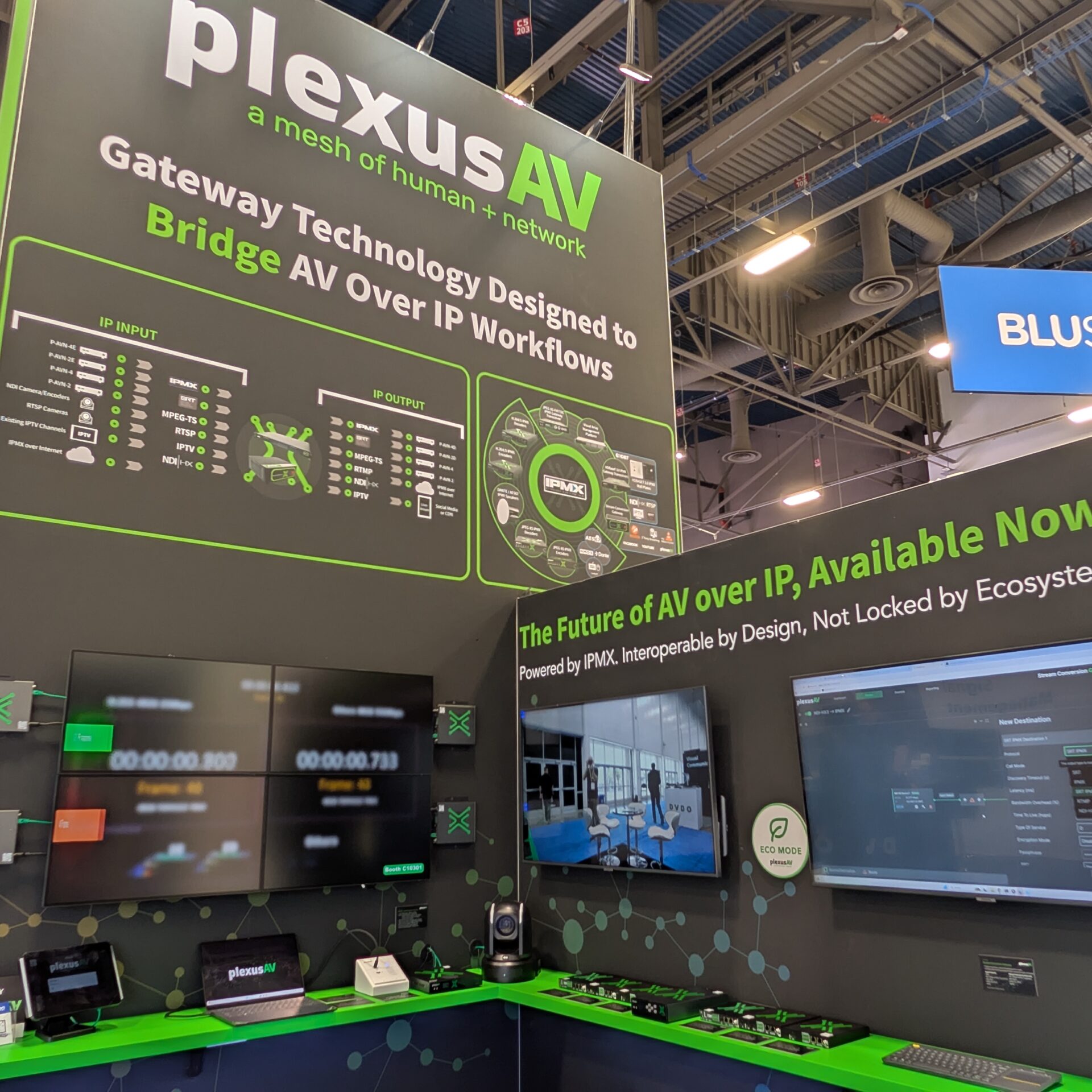
At Booth C10301, PlexusAV is showing 1G AV-over-IPMX featuring JPEG XS with FIP, H.26x, multicast and unicast streaming, SDI to HDMI, 25G and 1G AV-over-IPMX with Dante, bi-directional HDBT 3.0 and 1G IPMX transceivers, IPMX speakers, signal extension with charging for education spaces, and IP signal conversion including IPTV-to-IPMX, NDI conversion, SRT, RTMP, and RTSP.
That is a technical list, but the higher-ed question behind it is simple: how do campuses move toward the next generation of AV-over-IP without locking themselves into another closed ecosystem?
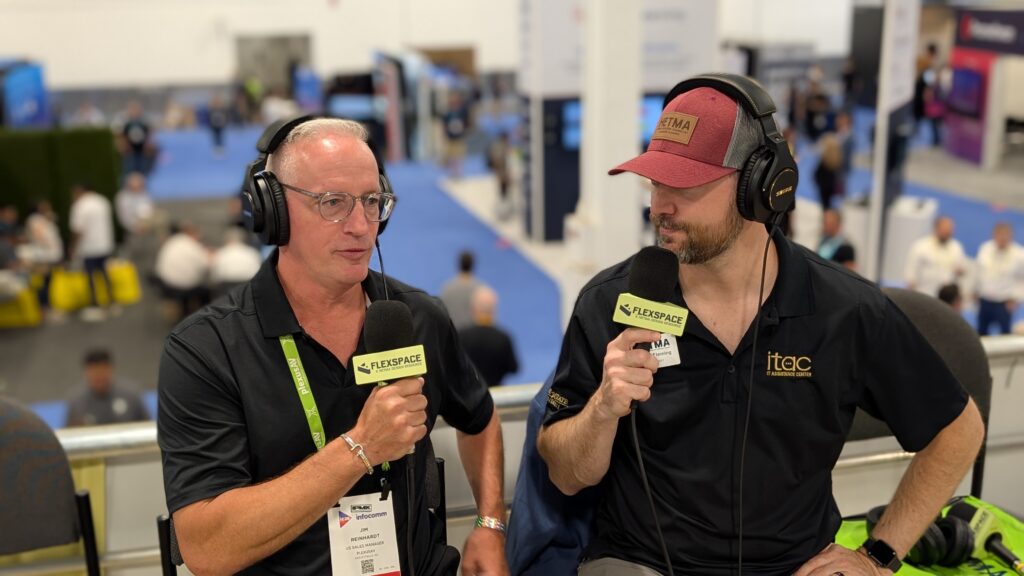
Jim Reinhart framed PlexusAV’s position clearly in the interview.
“We believe AV over IP has to change.”
That is the starting point for the PlexusAV story. AV-over-IP has become central to many campus designs, but a lot of it still behaves like a silo. One manufacturer’s endpoint does not automatically talk to another manufacturer’s endpoint. One codec, one wrapper, one management environment, one path forward. For campuses trying to build long-term standards, that can make every decision feel heavier than it should.
PlexusAV is making the case that IPMX gives higher ed a better direction.
Booth C10301
PlexusAV is exhibiting at Booth C10301, with a booth conversation centered on IPMX, open standards, interoperability, and the transition path from legacy classroom infrastructure into more flexible networked AV systems.
Jim described PlexusAV as a newer name in ProAV, but with roots in a long broadcast manufacturing history. PlexusAV is the ProAV division of a seventy-five-year-old broadcast equipment manufacturer, bringing broadcast engineering confidence into the ProAV space.
That matters because a lot of the current AV-over-IP conversation is borrowing from broadcast. SMPTE ST 2110, IPMX, JPEG XS, high-bandwidth networks, and essence-based transport are not just buzzwords. They are part of a broader move toward networked media systems that can be more flexible, interoperable, and standards-based.
Jim made the contrast with audio and cameras. In audio, teams expect interoperability. In broadcast camera workflows, different manufacturers can coexist in the same production. But in AV-over-IP, the endpoint ecosystem has often been more locked down.
“video over IP is very proprietary.”
That is the problem PlexusAV is trying to address. The company is building around IPMX as an open standard for ProAV, based on broadcast technology but adapted for the needs of AV spaces, including HDCP, EDID, and KVM requirements.
Why IPMX Matters for Higher Ed
Higher ed AV teams tend to live with technology decisions for a long time. A campus may refresh classrooms in waves, standardize by building, inherit legacy infrastructure, and support equipment across many generations. That makes interoperability more than a philosophical preference. It becomes a planning and support issue.
PlexusAV’s booth message is built around open standards and interoperable system design. The company is positioning IPMX as the next generation of AV-over-IP for education and other verticals, with the goal of avoiding traditional reliance on a single manufacturer.
Jim put the idea directly.
“IPMX is the future.”
For higher ed, the value would be in reducing lock-in and increasing the number of paths a campus can take over time. That does not mean every campus needs to replace its current AVoIP infrastructure immediately. It means the next standard conversation should include interoperability, lifecycle risk, and whether today’s decision limits tomorrow’s options.
That is especially important when AV-over-IP moves beyond a few specialty spaces and becomes part of classroom standards, lecture halls, active learning spaces, event venues, and distributed signage or media workflows.
Bringing Legacy Rooms Forward
One of the strongest higher-ed angles in the interview was not about abandoning existing infrastructure. It was about connecting it.
Jim used a campus example: a school upgraded thirty classrooms with HDBaseT a year or two ago, then wants to bring AV-over-IP into new classrooms next year. PlexusAV is building tools to help connect those worlds.
“We could bring HDMI to IP, USB-C to IP, HDBaseT to IP, SDI to IP.”
That is the reality on campus. Standards evolve, but the installed base does not disappear. A campus may have HDBaseT in one building, HDMI in another, SDI in production spaces, USB-C in newer teaching environments, NDI in media workflows, and streaming protocols somewhere else. The work is not only choosing the next architecture. It is bridging the old one to the new one without turning every room into an exception.
PlexusAV is showing conversion paths that include IPTV-to-IPMX, NDI conversion, SRT, RTMP, and RTSP. For higher ed teams, that matters because campus media workflows rarely stay neatly inside one standard. Classrooms, studios, events, signage, conferencing, and streaming often collide.
The practical value is in making IPMX adoption less like a cliff and more like a transition path.
Compression, Bandwidth, and the Real Campus Network
The interview also got into a technical point that matters for campus networks. Broadcast can work with very high-bandwidth uncompressed networks. ProAV often cannot assume that same infrastructure everywhere.
Jim described the difference clearly. The ProAV industry is not always used to twenty-five, fifty, or hundred gigabit networks, so compression becomes part of the conversation. PlexusAV is looking at JPEG XS and other codec options to balance quality, performance, and network practicality.
That is an important higher-ed consideration. A campus network is not a blank slate. AV traffic has to coexist with IT standards, security practices, switch refresh cycles, network segmentation, classroom schedules, and the reality that not every building has the same infrastructure.
The question is not just whether an AVoIP product looks good in a demo. It is whether it fits the campus network model, whether IT can support it, whether AV teams can troubleshoot it, and whether the solution can scale beyond a pilot room.
PlexusAV is bringing broadcast-derived architecture into that conversation, but with ProAV constraints in mind.
Eco Mode and the Cost of Always-On AV
PlexusAV is also highlighting Eco Mode at InfoComm 2026. The feature can reduce power consumption by twenty-five percent, with potential savings over the life of an AV installation.
Jim connected that to campus green initiatives and the hidden cost of AV-over-IP systems.
“anything in a rack is generating heat.”
AV-over-IP endpoints consume power and generate heat. Multiply that across hundreds of endpoints, many buildings, long operating hours, weekends, holidays, and summer break, and the soft costs become real.
Jim explained that Eco Mode can reduce wattage by twenty-five percent and can be activated by schedule, API, third-party control system, individual unit, building, floor, or campus. That flexibility matters because not every display path or endpoint can sleep at the same time. Some systems may need to stay active for signage. Some buildings may run longer hours. Some spaces may have different academic schedules.
For higher ed AV/IT teams, the key words were the ones Atkins called out in the interview: free and no licensing. Jim said Eco Mode is built into the firmware, free of charge, with no licensing.
That matters in a sector where recurring costs can quietly change the long-term math of a standard.
IPMX Speakers and End-to-End AV-over-IP
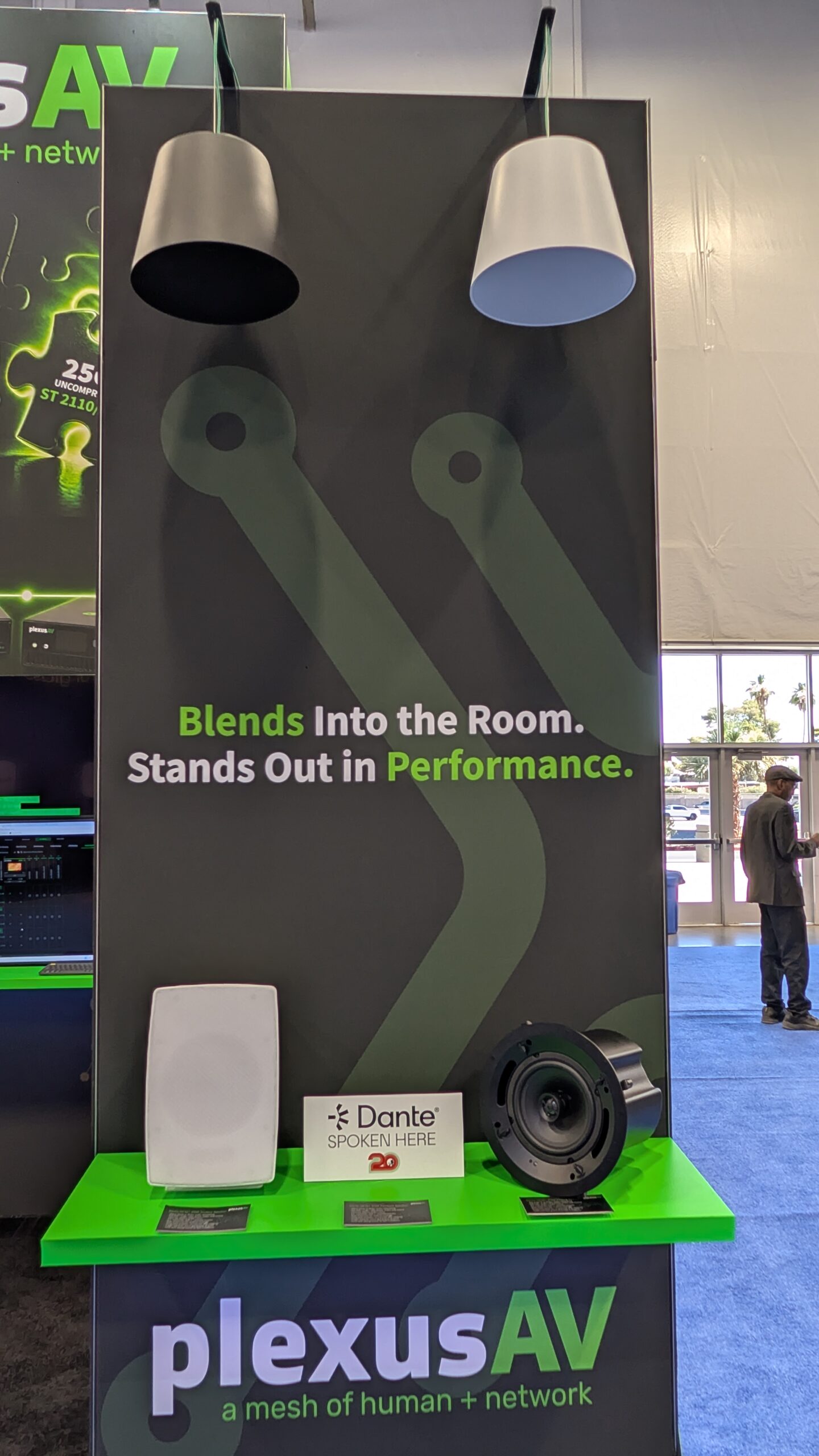
PlexusAV is also showing what it describes as the market’s only IPMX speakers, along with 25G and 1G AV-over-IPMX with Dante and bi-directional HDBT 3.0 and 1G IPMX transceivers.
That broadens the IPMX conversation beyond video endpoints. As campuses move more audio, video, and control onto the network, the question becomes how much of the room can participate in the same standards-based environment. Dante remains an important part of the audio side, and PlexusAV is including Dante in its 25G and 1G AV-over-IPMX products.
For higher ed, that can support a more coherent architecture across different room types: classrooms, lecture halls, active learning spaces, event venues, and production-adjacent spaces. The value is not just that everything is networked. The value is whether the networked pieces are interoperable, manageable, efficient, and designed to avoid unnecessary vendor lock-in.
The Higher Ed Takeaway
PlexusAV at InfoComm 2026 is a technical booth conversation with a practical campus implication. AV-over-IP is not going away, but the next phase needs to be more open, more interoperable, and easier to carry across years of campus infrastructure decisions.
At Booth C10301, PlexusAV is showing 1G and 25G AV-over-IPMX, JPEG XS, Dante integration, HDBT 3.0 to IPMX transceivers, IPMX speakers, signal extension with charging for education spaces, IP signal conversion, and Eco Mode for power savings. The important higher-ed question is how those tools help campuses bridge existing systems into a more standards-based future.
Jim described the transition goal this way.
“continue with your legacy, but bring that into where we and the market and the industry is moving forward”
That is the useful takeaway. Campus AV teams do not get to design from zero every year. They inherit, adapt, extend, and standardize over time. PlexusAV is making the case that IPMX can help make that future less proprietary and more flexible.
Make sure to check out PlexusAV at Booth C10301 at InfoComm 2026, or visit https://plexusav.com/ to learn more.