





Audio-Technica at InfoComm 2026: Audio Support That Meets Higher Ed in the Middle
Some InfoComm conversations are useful because they name a shift that has already happened on campus. Higher ed AV teams are not just asking for microphones anymore. They are managing lecture halls, classrooms, performance spaces, hybrid rooms, event spaces, networked audio, Dante workflows, ceiling microphones, wireless systems, support expectations, and budget pressure, often with staff who came into the work from IT rather than traditional audio.
Audio-Technica’s InfoComm 2026 conversation sits right in that space.
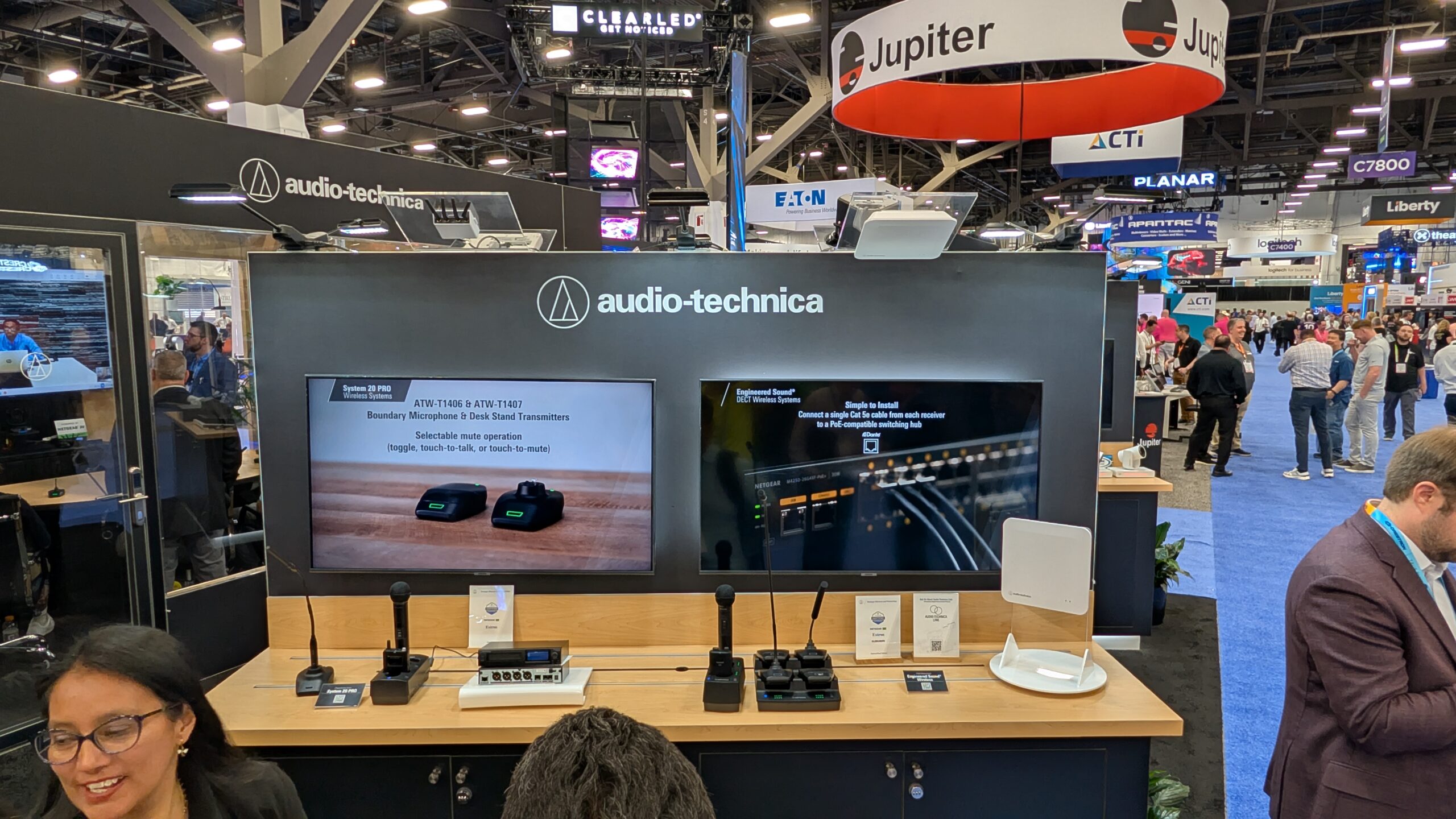
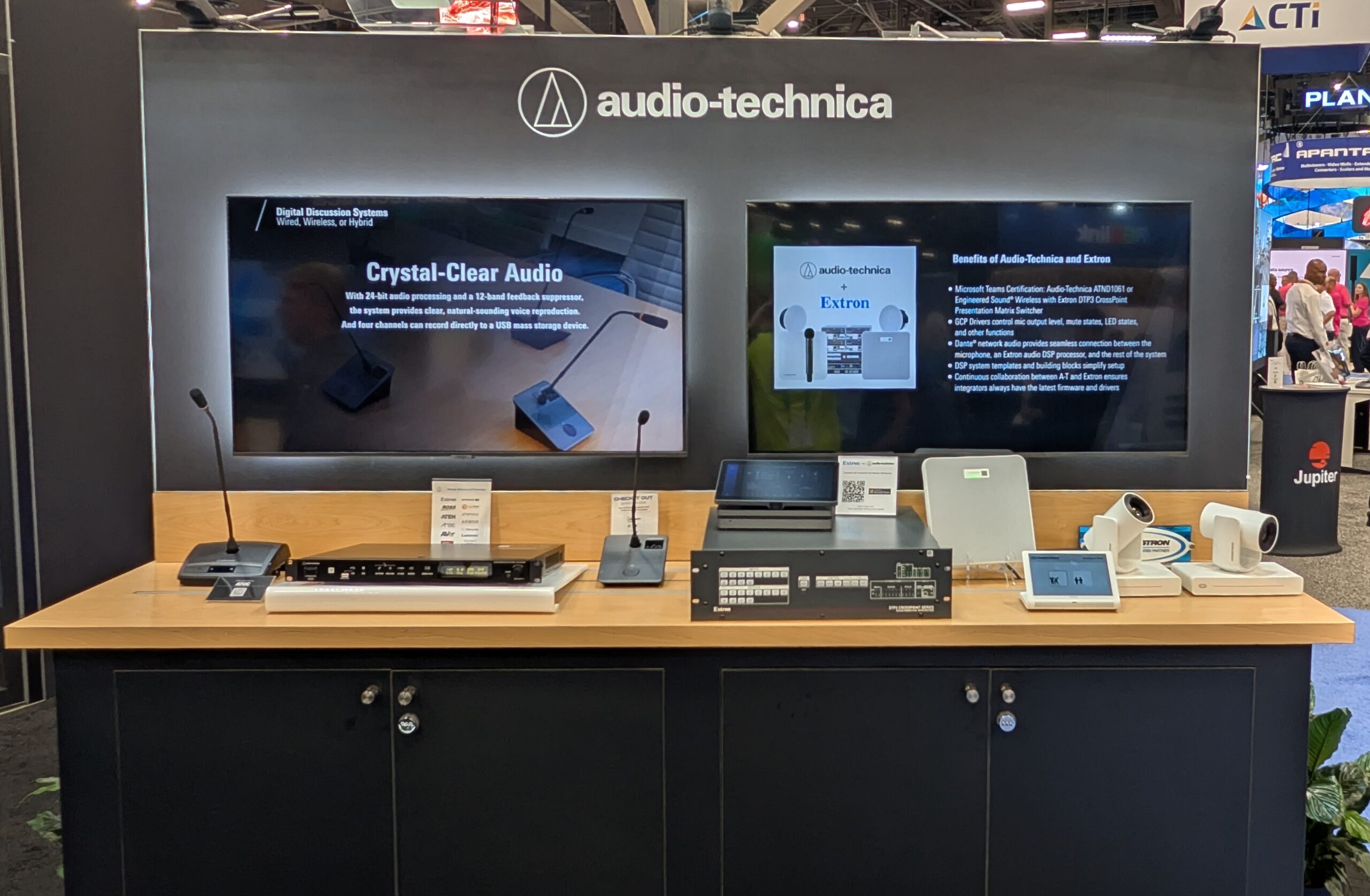
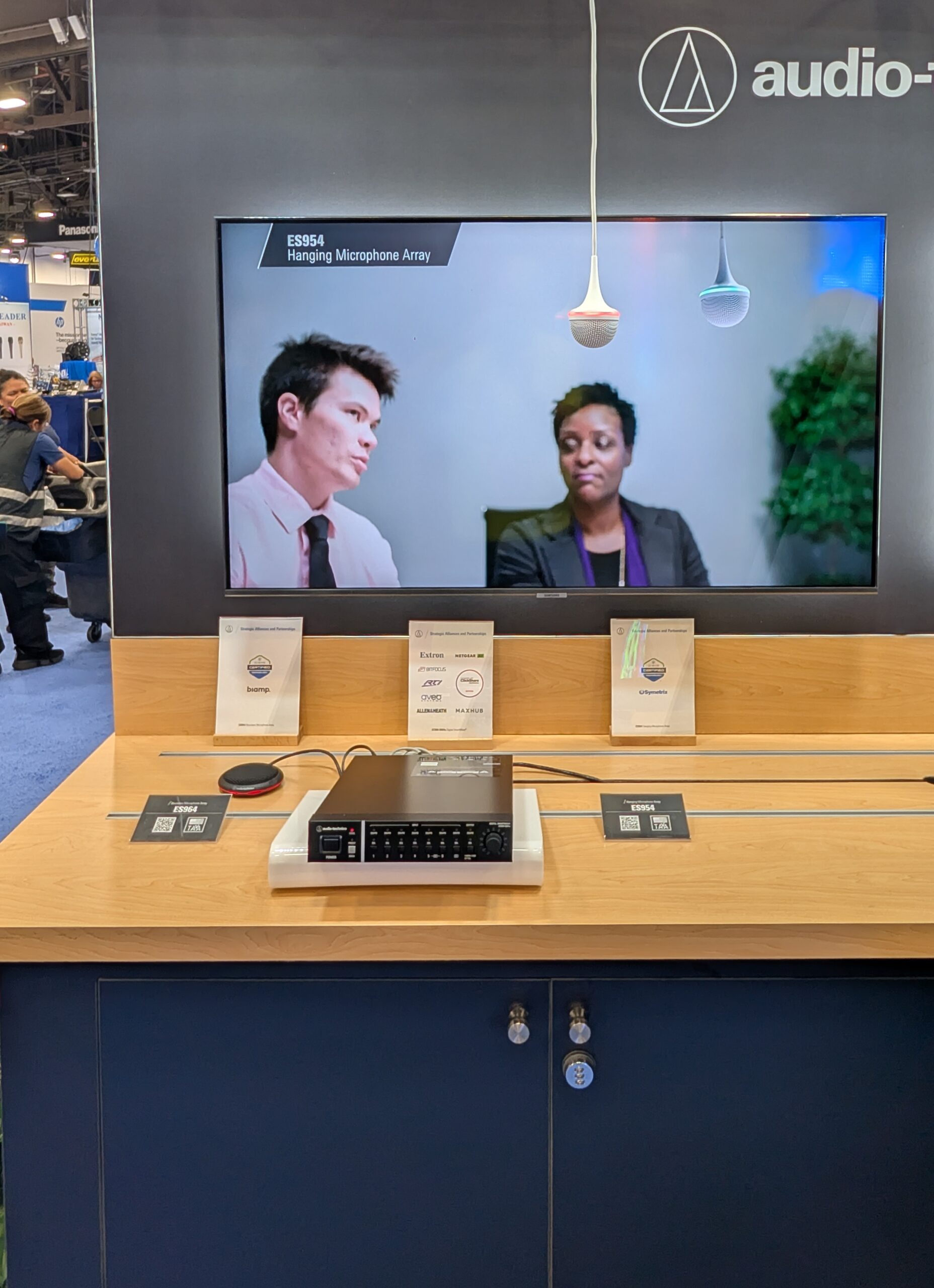
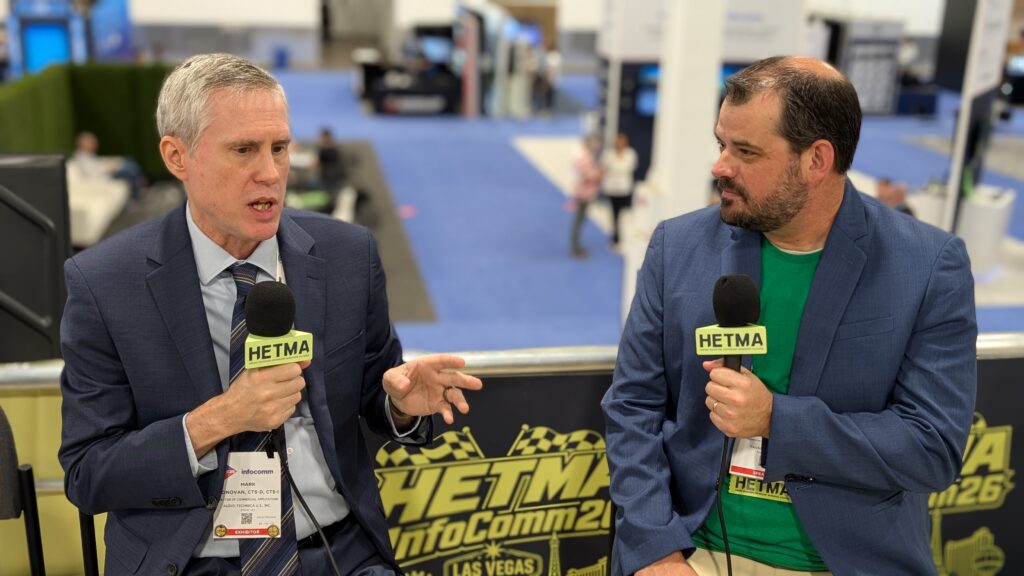
In the interview, Mark, Director of Commercial Applications at Audio-Technica, talked about the company’s new digital wireless microphone work, its broader commercial audio portfolio, and the support role his applications engineering team plays for higher ed AV/IT teams. Audio-Technica is showing digital wireless microphone systems, System 20 PRO Wireless, Engineered Sound Wireless, the ATND1061 beamforming ceiling array microphone, ATSP-30 ceiling speakers, network microphones, discussion systems, wired microphones, mixers, and the new D50 Digital Wireless Systems.
But the better part of the conversation was not just the product list. It was the recognition that higher ed AV teams have changed.
“we’re working hard to push knowledge outward and meet in the middle for a solution.”
That is a useful way to think about Audio-Technica’s higher-ed presence. The company is not only bringing microphones to the show floor. It is talking about how manufacturers can help campus teams solve audio problems directly, with better access to engineering knowledge and less dependence on guesswork.
Audio Is Not Somebody Else’s Problem Anymore
For many campus AV/IT teams, audio has become part of the daily support load whether or not the team started there. Mark named that shift clearly. He talked about people with IT backgrounds now being responsible for audio, and the pressure that comes with having to learn the category while still keeping rooms online.
That will sound familiar. A classroom may need ceiling mics. An auditorium may need wireless. A meeting space may need Dante. A lecture hall may need voice lift, capture, and remote participation. A performance space may need a different level of RF planning and gain structure. One team may be expected to understand all of it.
Mark described the support role Audio-Technica wants to play in that environment.
“we want to be there to help you guys out.”
The stronger point came right after that: the goal is to take some stress off campus teams trying to figure out audio. That is the higher-ed fit. Audio issues can be hard to diagnose, hard to explain, and very visible when they fail. The room can have the right display, camera, and control interface, but if the students cannot hear or remote participants cannot follow the conversation, the experience breaks.
D50 and the Range of Campus Audio Use Cases
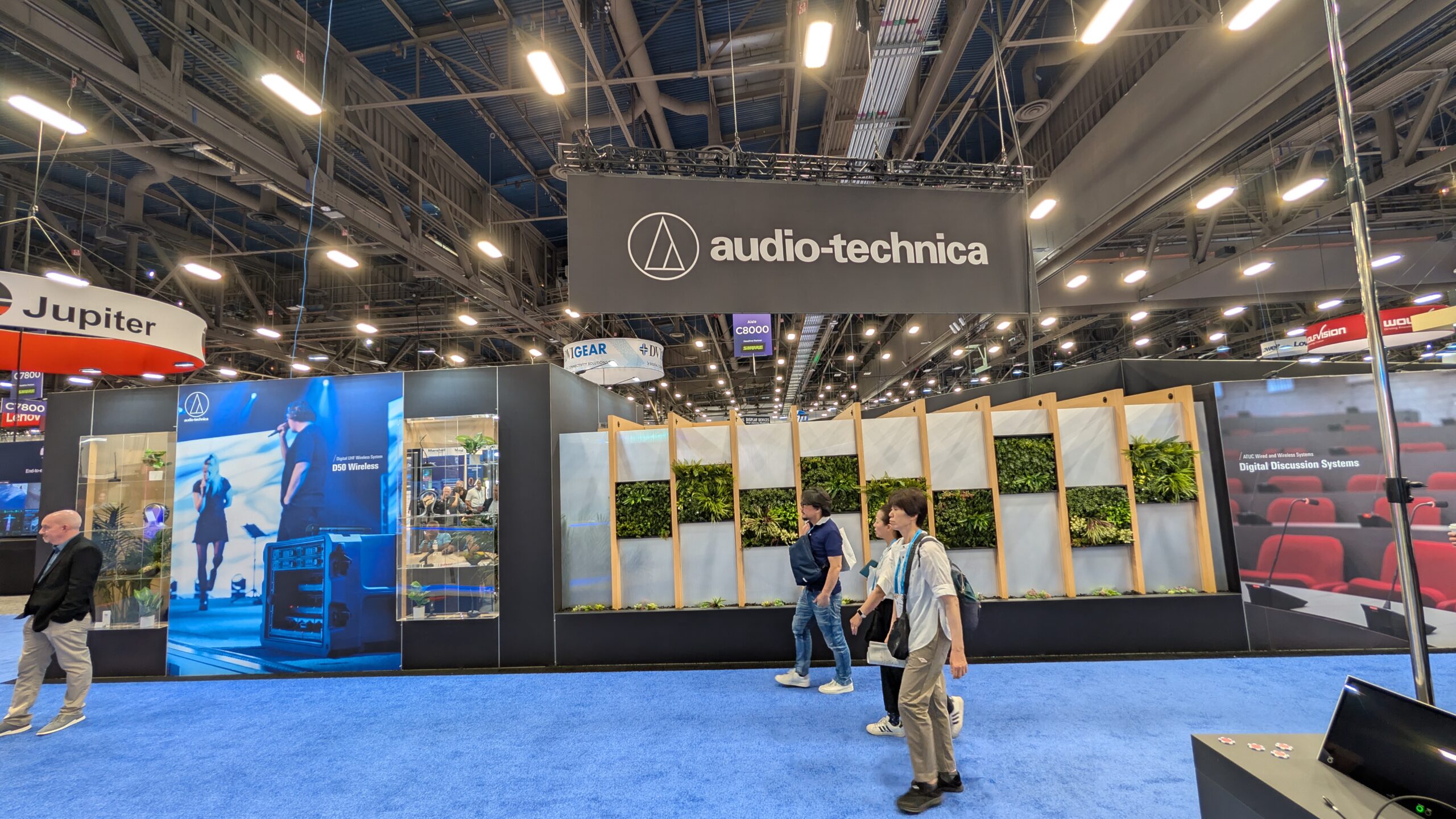
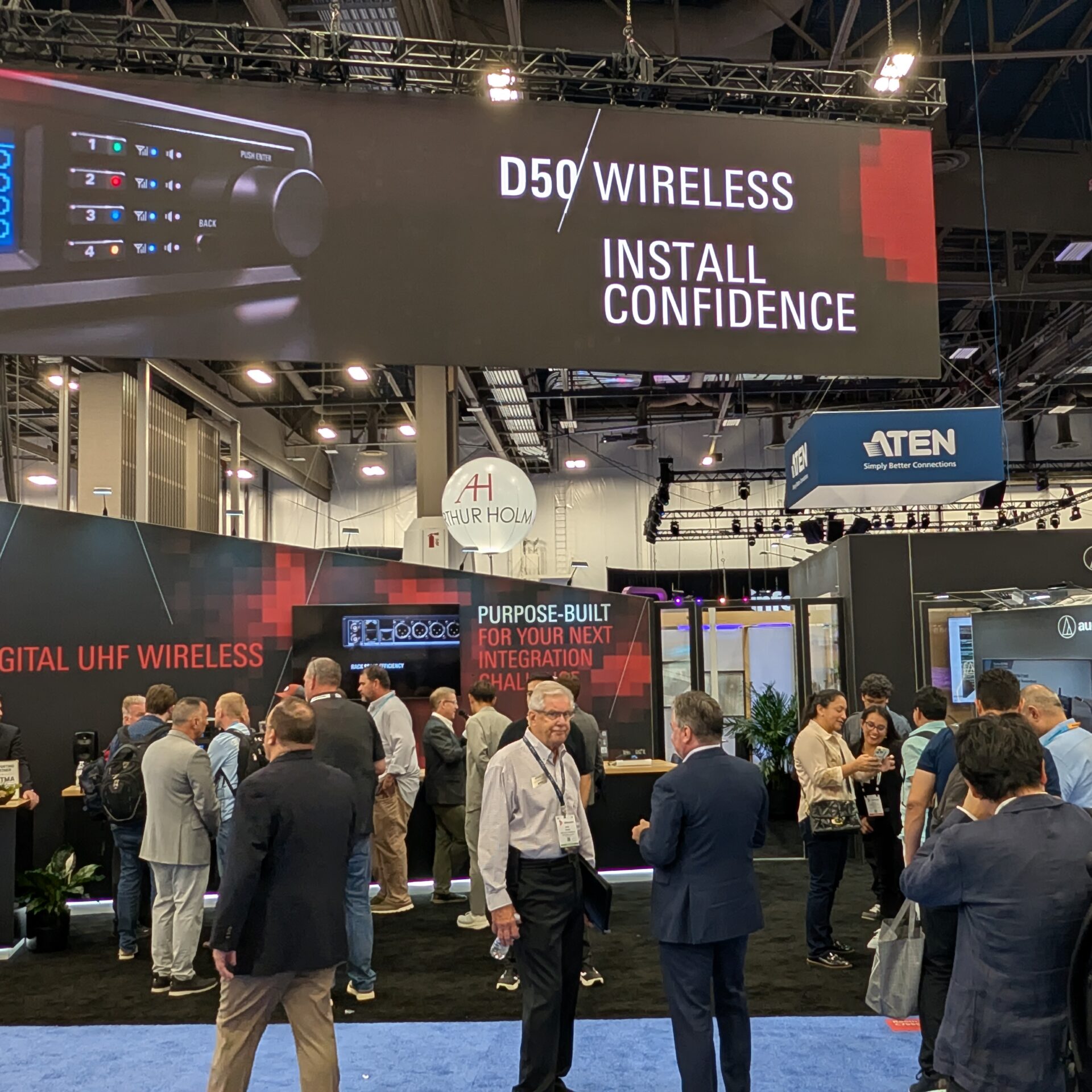
Audio-Technica is highlighting its new D50 Digital Wireless Systems at InfoComm 2026. The system is positioned for a range of applications, including auditoriums and performance spaces, but Mark also pointed to classroom support and workflows built around digital audio and Dante.
That range matters in higher ed. A campus wireless system may need to support a lecture hall during the day, a panel discussion in the afternoon, and a student performance or event at night. Some spaces require more advanced capability, but the system still has to be understandable and supportable by the team that owns it.
Mark’s larger point was that Audio-Technica is trying to map solutions to actual problems rather than presenting every space with the same answer. Budget concerns, voice-only needs, performance requirements, classroom support, and networked workflows all point to different paths.
That is the right framing for higher ed. The right microphone system is not always the most complex one. It is the one that fits the room, the users, the support model, and the budget.
System 20 PRO and the Granular Details That Matter
One of the most practical pieces in the conversation was System 20 PRO Wireless. The detail that stood out was simple: the antenna module can be removed from the receiver and relocated over a CAT cable.
That is exactly the kind of feature campus AV teams notice. External antennas can solve real RF and rack-location problems, but they can also add cost, complexity, coax runs, and planning overhead. A receiver design that lets the antenna module move using category cable changes the install conversation.
Mark described the fit of System 20 PRO this way:
“it’s not going to break the bank either.”
That is a meaningful higher-ed point. Campuses are not always looking for the most expensive path to good audio. They are looking for features that solve actual room problems without creating a pricing model that makes standardization impossible.
A small design decision can matter at scale. If a wireless system makes antenna placement easier, keeps sound quality strong, and fits common campus budgets, it becomes easier to repeat across classrooms, labs, multipurpose spaces, and small event rooms.
The Applications Engineering Team Is Part of the Product Story
The interview kept coming back to access: who campus teams can talk to, how quickly they can get help, and whether support is limited to sales channels or includes real applications engineering.
Mark described his role as leading the applications engineering team, then made the support posture clear.
“we’re not one of those groups that is, like, locked up in a back room.”
That quote matters because higher ed AV teams often need more than a spec sheet. They need to talk through the room. They need to ask whether a product fits the use case. They may need help understanding audio behavior, microphone placement, wireless design, Dante routing, ceiling arrays, or how to simplify a room for faculty use.
Audio-Technica’s applications engineering team gives campus AV/IT teams a direct path for those conversations. The team can be reached at aeteam@atus.com, and Audio-Technica positions that access as a way for AV/IT staff to communicate directly with application engineers.
The more important point is the philosophy behind it. Mark said that sometimes the right answer is not Audio-Technica’s product, but guidance on what the campus should be looking for.
“you might come to me and say, you know what? I don’t have a solution that’s going to work for you, but, you know, this is what you need to look for.”
That is the kind of partner conversation higher ed needs. The campus problem comes first. The product recommendation should follow.
A Real-World Demo Room, Not Just a Booth Demo
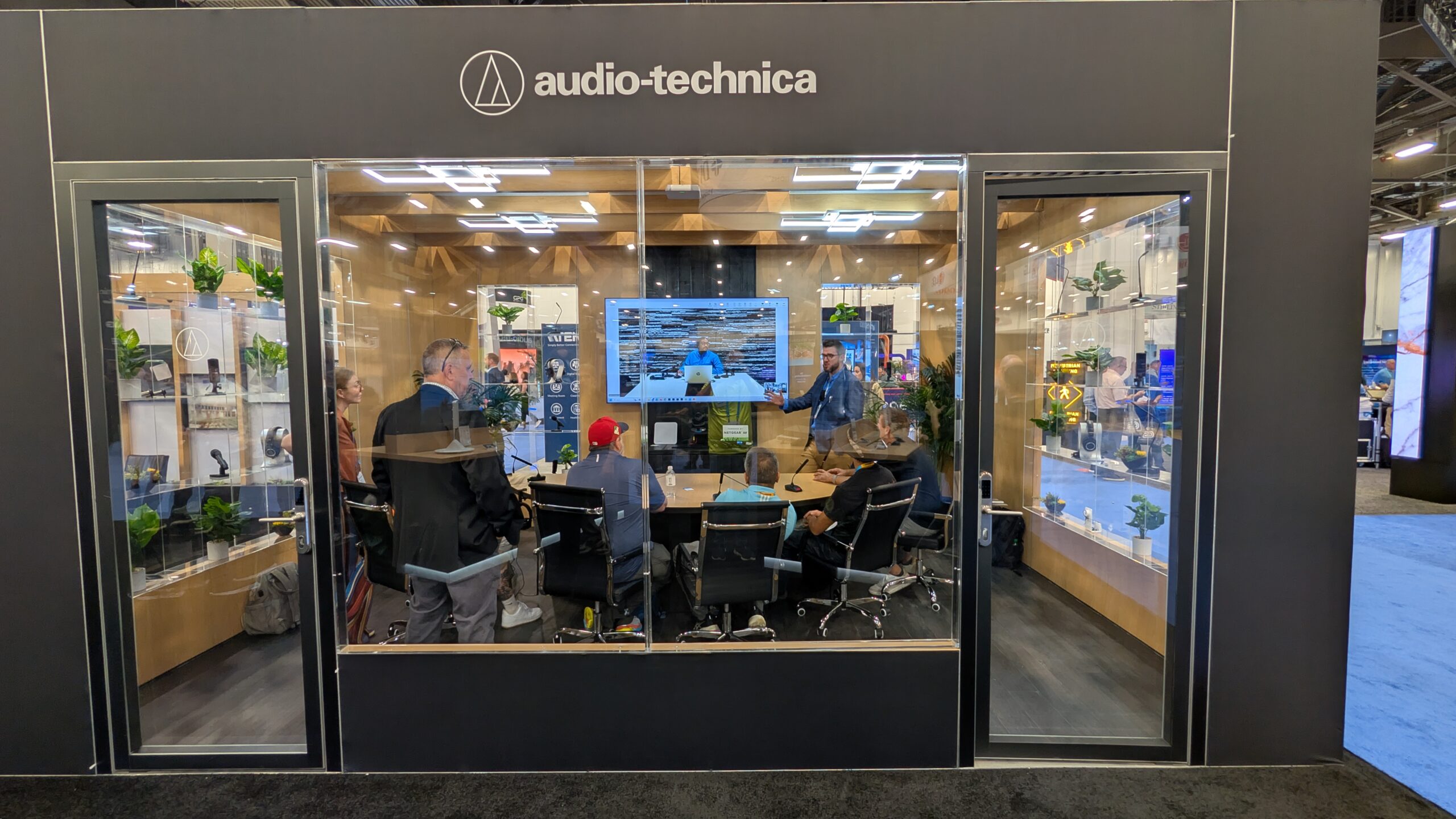
Audio-Technica also has an award-winning demonstration room managed through Microsoft Teams back to its System Solutions Lab in Ohio, designed for real-world remote-learning demonstrations.
That detail fits the higher-ed story because remote-learning audio cannot be judged only in a quiet booth. The challenge is how the system behaves in rooms that resemble actual campus environments: people speaking from different positions, ceiling microphones capturing conversation, remote participants needing clarity, and support teams needing to understand what is happening without always being physically present.
For campuses evaluating microphones, ceiling speakers, discussion systems, network microphones, or digital wireless, the demo environment matters. It can show how the pieces work together rather than presenting every microphone as a separate object.
The Higher Ed Takeaway
Audio-Technica at InfoComm 2026 is worth seeing because the company is talking about audio the way higher ed teams experience it: as a set of room problems, support pressures, user needs, and budget realities.
The company is showing digital wireless microphone systems, System 20 PRO Wireless, Engineered Sound Wireless, D50 Digital Wireless Systems, ATND1061 beamforming ceiling array microphones, ATSP-30 ceiling speakers, network microphones, discussion systems, wired microphones, mixers, and more. The products matter, but the larger value is in the support model: direct access to applications engineering, practical help with system design, and a willingness to meet campus teams in the middle.
For higher ed AV/IT teams, audio is one of the places where user experience and support load collide quickly. Audio-Technica’s message at InfoComm is that the solution should fit the problem, the room, the people supporting it, and the budget behind it.
Make sure to check out Audio-Technica at InfoComm 2026, visit www.audio-technica.com/en-us/commercial-audio, or connect with the applications engineering team at aeteam@atus.com.