






SAVe and HETMA: Turning Sustainability Into Higher Ed AV Action
Some InfoComm conversations do not need a booth number. They need a calendar reminder.
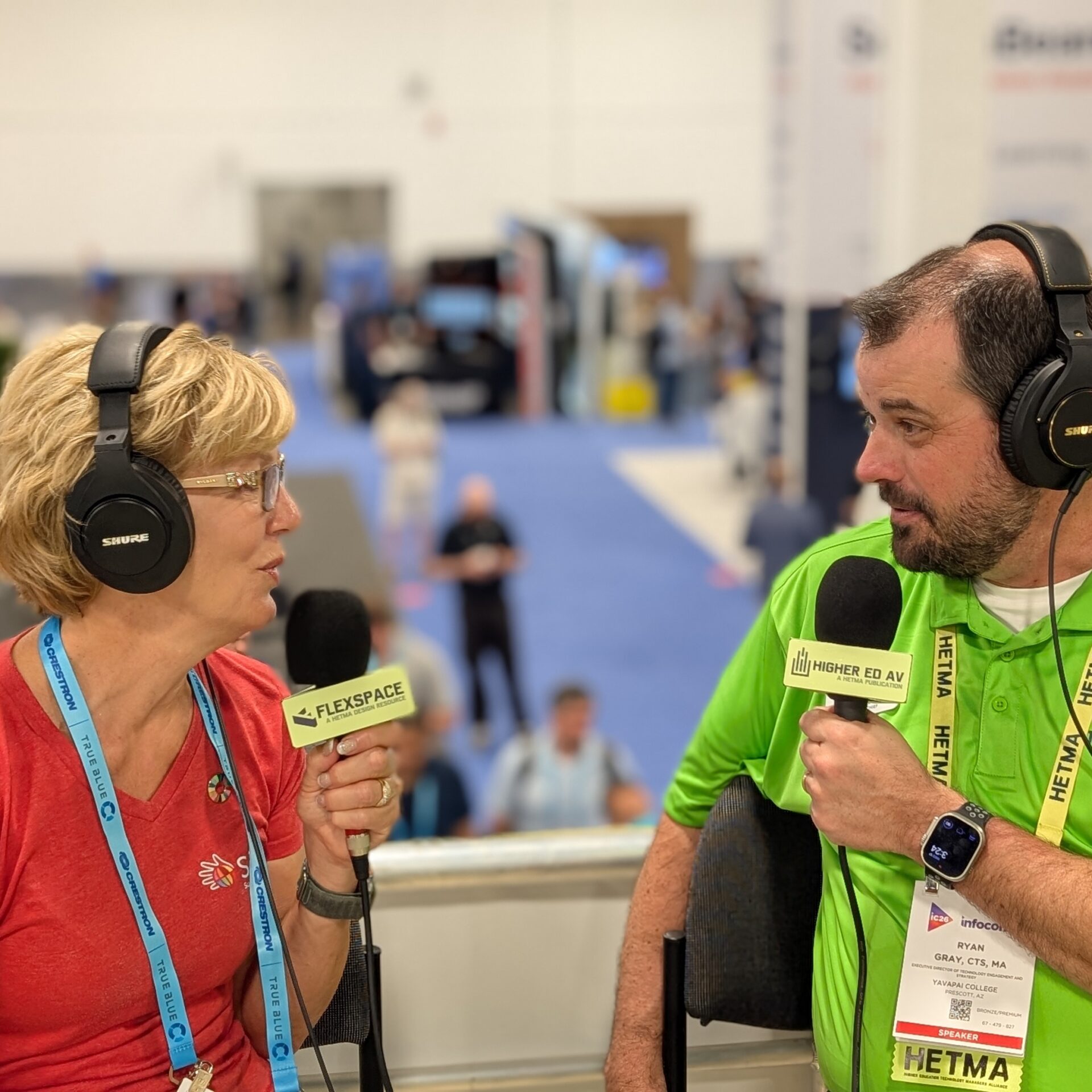
SAVe is not here as another show-floor product stop. The work is bigger than that. In the conversation from the HETMA booth, Christina De Bono, Founder and President of SAVe, talked about the organization’s growing work around sustainable manufacturing, equipment reuse, certification, volunteer engagement, and the upcoming SAVe 2026 Global Conference.
For higher ed AV teams, that matters because sustainability is not an abstract campus talking point. It shows up in refresh cycles, surplus closets, retired classroom equipment, purchasing decisions, packaging, power use, lifecycle planning, and the uncomfortable amount of working technology that can end up with nowhere useful to go.
SAVe’s work gives the AV industry a more practical way to enter that conversation.
SAVe a Second Life
One of the strongest higher-ed connections is SAVe a Second Life. The program is built around keeping AV gear out of landfills by encouraging repair, reuse, repurposing, recycling, and proper disposal. SAVe has established a donation network with educational institutions and non-government organizations, and its HETMA partnership has connected that work directly to the higher-ed AV community.
That is a very real campus issue. Higher ed AV teams often replace technology in volume. A classroom refresh may leave behind equipment that no longer fits the campus standard but could still be useful somewhere else. SAVe a Second Life creates a more intentional path for that gear, especially when schools or organizations with smaller budgets can still benefit from equipment that has useful life left.
Christina shared that Tom Peters is now chairing the SAVe a Second Life committee and initiative. She also pointed to a growing partnership between SAVe a Second Life and HETMA, with the goal of helping AV equipment find new homes instead of ending up in landfills or dumps.
That is where this work becomes very higher ed. Campuses already think in lifecycle terms. SAVe is asking the AV industry to make the end of that lifecycle less wasteful and more useful.
Sustainable Manufacturing and Industry Change
SAVe’s Sustainable Manufacturer Council is also part of the 2026 conference program. The SAVe agenda lists a Sustainable Manufacturer Workshop facilitated by Mike Rogers of Crestron, along with a Sustainability in Manufacturing breakout featuring Wendy Feldstein and Mike Rogers from Crestron, Althea Ricketts from Shure, Sarah Drysdale from CommBox, and Joyce Kwan from Sony Electronics. The session focuses on product impact, energy efficiency, circular economy practices, repair, recycling, sustainable design, and the role manufacturers can play in advancing the 2030 Sustainable Development Goals.
That matters because higher ed AV teams can only do so much after products arrive on campus. The manufacturing side has to be part of the conversation too. Packaging, materials, serviceability, repairability, energy use, documentation, and replacement practices all affect whether campus sustainability goals are actually supported by the systems being installed.
SAVe’s position is that the AV industry has to work across the whole chain: manufacturers, integrators, consultants, campuses, associations, volunteers, and end users.
The Conference to Put on the Calendar
The main call to action is the SAVe 2026 Global Conference, taking place October 13–14, 2026, at UCLA Covel Commons in Los Angeles. SAVe describes the event as a gathering for AV industry leaders and change makers focused on the 2030 Sustainable Development Goals, with registration open through the SAVe 2026 conference page.
Joe Way, PhD, CTS, will serve as an MC alongside Christina De Bono, and the agenda includes keynote speakers Michael Blackman, Managing Director of Integrated Systems Events; Oladele “Dele” Ogunseitan, PhD, Distinguished Professor of Population Health & Disease Prevention at UC Irvine; and Diran Apelian, Distinguished Professor of Materials Science and Engineering at UC Irvine. The program also includes workshops on SAVe Certification, SAVe a Second Life and HETMA, and sustainable manufacturing.
For HETMA members, the especially relevant sessions are the ones that bring this back to campus action: SAVe Certification, reuse and repurposing programs, the HETMA partnership, and a breakout session on bringing SAVe’s mission to universities. That university-focused session includes HETMA members who have completed SAVe Certification and is designed to help attendees develop sustainability plans for their own higher-ed institutions.
Christina’s invitation was direct:
“we encourage HETMA members to attend.”
That is the point of this piece. This is not only a sustainability conference for someone else in the institution. It is a place where higher ed AV people can bring their room-level, campus-level, and refresh-cycle knowledge into a broader industry conversation.
How to Get Involved
SAVe gives people several ways to enter the work: certification, volunteering, donating, and SAVe a Second Life. The organization also points people toward volunteer opportunities through committees and posts monthly committee activity on its event calendar.
That matters because not every campus is ready for the same step. Some may want to start with certification. Some may want to find a better process for retired equipment. Some may want to send staff to the conference. Some may want to get involved as volunteers before making a larger institutional commitment.
The important thing is to start somewhere.
SAVe gives higher ed AV teams a way to connect the work they already do, standards, refreshes, surplus, classrooms, support, and procurement, to a sustainability framework that reaches beyond one campus.
Make sure to check out SAVe Global Conference for Sustainability in AV 2026, October 13–14, 2026, at UCLA Covel Commons in Los Angeles, and visit saveav.org to learn more and get involved.