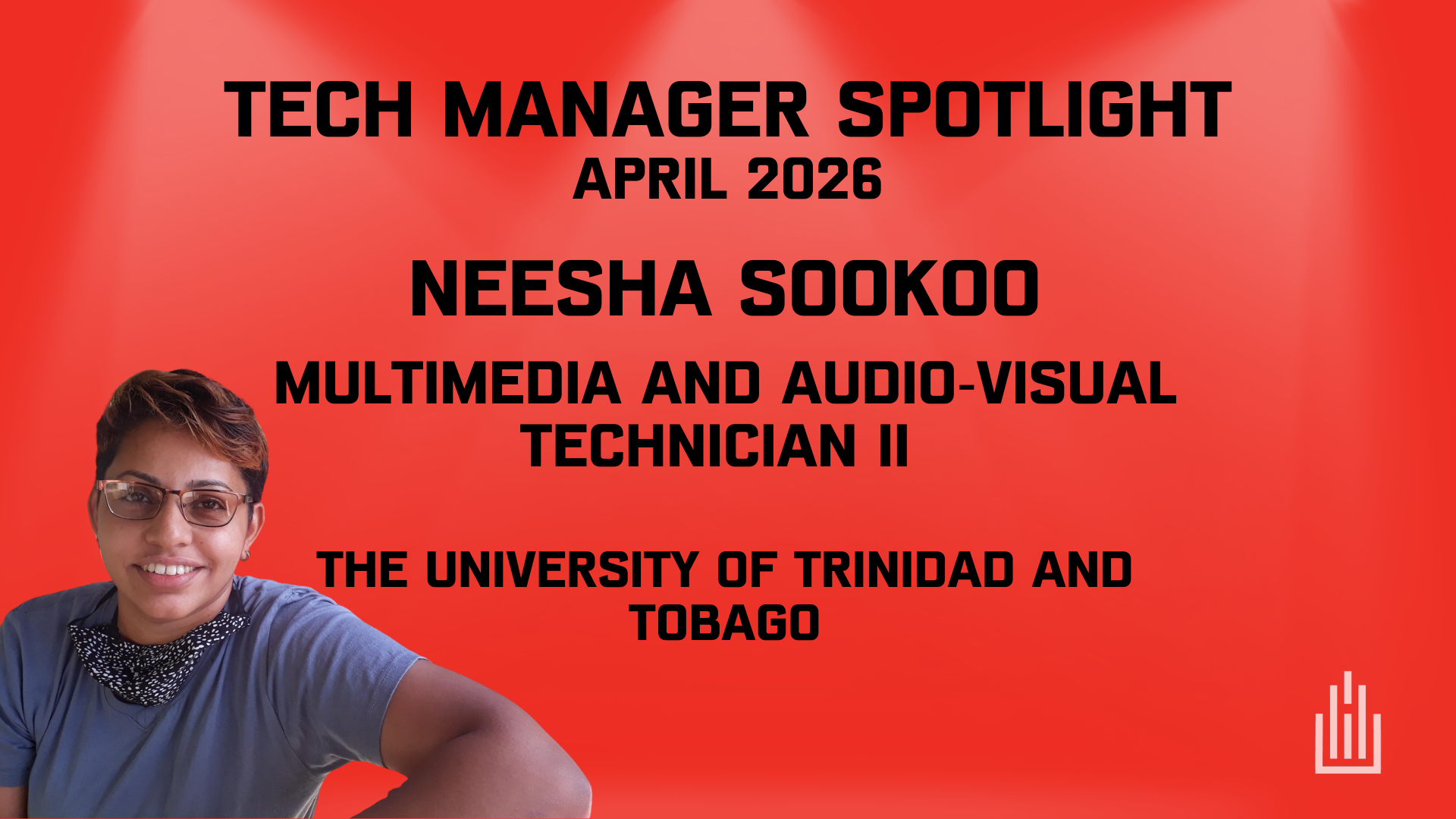
Welcome to this month’s edition of the Tech Manager Spotlight. This month, we are pleased to introduce Neesha Sookoo, a Multimedia and Audio‑Visual Technician II at The University of Trinidad and Tobago.
Neesha has worked in the AV field since May 2022, following nearly nine years of experience in IT customer support and technical troubleshooting. Her professional background is grounded in customer service and continuous learning, and in her current role she supports teaching and learning by aligning technical solutions with pedagogical goals. Her responsibilities include developing departmental documentation such as process workflows and troubleshooting guides, supporting logistics activities, and serving as a Zoom administrator, where she monitors and maintains Zoom Rooms and manages user licenses across the university.
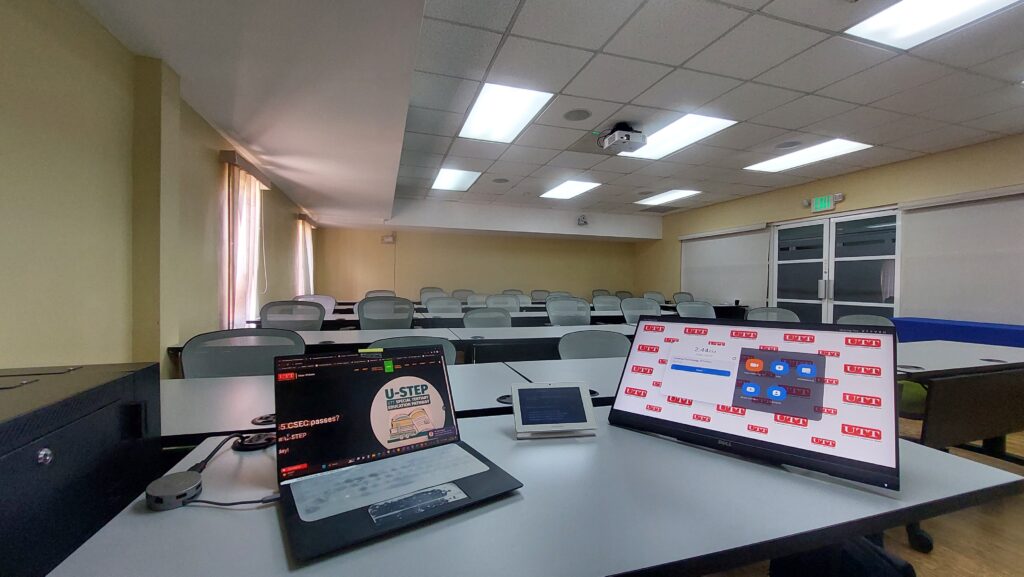
As a team, the AV group at The University of Trinidad and Tobago designs, installs, and commissions audiovisual systems across the institution. This work often involves creating customized learning spaces for both in‑person and hybrid instruction, particularly due to limited architectural standardization across campuses.
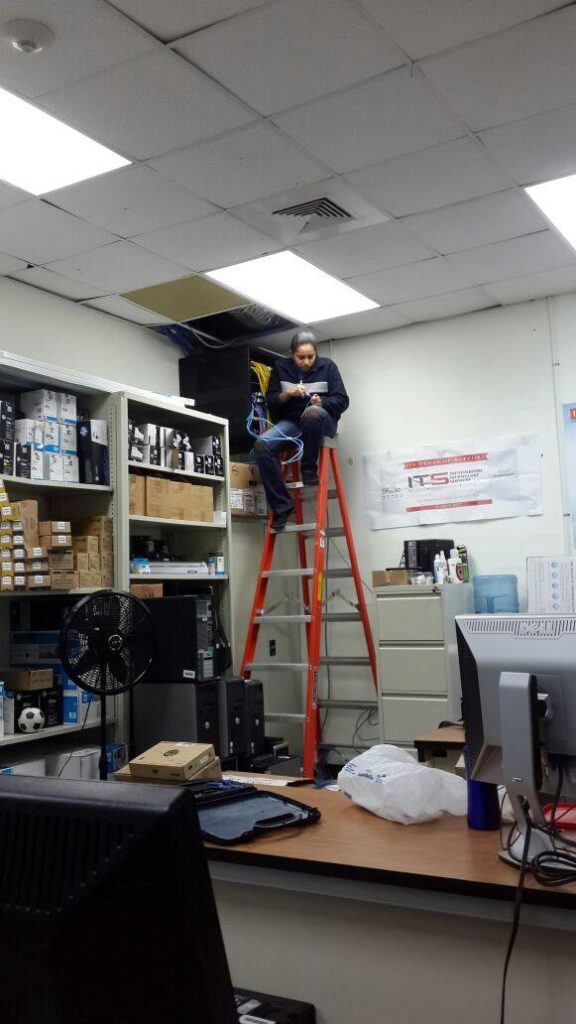
Currently, much of Neesha’s focus is on logistics management, including tracking deliveries, coordinating payment documentation, and organizing equipment storage in preparation for room installations. During periods without deliveries, she works on refining departmental process workflows, using AI tools to improve clarity, consistency, and efficiency so documentation better supports technicians in executing tasks accurately. She also fosters collaboration and innovation by attending industry webinars, staying informed about emerging AV technologies in higher education, and discussing viable solutions with her manager, with the goal of piloting new ideas in existing spaces when possible.
Have you always worked in AV? What did the path look like for you to get to where you are now?
This is my first formal role in AV. My career path has been intentionally flexible, as I never limited myself to a single industry while studying. My primary objective has always been to pursue work that is meaningful and contributes positively to society.
Throughout my career, I have held roles including inventory clerk, auto mechanic, advertising clerk, IT technician, and now AV technician. Each role has helped me better understand how I want to support others and where my skills and interests are best applied.
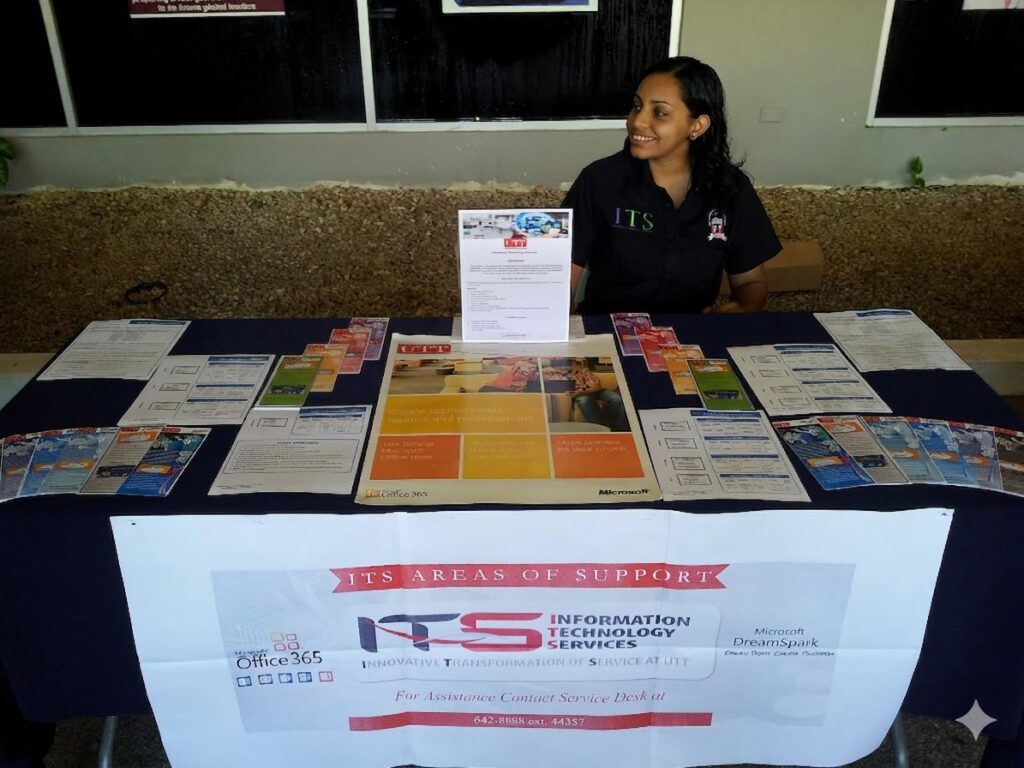
I pursued a degree in Information Technology and Management, which combined IT and business studies. I joined UTT in 2011 as an Information Technology Trainee, later transitioning into a full-time IT Technician role. I remained with the IT Department until early 2022, working across nearly every campus location.
After several years, I sought career growth but encountered limited advancement opportunities. Rather than becoming discouraged, I focused on preparing for the next level by taking on short-term acting IT Technician II roles whenever they became available. I carefully documented my responsibilities and achievements to strengthen my professional profile.
In 2022, while awaiting a permanent IT Technician II vacancy, I learned of a lateral opportunity within the Multimedia Department. Although the role required additional certifications, many were attainable online. I applied, met the requirements, and was ultimately selected for the position I hold today—an outcome that was both unexpected and deeply rewarding.
What is your morning routine?
My mornings begin intentionally. I wake up early to mentally prepare for the day rather than rushing into tasks. This allows me to prioritize effectively and approach the day with focus. I also take time to check in with my roommate and care for my pet before transitioning into work preparation.
After getting ready, I check my work phone for any urgent messages and organize my thoughts for the day ahead. If I am assigned to a campus farther from home, I eat breakfast during my commute and listen to the news or a podcast.
Upon arrival at campus, I conduct a physical walk-through of teaching spaces to ensure systems are operational. I use this as an opportunity for light exercise, which helps me stay focused throughout the day. Once at my desk, I log into administrative dashboards to monitor Zoom Rooms, respond to tickets, and return calls. Depending on the day, this may include team meetings, on-site support, or professional development through reading and research.
On quieter days, I review AV resources and certification materials to expand my technical knowledge. I also take regular short breaks to maintain focus and reduce fatigue.
What does an average weekday look like for you?
On a typical weekday without installation projects, my schedule is fairly predictable and revolves around responding to emails, tickets, and team communications. Exceptions include network outages, departmental reporting, or researching equipment for custom AV installations.
What does your busiest day look like? What are the challenges your role faces, and how do you overcome those?
My busiest days involve monthly maintenance visits to the Tobago campus, which requires inter-island travel. These days begin two hours earlier, end two hours later than usual, and involve significant coordination due to travel logistics and financial constraints.
I’m usually at the airport by 6am and checked through the boarding gate by 6:30 am to avoid the lines. The flight itself is only 20 mins, and I arrive in Tobago by 8:20 am. I then take a taxi to the campus because it’s more cost-effective than renting a vehicle for the day. I’ve done this often enough now that I call the driver to pre-arrange my pick-up and drop-off times, so less time is lost on the actual day.
When I arrive at campus I check in with the administrative staff to find out if there have been any anomalies with the AV system, or significant events like recent power and network outages as this results in individual AV components becoming out of sync with the rest of the system.
During these visits, I assess system performance, document maintenance findings, and record equipment details using standardized reporting tools. We use an app to record the health status of the AV system and that information is automatically transposed into a ticket format for the manager to review and approve. There’s also a new maintenance template form that we use to record info in a more granular format.
When issues cannot be fully resolved on-site during that visit, I document the current state of the system and consult with my manager to ensure the most effective course of action before I depart. The taxi is usually 15 minutes early for our pre-arranged pick-up time, so I aim to be packed up fully before his arrival so I can be at the airport to collect my boarding pass and catch the subsequent flight.
Recently, I’ve started to use my waiting time to finish off the more detailed maintenance template form. In this way the information is fresher in my mind and it reduces my workload for the following day. If there are no flight delays, I arrive in Trinidad by 5pm.
On a good day, I can be home by 5:40 pm, and on a bad day it could be 6:30 pm. Thus far I’ve never missed my return flight back home, but that would be a very, very bad day if it ever occurs.
What do you enjoy doing on weekends? How do you spend your time outside of work?
Outside of work, I am an avid hiker and enjoy exploring trails along the Northern Range, as well as occasional beach trips. I also dedicate time to home improvement projects and volunteer work.
This year, I set goals to hike weekly, to rebuild endurance for a future marathon, and to repaint a local community center. I am pleased to be ahead of schedule on both.
What’s your favorite way to unwind or recharge?
To unwind, I seek quiet spaces where I can decompress without interruptions. My favourite way to unwind is to reduce my reachability, which helps me reset mentally. For recharging, food is my preferred short-term option. I am literally and philosophically refueled by food. If I’m in a crunch to finish something quickly, I have a quick snack and I find that lifts the brain fog quicker, and gives me the energy for the task ahead.
What inspired you to get involved with HETMA, AVIXA, and other higher-ed orgs?
I became involved with organizations such as HETMA and AVIXA in search of professional community. I valued HETMA’s inclusivity, diversity, and visible female representation in leadership, which reinforced my confidence and sense of belonging within the field.
Where do you see your career trajectory going in the next five years? Where do you envision yourself?
My immediate goal is to obtain CTS certification by September 2026. I also plan to attend InfoComm to gain broader exposure to the AV industry and evaluate potential career paths that align with my values and priorities.
Over the next five years, I anticipate making difficult but necessary decisions. As the saying goes, you can be comfortable or you can be brave—but not both.
What is your life motto and how do you apply it to your daily routine?
My personal motto for the past three years has been “slowly but surely.” It reminds me to pursue steady, incremental improvement rather than overwhelming long-term goals.
I apply this philosophy by taking small personal and professional risks, particularly in developing my communication and interpersonal skills. Rather than relying solely on feedback forms, I gather insights through classroom observations and direct conversations, which has helped me grow socially and professionally.
Comparing your career path over time, what are some of the moments, accomplishments, or projects that you’re most proud of?
I am proud of the steady progress I have made throughout my career by seeking roles that align with my values and strengths. I am also proud of completing my Master’s degree in Marketing six months early, despite the challenges of a condensed thesis timeline and group coordination across countries. One of my group members was from Barbados, and later realized she had a time constraint with her scholarship. We collectively agreed to complete the thesis and marketing campaign ahead of schedule, and we graduated ahead of our entire cohort as well.
Additionally, I consistently received the highest rating in the entrepreneurial category of employee performance appraisals during my time as an IT technician. My supervisor at that time had an ill-applied rationale of decreasing your rating for each section by saying “I’m leaving room for you to improve”. Most of my co-workers were discouraged by this, but I looked forward to this one section where my out-of-the-box ideas translated to financial savings and greater customer satisfaction.
Most recently, I was selected for HETMA’s PRISM Scholarship for 2025, a highly competitive DEI initiative with limited annual placements. I hesitated to apply because I thought my chances were slim to none and I didn’t have as much experience in the AV industry as other applicants would. However, my perspective shifted when one of my work colleagues applied in 2024 and was selected. This gave me the confidence needed to apply, and thankfully I was selected.
How would you describe your leadership style?
My leadership style is collaborative and built on open, direct communication. While I do not seek traditional leadership roles, I prioritize clarity and mutual understanding when working with colleagues. Often if I meet someone new I will ask them to “please skip the formalities and describe what you want to accomplish, so that I/ we can figure out the best way to get to that goal”.
How do you see the role of AV evolving in higher education?
The COVID-19 pandemic significantly accelerated the adoption of collaborative AV technologies in education. What was once considered a luxury has become essential infrastructure, and increasingly, a core pedagogical requirement.
As time goes on, I foresee the role of AV shifting from essential infrastructure consideration to mandatory pedagogical criteria for how education is captured and dispensed in schools at all levels. With this re-classification, it should mean that as the student through their education that the tech grows with them as well, so that growing brains get a tech diet that’s appropriate for their level of cognition.
At the higher education level, I foresee AV becoming one of the biggest cost-saving mechanisms to universities. AV is regularly being leveraged to showcase computer modelling and simulations reducing the need for dedicated spaces such as labs. This means that universities could scale back in size and function with few hybrid, multipurpose rooms to reach the same or a greater quantity of students.
I foresee the on-demand dispensing of higher ed becoming the norm as people try to balance high inflation, low salaries, and utilizing their available hours to attain a comfortable stand of living.
With this new format of dispensing education, that could mean a deprioritizing of collaborative technology and a shift back to instructional-type tutorials. Thus the traditional room design will be adjusted again. Perhaps this instance will have one camera (either a static mounted cam or an AI-enabled cam with auto-tracking and autozoom features), one mic for the sole instructor, no speakers (because it’s a pre-recorded session), and a screenshare from your compute device or a digital screen (not necessarily a whiteboard, more like an all-purpose content board for interactive video, text and annotation).
From these scenarios alone it wouldn’t be surprising to see higher education graduates starting their own university using a high-quality home studio and rivaling the traditional higher education institutions. This could become a possibility when the available technology can level the playing field of both competitors.
What’s a lesson you’ve learned the hard way in your career?
One lesson I learned the hard way is that friends and work colleagues are two separate and distinct groups of people.
What advice would you give to someone just starting out in AV or higher ed tech?
For those starting out in AV or higher education technology, perseverance is essential. Early uncertainty is normal. Explore different roles, identify what resonates with you, and once you find your fit, pursue it with focus and commitment.
What’s something people often misunderstand about your work?
A common misconception about my work is that AV and IT are interchangeable. While related, they require distinct skill sets. Another misconception is that soft skills are secondary. In my experience, communication, empathy, and adaptability are what truly differentiate strong technicians.
Connect with Neesha: LinkedIn