

Every year, I leave InfoComm energized. I get to see new products, reconnect with friends and colleagues, and spend several days immersed in the technology that many of us are passionate about. InfoComm 2026 was no exception. But this year, I left with something else on my mind.
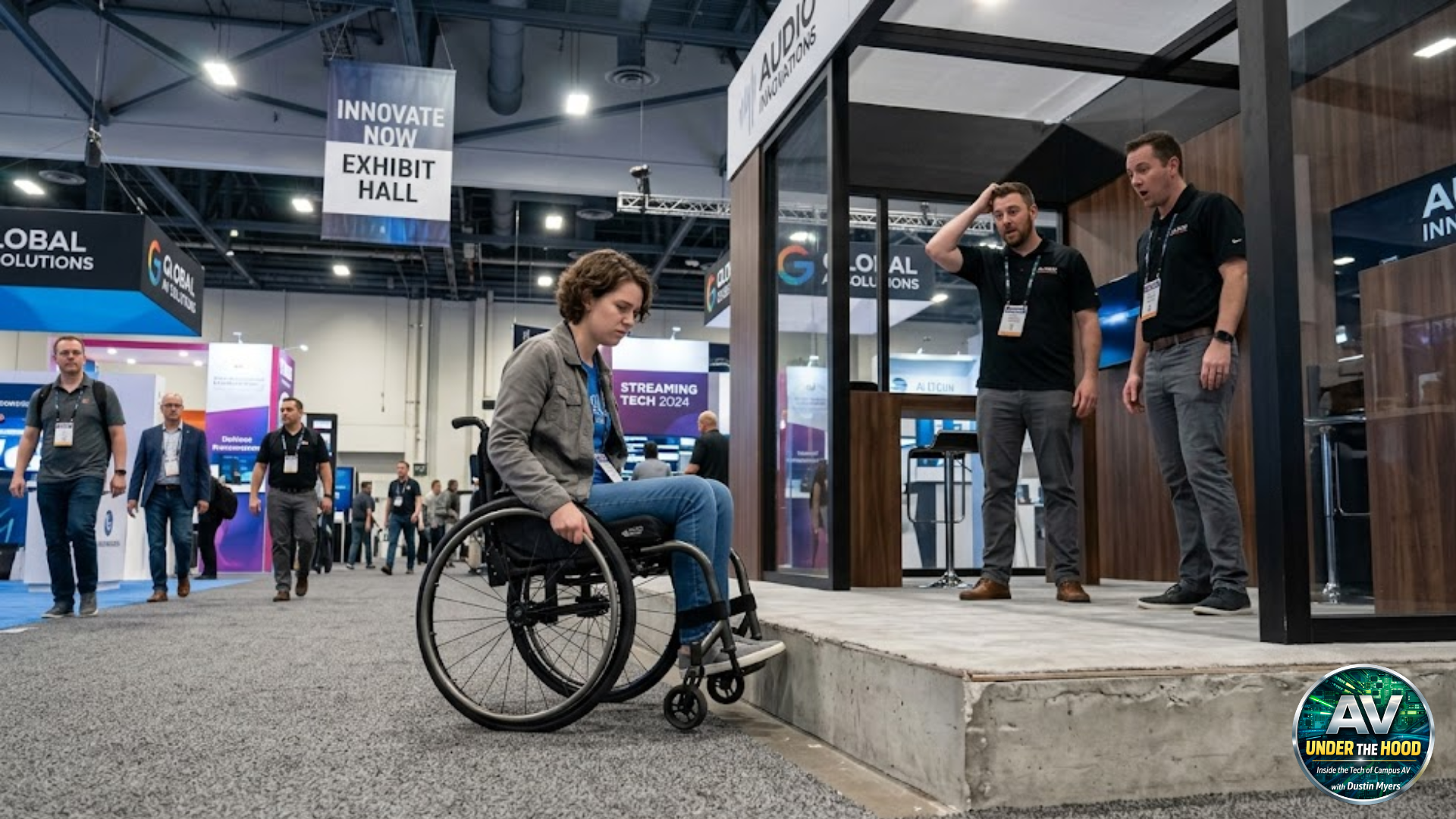
As I walked the show floor, I noticed several attendees using motorized wheelchairs struggling to navigate vendor booths. In most cases, the booths technically had accessibility ramps. On paper, they were accessible. In practice, many weren’t.
Furniture, products, and crowds created choke points, making maneuvering nearly impossible. I watched attendees attempt to enter booths, only to turn around because there simply wasn’t enough room to move comfortably or safely.
As AV professionals, we spend a lot of time talking about accessibility in classrooms and conference rooms. We rightfully push for technology that allows everyone to participate. But somewhere along the way, I think we may have overlooked the experience of the very people attending our industry’s flagship tradeshow.
Anyone who has ever designed a classroom knows that meeting code and creating a usable space are not always the same thing. A room can technically meet requirements while still being frustrating to navigate. The same principle applies to trade show booths.
If an attendee can’t comfortably enter your booth, approach your products, or participate in a demo, then they’re not really part of the experience. And that’s more than an accessibility issue. It’s a customer experience issue.
The reality is that accessibility benefits everyone. Wider pathways help more than just wheelchair users; they make it easier for anyone trying to get into or move through a booth. When sightlines are clear and layouts aren’t cluttered, people can actually see the products and have conversations instead of fighting through a maze. Good design isn’t about checking boxes. It’s about removing friction.
There’s also a cost to getting this wrong. A booth that’s difficult to navigate doesn’t just frustrate attendees; it reflects on the vendor. It limits engagement and leaves people with an impression that the space wasn’t designed with them in mind. That perception matters, especially in a space built around showcasing innovation and user experience.
I honestly don’t believe any manufacturer is intentionally creating barriers. I know a lot of the people building these booths, and the effort that goes into them is real. But accessibility still tends to be treated like a checkbox rather than built into the design from the start. That’s where diverse perspectives matter.
Booth layouts should be looked at the same way we design learning spaces. Not just “is there a ramp,” but whether people can actually move through the space, see products, and engage. The question is pretty simple: can everyone actually experience what we built? That’s the point of this industry. We build experiences. And if people can’t fully access them, then something isn’t working the way it should.
I don’t think this is about anyone doing something wrong. It’s more about how the spaces are designed and what gets missed when you’re focused on everything else happening in a booth. Sometimes the biggest issues under the hood aren’t technical at all; they’re the assumptions we don’t question until someone runs into them.