

HETMA has always been at its best when it feels like home.
Not home in the sentimental, decorative sense. Not home as a theme for banners, shirts, or conference graphics, though I am sure we will have some fun with that too. I mean home as the place where you are known, where you belong, where people notice when you are missing, and where people expect you to contribute because they know you have something worth contributing.
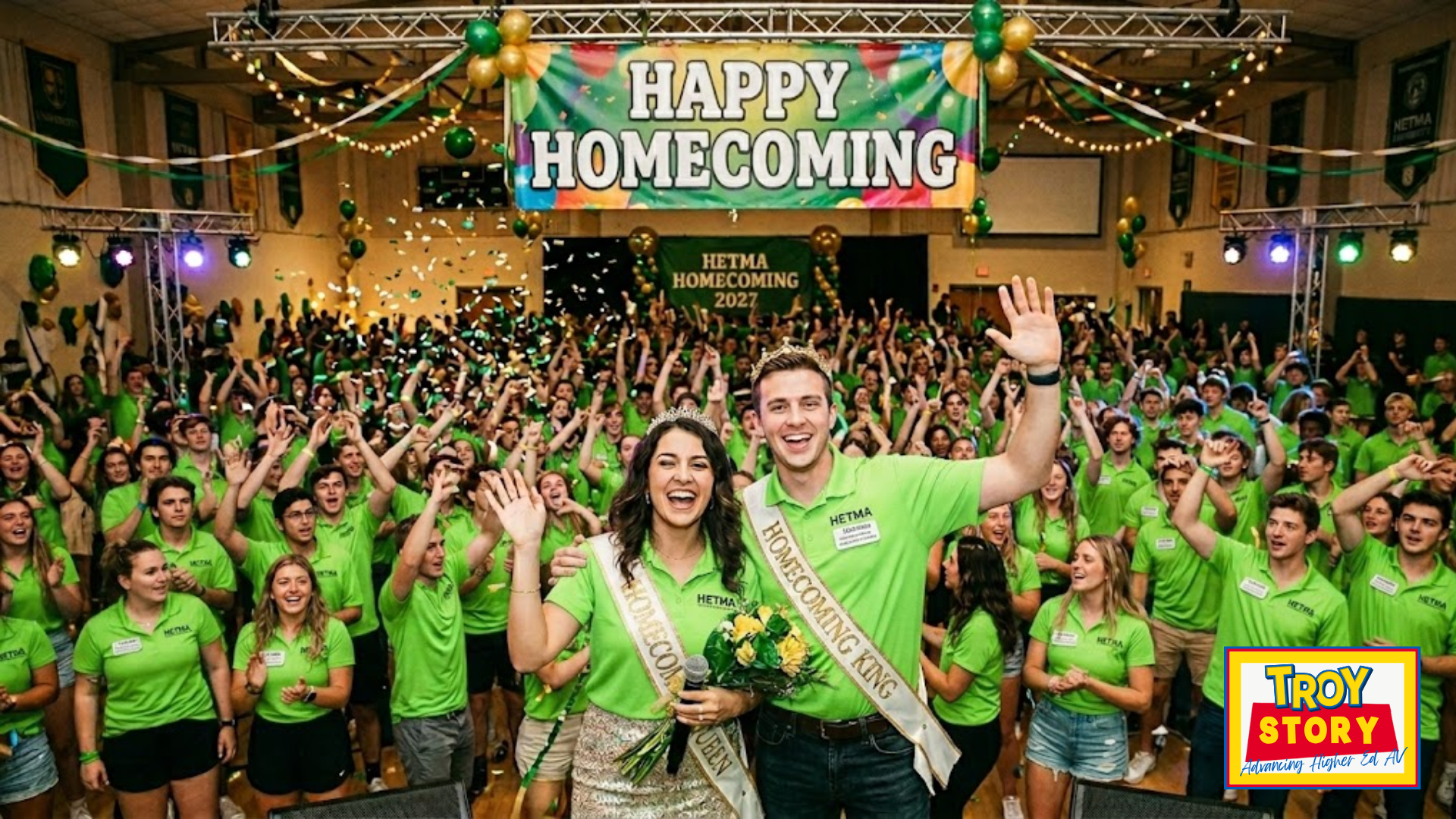
That is the spirit behind this year’s HETMA theme: Homecoming.
Over the last several years, HETMA has grown in ways that would have been hard to imagine when this organization first started. We have crossed 10,000 members. Our content reaches more people than ever. Our events, media, programs, and conversations are being seen by a larger higher ed AV audience than ever before.
That is worth celebrating.
But growth also forces honesty. As we have gotten bigger, there are ways we have drifted from some of the things that made HETMA so powerful in the first place. Not because anyone stopped caring. Not because the mission changed. But because scale changes things. When a community grows, it becomes easier for people to watch from the outside instead of stepping into the conversation. It becomes easier for members to consume content without feeling personally connected to the people, the work, or the mission behind it.
That is not a failure. It is a challenge. And it is one we are choosing to meet directly.
Homecoming is about coming back to the core of who we are: a community of higher ed AV professionals helping each other get better at the work we do every day.
That means a renewed focus on technical conversations. It means more practical, useful, real-world content. It means talking about systems, standards, support models, classroom technology, design decisions, lessons learned, failures, fixes, and the things we only really understand because we live this work on our campuses.
But it also means something deeper than programming choices.
It means asking how we get our newest members to feel the same sense of ownership that our original members felt. It means asking how we turn viewers into participants, participants into contributors, and contributors into leaders. It means reminding people that HETMA was never supposed to be something you simply watched. It was meant to be something you joined.
That is what happened to me.
I did not get involved in HETMA because I had some grand plan to become deeply involved in a professional organization. The truth is much more personal than that.
HETMA came into my life at a time when I suddenly had space.
For years, so much of my time and energy had been tied up in my daughter Brooke’s medical issues. Appointments, research, worry, advocacy, trying to find answers, trying to make sure she had what she needed. When that part of our lives finally changed, when the constant medical fight was no longer consuming the same amount of time, I had time back that I did not really know what to do with.
HETMA arrived at exactly the right moment.
At first, it gave me somewhere to put that energy. It gave me conversations to join, work to do, and people to connect with who understood the strange, specific, often chaotic world of higher ed AV. People who knew what it was like to support classrooms, faculty, events, budgets, aging systems, impossible timelines, and all the other things that come with keeping technology working on a campus.
But over time, it became more than something to fill time.
It became a place where I could contribute. It became a place where the things I had learned, the mistakes I had made, the opinions I had formed, and the experiences I had lived through could actually help someone else. It became a community that gave me value, but also asked something of me in return.
That is why I still do the work.
Not because it is easy. Not because there is endless free time. Not because every project is glamorous or every conversation is simple. I do it because HETMA gave me a place to put my energy when I needed one, and because I know there are other people who need that same kind of place now.
Someone else is out there watching a session, reading a post, listening to a conversation, or standing near the edge of the room wondering whether they belong here.
They do.
But belonging is not passive. Community does not happen just because people are present. It happens because people choose to engage.
That is the invitation of Homecoming.
If you have been around HETMA from the beginning, come back to the center of the mission. Share what you know. Reconnect with the technical conversations. Help newer members understand not just what HETMA does but why it matters.
If you are newer to HETMA, do not wait for someone to give you permission to participate. Ask the question. Join the committee. Attend the session. Show up to the conversation. Reach out to someone whose work you respect. You do not have to be the most experienced person in the room to have something valuable to offer.
And if you are one of the many people watching from the outside, this is your invitation to step in.
We are grateful that people are watching. The numbers matter because they tell us the work is reaching people. But HETMA was built for more than views. It was built for connection, collaboration, and community. A viewer can learn from HETMA. An engaged member can help shape it.
That is what this year is about.
Homecoming is not about going backward. It is not nostalgia for a smaller organization or a simpler time. We should be proud that HETMA has grown. We should be proud that more people are finding us, learning from us, and seeing value in what this community creates.
But as we grow, we have to make sure we are still becoming more HETMA, not less.
More technical.
More connected.
More useful.
More welcoming.
More engaged.
More willing to do the work for each other.
We made it to 10,000 members. Now the work is making sure those members know this is not just an audience.
This is their community.
This is their organization.
This is home.