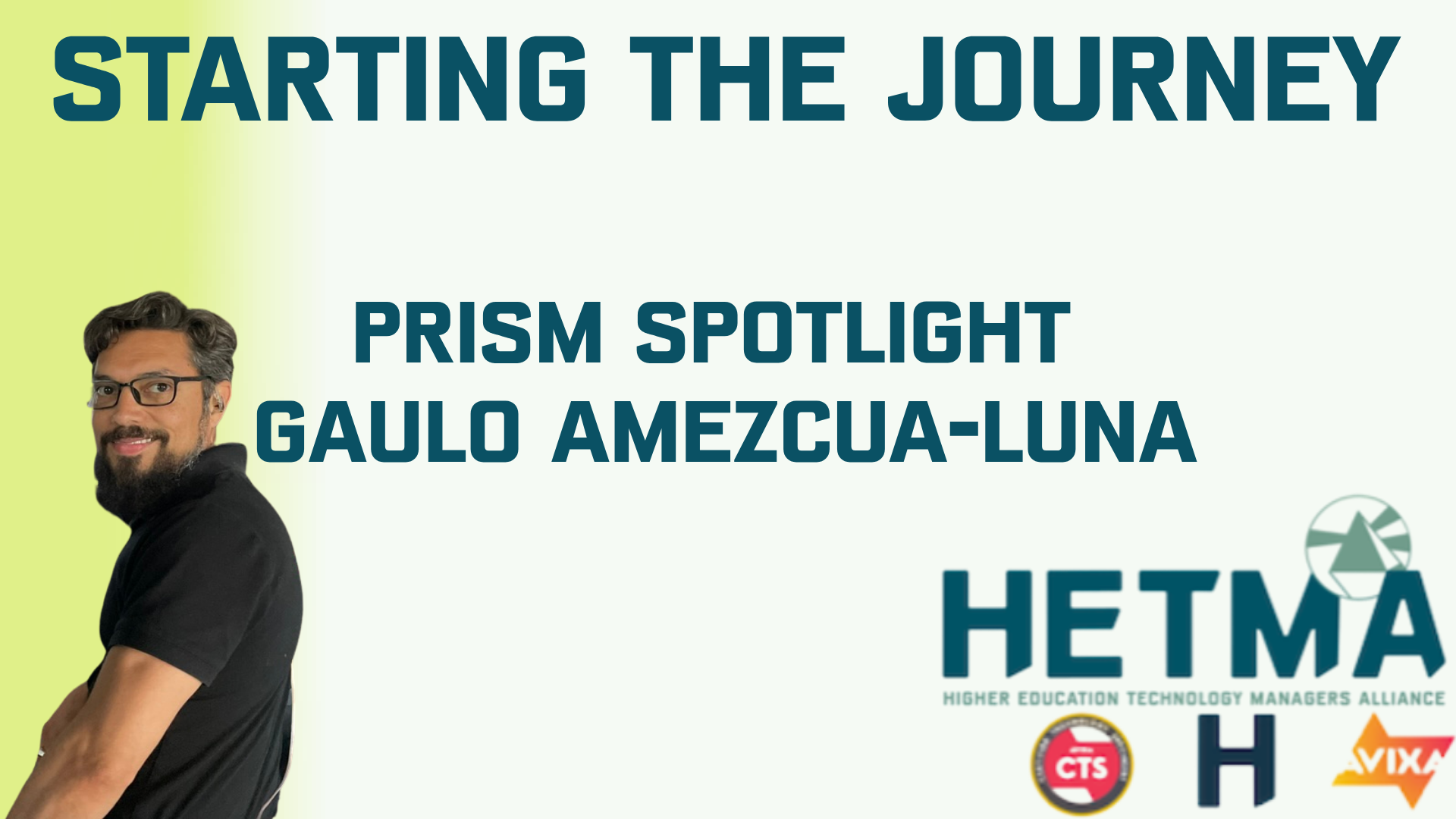
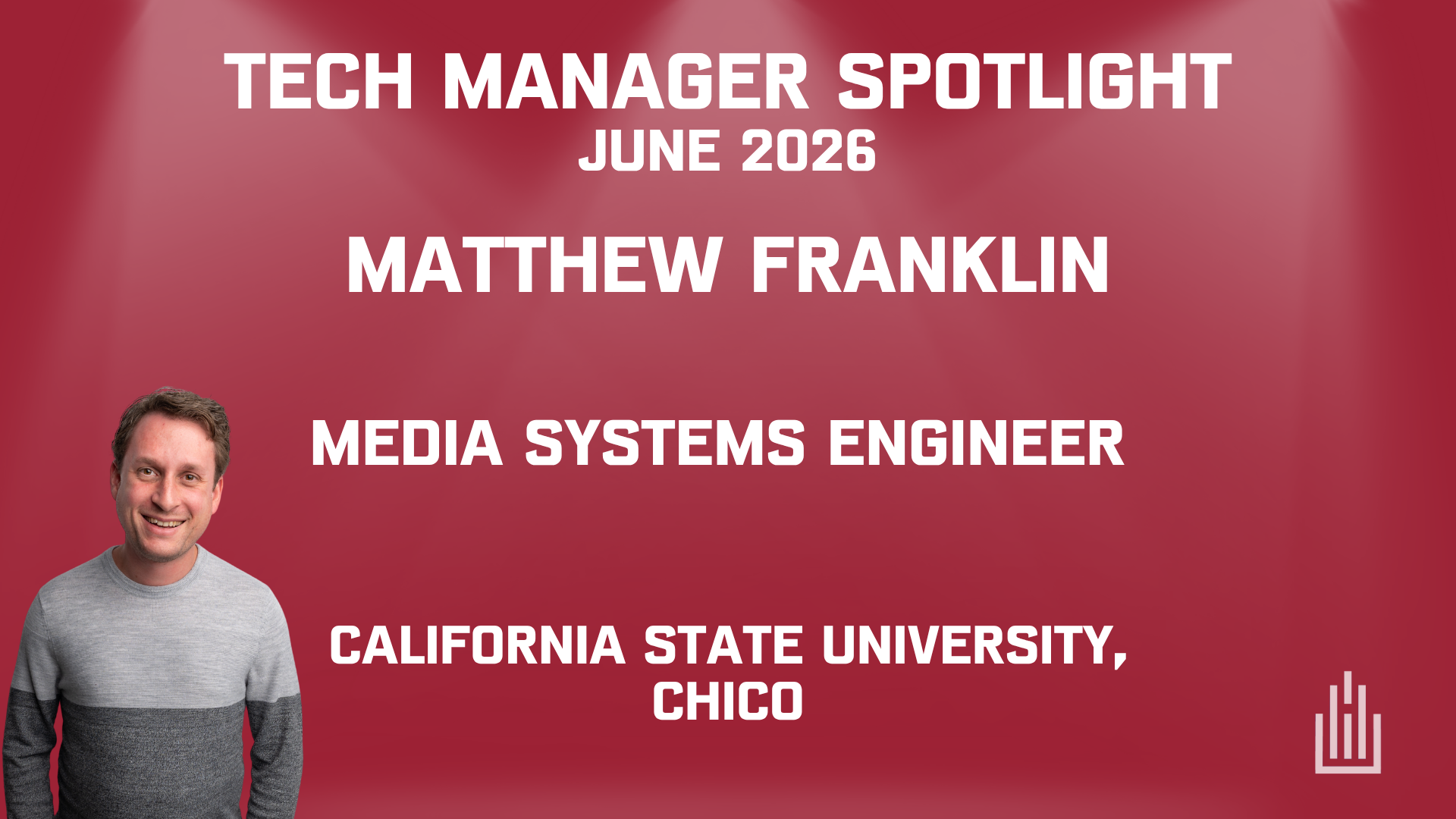

Matthew Franklin is a Media Systems Engineer with Classroom Technology Services in the Division of Information Technology at California State University, Chico. In his role, Matthew focuses on building practical, software-driven solutions that solve the kinds of everyday AV challenges many of us run into but rarely have time to fix at scale. His work often lives at the intersection of AV and scripting, where small automation efforts can eliminate high-volume support issues and improve consistency across shared systems.
Recently, Matthew was also elected as the new Advisory Chair for HETMA. Congratulations to him on being voted into this role and taking on a leadership position that reflects both his technical work and his commitment to the higher ed AV community.
Right now, he is wrapping up an open-source project designed to stabilize Windows audio and display settings on shared machines. The tool enforces a known-good baseline at login and logout, addressing one of the most common classroom support issues tied to display configuration changes. The solution is open sourced at Windows Audio and Display Baseline Enforcer.
From there, he is continuing to expand his Instructor Contact System, an automated platform that helps technology teams connect with instructors based on where and when they teach, making proactive communication more scalable across campus. This project can be found here Instructor Contact System.
Within his department, Matthew emphasizes collaboration through regular all-hands conversations. By bringing together staff from a wide range of backgrounds, including help desk, conferencing, engineering, and even custodial roles, he creates space for ideas that might otherwise be overlooked. For him, innovation is less about hierarchy and more about making sure the right ideas have a place to surface.
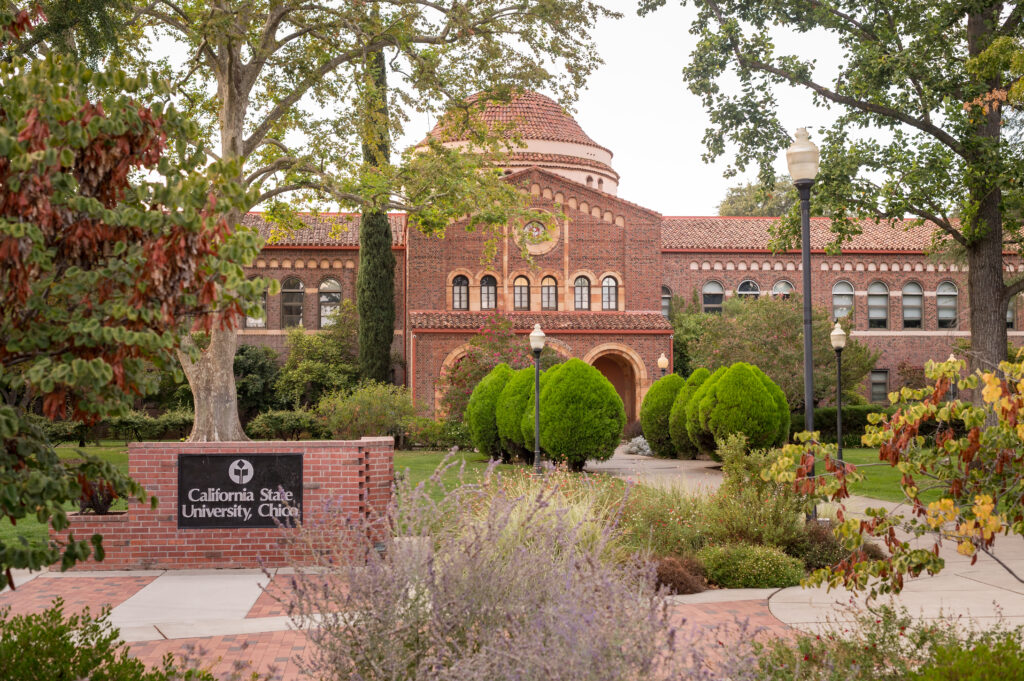
Have you always worked in AV? What did the path look like for you to get to where you are now?
Working in AV was really my goal from the start, but at one point in my career, it was my goal to never be involved in AV again. In high school, I was on the tech crew of our on-campus theater and worked for sound companies at festivals during summers. I actively searched for colleges that had related programs and ended up getting a double-option BA in Recording Arts and Music Industry from Chico State.
Upon graduation, I started my own AV events and mobile studio business, which became very successful but was very demanding, as almost all my nights and weekends were booked months in advance. I met the love of my life around this time, who worked a typical 8-5 job, so when a larger AV events and integration company offered to buy out my company and give me an office job with normal hours, I instantly took it. I was initially hired as fleet manager, but shortly after joining, I was tasked with getting the integration side of the business back up and running.
Less than a year after I joined, COVID hit. Now the small integration side of the business I was leading had become the only way to keep the lights on, as all events were cancelled. The stress was astronomical because with that constrained cash flow, one bad bid could tank the company. If I didn’t manage the situation properly, people could lose their jobs, and the owner could lose his house, as it was collateral for our lines of credit, but I still had a job and realized how fortunate I was to not be self-employed in events at that time.
We made it through COVID, then the equity offer I had with the owner was rescinded, as my division was not as profitable as events. I found myself working late hours and weekends again, which is what I wanted to avoid in the first place, so I told my wife that I can’t do this anymore and had to leave. I swore I would never work in AV again. I promised to finish the projects I started and ensure a smooth transition.
Since I was only working on existing projects that were winding down, the extra time I had, plus the commission checks coming in, afforded me significant runway to re-tool my skills to change careers. I decided I’d be in IT, since the networking, programming, and server administration parts of the integration job were my favorites. I speed-ran my Security+ cert, grew my home lab, was doing Hack The Box CTF challenges, started studying for sys admin certs, and completely re-did the IT infrastructure at my last employer before I left.
I started applying for IT jobs throughout the city, including at Chico State. One of the roles was for Classroom Tech, which seemed like an AV job, but I figured it would get my foot in the door with IT. I even mentioned in the interview that I don’t see myself doing AV in 5 years, and it was something I wanted to move past.
I took the job and found myself with the smartest and most relaxed group of people I’ve ever been around, who inspired me to learn Python. Once I knew one programming language, my world changed. There are so many opportunities for automation, improvement, and custom systems in our environment and the vertical. Solving problems by creating software is really what makes me excited to go to work.
What is your morning routine?
My dog gets a walk every morning, rain or shine. It’s great to take the walk to prepare and get motivated for the upcoming workday while also providing a break from the normal “get up, get ready, drive, work” rut. He loves to stop and sniff, so I take that time to skim my emails and start coming up with a priority list for the day.
What does an average weekday look like for you?
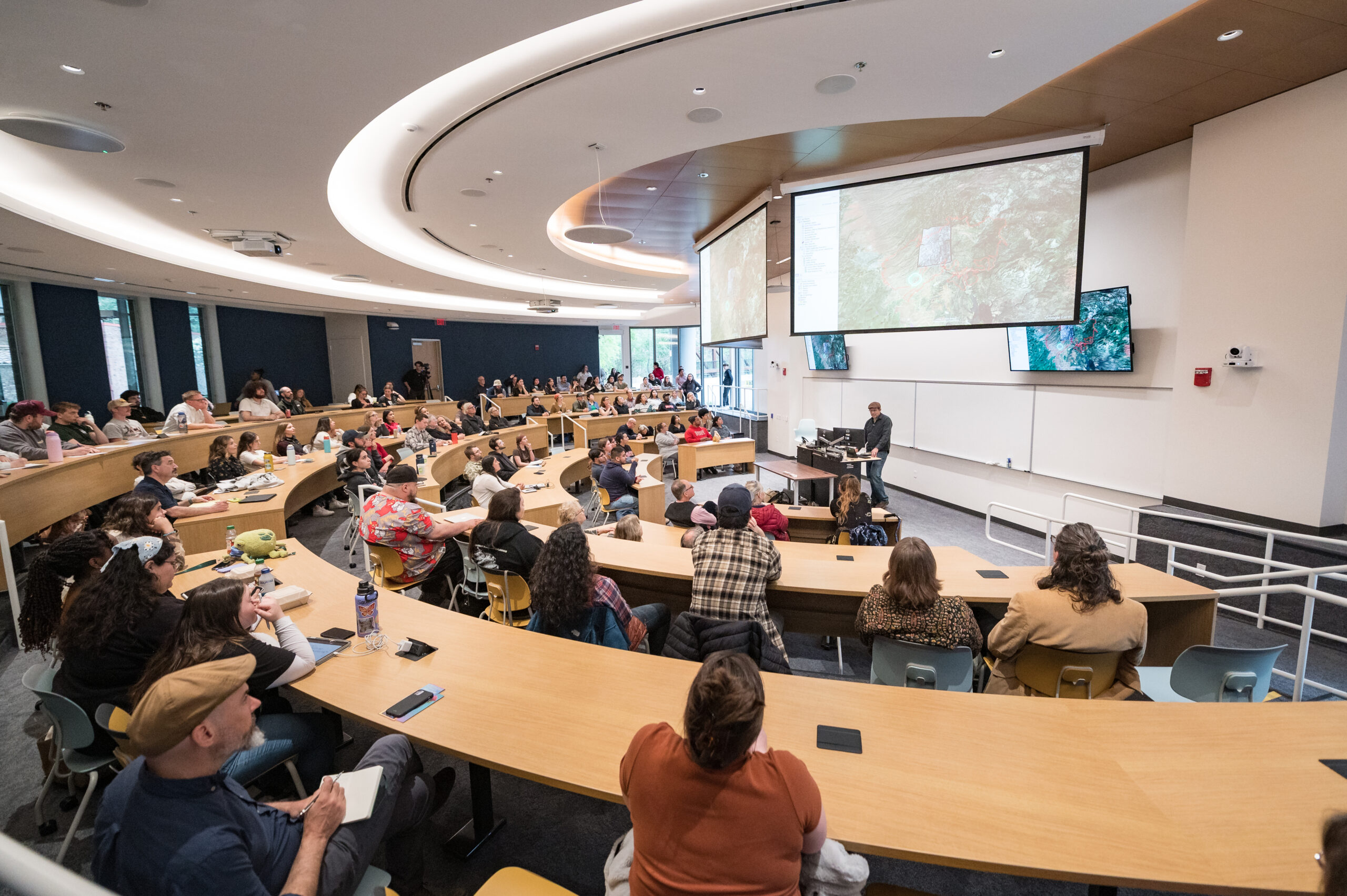
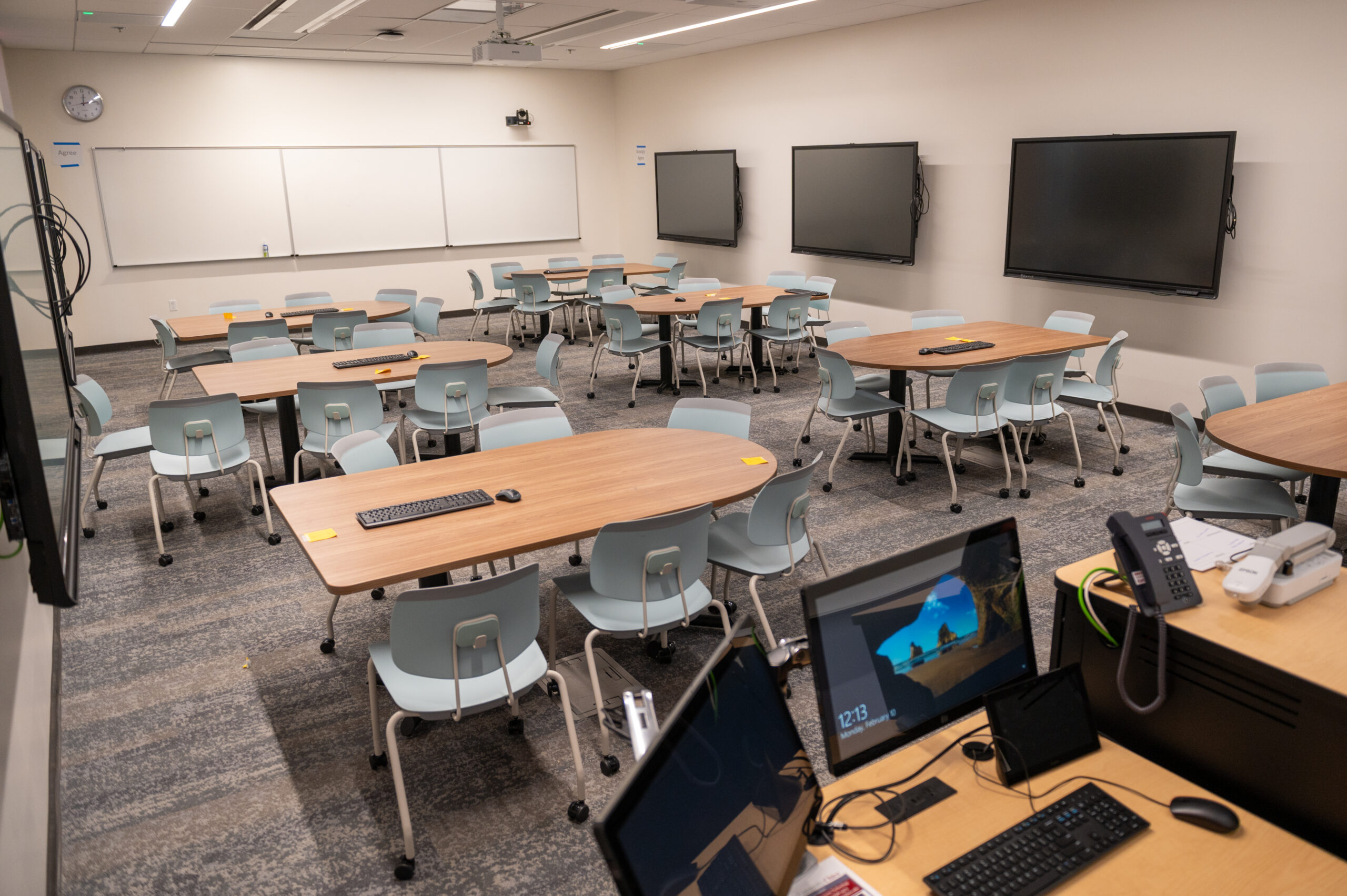
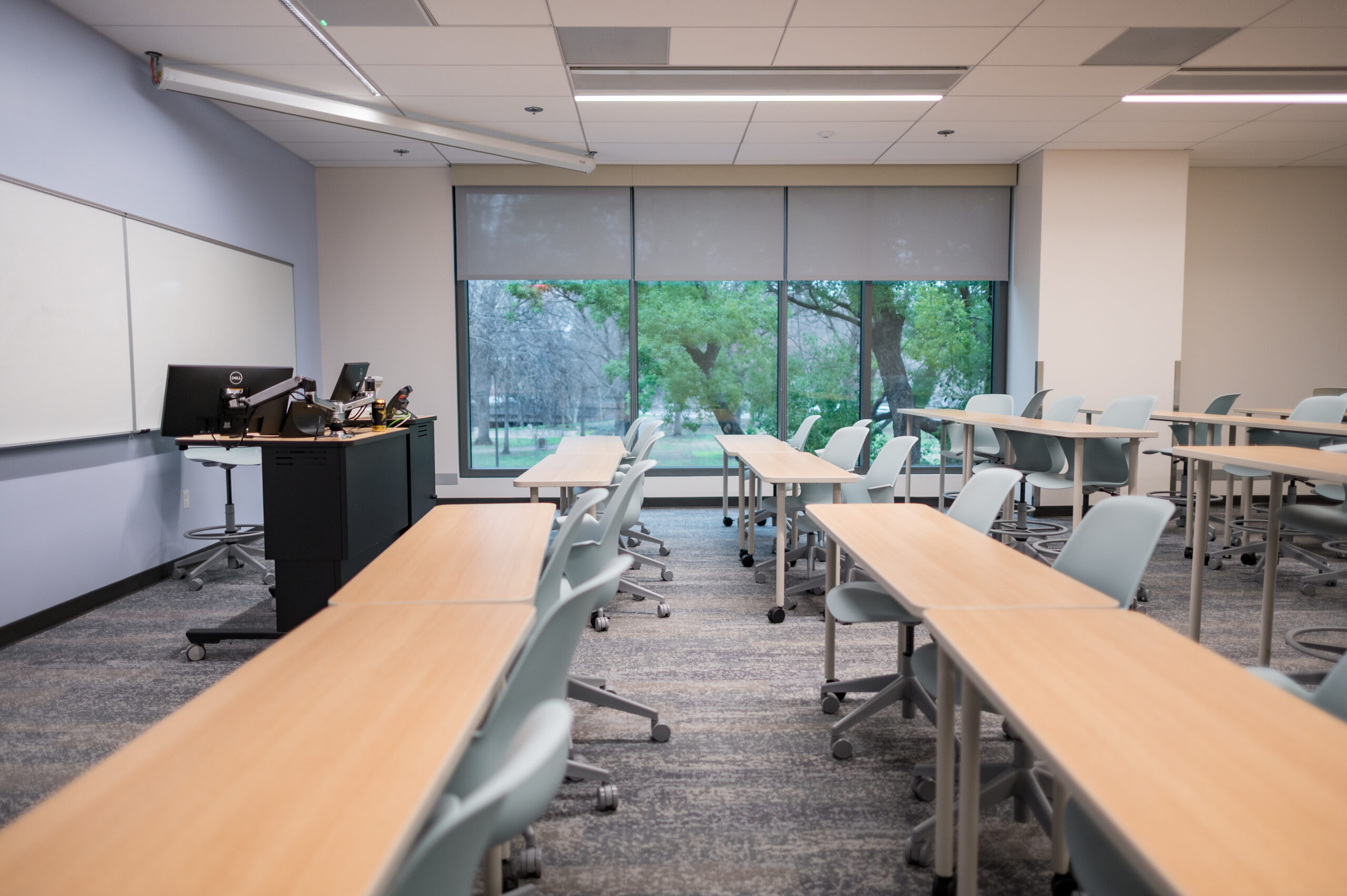
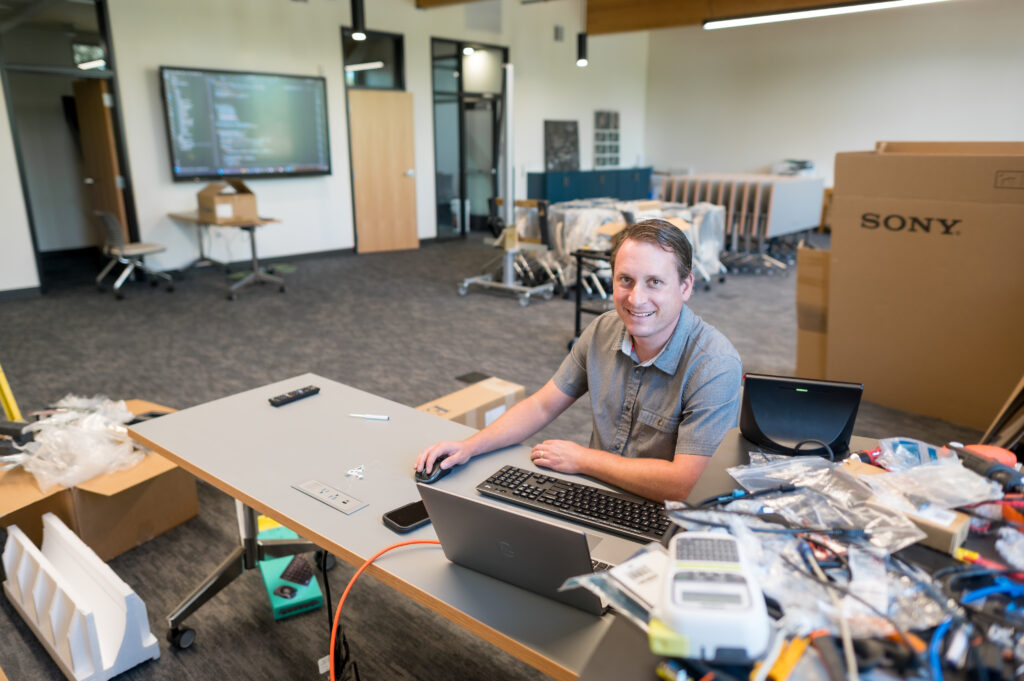
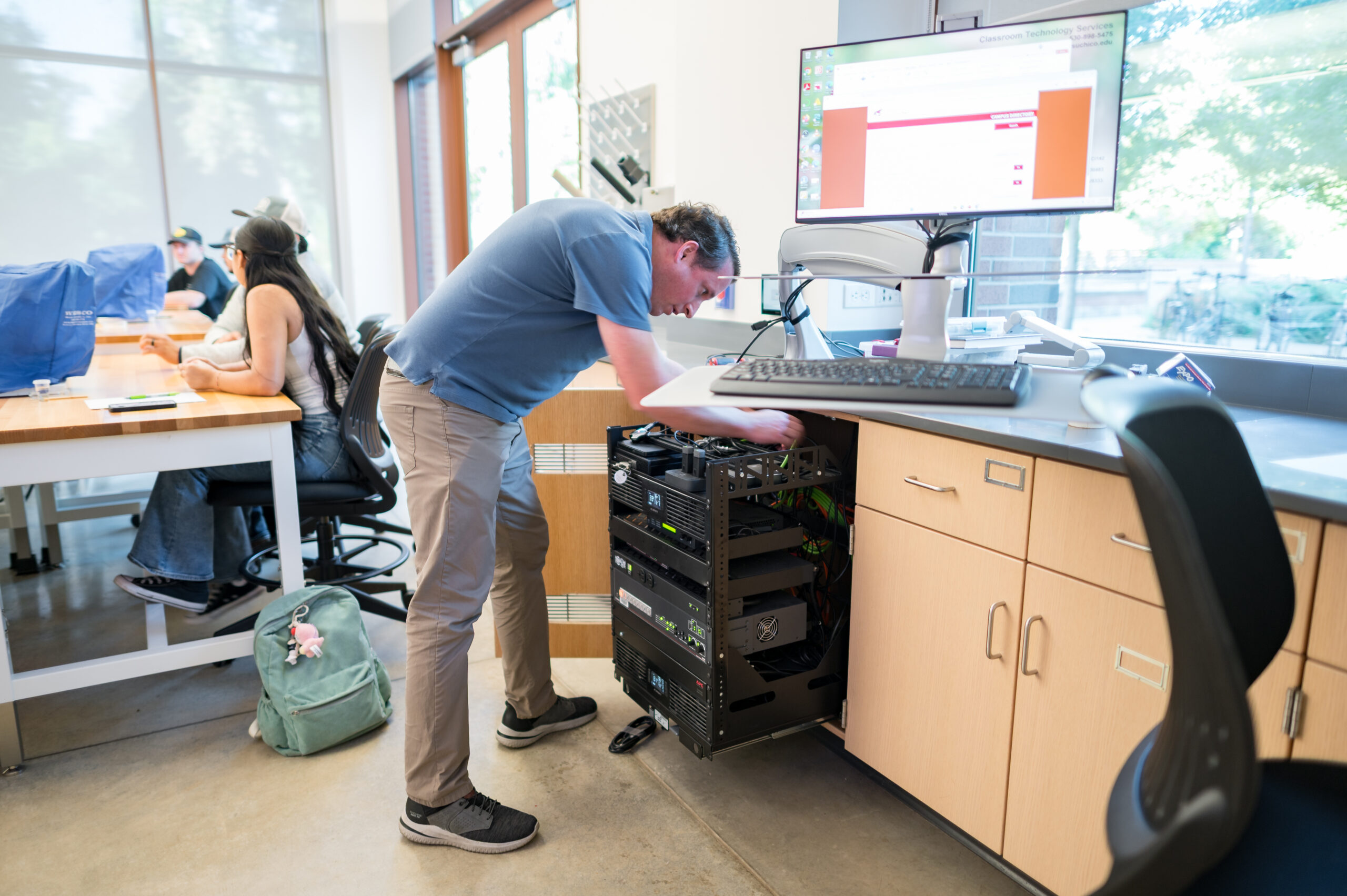
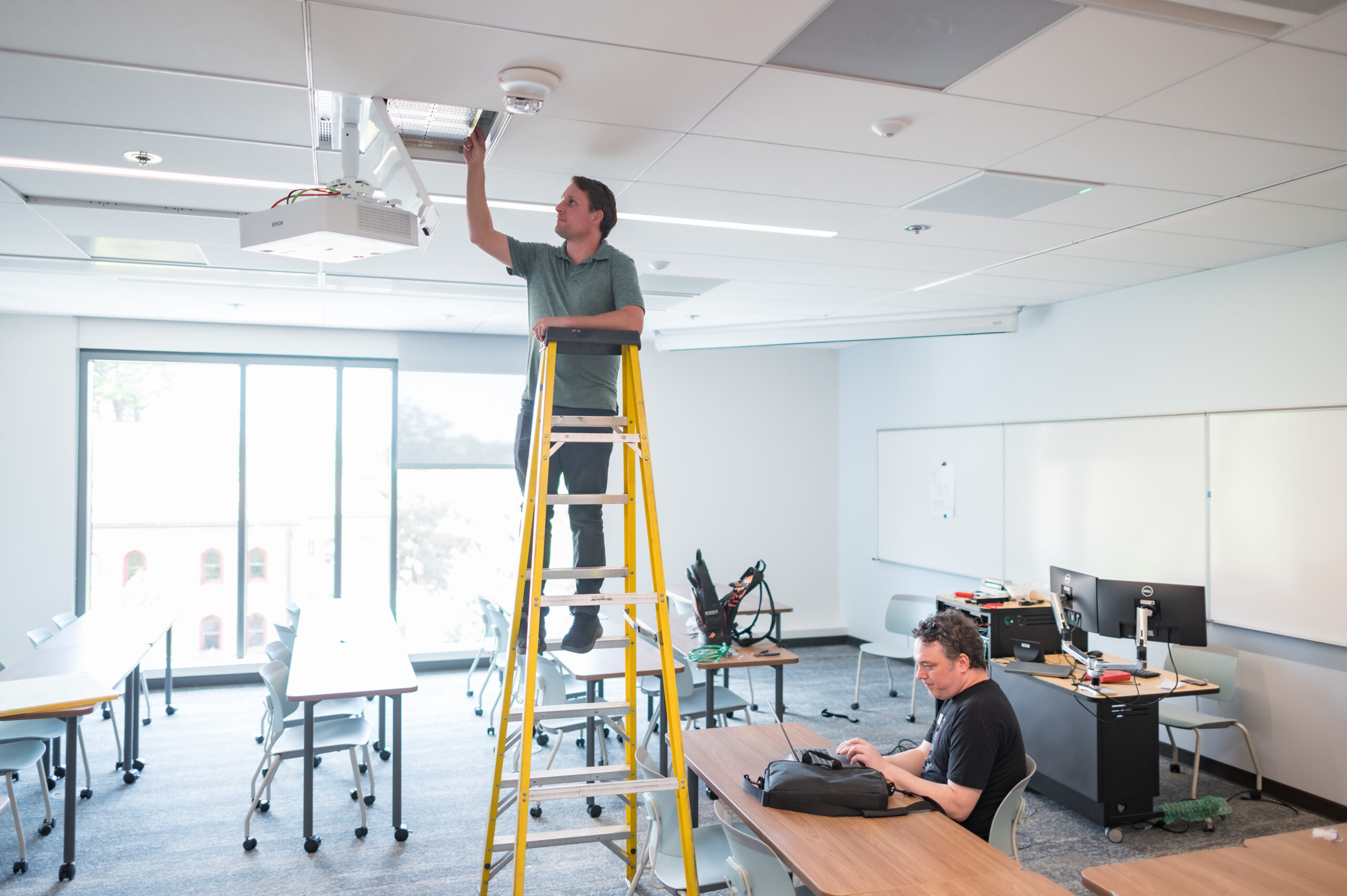
It really depends on where we are in the “new building” cycle. In the past five years, my office has completed four new buildings, in addition to 100+ CARES/HEERF HyFlex upgrades of existing rooms that many institutions have made. We are highly involved in these capital projects, as we take on the roles of AV consultants, designers, programmers, and installers. We do not have a history of hiring outside help, so we’re the ones working with the architects, the project managers, and the low-voltage contractors. The only thing we don’t do in a new building is attach anything to the structure and pull cable. Outside of capital projects, I’m usually working on software systems to create or improve AV-adjacent processes.
What does your busiest day look like? What are the challenges your role faces, and how do you overcome those?
The busiest days are the ones where the electrical grid power is unstable for just a second. Since so much equipment in rooms is operating past its expected lifespan, short voltage drops usually turn into emergencies. Most rooms just need a power cycle for the switcher, but sometimes we must replace dead equipment with whatever we have on hand.
To help with incident response, I coded a tool that queries our Global Viewer Enterprise API, determines what is actually offline, and reboots the switched power outlets of the devices if possible. For the rooms without power control or rooms that need manual intervention, I wrote an algorithm that takes class schedule data and assigns priority levels to the rooms that have issues. Unfortunately, this happens at least once a year, but we’re very efficient in response, and the impact on instruction is typically minimal.
What do you enjoy doing on weekends? How do you spend your time outside of work?
You can find me in my backyard grillin’ and chillin’ all year. I love outdoor cooking. Food is very much our hobby. It’s not healthy for work-life balance because it’s so close to what I do for work, but I also automate my house through Home Assistant with Pyscript, host a Jellyfin media server, maintain an enterprise-grade home network, and contribute to open-source projects that I use.
What’s your favorite way to unwind or recharge?
Hot tub. I’m in it almost every night.
What inspired you to get involved with HETMA, AVIXA, and other higher-ed orgs?
I believe that collaboration produces better results than competition. It’s like my passion for open-source software usage and development. If you have a good solution for a problem, share it. As more people use your solution, you’ll come across more edge cases and more areas for improvement, but you’ll also come across more people who can contribute fixes and new features, which improve the solution and therefore benefit everyone involved.
Where do you see your career trajectory going in the next five years? Where do you envision yourself?
I’m not actually management or even a lead in this current position. I graduated college and went straight into being a business owner and senior technician, so I never got to experience a non-supervisory role until now. I am now managing more projects, my new senior manager is a fantastic mentor, and I’m in the “IT Emerging Leaders” track, so I can see myself being ready to step back up to a leadership position on my team or in another IT office, more prepared than I ever have been in my previous roles.
What is your life motto and how do you apply it to your daily routine?
Continuous improvement, like Kaizen. I strive to make myself and my work just a little better every day.
Comparing your career path over time, what are some of the moments, accomplishments, or projects that you’re most proud of?
I’m proud of the work I did as an integrator helping rebuild Paradise, CA. Paradise is only about 12 miles from Chico, and in late 2018, it was the site of the deadliest wildfire in California history, killing at least 85 people and destroying over 18,000 structures, including over 90% of homes. Everyone here knows someone who lost their home, and we all carry the trauma with us every day. My company helped schools, churches, community centers, and homeowners recover and come back stronger.
How would you describe your leadership style?
Trust but verify.
How do you see the role of AV evolving in higher education?
I’m hoping the trend is towards holistic technology management in classrooms. We already manage the lectern computers in addition to all the AV tech, but now that lighting, shade control, partition control, occupancy, and even HVAC have become networked, I can see the benefit of one team handling control of everything in the classroom. We need to start thinking “how can we best support instruction?” instead of “how can we best support the AV system?” It bugs me when I go to a room and see three touch panels on the wall, all grouped together and on the same network switches, but completely isolated and managed by different teams.
What’s a lesson you’ve learned the hard way in your career?
Promises of company equity and large commission checks can be a trap. It’s better to have a stable income with good benefits, which is often what you’ll find in higher ed. The people I come across here at the university are people I would have done anything to hire in the private sector, so my team gets it!
What advice would you give to someone just starting out in AV or higher ed tech?
Really, truly, understand both the digital and physical signal flow of every system you come across and every design you make. Learn project management: a PMP cert will be significantly more useful than a CTS cert. Understand business-to-business sales. Find good reference systems: you need to know what looks good and what sounds good before you can make a system that does either. Consider getting the Network+ cert.
Programming track: study what good software architecture looks like, study SOLID software design, and learn the Software Development Life Cycle (SDLC). Don’t waste time getting good at one language, AI is at the point where you don’t need to know all the details to implement code, but you absolutely need to know what good architecture looks like. Don’t waste time on proprietary visual programming systems, like where you drag around conditional blocks; if you need to use those in your career, you can pick them up without issue if your logic is strong.
What’s something people often misunderstand about your work?
A good classroom tech team is not a user support team. I say, “Don’t just put out fires, start conducting arson investigations and making fire-resistant buildings!” Don’t hire people for support: hire them to continually improve processes, design resilient and proper systems, properly maintain systems, implement self-healing automations, create solutions where none previously exist, and develop proper documentation and training materials. If you stay on top of all of that, your support burden can be quite low.