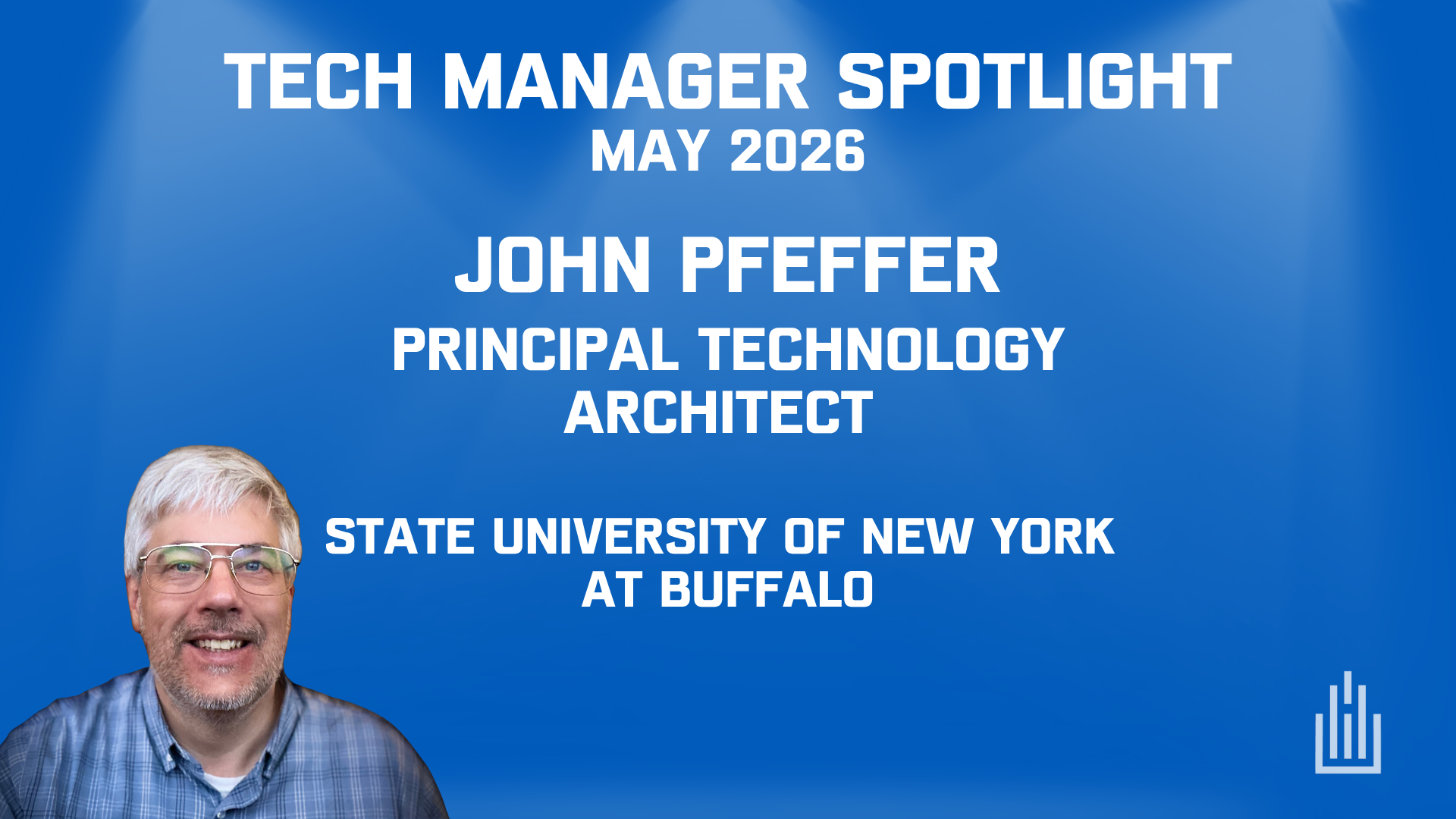

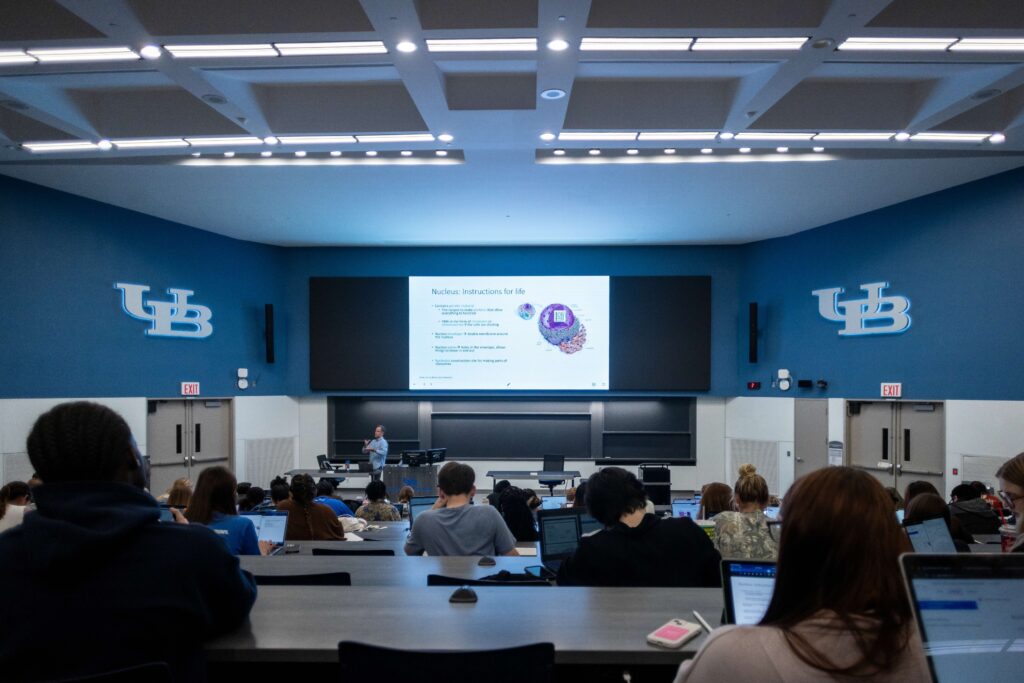
As the principal technology architect for IT Customer Service at the University at Buffalo (UB), part of the SUNY system in New York, John Pfeffer focuses on maintaining standards for classroom technology while also keeping an eye on what comes next. His work spans planning for future implementations, recommending new technologies, collaborating closely with classroom systems engineers on major projects, and, as he puts it, “driving everyone nuts” by asking whether something will actually work in practice.
Right now, much of his attention is on helping shape the next generation of teaching and learning spaces at UB. That work ranges from major classroom technology upgrades to exploring immersive learning environments and identifying tools that can meaningfully improve the faculty and student experience. A consistent theme in his approach is balance. Innovation matters, but only when it can be supported. The best technology, in his view, is not just impressive on day one. It needs to be reliable, intuitive, and sustainable over time.
That same mindset carries into how he approaches collaboration and innovation within his department. He emphasizes creating opportunities for people to talk across roles, not just within them, because some of the strongest outcomes come when engineers, support staff, project managers, and strategists bring their perspectives to the same challenge. Innovation, he believes, has to be intentional. It needs structure, standards, and room to experiment, without losing sight of operational reality. For him, that balance comes from encouraging research and development, talking through ideas early, and continually asking how something will scale and how it will be supported.

Photographer: Douglas Levere
Have you always worked in AV? What did the path look like for you to get to where you are now?
Absent a stint in a fiberglass factory, I have always worked in AV or IT. I started in high school in the AV club (of course!) and made my way from there! I may have even (illegally, the statute has run out) wired my dorm for cable TV during college. Before my time at UB, I worked in K-12 as a Technology Director.
What is your morning routine?
I am usually at work by 6 a.m. for two uninterrupted hours drinking lots of coffee, looking for trends in any issues that may have arisen, and reviewing projects. I try to dedicate time to R&D every other day during those hours as well.
What does an average weekday look like for you?
I don’t think there is an average unless we look at recurring meetings! I try to get as much face time with my colleagues as possible, see how classrooms are being used, and spend time with our project manager to understand how everything is progressing.
What does your busiest day look like? What are the challenges your role faces, and how do you overcome those?
My busiest day is traveling between our three campuses, but that is rare, usually busy means too many meetings and not enough time to act on the outcomes of those meetings. My role has few challenges, but I would say the biggest is that I am charged by leadership to be on the bleeding edge of what we can do with technology. That sometimes (all the time) runs up against our very strict standards.
Photographer: Meredith Forrest Kulwicki
What do you enjoy doing on weekends? How do you spend your time outside of work?
Outside of work, I enjoy spending time with family, working on local community projects, and diving into whatever technical or creative project has caught my interest at the moment. I am one of those people who does not mind tinkering, whether that means exploring new technology, solving a practical problem, or working on something that blends design and function. I also value time that lets me step away from meetings and screens for a bit. I serve as the elected supervisor for the Town of Ashford, which means I am heavily involved in nuclear waste and nuclear power issues.
What’s your favorite way to unwind or recharge?
Skiing, hiking, mountain biking, camping, traveling, and currently restoring a 1979 F150 pickup.
What inspired you to get involved with HETMA, AVIXA, and other higher-ed orgs?
Higher education technology can be a surprisingly small world, and one of the best parts of it is how willing people are to share what they have learned. Getting involved with organizations like The Educational Technology Collaborative (ETC), HETMA, and AVIXA gave me access to a broader community of people dealing with many of the same challenges we face on campus. It is valuable to learn from peers, but it is equally important to contribute back. These organizations help all of us think bigger about the role technology plays in teaching, learning, and institutional success.

Photographer: Douglas Levere
Where do you see your career trajectory going in the next five years? Where do you envision yourself?
Over the next five years, I see myself continuing to grow at the intersection of strategy, systems design, and leadership in higher education technology. I enjoy thinking beyond individual rooms or devices and focusing on the broader experience of how people teach, learn, and work. Whether that means leading larger initiatives, helping shape institutional direction, or mentoring others in the field, I want to keep building environments where technology is thoughtful, dependable, and clearly aligned with the mission.
What is your life motto and how do you apply it to your daily routine?
One phrase I come back to often is: Make it work, then make it better. In practice, that means staying focused on solving the immediate need, but never being satisfied with patching something together if there is a better long-term solution. It applies to technology, leadership, and even how I organize my day. I try to stay practical without losing sight of improvement.
Comparing your career path over time, what are some of the moments, accomplishments, or projects that you’re most proud of?
I am most proud of the work that has helped move organizations toward greater consistency, better user experience, and more thoughtful planning. At UB, that has meant helping strengthen classroom technology standards and contributing to projects that improve how teaching spaces function at scale. Earlier in my career, serving as a Technology Director in K-12 gave me a strong appreciation for doing a great deal with limited resources. More broadly, I am proud of building a career where I have been able to combine technical knowledge, strategy, and service to support students, faculty, and staff.
How would you describe your leadership style?
I would describe my leadership style as collaborative, steady, and curious. I like to ask a lot of questions, not because I want to slow things down, but because I want to make sure we are solving the right problem. I believe good leadership means setting clear expectations, trusting talented people to do their work, and creating an environment where ideas can be tested honestly. I also think leaders need to stay approachable. Some of the best solutions come from hallway conversations, quick check-ins, and listening carefully to the people doing the work every day.
How do you see the role of AV evolving in higher education?
I think AV is increasingly becoming part of the core academic infrastructure of the institution. It is no longer just about projectors, microphones, and lecture capture. It is about creating environments where learning can happen effectively whether instruction is in person, hybrid, active-learning-based, or immersive. AV professionals are also being asked to think more strategically about data, user experience, standardization, accessibility, and integration with the broader IT ecosystem. In higher ed, AV is moving from a support function to a more visible strategic partner in the academic mission.
What’s a lesson you’ve learned the hard way in your career?
One lesson I have learned the hard way is that a good idea is not enough on its own. If you want something to succeed, you need the right process, the right people involved early, and a realistic understanding of how it will be supported after implementation. I have also learned that standards matter more than people sometimes realize. They are not there to limit innovation. They are what make innovation sustainable.
What advice would you give to someone just starting out in AV or higher ed tech?
Learn the technology, of course, but do not stop there. Spend time understanding the people, processes, and mission behind the work. In higher education especially, technical success depends on understanding teaching, learning, service, and institutional culture. I would also tell someone starting out to be curious, reliable, and willing to ask questions. A lot of growth in this field comes from paying attention, building relationships, and showing that people can count on you.
What’s something people often misunderstand about your work?
I think people sometimes misunderstand how much of this work is about planning, coordination, and decision-making before any equipment is ever installed. They often see the visible technology in a room, but not the standards work, design conversations, lifecycle planning, or support considerations behind it. The goal is not just to make technology appear. It is to make it work well, work consistently, and work in a way that supports the institution over time.
Connect with John: LinkedIn