

In business, an organization’s capacity to support technology often receives less scrutiny than its capacity to purchase it. We’ll throw money at solutions without deep thought about how it will be supported in the future. We make technology suggests, our leaders approve it, so we expand services and modernize facilities with clear expectations for the resulting benefits. However, the work required to sustain those investments can remain buried in existing job descriptions and operating budgets without the added resources to scale up without harming the current team’s workload. Over time, that gap affects service quality, employee retention and the organization’s ability to deliver what’s promised.
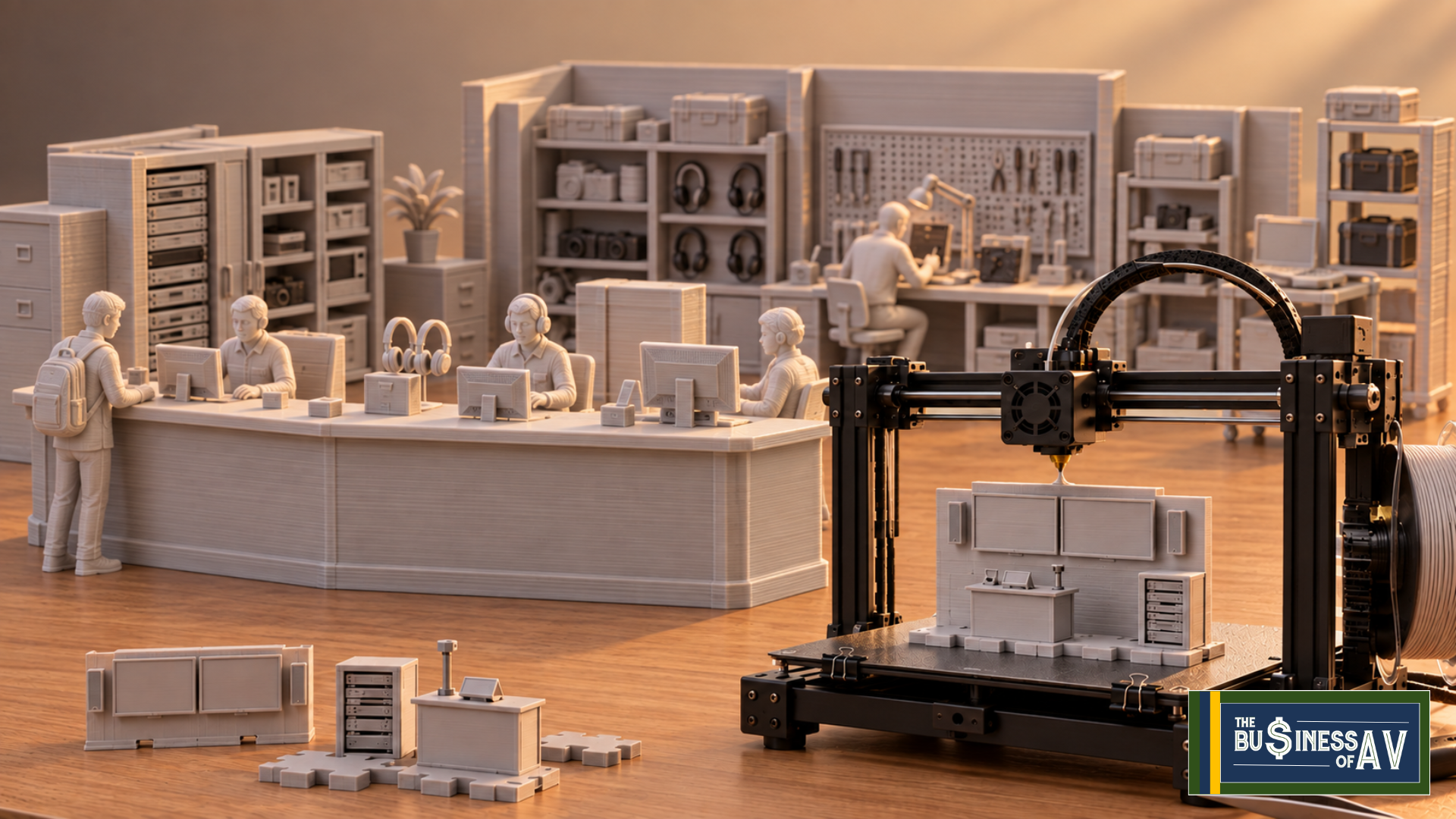
In. a recent Higher Ed AV Podcast episode, Chris Harshfield talks about his 3D printing hobby. And in fact, 3D printing provides a useful metaphor for addressing this challenge of supporting our systems effectively. A successful print begins with a design, takes shape through successive layer-after-layer processing, and in the end, its success depends on the integrity of the structure beneath it. Technology support develops through a similar combination of planning and execution. Hiring, training, documentation, system standards and decision-making authority must work together to produce a service that can withstand the daily grind.
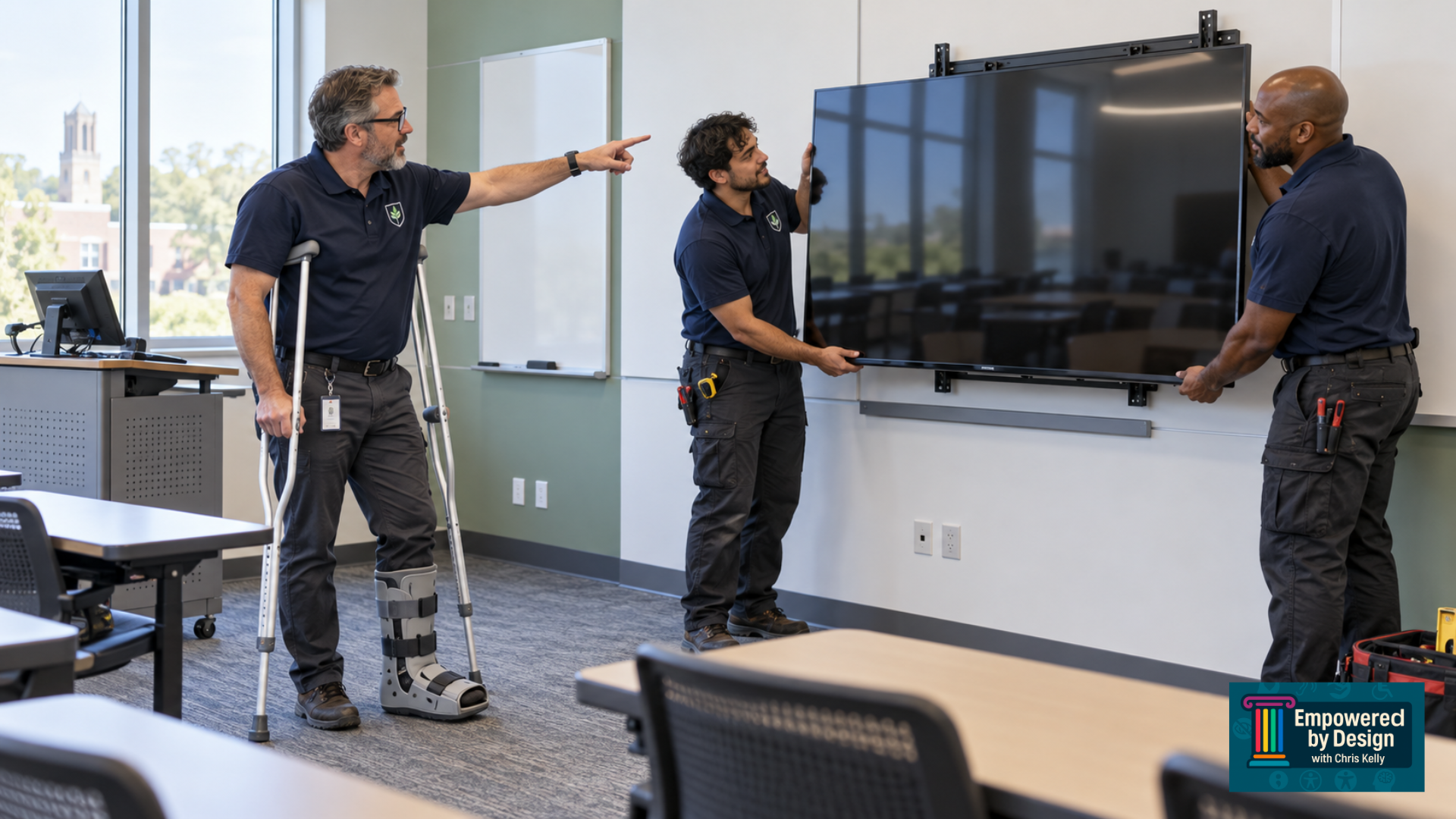
For leaders, the practical question often asked is whether the support model has been designed to meet current demand. Many organizations operate with structures that were established long before their current technology footprint, user expectations, or service demands expanded into their current form. Teams will naturally adapt through experience and individual effort, often keeping that mismatch from becoming visible. Strong performance can therefore conceal a growing dependence on a few employees whose knowledge and availability have become essential to basic operations.
That dependence isn’t a good thing. In fact, deserves attention before a major service failure exposes it. When routine work requires a particular employee to answer a call, recall an undocumented configuration, or approve every decision, the organization has limited capacity to absorb change. Having that one person who knows “where the skeletons are buried” isn’t actually a positive. A departure, an absence, or a sudden increase in demand can disrupt the entire service. Leaders must examine where knowledge and authority are concentrated and determine what would happen if those resources were temporarily unavailable.
The assessment should begin with how work actually moves through the organization. A reported problem needs an owner with an appropriate response and a clear path for escalation. Shift changes and departmental boundaries should allow information to move with the work. If employees repeatedly reconstruct the same incident or users rely on personal contacts to obtain help, the service process is creating avoidable effort. Documentation and training can reduce that effort when they reflect actual operating conditions. A repository of outdated instructions offers little protection against the loss of institutional knowledge. Likewise, completing an onboarding course does not establish that an employee can handle the situations they will encounter. Leaders need to provide time for maintaining documentation and evaluating whether training prepares staff to act with confidence.
Additionally, system standardization strengthens this foundation. Consistent interfaces, equipment choices, and configurations can reduce the number of scenarios a support team must understand. They can also simplify replacement planning and make training useful across a larger portfolio of spaces. The business value lies in reducing unnecessary variation while preserving the capabilities users need. Of course, exceptions will remain necessary, particularly in environments with specialized teaching, research, or production requirements. Each exception, however, introduces obligations that extend beyond installation. A custom system may require additional training, unique replacement needs, or support from a limited group of specialists, however those requirements should be evaluated and funded (yes, funded) as part of the project rather than discovered after deployment.
This is where executive oversight can make a substantial difference. Capital funding often creates the opportunity to purchase technology without creating the operating capacity to maintain it. A well-funded installation can enter an already constrained service environment, leaving existing staff to absorb the additional work. Approval processes should account for expected service demand, maintenance responsibilities, staff preparation, and eventual replacement. Capacity planning must also consider the nature of the work being added. Ten identical rooms may be easier to support than two highly customized environments. A modest system used continuously can generate more service demand than an elaborate installation used occasionally. Room counts and asset totals remain useful, but they should be considered alongside complexity, utilization, service hours and the consequences of downtime.
As often said, you can’t manage what you can’t measure. Proper measurement should make the real conditions visible. Ticket volume alone cannot show whether a team is preventing failures, resolving recurring issues, or carrying a backlog of maintenance work. A broader assessment can include repeat incidents, unresolved work, coverage gaps, and the proportion of support that depends on escalation. User feedback is the most valuable way to establish whether improvements are making the service easier to access and more dependable. Gathered metrics should inform decisions about the service design. Persistent escalation may indicate a training gap, unclear authority to resolve for the long term, or a system that is too difficult to maintain and doesn’t actually align with the needs of the users of the space… Repeated incidents may point to an underlying technical problem that deserves investment; a growing backlog may show that demand has exceeded available capacity.
Consequently, when these misalignments are exposed, we do not need to redesign our entire support operations at once. It can begin with a recurring failure solution that builds the framework for similar situations discovered in the future… identify its cause, improve the process around it, and find where that can be scaled across the organization support functions. This also promotes authority at the service level rather than the executive level. That creates repeatable practices through teams that know they can define the result, because they are the ones closest to the work. And that’s the foundation of a truly successful support department.
This article was inspired by my conversation Higher Ed AV Podcast episode featuring Chris Harshfield. Check out the entire episode with Chris here: https://higheredav.com/368-being-the-resource-with-chris-harshfield-higher-ed-av-podcast-with-joe-way/.