

The project is already behind schedule, and we are only a few months away from when the building needs to be ready. As if that weren’t enough to manage, we recently discovered that part of the AV scope was never included in the construction documents. The system still needs the infrastructure we designed, but the work that was supposed to happen during construction was never included in the plans the contractor was given.
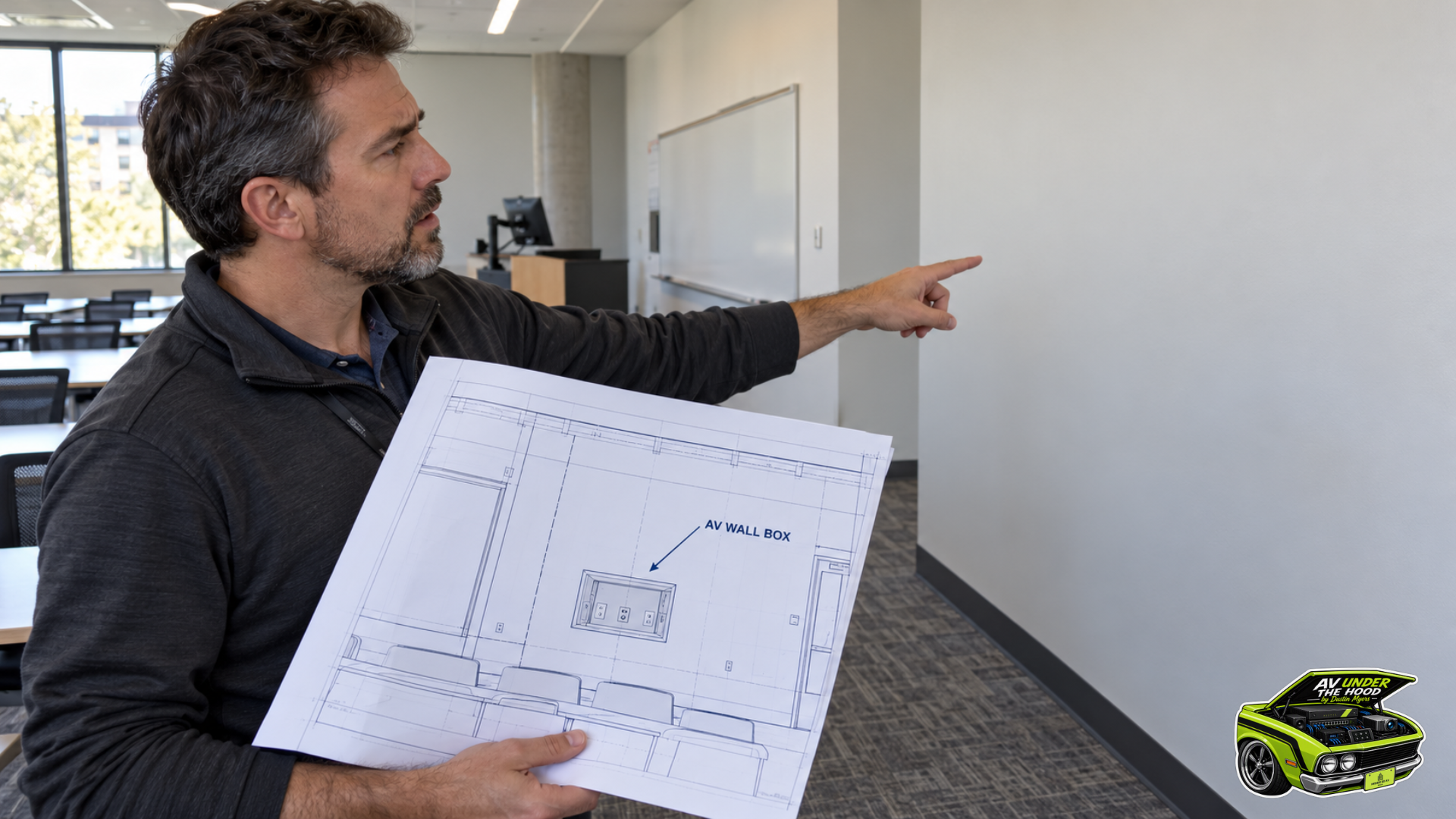
This wasn’t a case of the AV design being unfinished or the requirements showing up after construction was underway. I had already provided the architect with detailed specifications, line drawings, cable requirements, and information identifying the wall box where those cables needed to terminate. That information was then passed along to the engineering firm responsible for incorporating it into the project documents. Somewhere in that process, the AV requirements disappeared from the plans.
Our understanding was that the cabling and supporting infrastructure would be installed as part of the construction project. Once that work is complete, we will connect the equipment, configure the system, and handle commissioning. That’s a straightforward division of responsibilities, provided everyone is working from the same set of requirements. Instead, the cable pulls were omitted, the specifications were never included in the documents, and the wall box wasn’t identified on the construction drawings. Now we’re trying to figure out how to add work that should have been part of the original project, all while dealing with an existing schedule delay.
One of the challenges with construction projects is that AV requirements don’t always live in one place. A wall box might appear on an architectural plan, while the conduit and cabling are covered in engineering documents. Power is handled on electrical drawings, and the equipment itself may be detailed in a separate technology package. All of those pieces have to come together for the system to work, and that depends on information making it through each stage of design and coordination.
Sorting out scope and responsibility
In this situation, the information was provided and forwarded, but it didn’t make it into the engineering documents. From our perspective, the requirements had been documented and submitted. From the contractor’s perspective, work that isn’t identified in the issued construction documents may not be included in the contracted scope. Both sides can point to their respective records, but that doesn’t get the cables installed.
That’s where things get complicated. The contractor can’t necessarily be expected to perform work not included in the documents that established the project scope, but the institution still needs the infrastructure to deliver the system it planned and funded. The fact that the information existed somewhere in the design process doesn’t automatically resolve the contractual question of who is responsible for the omission.
The immediate solution may be a change order to add the missing work. That can establish the cost and authorize the contractor to proceed, but it doesn’t necessarily settle who should ultimately pay for it. Answering that question may require reviewing the original submissions, emails, meeting notes, design agreements, drawing revisions, and issued construction documents to establish where the process broke down and who was responsible for carrying the requirements forward.
The problem is that we don’t have unlimited time to sort that out. Waiting until everyone agrees on responsibility could put the schedule at even greater risk. Authorizing the work right away may help protect the completion date, but it could complicate the financial discussion afterward. The technical correction and the contractual resolution may need to move forward at the same time. Whatever decision gets made, the circumstances need to be documented so that addressing the immediate problem doesn’t erase the question of how it happened.
The cost of waiting
Another option is to let construction finish as currently documented and bring in someone afterward to install the missing infrastructure. On paper, that might seem like a reasonable way to avoid disrupting a project that’s already running late. In practice, finishing the building doesn’t make the work disappear. It just changes the conditions under which it has to be completed.
Once the walls and ceilings are finished, furniture is installed, and rooms are being prepared for use, cable pulls become a different kind of job. Work that could have been completed alongside the other trades may now require after-hours access, protection for finished spaces, and removal of materials to create the necessary pathways. What should have been routine construction work can turn into a separate project with its own schedule, coordination, and costs.
There’s also the risk that a temporary workaround becomes the permanent solution. Once a building opens, missing AV work starts competing with classes, events, operating budgets, and everything else that needs attention. A workaround that everyone expects to last a few weeks can easily become the way a room operates for years. I’ve written before about what happens when we tell ourselves we’ll come back and fix something later. Construction has a way of giving us another opportunity to learn that lesson, usually at a time when fixing it has become much harder.
I’m frustrated because these requirements weren’t an afterthought. They were provided in detail, sent through the design process, and should have been incorporated into the construction documents. That responsibility matters, and I don’t think it should get lost simply because several organizations were involved along the way. At the same time, being frustrated doesn’t get the work completed. We need to address the immediate problem while figuring out how to keep the same thing from happening again.
Verifying the next project’s scope
Preventing the same problem is especially important because the same engineering firm is working with us on another construction project that’s about to begin. We have an opportunity to apply what we’ve learned here before the next set of documents is issued. For that project, I want every critical AV infrastructure requirement traced from our original submission through the engineering drawings, specifications, contractor scope, rough-in work, and final installation.
If a wall box is required, we need to verify that it appears in the appropriate plans and details. If cabling is part of the construction scope, the documents need to identify the cable types, quantities, pathways, termination points, testing requirements, and the contractor responsible for the work. Those items need to remain part of the design reviews, coordination meetings, and site walks, even as drawings change and construction moves forward.
That doesn’t mean the institution should have to revise engineering documents or take responsibility for omissions made during design. It means we need a better way to verify that the information we’ve provided actually makes it into the documents everyone will use to build the project. Sending the information is one step. Confirming that it was incorporated is another, and we can’t assume the second step happened just because the first one did.
Working with the same firm on a new project while we’re still dealing with an unresolved issue on the current one isn’t easy. The frustration is real, but carrying it into every future meeting without turning it into a better process won’t help us. The current project needs a solution, and the next one needs clearer expectations, better tracking, and written confirmation that the AV scope has been incorporated before construction begins.
Right now, we still have to determine whether the missing work will be added through a change order or completed by another contractor after construction. Neither option gives us back the time we’ve lost, and neither changes the fact that the infrastructure was required from the beginning. Missing from the drawings doesn’t mean missing from the project. It means the work comes back later, when the options are fewer, the costs are higher, and the time to get it right is running out.