


As HETMA embarks on the #Roadto10K, this journey is about more than just growing our numbers—it’s about supporting the personal and professional growth of each member. Every month, we’ll explore a new theme centered on reflection, growth, mental health, and confidence. If the themes ever feel overwhelming, this column will offer them in small, approachable steps to help you engage at your own pace.
March’s theme is:
Checkpoint: AUDIT YOUR IMPACT
Take stock of your contributions, problems solved, projects led, opportunities seized, and teams influenced. Build a case for your value and future growth.
It’s easy to move from one task to the next without pausing to recognize how much you’ve actually accomplished. Days fill up with meetings, emails, problem-solving, and supporting others. Before you know it, months have passed, and when it’s time for a review or a new opportunity, you’re left trying to reconstruct everything you’ve done from memory. That’s where a personal impact audit becomes a powerful career habit.
Auditing your impact isn’t about bragging or self-promotion. It’s about clarity, understanding your own contributions, recognizing your growth, and being able to clearly articulate the value you bring to your team and organization. Think of it as keeping a professional highlight reel that you update consistently instead of scrambling to assemble at the last minute.
Taking time each month to track your work helps you:
- See patterns in your strengths and progress
- Document wins you might otherwise forget
- Connect your efforts directly to team or organizational goals
- Prepare for performance reviews with confidence
- Identify growth opportunities early
A strong impact audit doesn’t need to be complicated. Focus on capturing the most meaningful elements of your work:
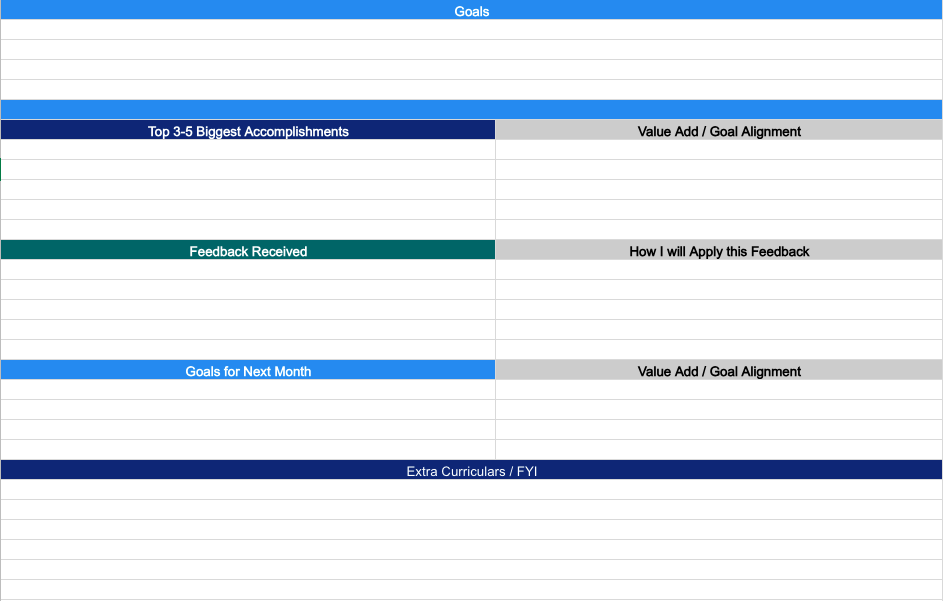
1. Your Goals
List the official goals you’ve set with your supervisor as well as any initiatives you’ve chosen to take on. This creates context for everything else you record. It also helps demonstrate that your work is intentional and aligned, not random or reactive.
2. Top 3–5 Accomplishments
Highlight your biggest wins and explain their value. Ask yourself:
- What problem did this solve?
- Who benefited?
- How does this support a team or organizational goal?
Adding a “value add” explanation is what transforms a task into an achievement.
3. Feedback Received
Include both positive and constructive feedback. The key isn’t just recording it, but also noting how you plan to apply it. This shows growth mindset and professional maturity.
4. Goals for Next Month
List upcoming priorities and how they connect to larger objectives. This demonstrates forward thinking and strategic awareness, two qualities leaders consistently look for.
5. Extra Professional Highlights
Don’t overlook work that happens outside your day-to-day tasks. Capture things like:
- Professional development you completed
- Articles or podcasts you engaged with
- Conferences or trainings attended
- Presentations or speaking engagements
These moments reflect initiative and investment in your own growth.
The secret to making this system work is simple: fill it in as you go.
If you wait until the end of the month, you’ll forget details and spend unnecessary time reconstructing events. Instead, update your log weekly or even after a major accomplishment. By month’s end, your record will already be complete.
This consistent tracking creates a month-to-month narrative of your professional journey. Over time, you’ll be able to clearly see:
- How you’re progressing
- Which skills you’re strengthening
- Where you’re creating the most impact
And when it’s time for performance reviews, promotion conversations, or new opportunities, you won’t have to search for examples because you’ll already have them.
Auditing your impact is one of the simplest habits with the biggest return. It builds confidence, strengthens self-awareness, and ensures your work is seen and understood. Most importantly, it helps you recognize something we often overlook: you’re accomplishing more than you think.