


Walking into Day 2 of the HETMA Higher Education Summit at InfoComm 2026, I already had momentum from the previous day’s sessions on inclusive audio, universal access, and the gap between accommodation and proactive design. Day 2 shifted the conversation toward the structures, standards, talent pipelines, and shared systems that allow higher ed AV to scale what works across institutions.
The talent pipeline conversations that defined much of Day 2 produced the most meaningful moment of the summit for me. Weaver’s professional path closely mirrors my own. Weaver, like many of us, fell into AV, with her journey starting in K-12. Hearing her reflect on that journey felt immediately familiar to my own K-12 pathway.
Weaver was direct about the responsibility that comes with bringing professionals into AV from adjacent fields. One of her polls showed that many AV professionals approach student learning with a “sink or swim” mentality. Weaver pushed back on that directly.
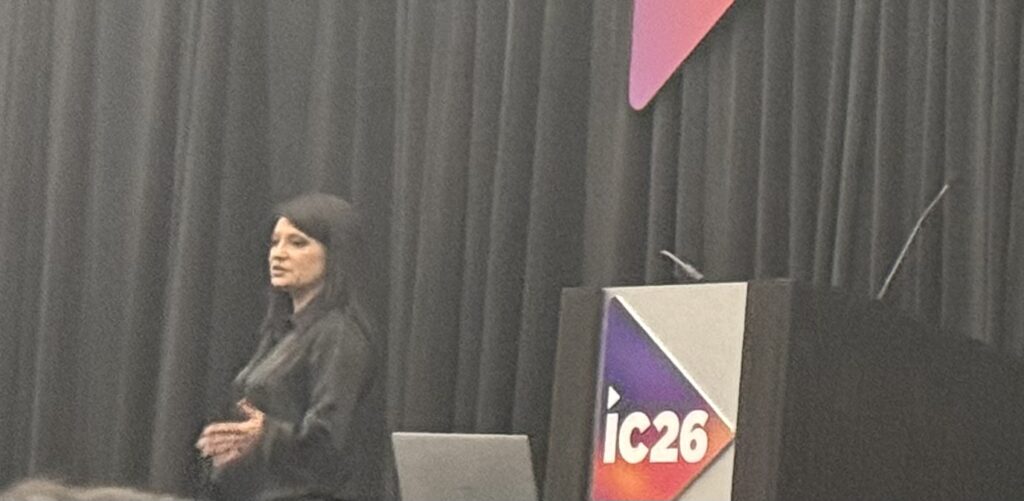
New professionals often fail through exposure alone. Students succeed when organizations provide structured guidance, mentorship, and space to build competence before being asked to perform at full capacity.
That framing resonated with someone who also came from education, where scaffolded learning is not a management philosophy but a foundational design principle. Her words were a reminder that the field’s growth depends not just on the technology it deploys but on how intentionally it develops the people doing the work.
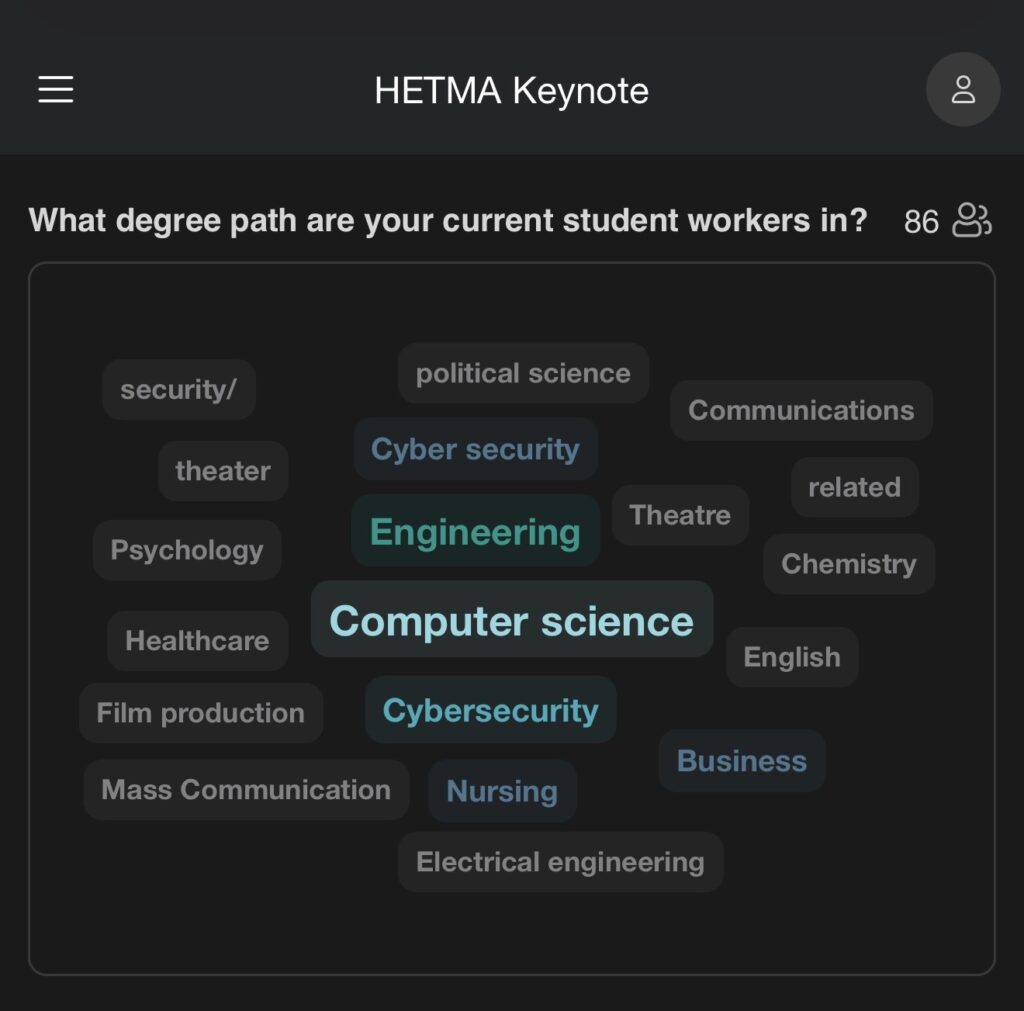
That message connected directly to a panel featuring Ann Kelly from UCLA, Will DeWitt from USC, and Mike McHugh from Goshen College, who examined what student worker training looks like in practice.
The training goes beyond exposure, even though most students come in with baseline experience managing their own consumer devices, such as smartphones and other personal technology. However, the panel found that students often do not have the background needed for the complexity of AV systems or troubleshooting logic.
To provide clearer growth and skill development, the panel outlined a tiered pay system to increase transparency for students:
• Tier 1 for foundational skills and basic AV system exposure,
• Tier 2 for advanced technical work and emerging leadership,
• Tier 3 for students who lead training and supervise peers at events.
The approach rewards competence, creates visible progression, and gives departments a retention tool grounded in something more durable than goodwill. Like learning objectives, students can see how distinct roles and tasks lead to increased pay. These experiences on-ramp students for career expectations in the industry.
Anthony Zaldana from St. Petersburg College (SPC) moderated a panel discussion with students including Michael Villigante from SPC, Brooke Paige from George Mason University, and Timothy Buchko from George Mason College.
The students shared that having trial-and-error opportunities increased their confidence when taking classroom calls. Going on calls with managers like Zaldana also allowed students to learn both technical and relationship-building skills.
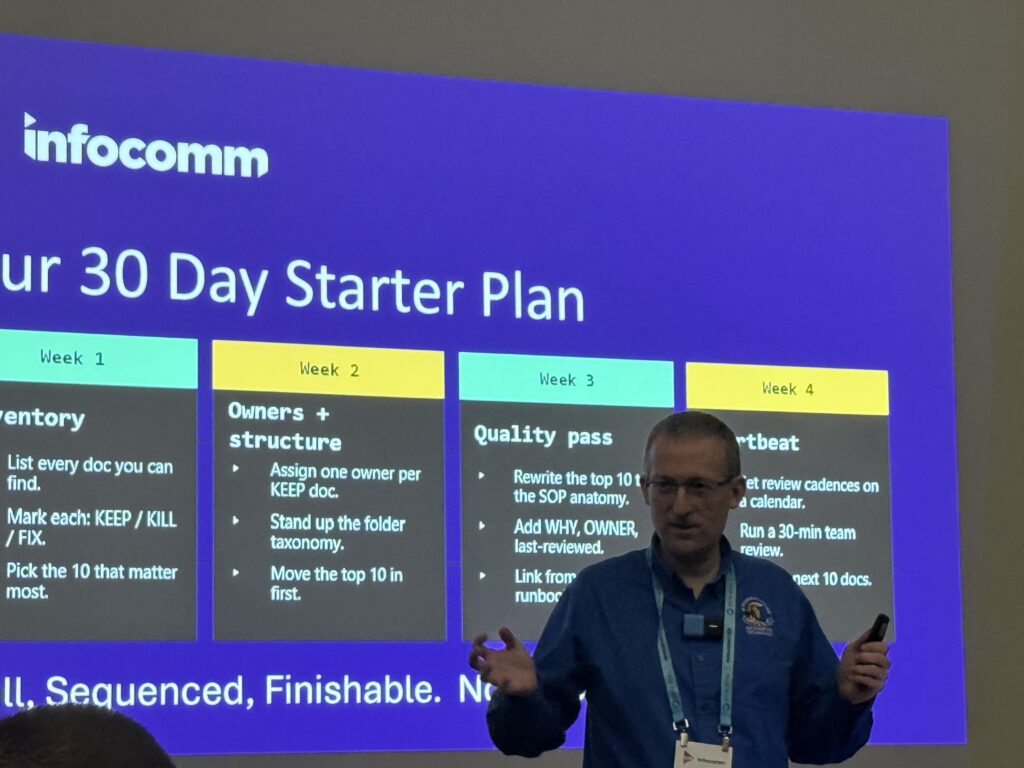
From an operational perspective, Jonathan Sullivan, also from SPC, offered guidance on starting with small, incremental approaches. It was a reminder that governance and training structures do not have to be built all at once to be effective.
Teddy Murphy from the University of Pikeville, Dustin Myers from John A. Logan College, and Mark Dunlap from the University of Aberdeen shared how they leverage existing IT training procedures.
The uniformity of training allows governance to align across AV and IT. These frameworks also give students a pathway into AV or the broader IT industry.
Day 2 showed that student management succeeds with clear structures and training opportunities. Allowing space for questions and learning helps develop a future pipeline for AV professionals.

Roles within AV, such as trainers and instructional designers, focus on how learning happens within that space. When those two groups are not in conversation early in the design process, that gap shows up in the classroom, and students absorb the cost.
Audio clarity affects comprehension. Interface complexity affects teaching confidence. Captioning affects access. These are not separate variables, but interconnected elements of a single learning experience.