Like pretty much everyone else in higher ed, we are refreshing existing spaces and building new ones every year. We implement some limited accessibility-related features, like infrared-based assistive listening systems and adjustable-height lecterns, as a pretty standard part of those projects. We are not going much beyond that as a normal course of installation.
That being said, I do not know that we even have anyone using those assistive listening systems. Even when they are available, they require students to know they exist, know who to contact, request a receiver, and trust that everything is working when they need it. In many ways, the burden of access still falls on the student.
It is always a question of how much good our “toss it in everywhere” model really does. I want to be doing things that improve how accessible our education is, but I am not convinced that placing an expensive piece of equipment in every room is always the best return on our limited time and budget. Some of the most meaningful improvements I have seen did not require new technology at all.
Building relationships before they are needed
Something I recently started doing as a low effort task on the back end was building better connections with other offices on campus. I would hope nearly every campus has some equivalent of a student accessibility office. For our campus, that office is Student Accessibility Services (SAS). I originally reached out a couple of years ago, but the office was completely restaffed over the last year, so reintroductions were recently needed.
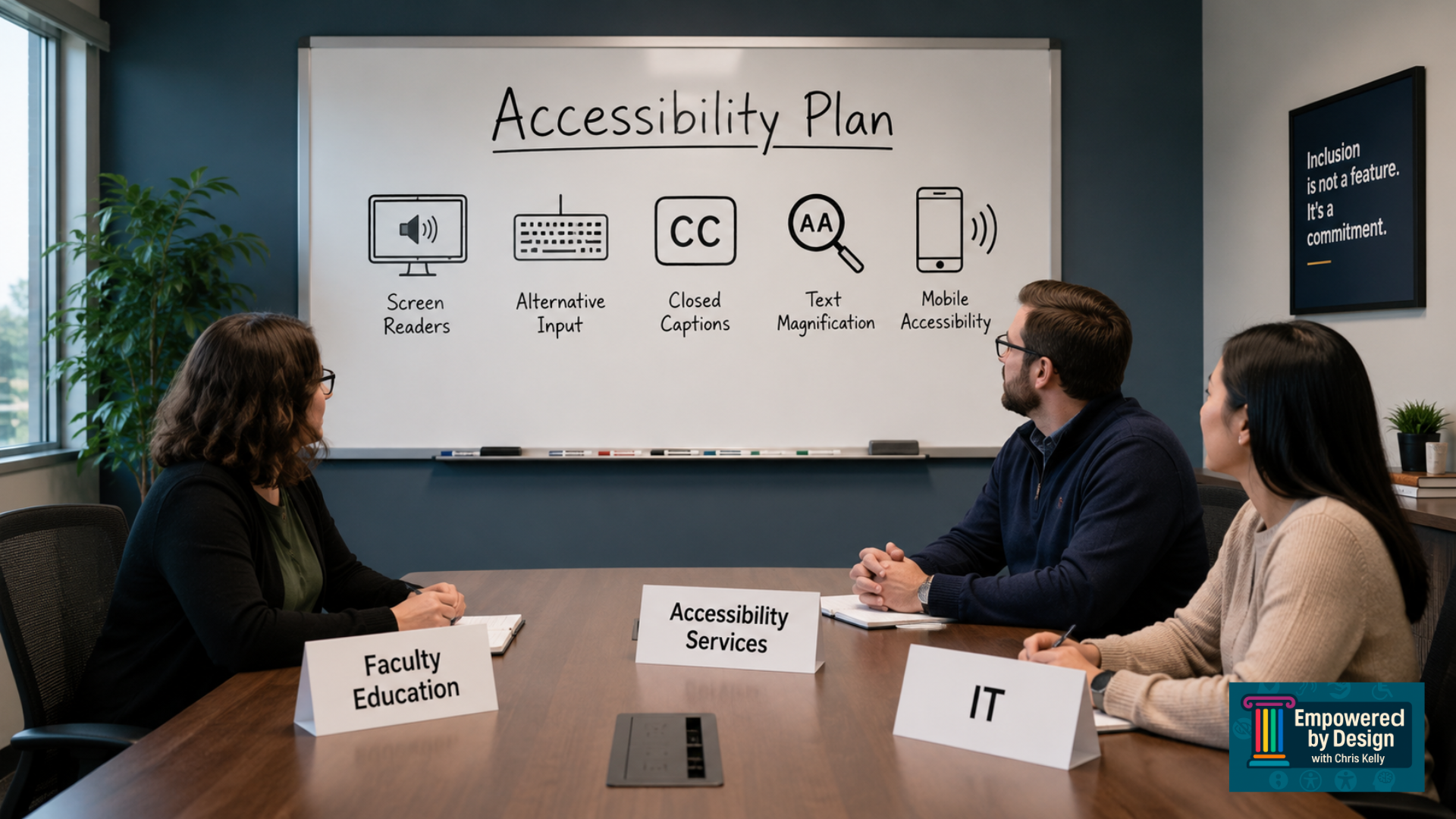
Another crucial office for me to have a relationship with is the Center for Faculty Excellence. They support faculty development, teaching, learning, and instructional innovation across the university. Any time I want to educate more than one faculty member about classrooms or workflows, these are the people. Through our coordination, we have set up shared trainings for staff in newly refreshed spaces. This is also the department that helps coordinate scheduled class recordings through Panopto.
So, how do connections with these groups benefit our students, faculty, and staff? I mean, in our role, we are just responsible for installing and maintaining the technology, right?
When coordination makes the difference
Over the summer, these connections paid off for us. We have multiple students with varying levels of hearing loss. I was first contacted about a particular student while I was at InfoComm, which started the conversation early in the summer. For that student, we coordinated and quickly knew which classes they would be taking and which rooms they would be in. We were able to confirm the workflows in those rooms and identify options that would give the student as equitable an experience as possible without requiring them to self-identify in the classroom.
Later in the summer, we learned of some additional students, but it was harder to narrow down the locations and times of their classes until closer to the start of the semester. We had rough ideas of buildings and classes, but we did not know the specific workflows the instructors would use.
By working through these connections, we were able to learn how the instructors planned to teach, identify the available workflows room by room, and establish a system that worked. The only additional cost was an enhanced Zoom license for the students.
Without key people in these other departments helping us stay aware of the things we did not know that we did not know, we would have reached the start of the semester unprepared and negatively affected the students. This was possible because of the coordination put in beforehand and because we knew who to go to for what.
While we love our technology, this situation was not really resolved by technology. What we think of as standard accessibility technology was not even being used here. The situation was resolved by coordinating around a fairly basic inclusion in every classroom: Zoom with microphone access.
We figured this out in time because we already knew who we were, what our roles were, and how to coordinate.
Learning from what did not work
A couple of years ago, that was not the case. I became aware of a student who was receiving on-site captioning from an external captioner. The setup was clunky, they had consistent issues, and the student’s experience was not positive.
This situation relied on none of our technology, literally. While I am not saying AV technology would necessarily have made everything better, we could have been more planful and set the captioner up with more dependable technology. That could have created a better experience. This situation encouraged me to contact our SAS office and start the relationship.
This experience also made me wonder how many accessibility accommodations are happening in our classrooms. Not that we need to know who is receiving them, but we should understand where we can partner.
For one thing, any time an accommodation needs to be made, our technology has failed to meet a student’s needs at the standard level. While we can never meet every need, I feel it is our duty to be aware of modifications made in our classrooms so we can think about ways to reduce their impact moving forward and design with these pedagogical and accessibility ideas in mind.
Beyond that, many SAS staff members do not know the ins and outs of the technology and options available on campus. By partnering with them and encouraging our involvement from the earliest stages, we may be able to find approaches that have a lower impact and are less likely to identify the student or faculty member receiving assistance.
Start with a conversation
I challenge all of you, at a minimum, to find your accessibility services office on campus. Ask them about the accommodations happening in your classrooms and the barriers students continue to encounter. You may be surprised by situations where an easier workflow or a better way to integrate an accommodation into the classroom is already available.
Those conversations can also help us identify recurring accessibility needs that should inform our classroom standards. If the same barriers continue to appear, we should explore whether changes to our standard technology, room designs, or teaching workflows could reduce the need for specialized accommodations in the first place.
Student Accessibility Services will always be an important campus partner, but students should not have to know which office to contact or feel comfortable asking for help just to receive an equitable education. Some students may not know where to go, and others may not feel empowered to seek assistance. The more barriers we can remove through our standard classroom experience, the fewer students we leave responsible for identifying and solving those barriers themselves.
Find out what accessibility services staff are struggling with as they work to give students a more equitable experience. This is a really easy, no-cost way to start helping students on a large scale. You never know how many students you may help just by starting a conversation.