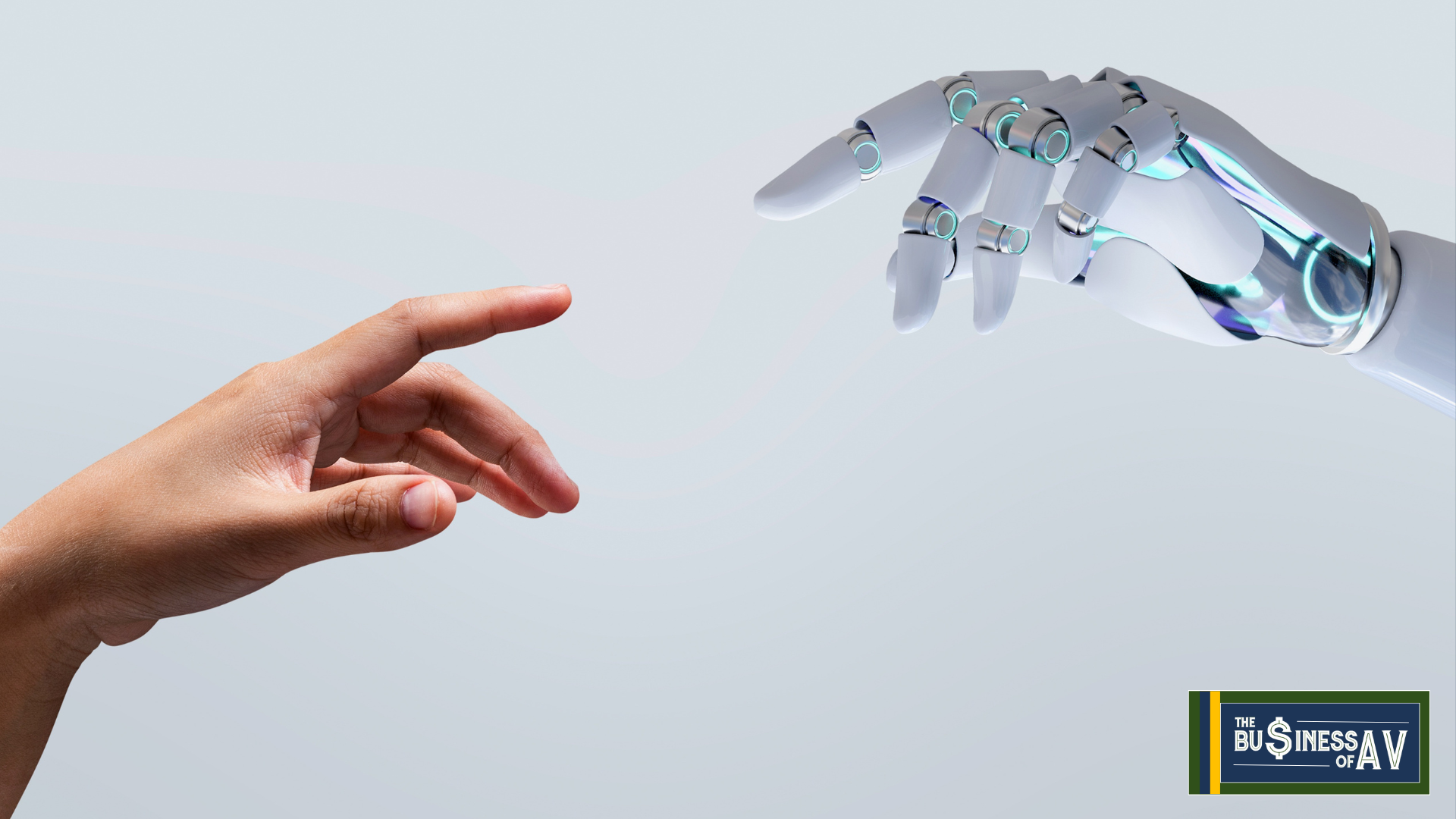

For all the conversation around artificial intelligence, much of it still centers on what AI might replace. What jobs will disappear? What tasks will become automated? What decisions will machines make for us? Indeed, in a time of the unknown, those are fair questions to ask, but they miss what may be the most valuable opportunity AI presents to the AV industry… AI can make technology more human.
On the surface, that might sound contradictory. After all, automation is typically associated with removing people from a process, and replacing it computers. But making AV more human isn’t about preserving every manual task or keeping people tethered to complicated control interfaces, it’s about designing technology that understands what people are trying to accomplish and adjusts itself around them. It’s about making space for humans to be human.
Traditional AV systems require the user to understand the room. They must know which source to select, which microphone to activate, how to adjust the lighting and where to find the correct controls. Even a well-designed interface still asks the user to translate what they want to do into a series of technical commands. AI has the potential to reverse that relationship. Instead of asking users to operate the technology, we can allow them to communicate their intent. A faculty member should be able to walk into a classroom and say, “I’m teaching remotely today,” or, “I need the students working in groups.” The room should understand what that means. Displays, cameras, microphones, lighting, shades and collaboration platforms should configure themselves around the desired experience.
That is technology finally getting out of the human’s way, not replacing them. It’s where spaces actually work toward the end result as a living tool, not a blockade to progress.
This matters considerably in higher education because our spaces are rarely used for one purpose. The same classroom may host a literature seminar in the morning, an acting course in the afternoon, and a student organization that evening. Yet, we traditionally design the room around its dimensions and installed equipment rather than the people moving through it. The most business value and ROI comes from allowing our spaces to adapt the large variety of users in the spaces.
AI can introduce an inference layer between the user and the system. It can interpret natural language, recognize established preferences and apply the appropriate room configuration without requiring every possible scenario to be programmed in advance. The result is not simply a smarter control system. It is a more personalized environment. A faculty member who prefers a particular lighting level, display arrangement or microphone configuration could have those preferences follow them from room to room. A guest presenter could receive a simplified experience. A production user could be given access to more advanced controls. Each person could interact with the same physical space differently without forcing the AV team to rebuild the interface for every use case.
The greater opportunity extends far beyond controlling displays and microphones. AV is becoming one part of a connected campus ecosystem that includes scheduling, access control, security, lighting, HVAC, digital signage, event management, and enterprise data. AI’s best skill is its ability to serve as the translator across these environments. And AV teams can earn their seat at the table as the catalyst of this.
For decades, technology teams have struggled to connect systems that speak different technical languages, operate through separate platforms and belong to different departments. Open APIs and network-based infrastructure have already made greater integration possible. AI now gives us a way to interpret the information moving among those platforms and turn it into coordinated action. A room could recognize that a class has been canceled and reduce its energy use. It could prepare itself based on the next scheduled activity, adjust ventilation based on occupancy, and notify support staff when equipment behavior suggests an impending failure. It could identify patterns across hundreds of spaces that no individual technician would have time to analyze. At that point, we are no longer managing an AV system, but rather we are managing the campus experience.
This transition also changes how AV departments demonstrate their value. Most institutional leaders do not care which projector, microphone, or control processor we install. They care about student success, operational efficiency, sustainability, accessibility, security and financial performance. The technology matters only when it helps solve one of those larger problems. This is where we can come to shine, and as I already mentioned, earn that much-deserved seat at the executive table.
AI gives AV leaders the opportunity to enter those conversations with measurable results. Smarter automation can reduce energy consumption, improve room availability and limit unnecessary service calls. Automated production capabilities can allow institutions to support more events with fewer resources. Intelligent spaces can become easier to even rent or leverage outside of traditional options, creating revenue for the institution while extending its connection to the surrounding community. That changes AV from a department that continually requests funding into one that creates demonstrable institutional value.
All this to say, it also changes the role of the AV professional. Our future will not be defined by competing with AI to complete technical tasks faster. We will provide the vision, judgment, and human understanding necessary to direct it. One of the areas we know well, but rarely talk about, is that we know how our users behave. We know what they naturally do when they come into a space, their movements, their desires, and their instincts. AI can help us cater exactly to those. We will become managers of intelligent environments, translators between institutional needs and technical possibilities, and strategic leaders who understand how spaces influence the people inside them.
The goal of AI should never be to remove humanity from the experience. It should remove the friction, repetition, and technical barriers that keep people from connecting, teaching, creating and collaborating. We all really do know that the best AV systems have never really been about the equipment… They have always been about what people can accomplish through it. AI simply gives us the opportunity to fulfill that promise better than ever before.
Check out the accompanying Higher Ed AV Podcast with Dan Litvin for a deeper dive: https://higheredav.com/?p=12515