


There is a wealth of books, articles, and podcasts focused on setting goals: how to establish them, the different types that exist, and the best ways to achieve them. This article is not one of them.
To illustrate, let’s consider a soccer analogy. The objective in soccer is to move the ball down the field and put it into the back of the net more times than the opposing team. This is a clear, measurable outcome that allows us to determine whether or not we achieved our goal. Boiled down to this singular objective, one might believe that achieving it is simple: you have 11 players on your team, plenty of space to maneuver, and an 8-by-24-foot net to target. The challenge, however, is that there are 11 opposing players whose entire goal is to put that ball into your net instead.
Consequently, each time a team attempts to reach its goal, it must adapt and try different strategies. For instance, a team might attack down the left side of the field and score. That is excellent. You achieved your immediate goal, but the match is far from over. The opposing team will reset, adjust its defensive plan to block that specific left-side path, and force you back to stage one. To succeed again, you must pivot and modify your approach. This strategic cat-and-mouse game continues relentlessly until the final whistle blows.
Analyzing this framework reveals a clear pattern: a goal has a definitive endpoint, with the ball resting in the back of the net. The ball stops, and everyone resets until the next objective is pursued. Another critical takeaway is that the strategy that helped you succeed once will not guarantee success a second time, even if the ultimate objective remains identical.
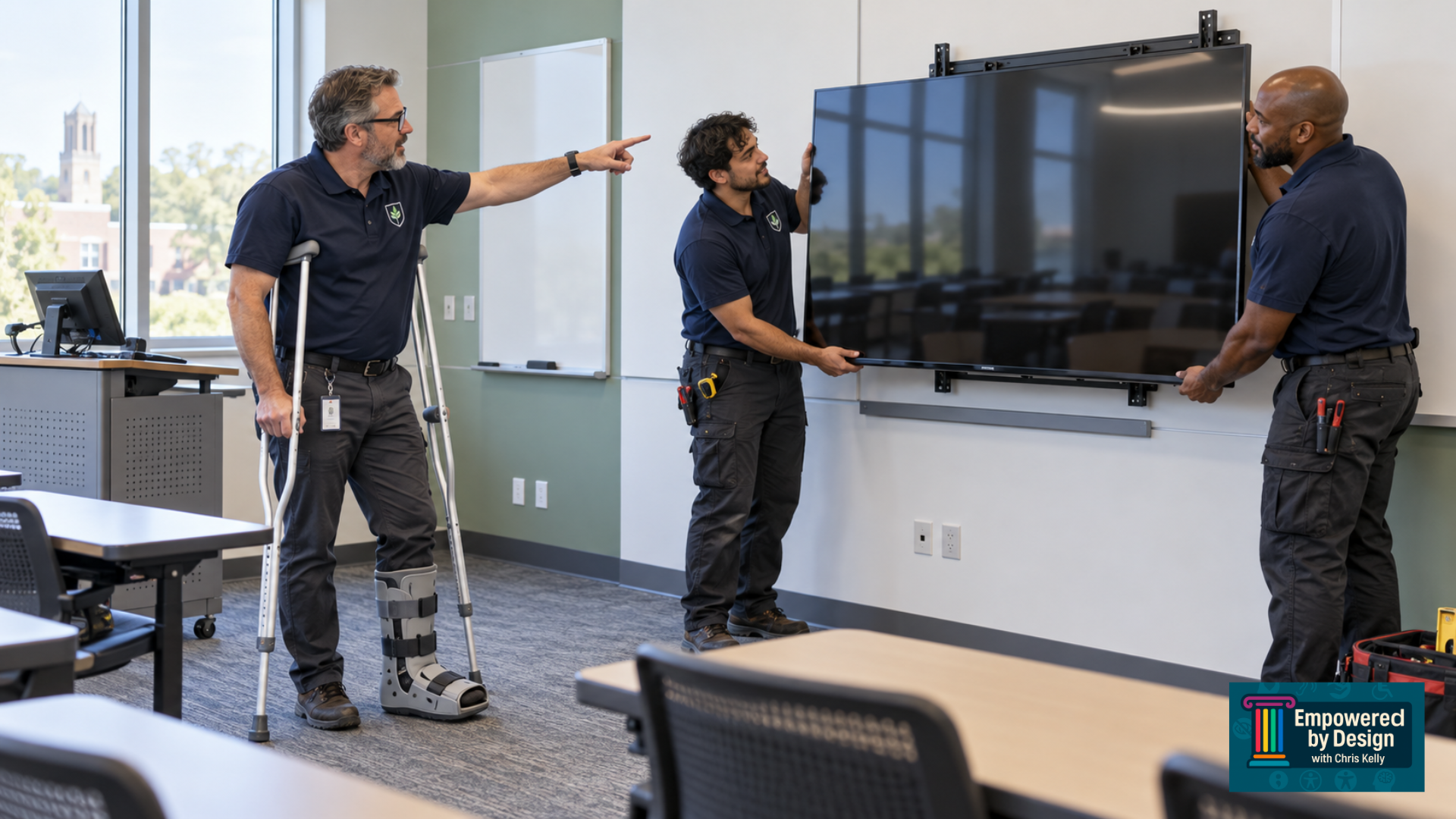
We face similar dynamics with our goals in higher education. One of our primary objectives is ensuring that classroom technology remains fully operational and seamless. On the surface, this sounds straightforward: we install the equipment, program the systems, and test the room’s functionality. The goal is met until a professor enters the room and reports that the system is down. A technician is dispatched, finds an unplugged cable, plugs it back in, and resolves the issue. The goal is temporarily met again. Shortly after, another report arrives because a hardware component has failed. Once again, the cat-and-mouse game resumes as external forces continually disrupt our baseline operational goals.
These technical disruptions are familiar challenges for which we already have clear troubleshooting solutions. But how do we handle external forces for which we do not have an immediate or simple remedy while still keeping our classroom technology up and running?
First, we face pressure from competing institutions. Faculty and stakeholders attend conferences or external campus events, witness alternative technological setups, and return with grand ideas centered on the mindset that “School X is doing this, so we should too.” Even if that technology does not align with our infrastructure or actively hinders us from maintaining our primary operational objectives, we are still expected to at least entertain the idea.
Second, we navigate pressures from manufacturers and integrators. I group these entities together because they operate hand in hand, driven fundamentally by commercial profitability, which I do not blame them for. They frequently push new features and product lines under the guise of “must-have” upgrades without evaluating how those changes complicate our core mission of keeping everyday classroom systems stable and functional.
Third, we face challenges with our teammates. Even though we are on the same team, that does not mean we have a common goal. This could be due to factors outside our control, such as poor leadership vision or different career goals among team members.
Does this mean we abandon our baseline objectives? Certainly not. Instead, it means we must proactively identify these external pressures and continuously refine our strategic plans to keep our primary goals at the forefront. We cannot simply step back and throw our hands up in resignation. The moment we do, we truly lose sight of our mission.