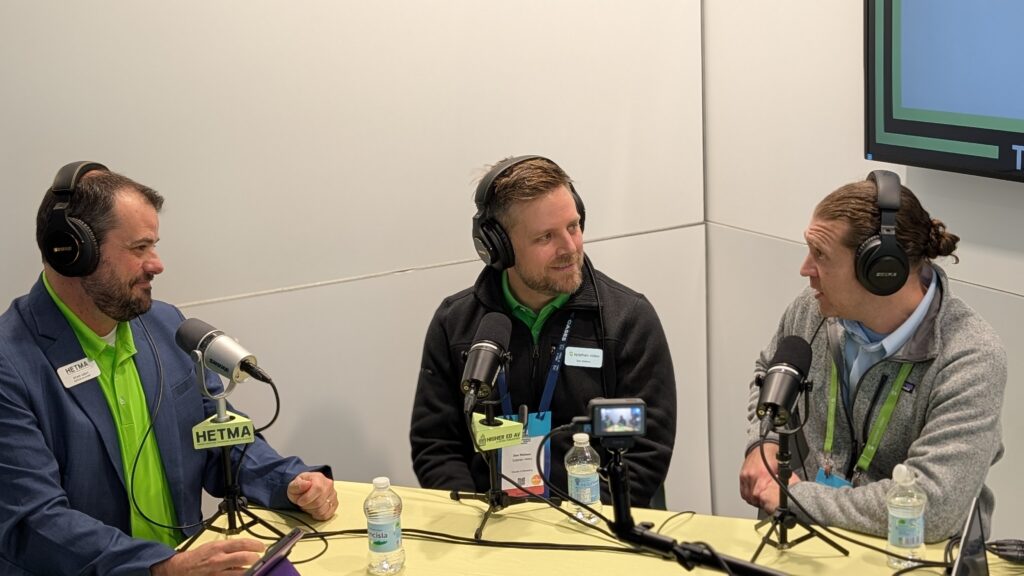







Epiphan shows up in higher ed. They’re a consistent presence in the community. This ISE 2026 conversation had the usual show-floor energy, plus a little friendly chaos, with Dan Wallace (Marketing Director) and Ron Epstein (Director of Higher Ed) leaning into what they care about most: making video capture predictable at campus scale, and staying close to the people who support it.
“There is very few places in this industry where people come together and share information and don’t see each other as competitors.”
Higher ed AV teams trade notes constantly. What works. What breaks. What scales. What does not. Epiphan’s story at ISE 2026 is built around that feedback loop, and around a clear operational goal: less time babysitting capture systems, more time making sure students and faculty get what they need.
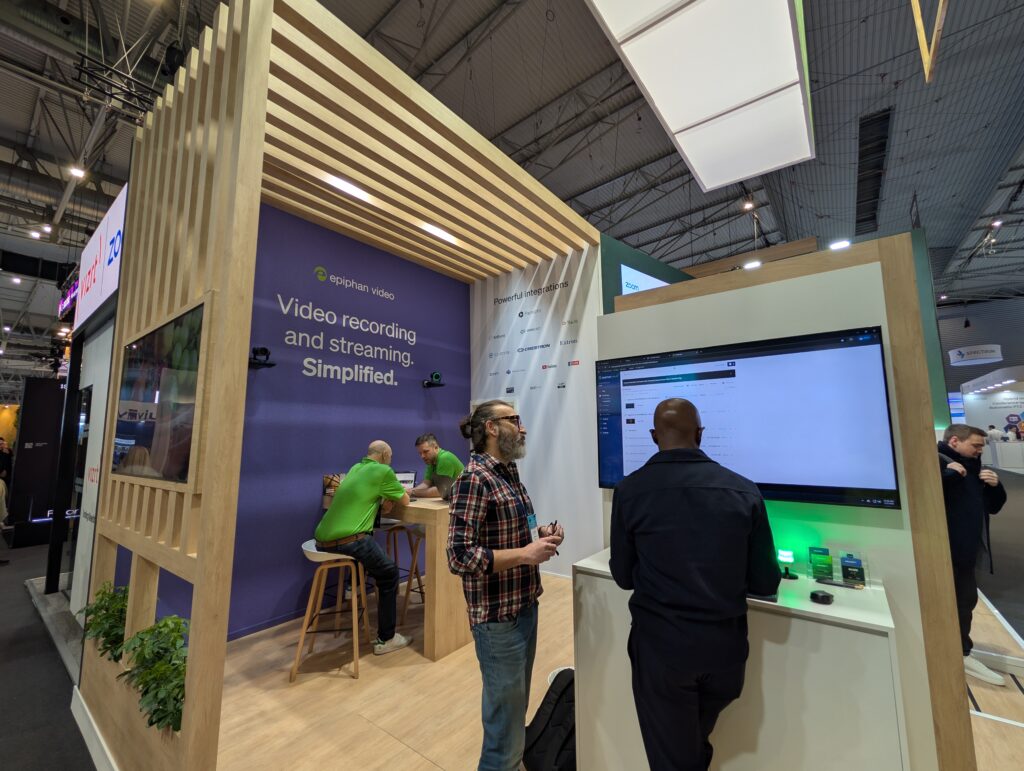
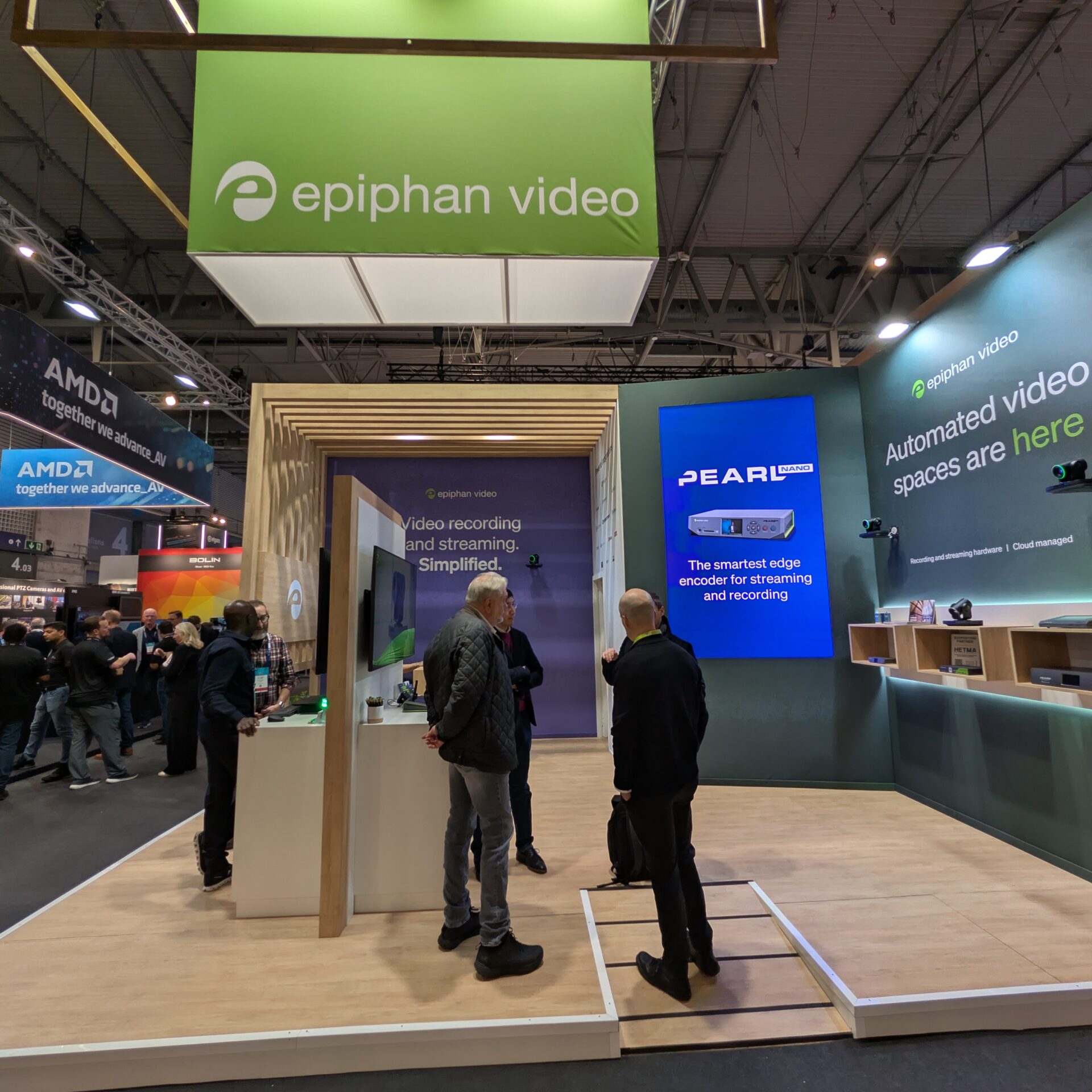
Booth 4R660: what they are putting in front of campus teams
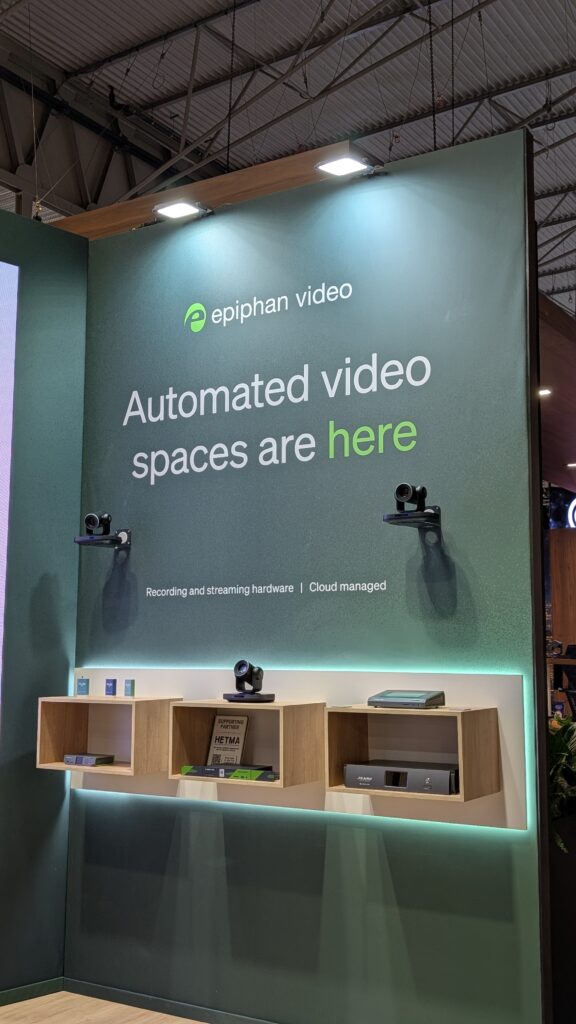
Epiphan is at Booth 4R660 at ISE 2026, and the booth lineup is centered on capture and streaming appliances, plus a growing camera and cloud-management story. The headline products being shown include Pearl Nexus, Pearl-2, Pearl Nano, and Pearl Mini, along with the EC20 PTZ Camera.
Pearl Nexus is still the device most higher ed folks bring up first when they talk about Epiphan. In the conversation, Dan framed it as an end-to-end lecture capture solution built to simplify capture, recording, and streaming across an entire campus, whether that is a standard classroom, a large auditorium, or spaces like studios and podcast environments.
“This is a lecture capture solution, full end-to-end lecture capture solution that simplifies capturing, recording, and streaming video across an entire campus.”
Appliance-first capture, because scale exposes every weakness
A big part of why Epiphan keeps landing in higher ed is that the lecture capture conversation has matured. Many campuses have already tried PC-based capture at scale and learned where it hurts. Too many moving parts. Too many updates. Too many edge cases. Too much uncertainty.
The discussion circled around the value of a dedicated appliance in a lectern. It’s predictable, built for the job, and it reduces the number of things that can go sideways. Ron also pointed out something that matters to higher ed buyers: the intent behind the product. Pearl Nexus is something designed for higher education instead of a device built for corporate but being sold to education.
“Epiphan literally has a product that was designed for higher education, not a repurposed product that can work here or work there.”
That framing matters because higher ed “scale” is not only room count. It is also support model. It is also staff turnover. It is also the reality that a room has to survive semesters and summers and refresh cycles with minimal drama. If the solution requires constant human intervention to label recordings, match schedules, or resolve basic inconsistencies then it’s a no go.
The conversation also pushed past the old lecture capture objection set. The idea that recording is about reducing attendance has faded. Students still want to be in the room. Recording is about access, review, retention, and flexibility for learners with work obligations, athletics, and a wide range of support needs. On many campuses, capturing consistently is now part of the experience students expect.
EC20 PTZ cameras: practical features, and the part that actually matters at scale
Epiphan also used the conversation to bring in their camera story, specifically the EC20 PTZ Camera line. The way Ron framed it was refreshingly honest: most booths can talk optical zoom and 4K. That is table stakes. The differentiator is what happens when you deploy cameras as a fleet.
Epiphan’s EC20 cameras tie into Epiphan Edge, their cloud platform for monitoring and managing deployments. EC20 is positioned as a PTZ camera built for cloud-managed fleets, which means remote visibility, remote control, and the ability to do the work without traveling room to room. That fits the higher ed reality directly. If you have to physically visit every room to push firmware updates, verify status, or troubleshoot, the model breaks as room counts grow.
Ron also dropped a very specific “installer pain” detail that higher ed teams will appreciate: an LCD screen on the camera that shows the IP address, because that is exactly the kind of small decision that saves real time during summer installs.
Dan tied the camera story back to the bigger objective: set it, forget it, and manage it at scale. If the campus team can deploy quickly, keep devices monitored centrally, and reduce the number of surprise failures, the whole environment becomes more stable.
“If we can save you time, if we can save you headaches, if we can help you take a vacation without needing to be worried that something’s going to break while you’re away, then we’ve done our jobs.”
A platform mindset: one box that works, and room designs that can evolve
Another key point made was the value of marrying consistency with flexibility. With the right profiles and layouts, the same room can support workshops, events, and different capture needs without locking the space into one fixed configuration. That matters for higher ed because room use evolves. Stakeholders push. Teaching styles change. Programs expand. A solution that can grow with the room stays valuable longer.
Dan reinforced that mindset directly. Pearl is treated as a platform that teams can build on, integrate with control systems and content platforms, and adapt as needs change.
“We see it as a platform that we want you guys to be able to innovate on top of as well.”
That is the practical difference between a capture system that is “installed” and a capture system that becomes part of the institution’s learning infrastructure.
Make sure to check out all of this and more at their website and reach out to Ron at repstein@epiphan.com.