Someone designs the wall. Someone else lives with it.
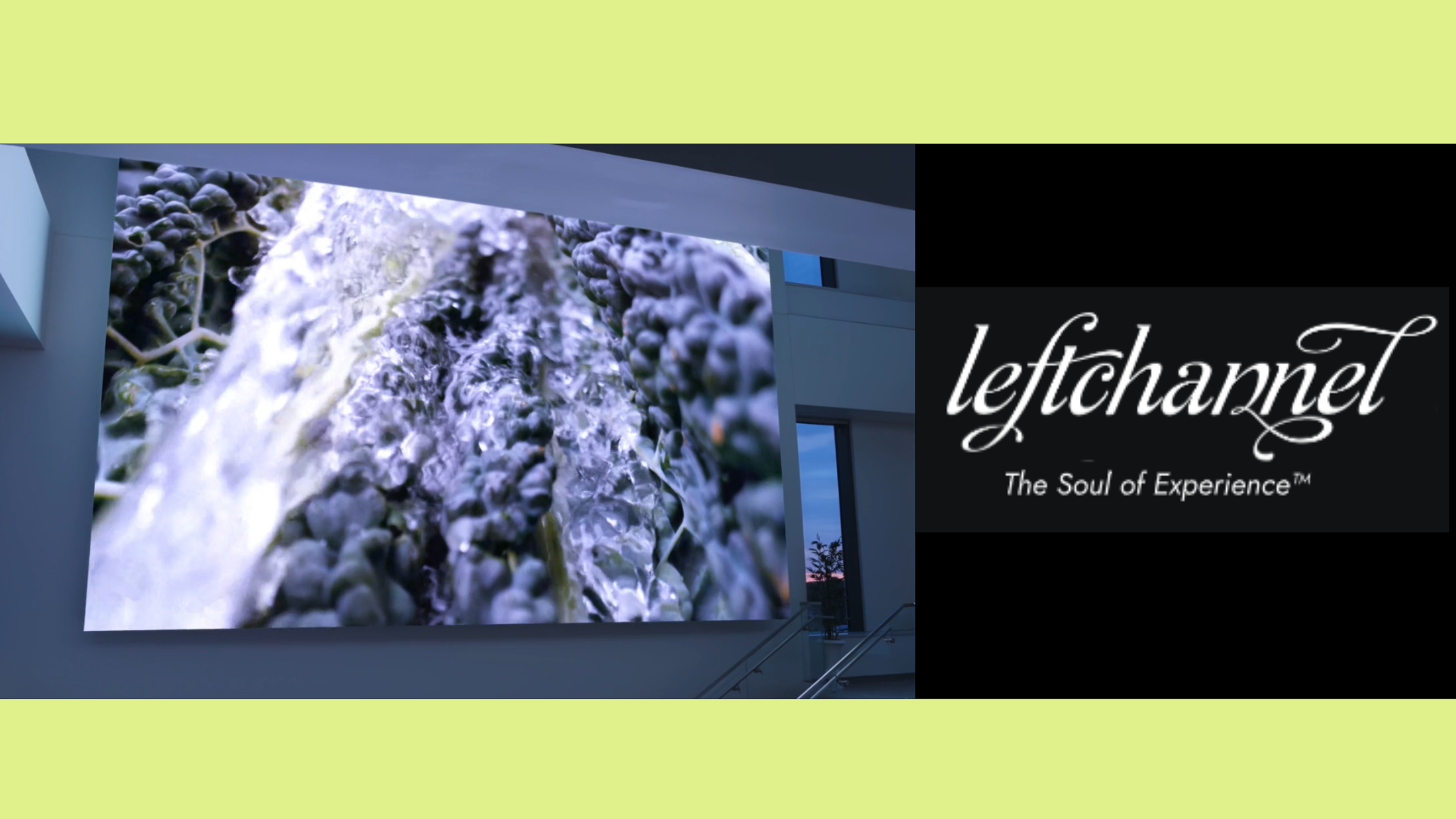
The wall at the OCC Culinary Institute had a job before it had a size. It was there to make the craft of food visible, and to give a prospective student a reason to remember the place. Strategy came first. The hardware followed it.
That part gets written about a lot. The part that decides whether the wall is still good in year three is the handoff: the moment a project stops being a plan and becomes something a person has to operate on a Tuesday morning.
I’ve spent most of my career building brand systems, and this is the failure I’ve watched most often. A large company pays a large agency to define the brand and express it in advertising. The work is excellent. Then the internal team has to actually use it, and finds out that the million dollar commercial isn’t reproducible in house, and that a thirty second spot built over six months tells them nothing about how to make thirty three-minute videos in the next eight weeks.
Nothing was wrong with the film. It just wasn’t built to be inherited.
Installations fail the same way, and on a campus the technology manager is almost always the one doing the inheriting.
A digital canvas is flexible by nature. That’s the whole appeal and the whole risk. Whatever the original plan was, at some point someone will want to put something else on it. A piece of art becomes the cafeteria menu. A brand moment becomes the announcement board for whoever has the strongest voice that month. You have walked past one of these: a beautiful canvas running something that was clearly made in a hurry by someone with no time and no tools. Usually nobody did anything wrong. The screen is there, it’s big, and somebody has a message.
You can see it coming early. Renderings filled with stock imagery. A screen sized to fit the wall rather than sized to what it has to show. Anyone saying we’ll figure out content later. And the sign that predicts the most trouble: nobody in the planning meetings is the person who has to run it after it opens.
You may not control the purchase. You can control what gets written down before it, and these three documents are worth the effort.
What it’s for, and what it isn’t
Call it the intent document. It works in two directions. It protects the wall when someone asks for the menu, and it inspires the wall when someone is genuinely trying to add something good. The goal isn’t to forbid secondary uses. It’s to be clear enough about the primary function that anything added later works with it instead of against it.
At OCC we built a composition that deliberately never loops, so the wall never settles into wallpaper. That’s a decision that shapes how the piece feels years in, and it only survives if somebody wrote down why it was made.
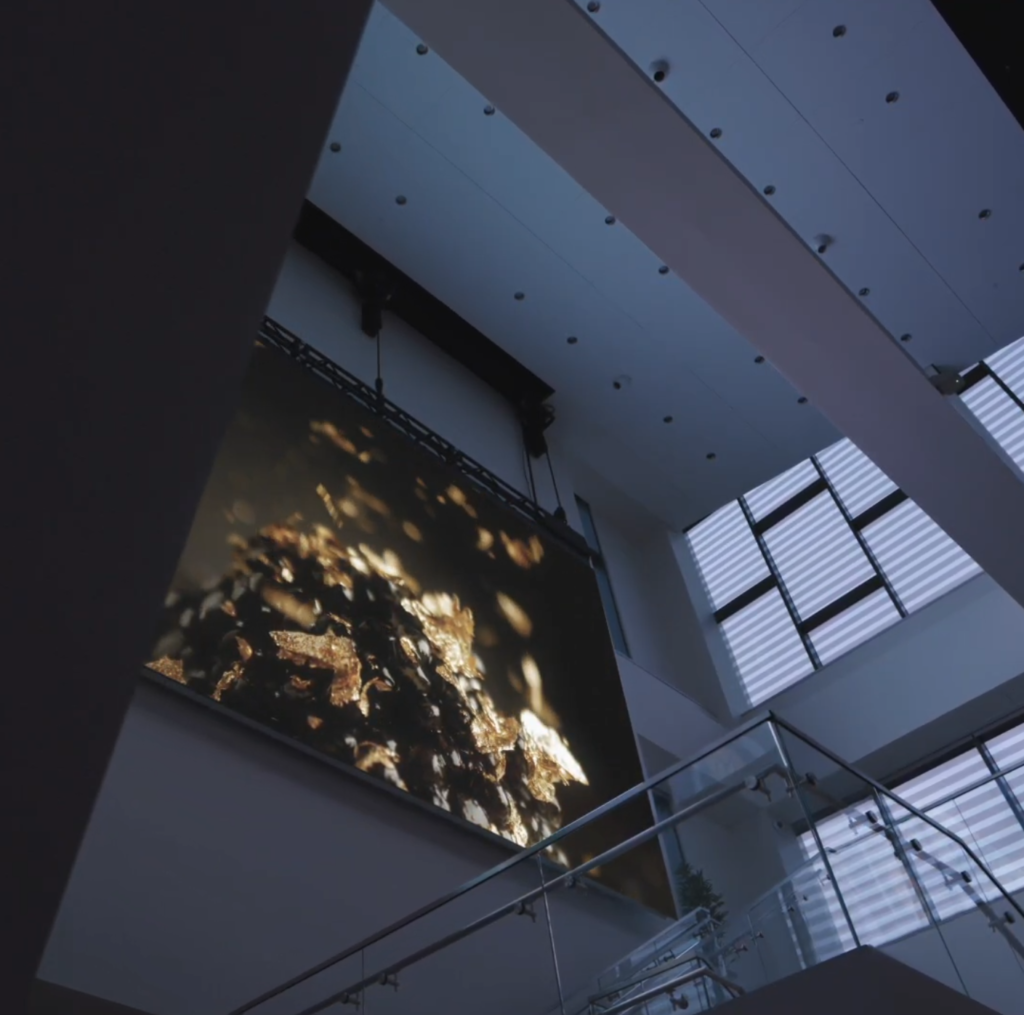
You may not be able to commission this document. You can write it. Sit in the kickoff, take down what each person says the wall is for, circulate it, and ask them to correct you. A one page summary you wrote is much harder to argue with a year later than a meeting nobody minuted. And ask one question out loud while the room is still full: who is feeding this wall in three years?
Spec the CMS against year three, not day one
Every content management system performs more or less the same practical function. They do not all support the same future. Some capabilities are available later only if the setup was done properly at the start. Some are never available at all once the choice is made.
The CMS usually gets treated as a procurement item, picked on price or on what the integrator already knows. It is closer to a design decision. We did a piece for the Sheraton Dallas where a set of LED columns lives as a work of art, but can temporarily brand the hotel for a conference. That second use existed on paper before anything was bought, so it shaped the CMS choice and a set of rules for how event content is allowed to behave. Had it come up a year after opening, the answer would have been no.
Before the CMS is selected, put the future use list in writing and make the vendor answer it item by item. Who has publishing access. Whether content can be scheduled and expire on its own. Whether regions of the canvas can be locked. What happens when somebody uploads the wrong aspect ratio at 4pm on a Friday. You are the person who will be in that interface, which gives you more standing on this question than on almost any other part of the project.
Ask for templates, not just content
In brand management we call this a toolkit. Half solved, so the rest is safe.
Most bad content on a good wall is not a taste problem. It’s a tools problem. Somebody was asked for a holiday message on Thursday and had nothing to work from, so they opened whatever software was on their machine and did their best. Give that same person a locked layout with the type, the color and the motion already decided, and a one page sheet saying what they are allowed to change, and the result takes an afternoon and still looks like the wall.
So ask for the templates while the content is being made, not after. Whoever is producing the launch content is thinking about the whole piece right now, and will never be that close to it again. Make the template set a line item in the scope of work before anyone signs, name the two or three content types you know will be requested, and ask for the spec sheet alongside the files.
How to make the case
None of this is a technology argument, which is why it usually doesn’t get made in a technology meeting. Make it as an operating argument instead, in the language the people signing already use.
The wall has an operating cost after handoff, and these three documents are what set it. Without them, every future request becomes a project. With them it becomes an afternoon. Put it in the risk column too: a capital asset that visitors see every day, with no agreed rules about what appears on it, is an institutional reputation sitting in an unlocked room.
Then get it into the document that actually binds. Not a recommendation in an email, a line item in the scope of work before anyone signs. Name the deliverables. Intent document. CMS capability matrix against a stated future use list. Template set with spec sheet. And at the design review, ask the question that tests whether any of it is real: what happens when the person who made this content leaves.
Someone owns the story, not just the system
The people who approve a display and the people who make it work are rarely the same people. The person who will end up owning what it says is often not in the early meetings at all. You don’t have to be that person, but you’re frequently the only one in the room who knows they need to exist, and the time to say so is while the project is still cheap to change.
You also don’t have to make the case alone. Marketing, communications and the academic program all want the wall to mean something, and they are usually already talking to the people who sign.
The wall itself is the easy part. It arrives, it gets mounted, it works. What’s really being installed is a job that somebody has to keep doing. It’s worth deciding in advance whose job that is, and handing them something built to be inherited.
Guest written by Alberto Scirocco, President and Creative Director at leftchannel, a motion and experiential design studio based in Columbus, Ohio.