
A few years ago, I realized I have a hard time simply doing nothing.
There is a part of me that always feels like I should be accomplishing something. It does not necessarily matter what it is. There just needs to be progress. Something to learn, improve, finish, organize, build, or prepare for. Looking back, I think I know where at least some of that mindset came from.
Years ago, before grad school, I spent an unhealthy amount of time playing World of Warcraft and other online games. On the surface, it was a hobby. For me, it often felt more like a second job. I spent countless hours preparing for raids, earning in-game currency, helping guild members, and chasing whatever challenge came next.
One of the concepts common in high-level gaming is “min-maxing.” You maximize the things that help and minimize the things that don’t. You look for the most efficient path, the best possible outcome, and the highest level of performance.
I loved it.
The problem is that I don’t think I ever left that mindset behind when I logged out.
As life changed, I had less time for gaming. A full-time job, marriage, and eventually a child made it impossible to dedicate the same amount of time to virtual accomplishments. Somebody once asked why I stopped playing if I still enjoyed it. My answer was simple: if I couldn’t fully commit to it, if I couldn’t be pushing myself and trying to be among the best, it lost some of its appeal.
That sentence probably explains more about me than I intended.
When I decide something matters, I tend to go all in. I am not saying that as a point of pride or as a criticism. It is simply true. I have always struggled with moderation when it comes to things that interest me. If I am going to learn something, I want to really learn it. If I am going to contribute to something, I want to make a meaningful contribution. If I am going to take on a challenge, I want to know how far I can push myself.
When I decided to transition from social work into IT, I threw myself into learning. I listened to relevant podcasts whenever I could. I watched videos at home. I took practice exams. I spent an enormous amount of time trying to prove to myself that I belonged in the field. That effort paid off. It opened doors I never expected and helped me build a career that has been incredibly rewarding.
In less than three years, I moved into management at Creighton, served as HETMA Advisory Board Chair, became Managing Editor of Higher Ed AV Media, earned certifications, and found opportunities I never would have imagined when I first entered the profession. There are real benefits to this approach. People notice hard work. Learning compounds. Relationships compound. A willingness to raise your hand and help often creates opportunities that would not otherwise exist.
A lot of good things in my life have come directly from always being willing to take on one more project, volunteer for one more responsibility, or learn one more skill.
The difficult part is that constant striving is usually rewarded. People tell you that you’re dedicated, compliment your work ethic, and ask how you manage to do so much. Those comments are usually meant as praise, and sometimes I take them that way. What people don’t always see is that eventually the challenge stops being how to work hard and becomes how to stop working at all.
At some point, productivity can become part of your identity.
Free time starts to feel uncomfortable. Rest begins to feel unearned. Sitting still can feel like wasting an opportunity. The question is no longer whether there is something to work on. The question becomes which of the dozens of available options deserves your attention next.
My wife sees this better than anyone. She is perfectly happy to relax and watch television or a movie together. I am much more likely to have a book open, be working on an article, studying for something, or tinkering with a project. Every now and then I will sit down and simply watch something with her, but I am far less likely to do so if it is fiction.
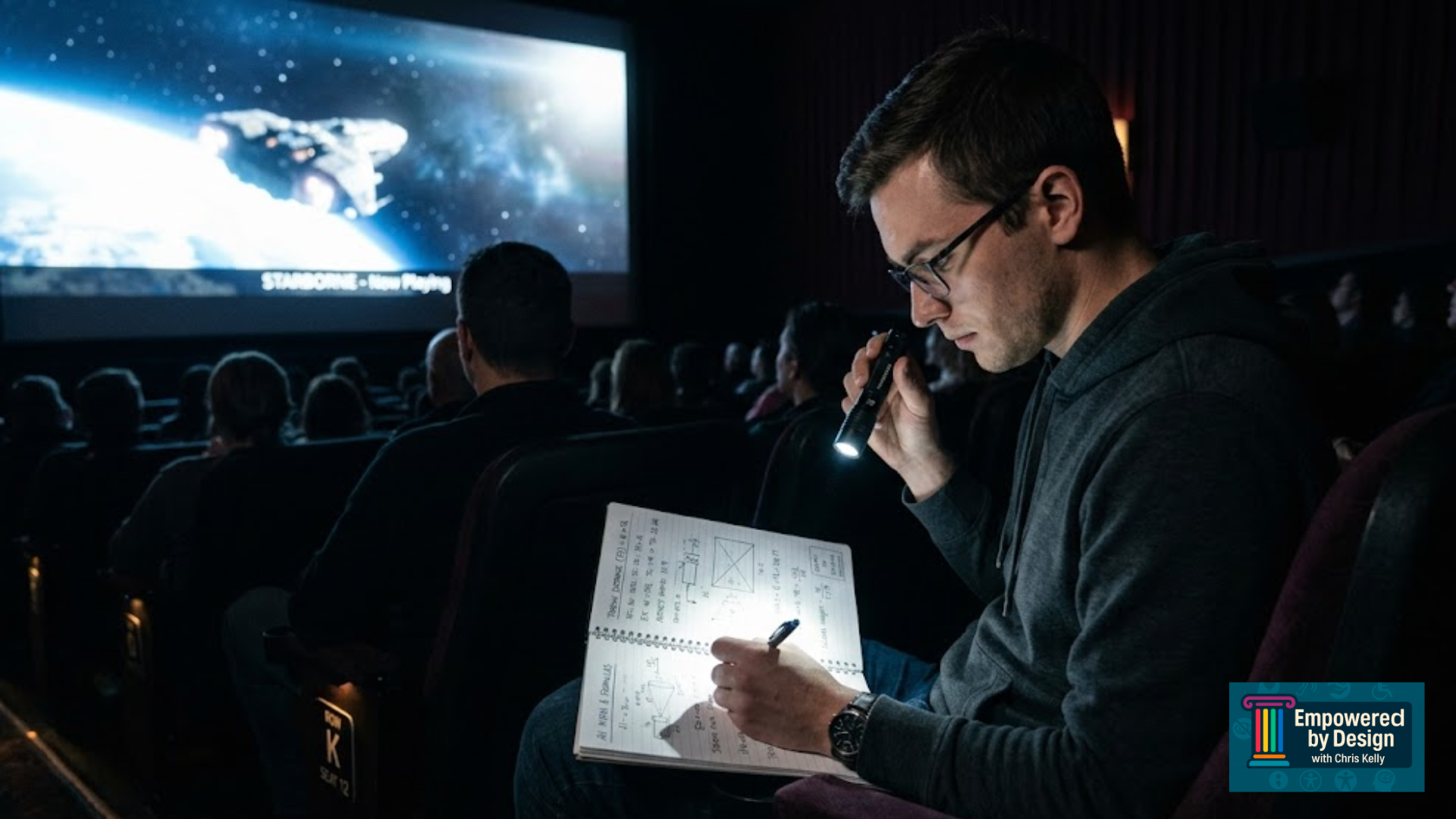
Somewhere along the way, I started assigning different values to how I spend my time. Nonfiction feels productive because I can convince myself I am learning something. A documentary, a podcast, or a book teaches me something new. Fiction, on the other hand, often feels like pure entertainment, and I struggle with that. Not because I think there is anything wrong with it, but because there is a part of my brain that keeps asking whether I should be doing something more useful instead.
Looking at that on paper, I realize how ridiculous it sounds. Stories have value. Entertainment has value. Relaxation has value. Yet I still find myself trying to justify how I spend my free time in terms of what I gained from it.
Even my entertainment became something to optimize.
That is the trap. When every moment can be used productively, every moment starts to feel like it should be used productively. Technology makes this incredibly easy. At any given moment, I can answer messages, work on an article, review documents, plan a project, study something new, or learn another skill. My phone ensures there is always something waiting for me. The convenience is undeniable. Whether it is healthy is a more complicated question.
Part of this is probably connected to anxiety. My brain has never been especially quiet. I worry more than I should, overthink things, and prepare for situations that may never happen. The newer piece, though, is the anxiety that comes from not being productive. There is a nagging feeling that if I am not moving forward, I am somehow falling behind.
Technology is uniquely positioned to feed that mindset. There is always another certification, another conference, another article, another tool, another connection, or another opportunity to improve. One of the things I love most about higher education technology is that there is always something new to learn. It is also one of the reasons it can be difficult to step away from it.
One of the few things that consistently breaks that cycle for me is my daughter. When I am spending time with her, I make a conscious effort to be present. We play games, go outside, explore, and spend time together without an agenda. Those moments force me to slow down in a way that little else can.
At the same time, she has made me more aware of my own habits.
I catch myself wanting her to always be improving, always learning, always accomplishing something. I do not want her growing up believing her worth is tied to productivity. I do not want her feeling guilty for enjoying downtime or treating every hobby as if it needs to become an achievement. Yet I know she sees my behavior. She sees how often I am working on something, studying something, planning something, or worrying about the next thing.
That realization makes me stop and think. Because the consequences of an always-on lifestyle are not always dramatic. It is not necessarily burnout, at least not right away. Sometimes it is smaller and quieter than that.
It is turning hobbies into obligations. It is planning vacations with military precision because even leisure time needs to be efficient. My wife and I joke about this, but there is truth behind it. We never talk about taking a trip somewhere and doing nothing. Every day gets planned. Every stop gets researched. Every route gets optimized. Even our vacations can start to resemble projects.
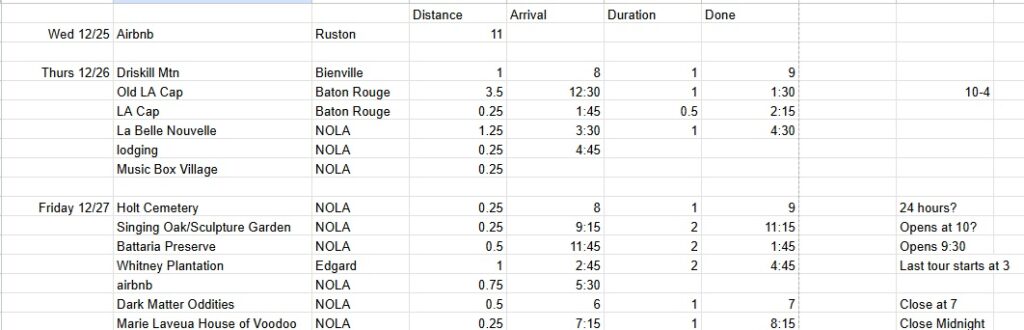
It is struggling to enjoy a quiet moment because part of your brain keeps asking what else you could be doing. It is measuring yourself by output instead of presence.
The irony is that we understand the importance of balance everywhere else. In technology, we talk constantly about sustainability. We build redundancy into systems. We schedule maintenance windows. We create capacity for growth and recovery. We recognize that systems operating at 100 percent all the time eventually fail. Yet many of us design our lives in exactly that way.
No margin. No downtime. No room to simply exist.
I am not writing this as someone who has solved the problem. The truth is that I still love much of what this mindset has given me. It helped me build a career. It helped me develop skills. It introduced me to incredible people and opportunities. It still drives me today. There are parts of it I would not want to lose.
But I am beginning to wonder if there is a difference between ambition and compulsion. Between wanting to improve and feeling unable to stop improving. Between being productive and believing your worth depends on being productive.
I do not have an answer.
What I have is a growing suspicion that achievement can become a treadmill. No matter how much progress you make, your focus shifts so quickly to the next goal that you rarely feel accomplished.
Maybe empowering ourselves by design is not just about becoming more capable. Maybe it is also about creating enough margin in our lives to enjoy the things we claim matter most. We design classrooms, technologies, and systems to be resilient because we know constant strain eventually leads to failure. It may be time to apply that same thinking to ourselves. I am still figuring out what that looks like.
But I think it starts by acknowledging that there is a difference between living a full life and trying to fill every moment of it.