






Panasonic at InfoComm 2026: Projection, DVLED, and the Campus Spaces Beyond the Classroom
Some InfoComm conversations start in the classroom, then quickly move across the rest of campus. Panasonic is one of those conversations this year.
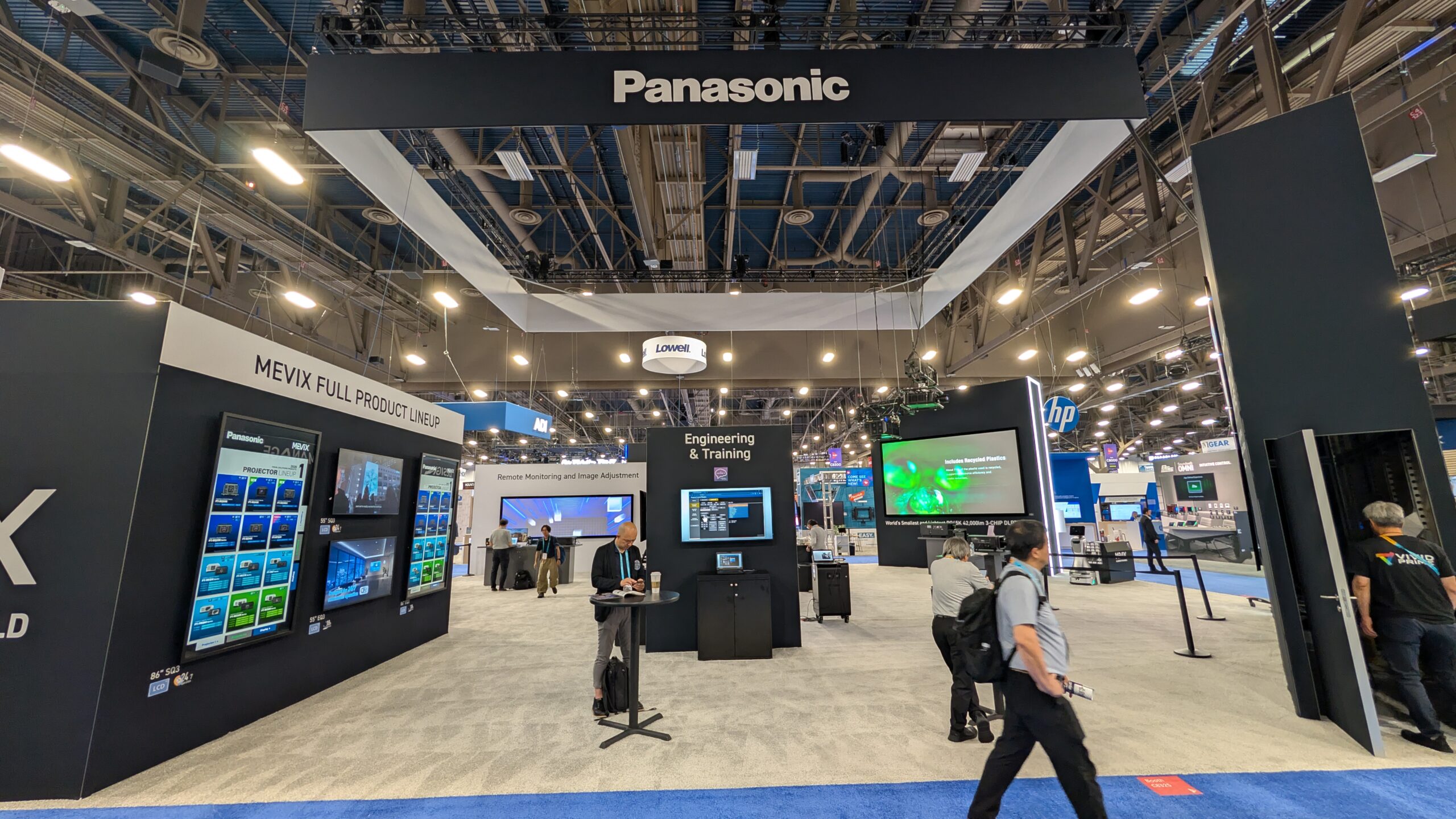
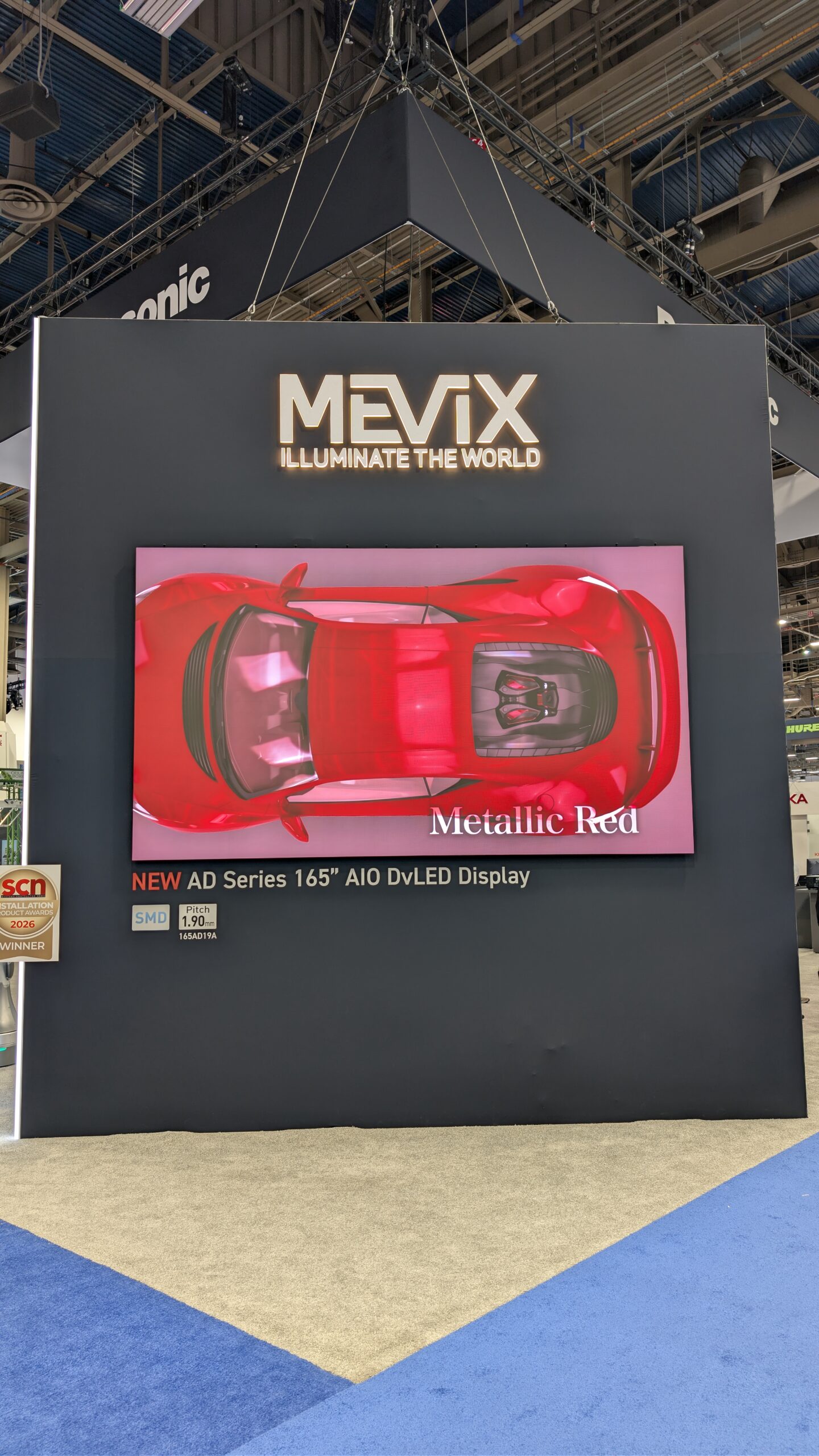
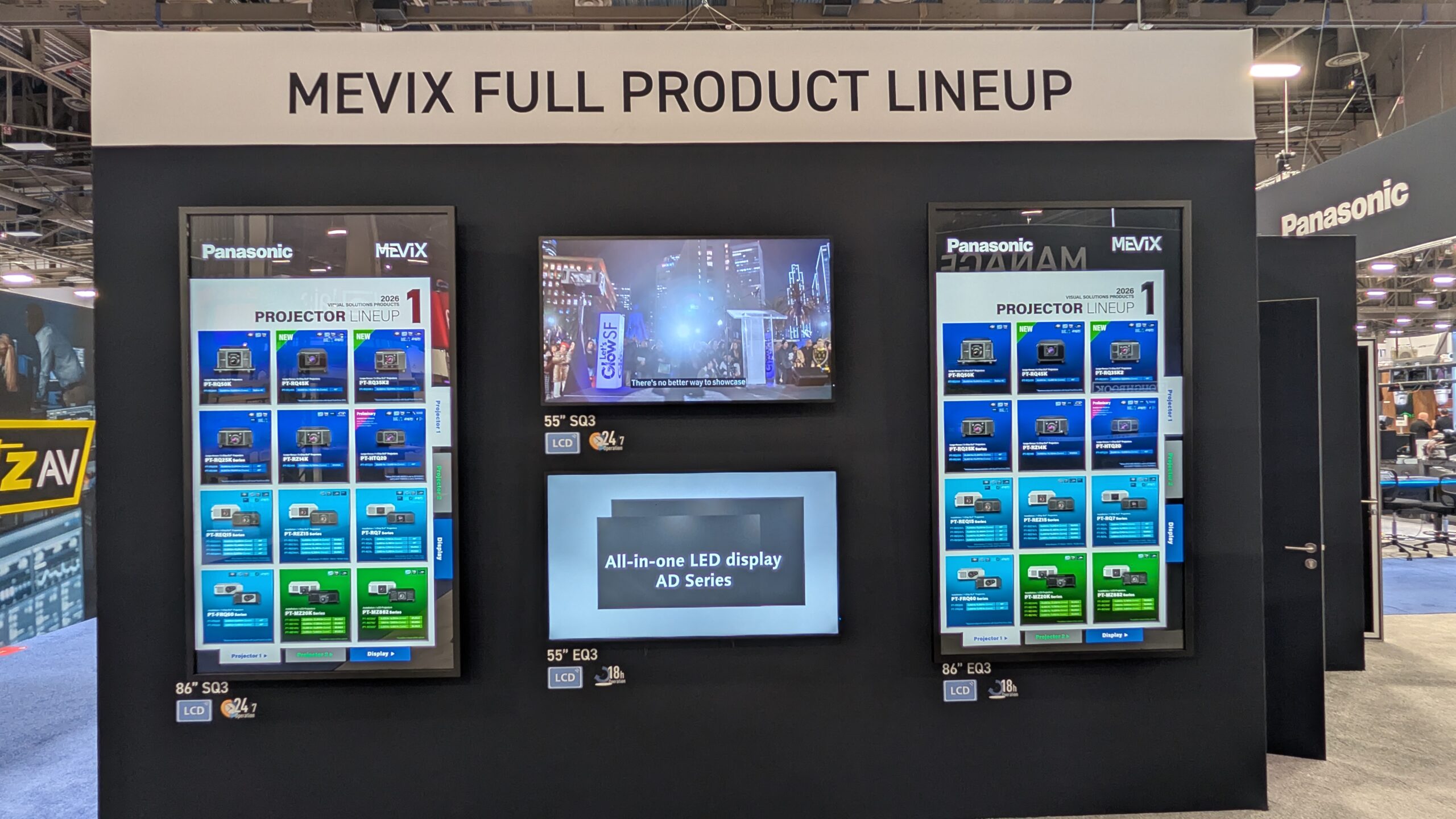
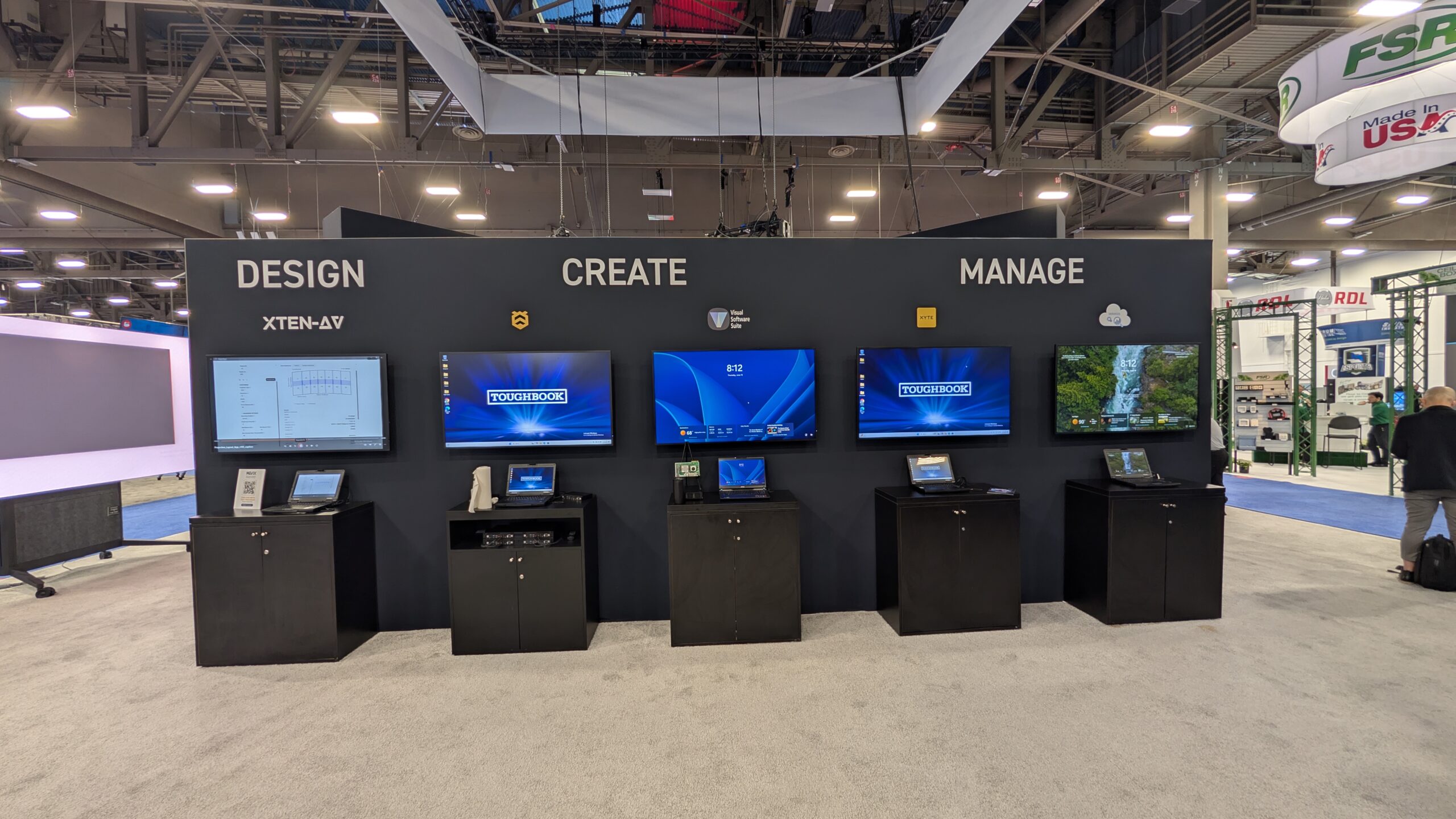
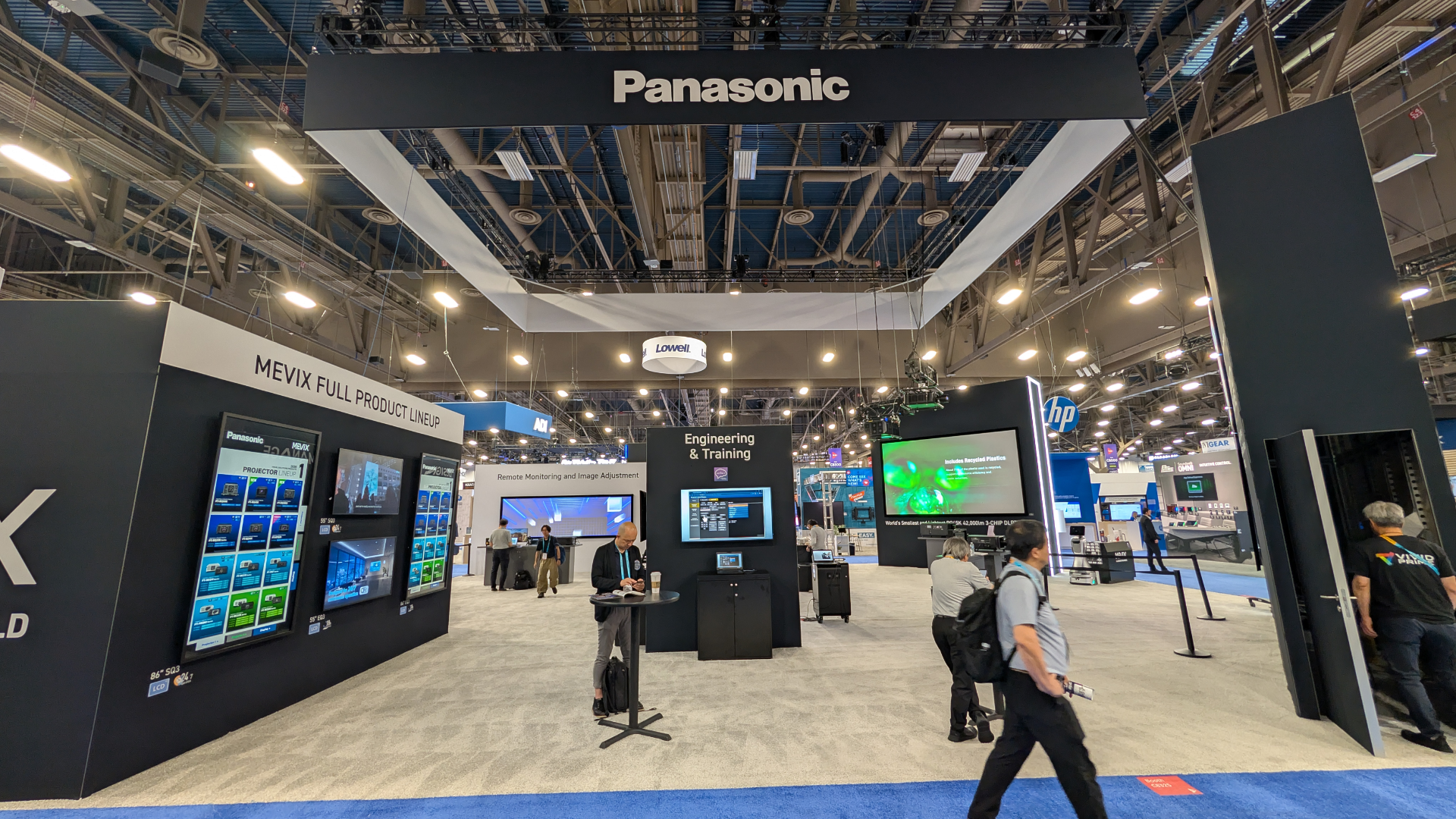
At Booth C8325, Panasonic Projector & Display Americas, under the Mevix brand, is showing projection, direct view LED, media management, and large-format visual tools for education environments, sports simulation, public art, projection mapping, arenas, and other campus experience spaces. The booth includes the PT-VMQ85, PT-RQ45K, a new all-in-one direct view LED display, 55-inch DVLED panels, and discussion around Panasonic’s acquisition of Hive for media management and content distribution.
That range matters because higher ed visual technology is not living in one category anymore. A campus may need a projector in a classroom, DVLED in a lobby, content management for signage, projection mapping for an event, simulation systems for specialty instruction, and arena-scale visuals for athletics or community engagement.
Projection is still very much part of the Panasonic story, but the booth also reflects the shift toward DVLED, software, content management, and larger experience-driven spaces.
Booth C8325
Panasonic is exhibiting at Booth C8325 with a mix of classroom, venue, and experiential visual technologies. The company is showing projector and display solutions for education environments, sports simulation systems, large-scale public art, and projection mapping experiences.
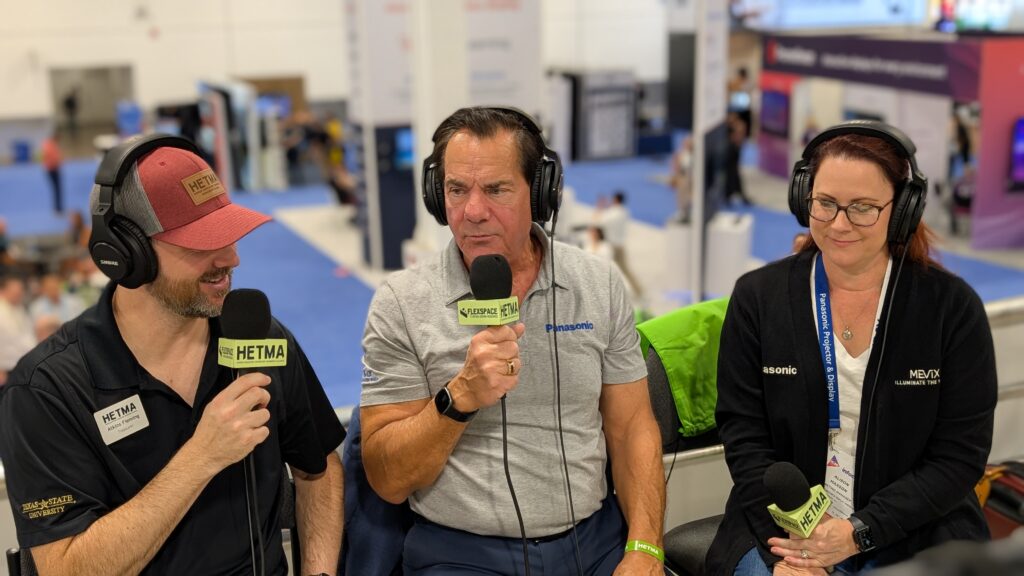
Daryl and Allison Maxon also pointed to the way the Mevix brand has settled in over the last year. Mevix stands for Media Entertainment Visual Transformation, and that wording fits the booth better than a simple projector-and-display label. Panasonic is not only talking about hardware. The booth conversation includes the software and content side, especially with Hive joining the Panasonic ecosystem.
Allison described that direction clearly.
“it’s more than just hardware moving into the software zone.”
For higher ed, that is an important shift. A display or projector is only useful if the content workflow around it is manageable. Campuses need to schedule, distribute, update, and support visual content across classrooms, lobbies, arenas, event spaces, and specialty environments. Hardware matters, but the management layer increasingly matters too.
Direct View LED Moves Into More Campus Spaces
Panasonic’s direct view LED story includes its all-in-one DVLED display, the 137-inch system that is shipping, the 165-inch system that Daryl said is coming, and a new 55-inch DVLED option.
The 55-inch product is especially interesting for campus teams because it speaks to replacement cycles. Many campuses have older LCD video walls now reaching the age where refresh conversations are becoming real. Daryl described the use case directly: if you are replacing a 55-inch LCD, you may be able to keep existing hardware and replace it with the new panels.
That matters because DVLED is often discussed at the very large end of the display market. But higher ed has many visual environments that are built around tiled LCD walls, lobby displays, athletics spaces, student centers, donor areas, and high-impact learning environments. A 55-inch DVLED path gives campuses another way to think about moving from older LCD video walls into newer display technology without treating every project as a complete rebuild.
Daryl described the configuration flexibility around the 55-inch panels, including the ability to build larger walls such as a 4-by-4 220-inch layout. For AV/IT teams, the practical questions will be mounting, serviceability, power, brightness, pixel pitch, budget, and whether the system fits the physical and operational realities of the space.
PT-VMQ85 and Accessible 4K Projection
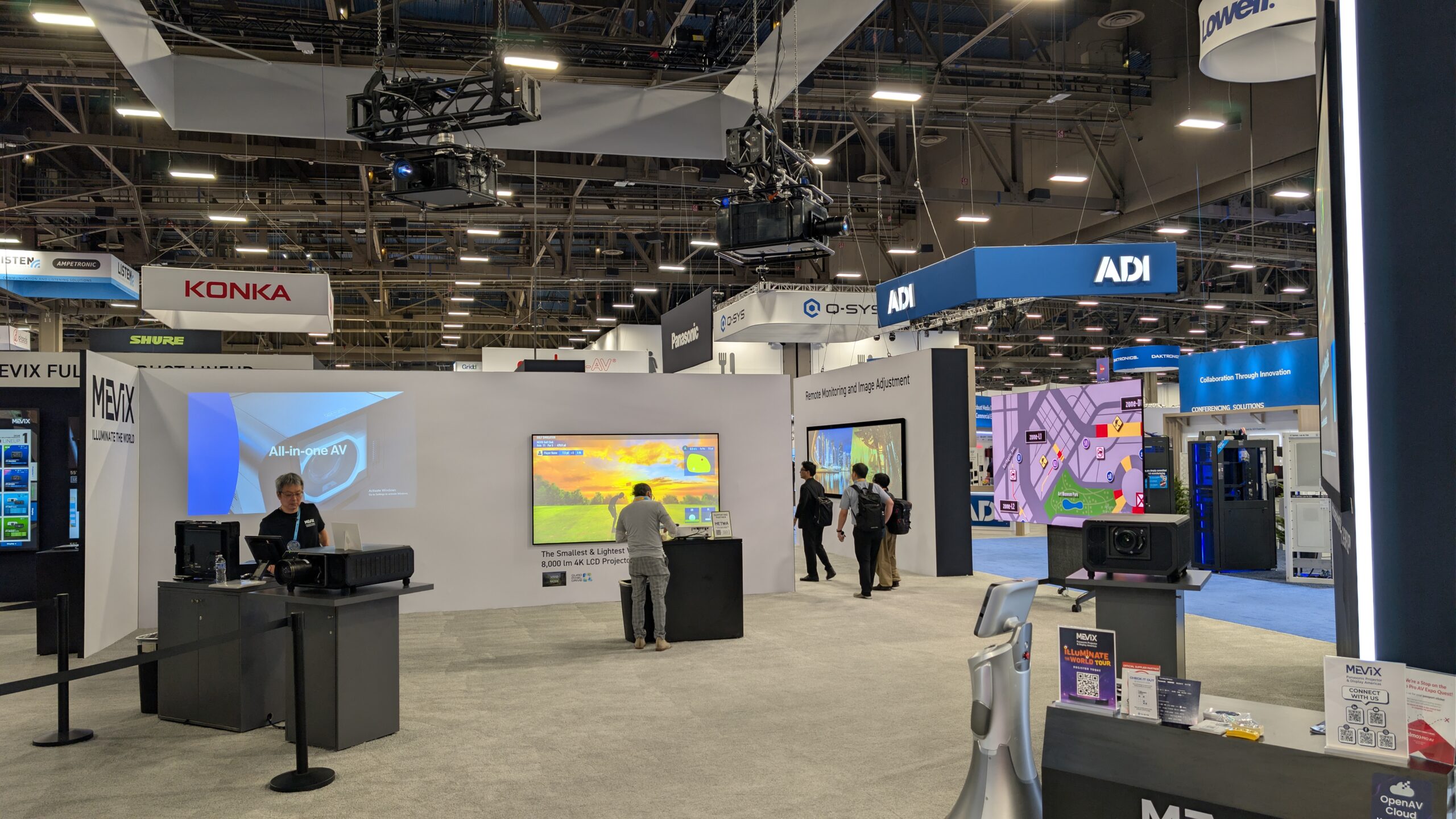
Panasonic is also showing the PT-VMQ85, described as its first 4K LCD projector. The product is positioned around making immersive 4K visuals more accessible, with 8,000 lumens, a sub-8 kg body, 2-axis pixel-shifting technology, and a design aimed at bright rooms and detailed image reproduction.
That is a relevant projector conversation for higher ed because projection is not disappearing from campus. The use cases are changing, but many classrooms, museums, simulation environments, flexible teaching spaces, and experiential rooms still depend on projection. Weight, brightness, image detail, and installation flexibility all matter when campuses are refreshing spaces or planning new visual experiences.
The VMQ85 also includes Vivid Green Mode for golf simulation, which points to another part of Panasonic’s InfoComm presence: sports simulation and specialty environments. That may sound niche, but campuses are increasingly supporting spaces that blur recreation, instruction, athletics, research, and student experience. Simulation can live in more places than a traditional lab.
PT-RQ45K and Large-Scale Visual Experiences
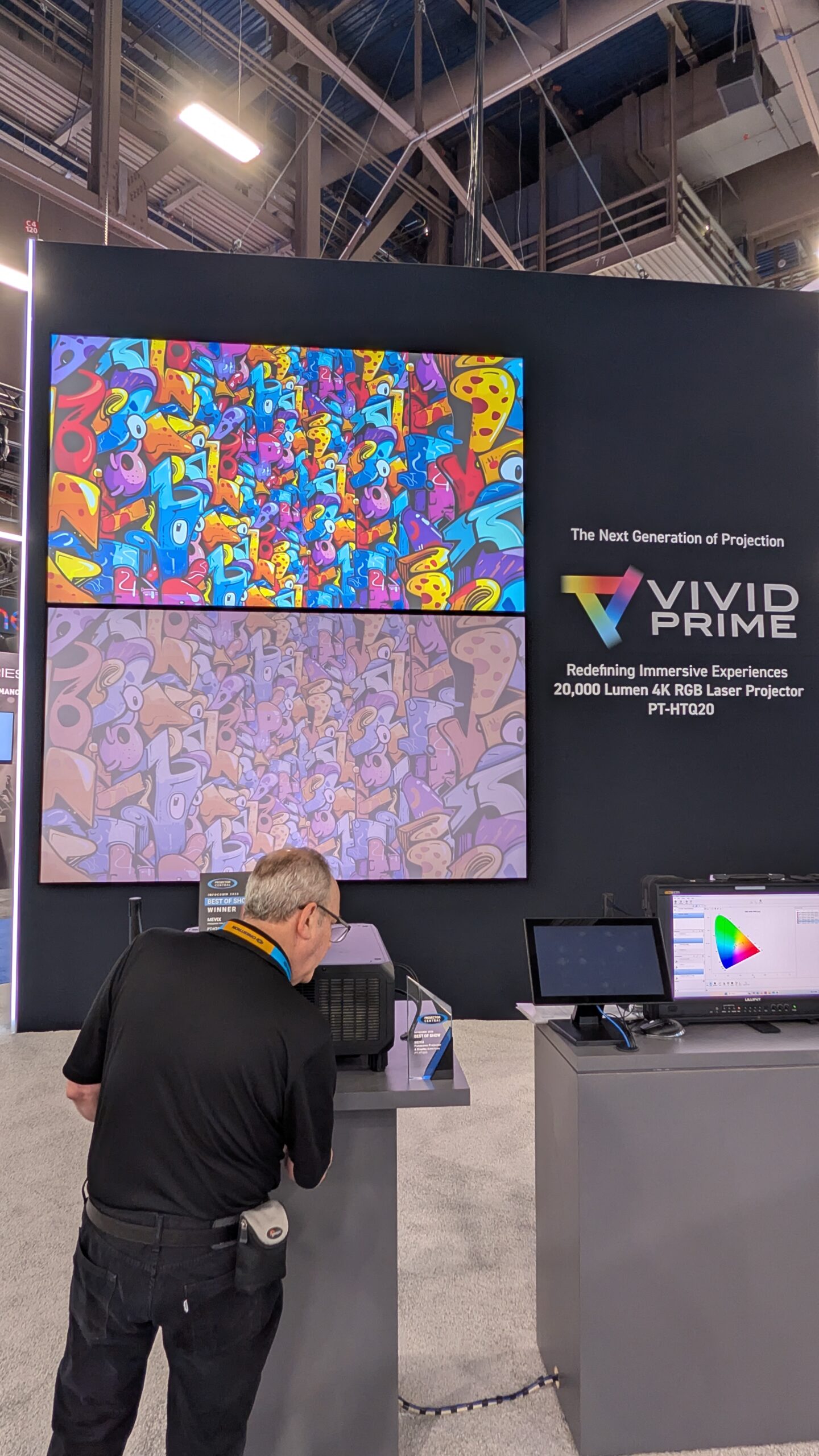
At the higher end of the projection lineup, Panasonic is showing the PT-RQ45K, a 42,000 lumen laser projector. Panasonic describes it as delivering that brightness from a body size equivalent to the RQ35K Series, with compatibility for existing frames, flight cases, and optional lenses. It also includes a 5-inch color LCD monitor for pre-show video checks and status monitoring, plus Intel SDM expansion and 12G-SDI input.
That combination matters for campus venues and large-scale events. A university may need projection for arenas, performing arts spaces, commencement, projection mapping, public art, museums, donor events, athletics, or immersive experiences. Logistics matter in those spaces. If a projector can fit existing frames, cases, and lenses, that can change the cost and complexity of upgrading.
Daryl connected the projector directly to high-end applications and Panasonic’s projection technology relationship with Disney. For higher ed, the practical takeaway is not that every campus needs a 42,000 lumen projector. It is that campus visual expectations are expanding. Athletics, advancement, recruitment, student events, and community-facing spaces may require tools that look more like professional venue technology than a traditional classroom install.
Hive and the Content Layer
One of the more important Panasonic updates is the acquisition of Hive, a UK-based company focused on media management, media content, and distribution.
As displays and projectors spread across campus, the problem shifts from showing an image to managing content at scale. Who owns the content? How is it scheduled? How is it distributed? How does it get updated? How does a campus avoid creating separate, disconnected workflows for every venue, lobby, classroom, and event space?
Daryl also noted that Hive has an Intel SDM board that can plug into Panasonic projectors and direct view LED products, providing a more integrated path for content management and scheduling. That matters because it reduces the amount of extra hardware needed in some workflows and gives campuses another way to think about display ecosystems.
For AV/IT teams, the question is not only what the display can show. It is whether the content workflow can be supported without adding unnecessary complexity.
Higher Ed Is More Than Classrooms
One of the strongest parts of the Panasonic conversation was Allison’s reminder that higher ed includes more than traditional teaching spaces.
“there’s another side to universities, to higher ed, in the entertainment, the arenas.”
That is a key campus reality. AV teams may be responsible for classrooms, but they are also increasingly tied into arenas, event spaces, student life, esports, performing arts, public-facing venues, and spaces that support recruitment, advancement, and community engagement.
Allison also mentioned Panasonic’s award for the new arena at the University of St. Thomas, pointing to the kind of large venue work that now sits inside the higher-ed AV ecosystem. These spaces carry different expectations. Visitors compare them to professional entertainment venues. Students expect them to feel current. Athletics and advancement teams may need them to support revenue-generating or brand-facing events.
That does not mean every campus needs the same level of technology in every space. It means AV planning has to account for a broader set of institutional experiences.
Illuminate the World Tour
Panasonic is also bringing the booth conversation beyond InfoComm through the Illuminate the World Tour, an eleven-city road show with HETMA as a partner. Daryl described stops beginning in Seattle in July, then moving to Los Angeles, Dallas, St. Louis, Chicago, and other cities.
That matters because most campus AV/IT professionals do not get to attend every major trade show. A regional road show gives teams a chance to see products, ask questions, and spend more time with the technology than a packed booth often allows.
Allison described the idea simply.
“Come to our road trip.”
The tour is expected to include Panasonic technology, DVLED, VMQ85, and partners including HETMA, Matrox, Q-SYS, Legrand, and others. For higher ed teams that could not make InfoComm, that kind of regional access matters.
The Higher Ed Takeaway
Panasonic at InfoComm 2026 is showing a broader visual technology story for campus: classroom projection, DVLED, large venue projection, content management, software, simulation, public art, projection mapping, and regional engagement beyond the show floor.
At Booth C8325, the key products and conversations include the PT-VMQ85, PT-RQ45K, all-in-one DVLED, 55-inch DVLED panels, Hive media management, Top of the Class education support, and the Illuminate the World Tour.
For higher ed AV/IT teams, the value is in thinking about visual systems across the whole campus. Classrooms still matter. So do arenas, student centers, simulation spaces, lobbies, public-facing venues, and event environments. Panasonic’s message is that projector, display, and content workflows all need to be considered together.
Make sure to check out Panasonic at Booth C8325 at InfoComm 2026, or visit connect.na.panasonic.com/ppnda to learn more.