





GUDE Systems at InfoComm 2026: Remote Power Management for the Rooms Nobody Has Time to Visit
Some InfoComm conversations start behind the rack, because that is where a lot of classroom support problems eventually end up. GUDE Systems is one of those conversations.
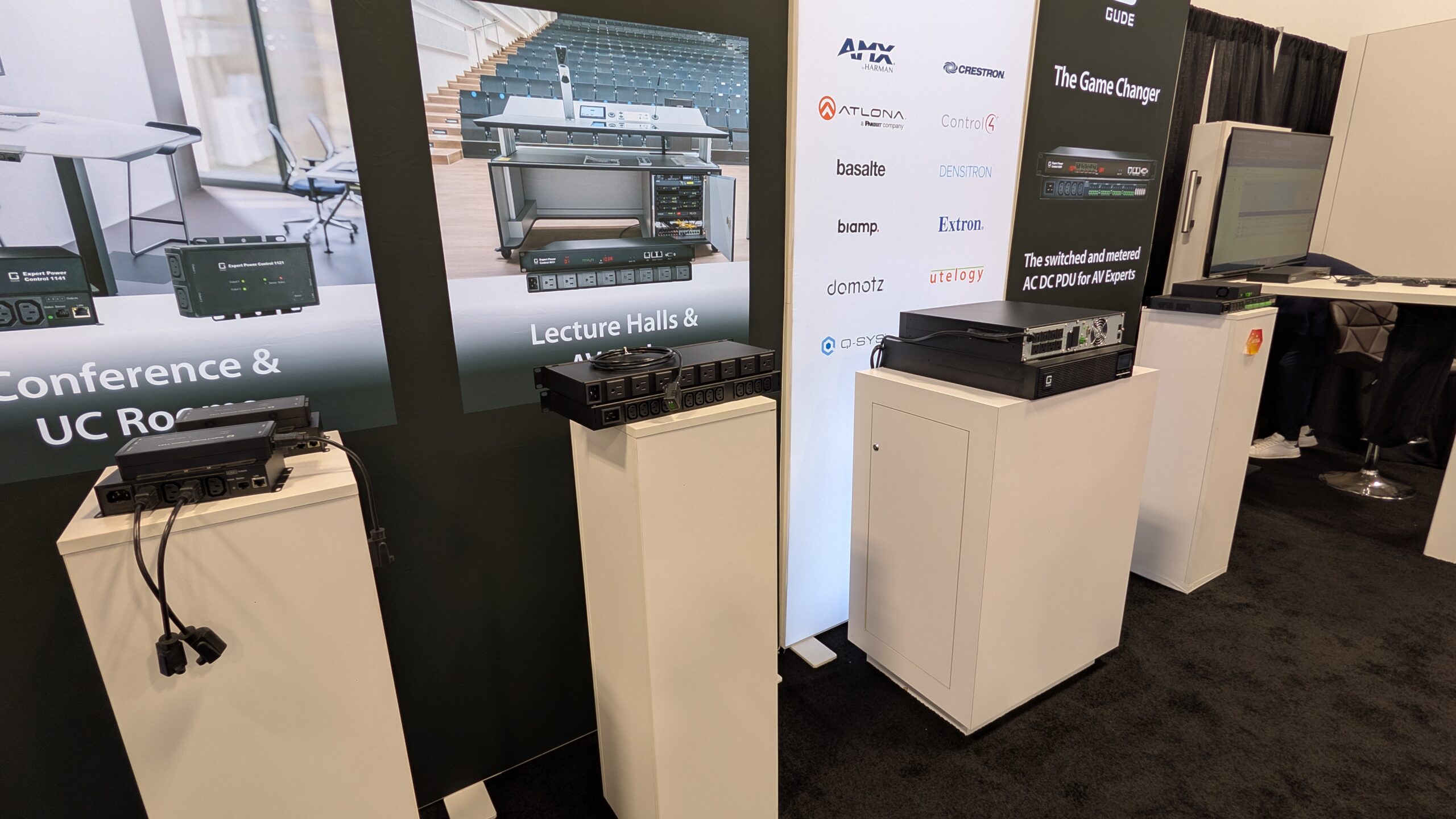
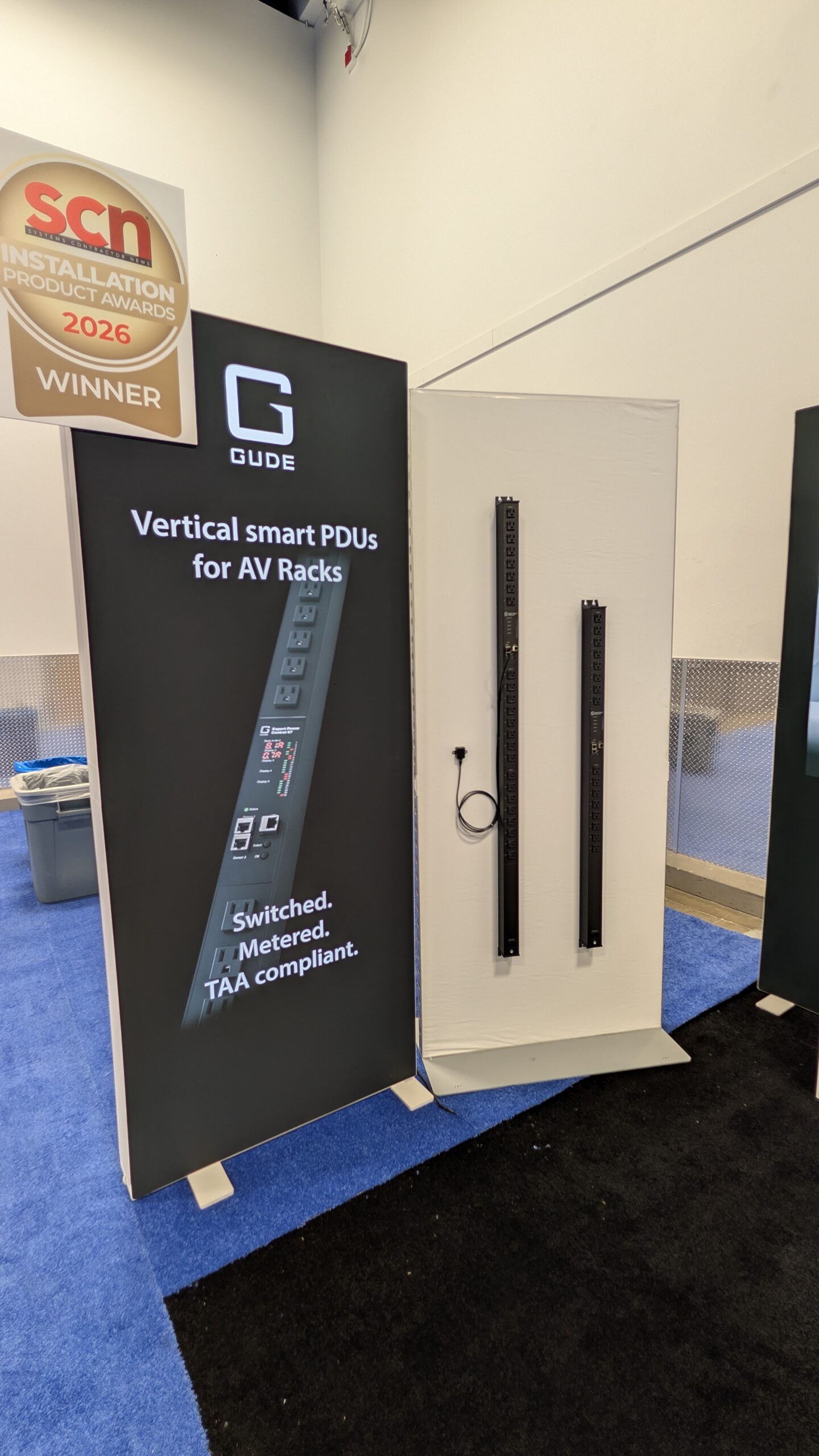
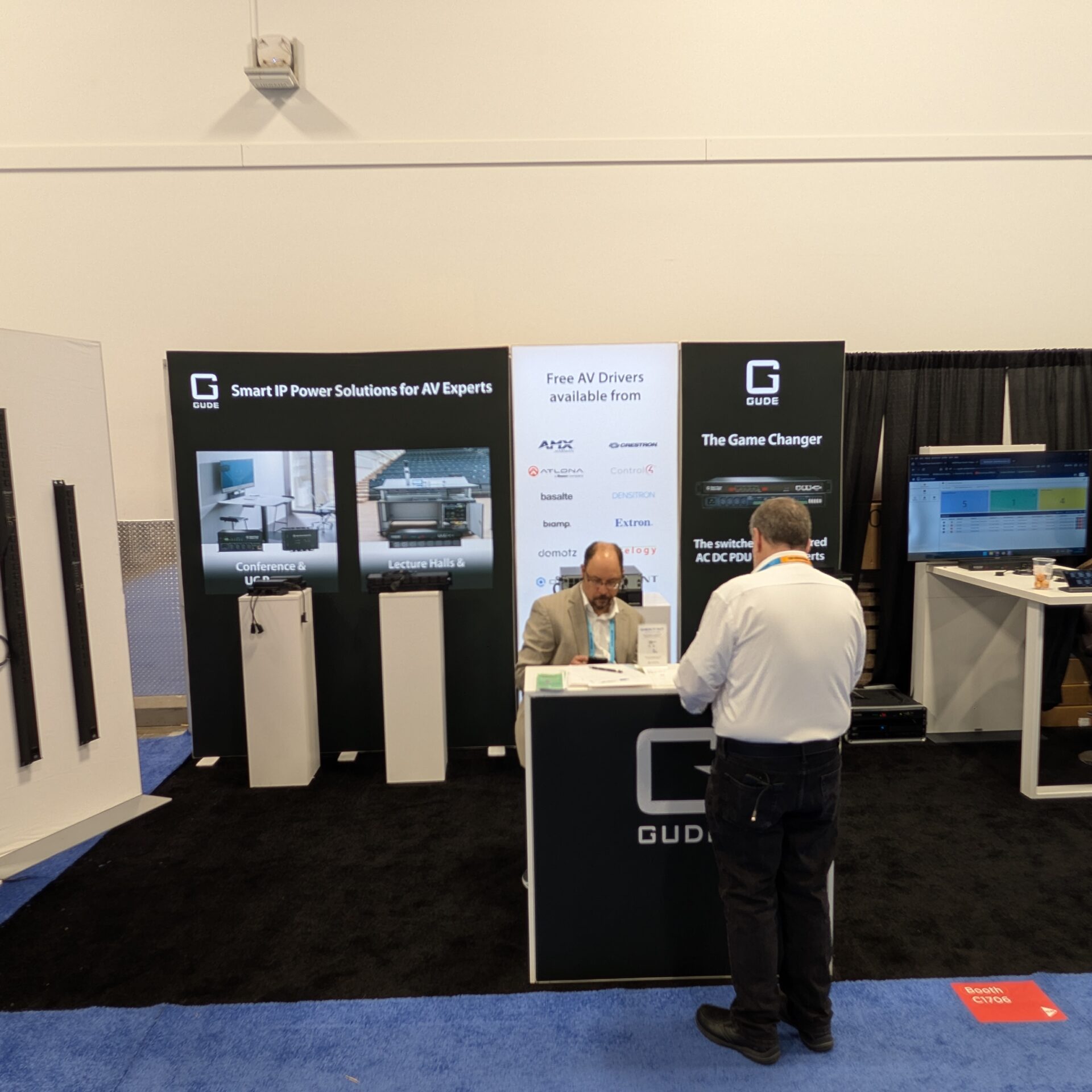
At InfoComm 2026, GUDE Systems is showing smart PDUs, UPS products, vertical power strips, cloud management software, and a new AC/DC PDU for smaller applications. The booth focus is remote power management, especially for higher education environments where AV teams are supporting more rooms with fewer people and less time to physically get across campus.
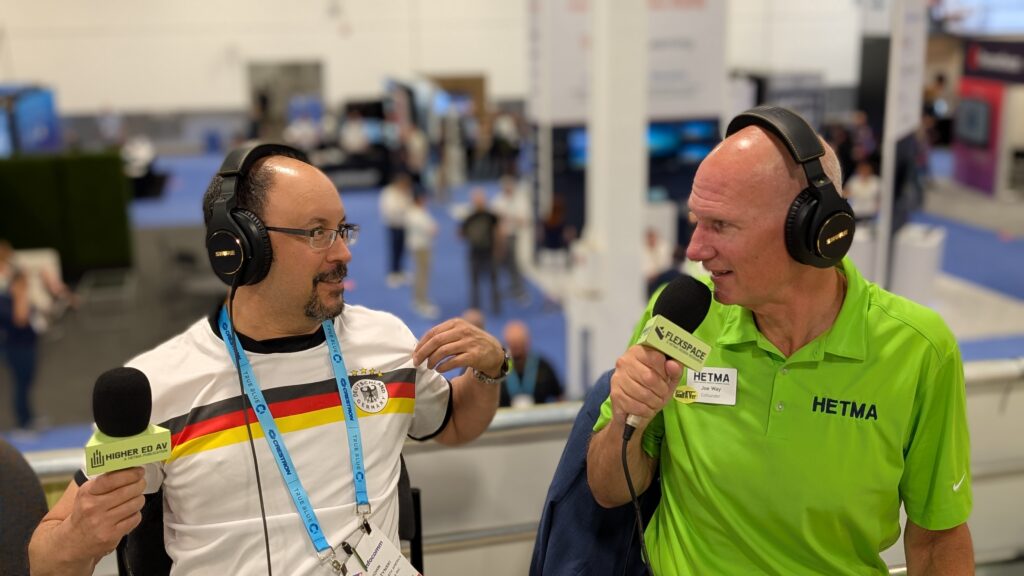
John Palaszynski from GUDE Systems framed the higher-ed problem in direct terms during the interview.
“what we’re seeing is a lot more rooms, AV rooms, with a lot less people to support it.”
That is the whole campus support challenge in one sentence. Room counts grow. Expectations grow. Technology stacks grow. Staffing does not always grow with them. When a classroom system fails, the support model cannot depend entirely on someone walking across campus, unlocking a rack, and power cycling a device by hand.
GUDE’s argument is that power should be part of the remote support strategy.
Remote Reboot Is Not a Small Feature
In higher ed, a failed device is not just a failed device. It is a class interruption. It is a faculty member losing time. It is students waiting while the room gets sorted. It is a support call that may or may not be solvable before the class session is affected.
John put the response-time issue plainly.
“they want immediate response.”
That is why remote power management matters. If a device needs a reboot, being able to do that from a desk, support center, or phone call can turn a room outage into a fast recovery. It does not solve every problem, but it solves enough of them to matter.
John described the practical reality this way.
“About ninety percent of the time when you reboot a box, it comes back up.”
That will sound familiar to many AV/IT teams. Some problems require real troubleshooting. Some require replacement, firmware work, network review, cabling, configuration, or vendor support. But plenty of classroom incidents begin with the same basic step: power cycle the thing and see whether the room comes back.
The difference is whether that step takes thirty seconds or a truck roll.
Self-Healing Before the Call Comes In
Remote reboot is useful when someone calls. GUDE is also talking about what happens before that call arrives.
In the interview, John described self-healing workflows where the system can ping devices, recognize when a device is not responding, and automatically reboot it.
“we can ping the devices, and if I’m not getting a response back, I can have it automatically reboot.”
That is the more interesting higher-ed use case. The best support call is often the one that never happens because the issue was caught and resolved before the instructor noticed it. If a networked device stops responding overnight, during a room check, or between classes, an automated reboot may restore it before the space is needed again.
The logs then become important. If the same device keeps needing recovery, the team has evidence. The pattern can lead to a real fix instead of repeated one-off support events.
That is where smart power moves from convenience to operations. It becomes part of the room health model.
Power Quality Belongs in the Classroom Conversation
GUDE is also showing new UPS products at InfoComm 2026. John connected that to a growing issue around power quality, brownouts, filtering, and clean power.
“I’m running into a lot is bad power, you know, brownouts or filtering because you got bad power or maybe you’re on a generator.”
That is not always the first thing people think about when planning classroom AV, but it is part of the support reality. Campuses have old buildings, new buildings, renovation zones, generators, shared electrical conditions, and changing power demands across their regions. AV systems are expected to perform regardless.
John also pointed to larger power pressures around data centers and the grid, and said GUDE is announcing a new UPS line that provides filtering and double-conversion power. For campus teams, the practical question is where clean power is needed, where uptime matters most, and where power protection can reduce failures that otherwise look like random device problems.
Surge protection is part of that same conversation. John named it as one of GUDE’s core benefits, alongside reducing downtime and helping save electricity costs.
AC/DC PDU and the Wall Wart Problem
One of the more concrete booth items is GUDE’s new AC/DC PDU for small applications. John described it as a way to get rid of wall warts.
That sounds small until you think about a rack, lectern, or small-room installation full of power supplies hanging off outlets, adapters pulling loose, and devices that are difficult to identify or service cleanly. Wall warts are one of those problems that rarely makes the big design narrative, but support teams know the pain.
John described the issue directly.
“those are a pain because not only is it the gravity of them pulling out of the outlets but it’s just a mess.”
That kind of cleanup matters in campus environments because serviceability matters. A cleaner power design is easier to troubleshoot, easier to document, and less likely to create intermittent problems. If small DC-powered devices can be powered more cleanly, the room becomes less fragile.
For higher ed AV teams, that can matter in exactly the kinds of spaces that are hard to justify overbuilding: smaller classrooms, huddle rooms, support desks, digital signage endpoints, compact racks, and edge locations where the power plan is often less elegant than the AV standard would like.
The Global Campus Problem
The interview also touched on a support issue that is becoming more common: campuses are not always one building, one city, or one time zone.
John mentioned a university standardizing on GUDE units because they needed remote power control across global locations. That is a useful reminder for higher ed. Even institutions that feel local may have distributed sites, remote classrooms, research centers, clinics, branch campuses, international programs, or partner locations.
If support depends on local hands every time a device locks up, the support model gets complicated quickly. Remote power control gives central teams another option. It does not replace local support, but it can reduce the number of times local support has to be involved for basic recovery.
That matters when time zones, access control, staffing, and classroom schedules all get in the way.
The Higher Ed Takeaway
GUDE Systems at InfoComm 2026 is focused on a part of the room that often stays invisible until something fails: power.
Smart PDUs, UPS products, vertical power strips, cloud management, and the new AC/DC PDU all point toward the same campus need. AV/IT teams need to reduce downtime, protect equipment, clean up installs, manage power remotely, and support more rooms without sending someone across campus for every reset.
John summed up the fit for higher ed around three benefits.
“Eliminating downtime, surge protection, and save electricity costs.”
For campus AV/IT teams, that is the booth conversation. Remote power management is not glamorous, but it is one of the tools that can make classroom support faster, cleaner, and less dependent on being physically present in the room.
Make sure to check out GUDE Systems at InfoComm 2026, or visit www.gudeamerica.com to learn more.