

Every year before InfoComm, I get all the emails and press releases about new gadgets, and I find myself thinking about standards.
Not just standards in the technical sense, but the way higher education AV teams approach design decisions in general. You can’t go to a conference or webinar and not hear talks about standardization. We establish standard hardware lists and deployment methods because consistency matters when you are supporting dozens or even hundreds of rooms across a campus.
There is real value in that approach. Supportability and predictability matter. But over time, I think a lot of institutions have quietly started confusing standardization with uniformity, and those are not the same thing.
When Consistency Breaks Down
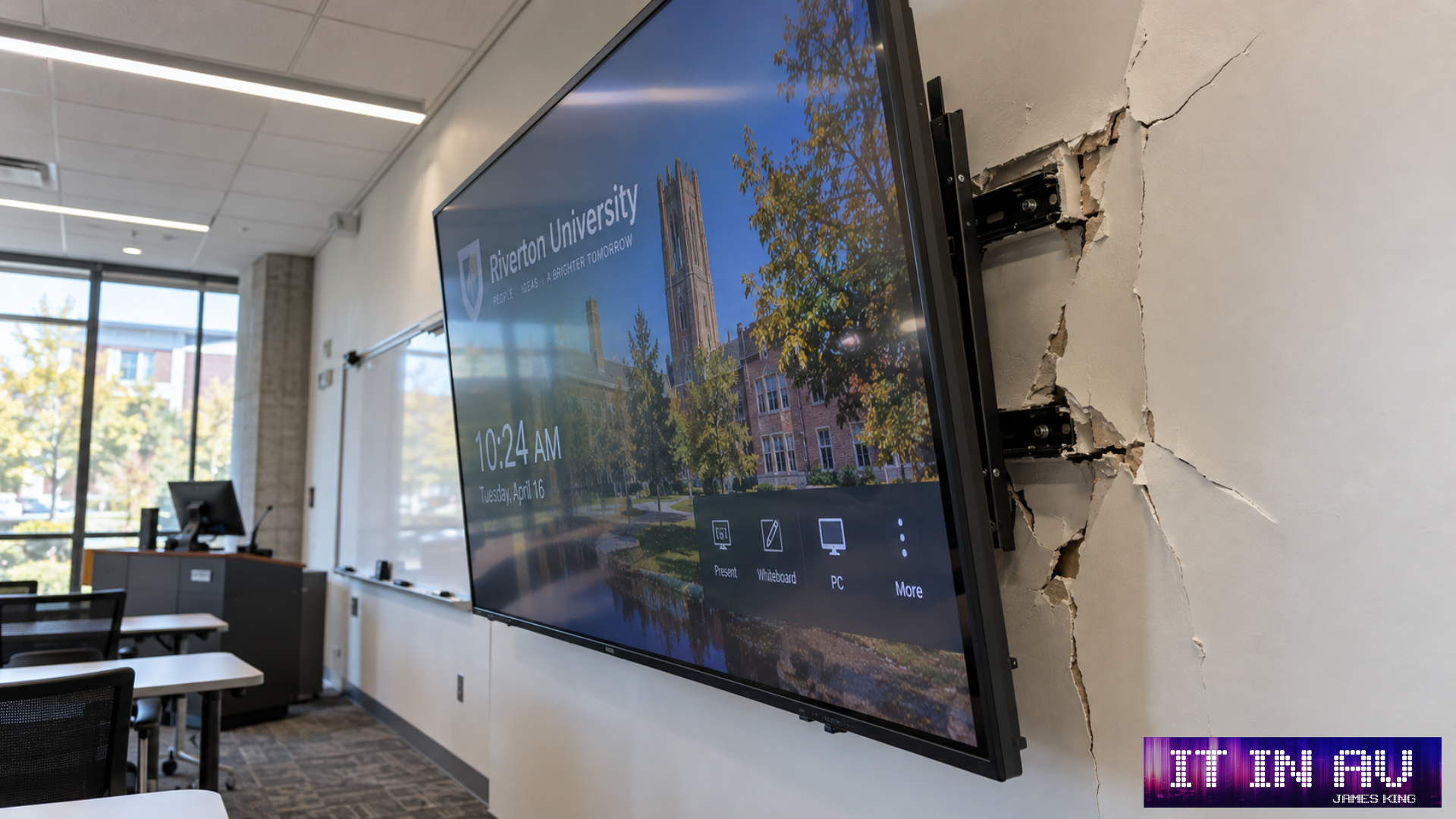
I have seen firsthand how campuses become so focused on consistency that they stop asking whether the technology makes sense for the room. On paper, everything looks clean and standardized, but once faculty and students start using the space, the cracks show. The system feels clunky, and people end up adapting themselves to the technology instead of the technology supporting the way the room was intended to function. Some of the best lessons I have learned in AV came from projects where that approach stopped working the way we expected it to.
A couple of years ago, we were working on our summer refresh cycle, and the goal was absolute consistency. Every classroom used the same core equipment. From an operational standpoint, it sounded perfect: fewer spare parts to stock and easier support calls. And honestly, for a while, it felt like the right decision.
Then the faculty started using the rooms. Some faculty who wanted flexibility while others wanted simplicity because they were only in the room one or two days a week. We had standardized the technology, but we had not standardized the experience.
Over the last couple of years, that difference changed the way I think about AV standards. Faculty do not care whether every room has the exact core components. They care that the room behaves like it was designed to do. Most importantly, they want confidence that everything works, and the system feels familiar enough that they are not relearning the room every semester. That thought process taught me what good standardization is supposed to accomplish.
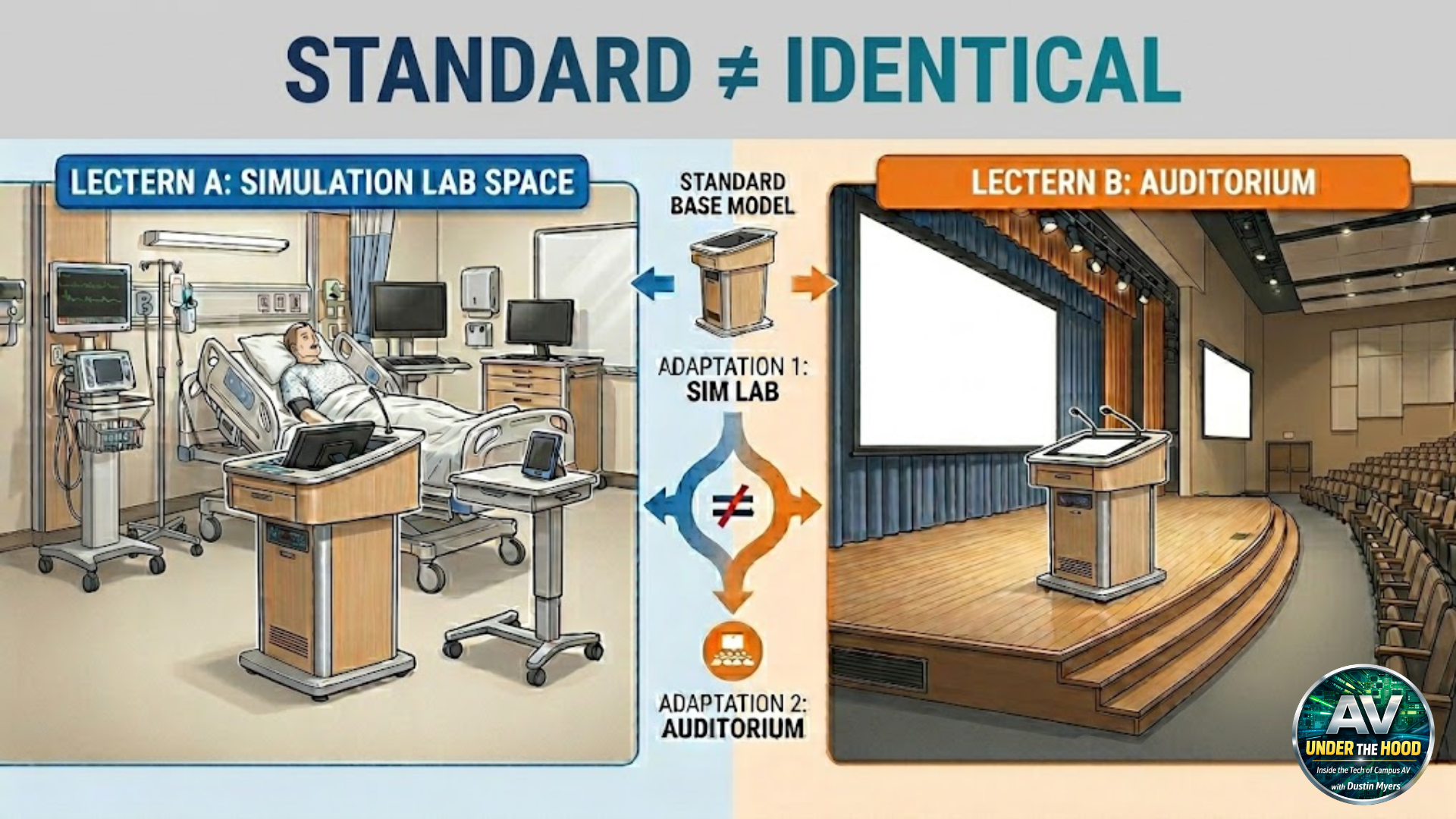
The strongest standards I have seen are not rigid equipment requirements. They are frameworks for how the rooms operate and behave. Higher education environments are simply too diverse for a one-size-fits-all mentality to work forever.
If you have ever designed a simulation lab, you know you can’t design it with the same equipment as a general classroom. An event space is not an esports arena. When we try to make every space follow the exact same template, we usually end up with rooms that technically meet the standard but never quite feel right for the people using them.
I think this becomes even more important as AV continues converging with IT infrastructure. Modern AV systems are no longer isolated pieces of hardware sitting in a rack. They are connected platforms tied into networks. The decisions we make now affect not only supportability, but scalability and lifecycle management. That level of convergence demands standards, but it also demands adaptability.
Rethinking “Standard” at InfoComm
And honestly, that is part of why I still enjoy going to InfoComm every year. The weeks before the show, conversations across the industry always start sounding the same. Everyone talks about what booths they plan to visit, what manufacturers they already work with, and what products they expect to see refreshed. There is comfort in familiarity. We all gravitate toward the technologies we already understand because those technologies fit neatly into the environments we have already built.
But one of the biggest mistakes we can make as AV professionals is walking the show floor already convinced we know exactly what a “standard room” should look like.
Some of the best ideas I have brought back from InfoComm over the years came from technologies I originally dismissed because they did not fit the standards we already had in place. A few of those conversations made me realize we were working around problems we had just accepted as normal. Others made me step back and ask whether our standards were improving the experience or just keeping us comfortable with what we already knew.
That does not mean every new technology deserves adoption. The AV industry is still full of products searching for problems to solve. We often see trends fade as quickly as they appear. Some companies introduce unnecessary complexity in exchange for new flashy features. But there is still value in exploring what is changing, especially in higher education where our environments evolve constantly.
So, if you are heading to Las Vegas for InfoComm this year, do yourself a favor and spend some time outside the booths you always visit. Sit in on a session that has nothing to do with your current standards. Some of the best ideas I have brought back from InfoComm over the years came from solutions I originally thought would never fit our environment. At the end of the day, the goal is to create systems that are reliable, supportable, and aligned with how people actually teach and learn.