






If you have spent any time in higher ed AV lately, you have probably had the same conversation in three different rooms. Expectations keep going up. Timelines keep getting tighter. Budgets do not stretch the way they used to. And the most expensive thing in the middle of all of it is still time, especially the time it takes to design, document, re-document, and then rebuild everything again when scope shifts.
That is the problem XTEN-AV is built around, and it is the problem they are showing live at ISE 2026. The company is known for a cloud platform that covers AV design and documentation, and over time it has expanded into quoting and project management so the workflow does not break apart the moment you move from “design intent” into “getting it delivered.”
Sahil Dhingra, co-founder of XTEN-AV, was at the HETMA booth for a short quick-hit interview and he framed it in a way that feels very familiar to higher ed teams. You can have a strong product, but the real test is whether it supports how different people actually work. Some of us live in the details and want clean drawings, standards, and line-level accuracy. Some of us need proposals, documentation, and a clear path from plan to execution. Most campuses need both, and they need it without creating a workflow that only one person on the team understands.
“We got something for everybody.”
Where to find them at ISE
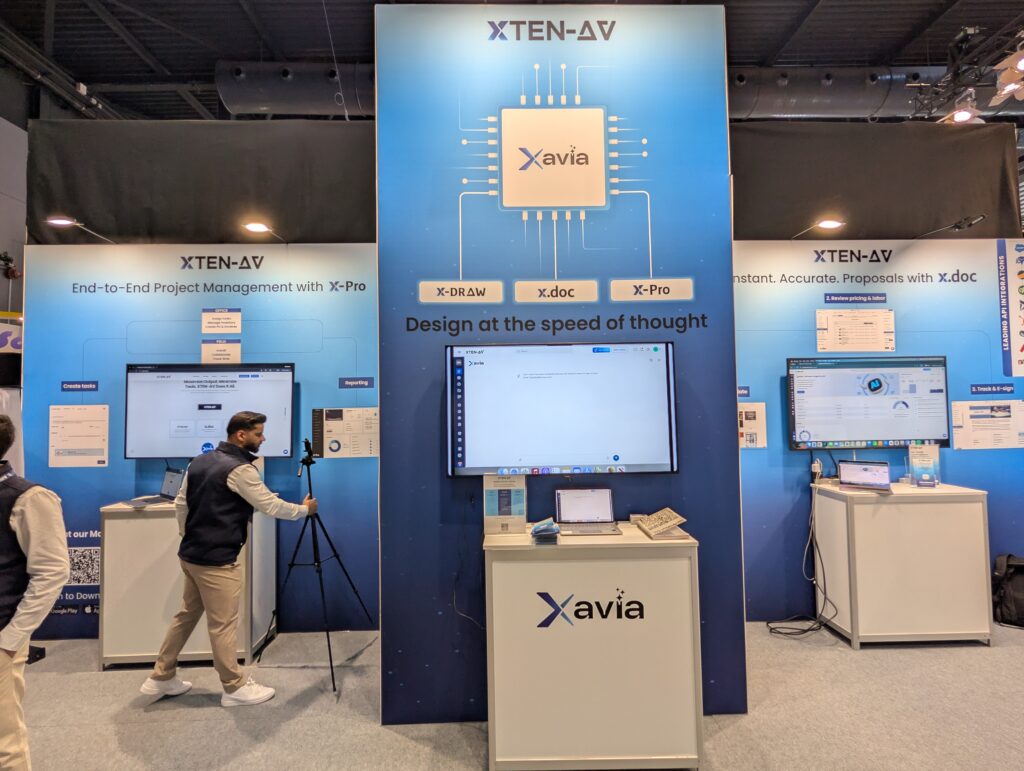
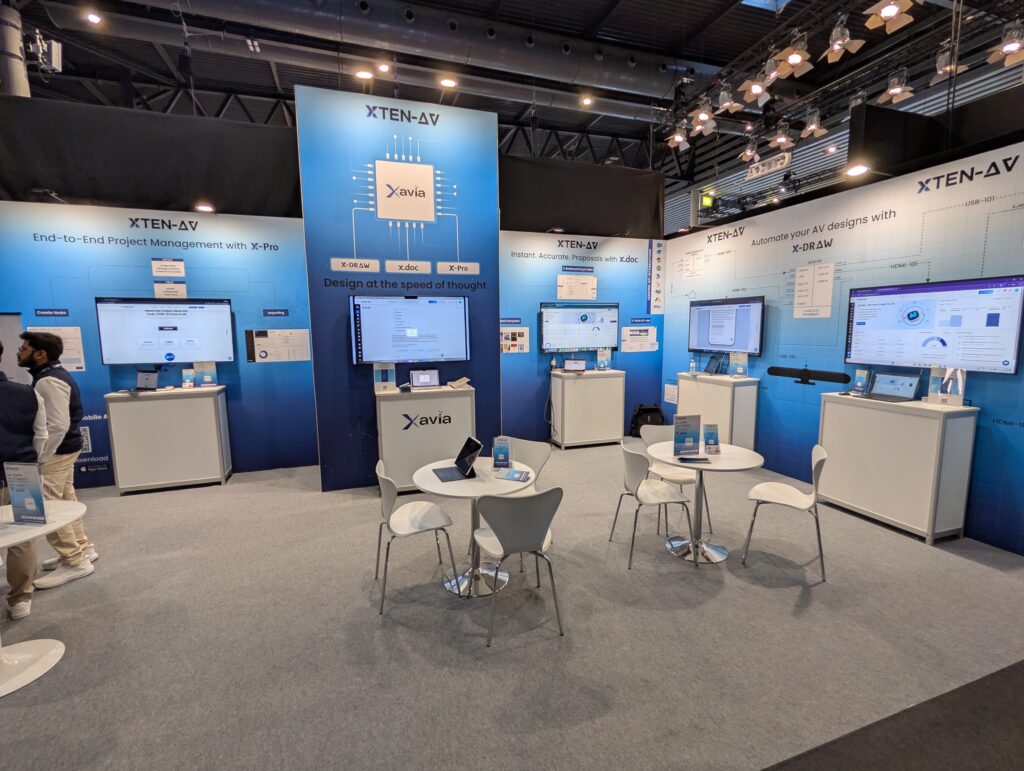
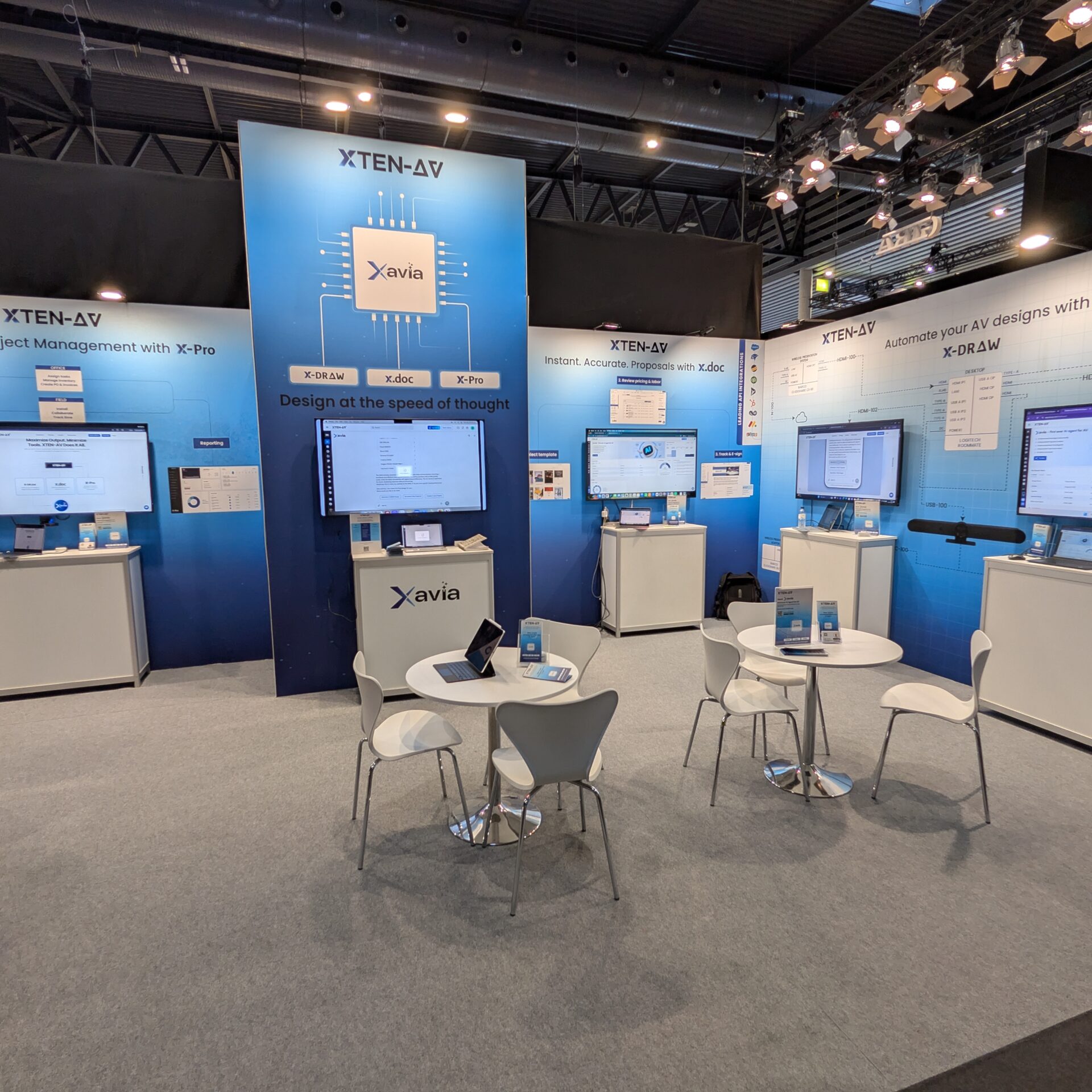
XTEN-AV is in Hall 1, Booth 1G800.
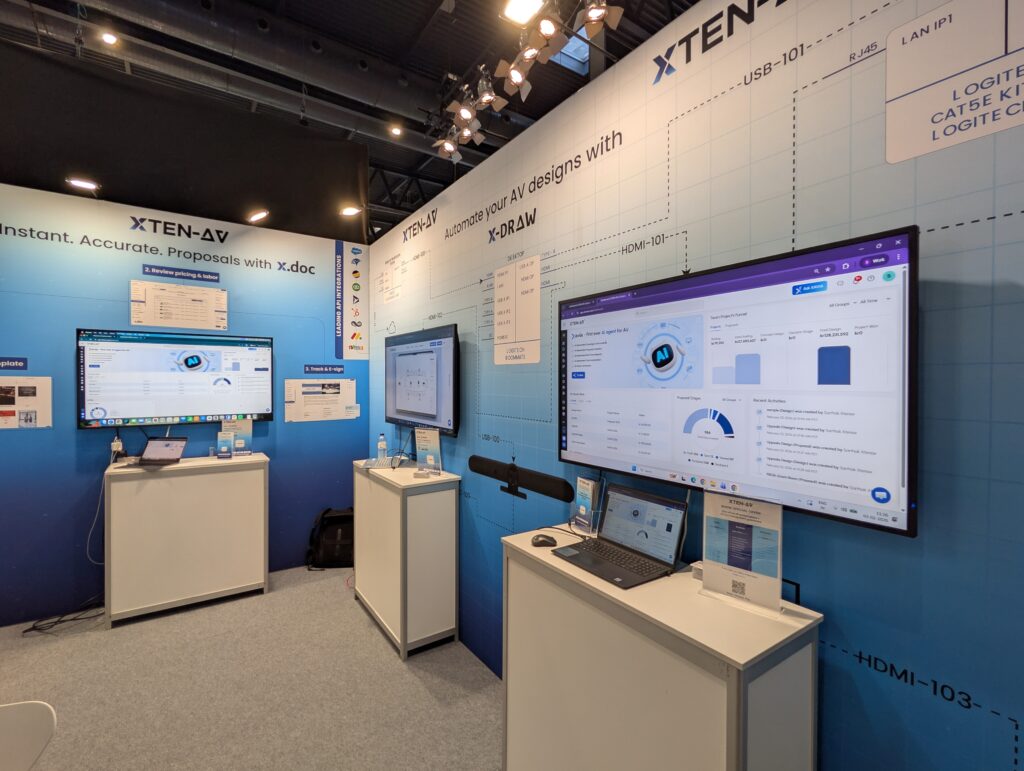
They are leaning into hands-on demos this year, and the booth setup reflects that. Sahil talked about a larger booth with five demo stations, running live walkthroughs of the full solution, starting with design and moving through documentation, quoting, and project management.
That is a smart choice for higher ed, because you can talk about workflow all day, but the real question is always, “Show me how it behaves when I change something.”
What they are showing, in plain campus terms
There are two threads running through what XTEN-AV is putting in front of people at ISE 2026.
The first is the end-to-end platform story: design, documentation, quoting, project execution. The second is what they are calling XAVIA, their AI agent for AV design workflows.
Both are aimed at the same higher ed reality: teams are being asked to do more with less, and “design time” is often the hidden cost that keeps projects from moving at the pace leadership expects.
A practical update that solves a real pain point
One of the updates Sahil called out sounds small until you have been the person cleaning it up. People wanted to create different areas and locations within the same drawing. On real campuses that is constant. One building, multiple room types, variations by floor, shared infrastructure, and lots of “almost the same” spaces that still require precise documentation.
He described this as something that can get complicated quickly, but they found a simpler way to represent it in drawings. It is one of those features you need to see to understand, but it maps to a very real pattern in higher ed: repeatable standards, with just enough variation to break your templates.
XAVIA: turning intent into documentation
The bigger headline is XAVIA, and the easiest way to describe it is that it tries to compress the most time-consuming part of AV design work. You start with what you want to build, then it generates the documentation stack that normally takes hours.
Sahil explained the “agent” idea in plain terms. A bot can answer a question. An agent can produce output that was not explicitly provided, like generating drawings and documents from a prompt. Then he went straight to what matters.
“So XAVIA is our AI agent, because it can convert your voice or text to a full schematics.”
In the conversation, the host gave a simple example that will feel familiar. You describe a room, you call out a few requirements, and you want the rest to follow your standards. The point is not that you will name every part. The point is that the system should learn what you typically do and fill in the gaps the way your team would.
Sahil described it as something that cuts down hours of work into minutes, sometimes seconds. He also listed the kind of outputs higher ed teams constantly get asked for, especially when you are coordinating with integrators, contractors, and internal stakeholders.
“With one click it will convert it into schematics… rack elevation, cable schedules, speaker layout, front elevation.”
That is a big deal for campuses because the drawings are not the only deliverable. The drawings are one slice of a larger documentation package that someone always needs yesterday.
Budget pressure is part of the design process now
One moment in the interview that landed was how directly they talked about cost constraints. In higher ed, value engineering is not a late-stage surprise anymore. It is often a requirement from the beginning, and teams are expected to iterate quickly without restarting the whole documentation process.
They talked about being able to generate a bill of materials, then immediately constrain it to a target budget, while still keeping certain items locked. That is a realistic workflow for campuses. “We want this capability, but we need it under this number. Keep these items. Adjust everything else.”
That is the kind of task that usually happens across spreadsheets, hand edits, and multiple rounds of redraws. If that loop can be shortened, it helps campuses move faster without sacrificing standards.
Why this resonates in higher ed
XTEN-AV’s higher ed angle is not just “we are used on campuses.” It is more specific than that. The platform is positioned as a way for higher ed AV teams to keep tighter control of design and documentation, rely less on outside parties for routine deliverables, and maintain consistency and standards across campus.
If you have ever tried to scale a room standard across dozens or hundreds of spaces, you know the two enemies are drift and rework. Anything that reduces rework helps. Anything that keeps standards consistent helps. Anything that makes it easier for different roles to work from the same source of truth helps.
One line from their ISE messaging captures the posture pretty well, and it fits the higher ed mood right now.
“If you want your design and quoting process to take days then DO NOT visit our booth because we would disappoint you by doing it in minutes.”
That is cheeky, but the underlying point is serious. Higher ed teams are stretched. Campus expectations are rising. And the time spent on documentation is time you do not have for stakeholder alignment, user experience, training, and support readiness.
What to do at the booth
If you are going to stop by Hall 1, Booth 1G800, the best use of time is to bring a real example. A room type you repeat across campus. A small scope change that normally causes a documentation cascade. A project where you constantly have to regenerate drawings, proposals, and BOMs every time someone says, “Can we adjust this one thing?”
Ask them to show you how XAVIA handles it, and how the platform keeps the outputs aligned when requirements change. Also ask to see the update around multiple areas and locations within a single drawing, especially if your campus has complex buildings where room standards overlap shared infrastructure.
Make sure to check out all of this and more at their website www.xtenav.com and reach out to Sahil at sahil@xtenav.com.