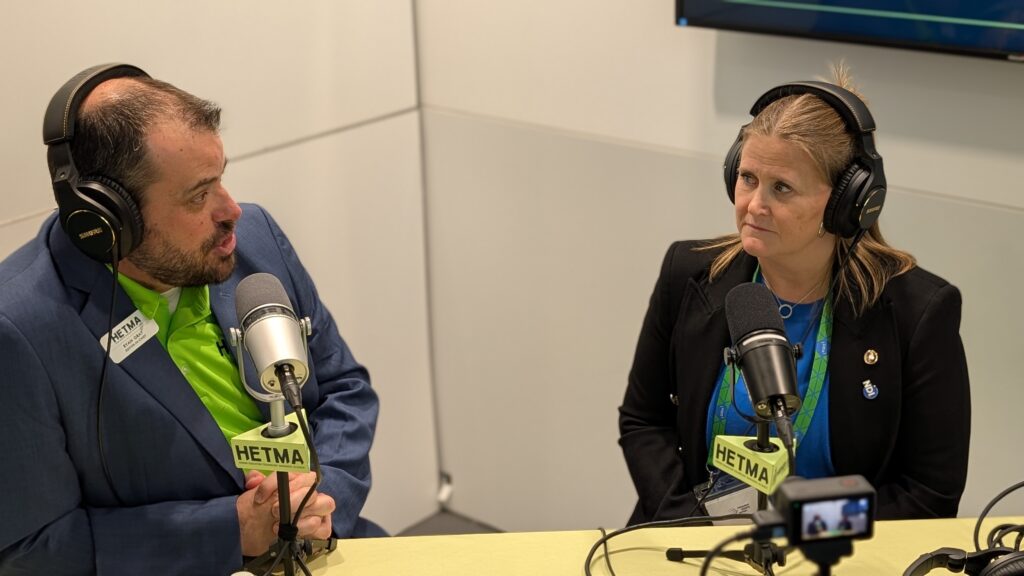







Vizrt is one of those names a lot of people recognize without realizing how wide the portfolio actually is. In this show-floor conversation, Katie Watts (Solutions Marketing Manager, Enterprise) frames Vizrt as a company that has traditionally lived in broadcast graphics and live production, and then expanded in a big way when Vizrt acquired NewTek. That is why TriCaster is now a core part of the Vizrt portfolio, and why the “small to massive” range matters. This is not only for broadcasters. It is also for schools, colleges, campuses, and organizations that want video to look more intentional without building a control room for every use case.
“TriCaster is now very much a part of the Vizrt portfolio of products.”
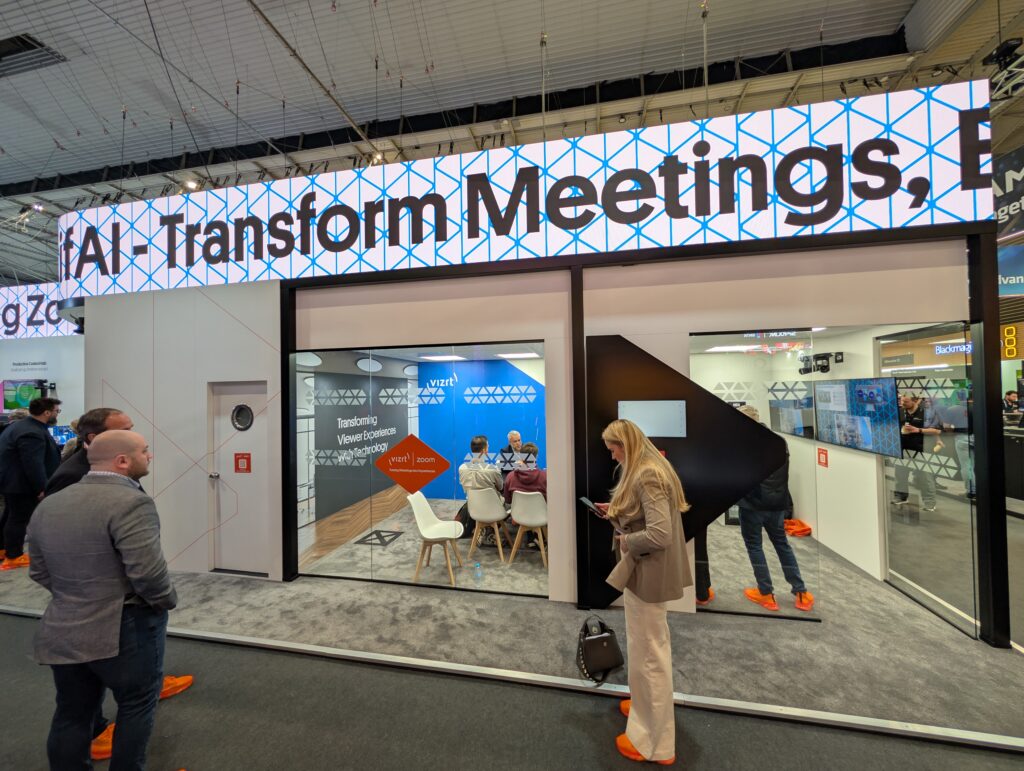
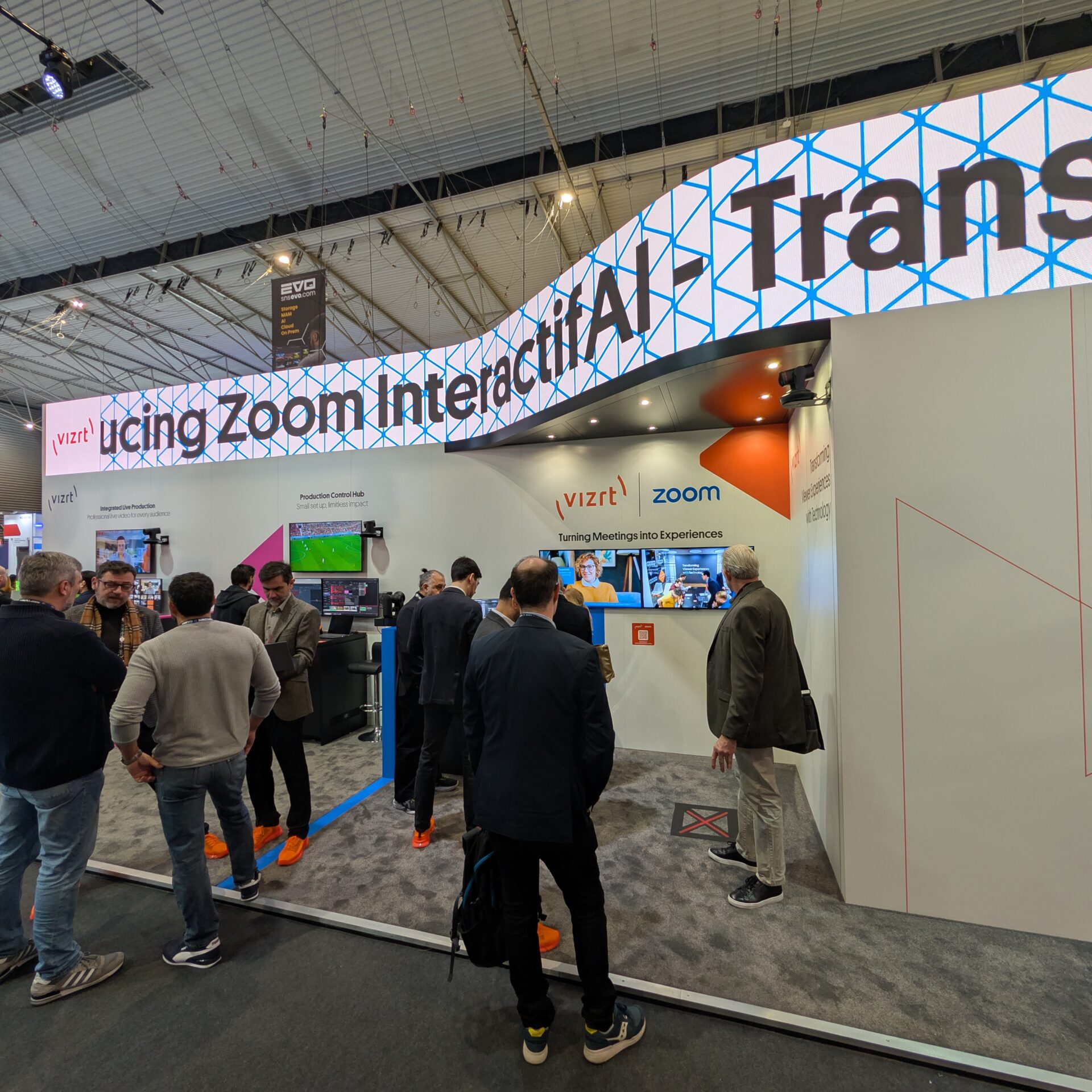
At ISE 2026, Vizrt is at Stand 4Q500, and the booth story is built around two very practical ideas. First, take the kinds of broadcast polish people are used to seeing on major productions and put it into tools that work for regular teams. Second, make those tools fit the platforms people are already using, especially Zoom.
Katie’s lane is enterprise, but the use cases she describes map cleanly to higher ed. Institutions are doing more with video for teaching, communications, events, and hybrid engagement, and they want it to look better without a huge infrastructure overhaul. In her words, it is about bridging broadcast and enterprise, and putting professional tools into the hands of more people.
InteractifAI: a Zoom add-on that makes meetings feel produced
One of the newest things Vizrt is talking about at ISE is InteractifAI, an app designed for Zoom meetings that “levels up” what participants see without turning the presenter into a technical director. The idea is that someone joins a standard Zoom meeting on their laptop, and the meeting gets upgraded with broadcast-style elements like lower thirds, tickers, QR codes, and audience interactions like polls.
In higher ed, this is a pat to take all the places where the campus is already using Zoom, but the experience still feels like a basic grid of boxes and change that experience. InteractifAI is positioned as a way to add structure, clarity, and brand consistency to those moments, while also making the content more engaging for viewers. Katie highlights that this is not meant to require new cameras or major room rework. A lot of the value is unlocking more from what people already have.
CaptivAIte: AI keying in Zoom rooms without a green screen
The other headline is CaptivAIte, which brings a more broadcast-style effect into Zoom rooms using AI-driven keying. Katie describes an AI keyer that can separate a person from their background without using a green screen, and then do things like place them into a different environment, including “teleporting” them into another Zoom room.
“You can have any camera in a Zoom room that uses no green screen, pick out an individual, and then almost teleport them into another Zoom room.”
For campus teams, the important part is not the novelty of the effect, it is the shift in what becomes possible without changing the room. If you can create a more intentional visual experience using existing cameras and familiar meeting workflows, you lower the barrier for higher production value in places that normally would not get it. That includes teaching studios, executive briefing rooms, student experience spaces, and communications teams that are asked to make everything look “professional” on short notice.
Katie is honest about something else too. Some of this is hard to fully communicate in text. It is experience-based, and the reaction she is looking for is the moment when people realize, “I did not know that was possible.”
“You need to feel it.”
TriCaster Vizion: the broader live production backbone
While the Zoom integrations are getting a lot of attention, Vizrt’s booth also represents the wider production ecosystem, especially TriCaster Vizion. Vizrt’s story has always been about getting real-time graphics and live production capabilities into workflows that scale from small teams to major operations. TriCaster is a big part of why schools and campuses can build broadcast-quality output without the traditional broadcast staffing model.
If you have a communications team producing events, a media program building student productions, athletics streaming, or a campus studio supporting hybrid learning and executive messaging, the TriCaster ecosystem is one of the most recognizable “do a lot from one place” platforms in the industry. Vizion is part of that evolution, aimed at modern IP and hybrid workflows while still fitting the “we need this to be practical” reality for teams that are not staffed like a broadcaster.
Make sure to check out all of this and more at their website and reach out to Isabella at ibertazi@vizrt.com.