


Most of us move through work with the hope that things will get quieter.
That will mean a better time to step away, a better time to rest, a better time to use the vacation days that are sitting there, theoretically available, technically part of our compensation, but somehow always just out of reach because the calendar is full, the projects are moving, the decisions are stacking up, and the next few months already feel spoken for.
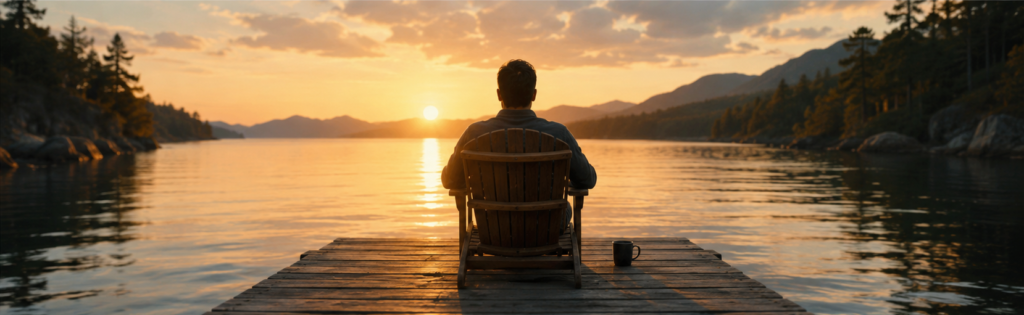
I am returning from two weeks away, and the honest truth is that it was not a good time to be gone.
That is not a dramatic statement. It is just true. There are things happening. There are decisions in motion. There are people doing work I care about. There are projects that did not stop because I was somewhere else. Coming back means catching up, re-entering conversations already in progress, figuring out what changed, what waited, what moved forward, and what got harder because I was not there.
There has not been a good time to be away for the past year and a half.
But here is the part I cannot get away from: there has not been a good time to be away for the past year and a half. And looking ahead, I do not see some obvious clean opening coming in the next year either.
So what do we do with that?
The usual advice starts to feel too thin. Take your vacation. Unplug. Recharge. Sharpen the saw. Use your time. All of that is true, and I believe it. But we often say those things like they are easy once we have decided they are important. They are not. Time away is important, and time away has real costs. Both are true. If we pretend otherwise, we turn something meaningful into another wellness slogan that sounds good until it touches the actual work.
The cost of being away is visible. Emails wait. Meetings happen without you. Someone else carries something. A project pauses or shifts or gets handled differently than it would have if you were there. That does not mean taking the time was wrong. It means the work is real and connected to other people.
But the cost of not being away is real too. It is just quieter. Narrower thinking. Shorter patience. Less creativity. Relationships getting the leftover version of us. A body that keeps absorbing pressure. A mind that stays active but gets duller around the edges. Those costs do not always show up on a project plan, but they still get paid.

That is where the old phrase sharpening the saw keeps coming back to me. I know it is overused. I know it has been turned into leadership wallpaper. But sometimes phrases become overused because they are sitting on top of something true. If you keep cutting without stopping to sharpen the saw, eventually you are working harder and producing less. The effort may even become part of the illusion. You are pushing more, sweating more, proving more, while quietly becoming less effective.
But I think we flatten the idea if we only make it about productivity. Sharpening the saw is not just about becoming a more efficient tool for your institution, your cause, your family. It is about recognizing that the person doing the work is not separate from the work. Perspective is a tool. Patience is a tool. Imagination is a tool. Emotional steadiness is a tool. The ability to listen without defensiveness, to think beyond the immediate task, to ask whether the problem has been framed correctly, those are tools too.
And they get dull.
They get dull when every problem is urgent. They get dull when every calendar is overfilled. They get dull when the only measure of value is responsiveness. They get dull when we confuse being needed with being healthy. They get dull when we are always in the same chair, staring at the same screen, solving the same problem, with no distance from the machinery we are trying to improve. They get dull when there is so much to do, you can’t do it all so you’re always letting someone down.
I have often found that some of my best thinking does not happen when I am trying hardest to think. It happens in the space after. In the walk. On the plane. In a different place. In a conversation that has nothing to do with the thing I am supposed to solve. The mind seems to need some kind of looseness before certain connections can form. Sometimes focus is exactly what is needed, but sometimes the harder I stare at the problem, the more the frame narrows around it. I can get very good at just getting past each problem as they come up while losing the ability to ask whether we’re even headed in the right direction.

That might be one of the hidden costs of never stepping away. We still get things done, but our thinking gets smaller.
In higher education, that should bother us. We are supposed to be in the business of learning, growth, formation, possibility, and community. Those words can get soft if we are not careful, but they are still real. Our institutions depend on people who can see beyond the immediate queue of work. They depend on people who can connect dots, rethink assumptions, and notice when the old answer no longer fits the new situation. Yet we often build work lives that make that kind of thinking harder. We reward immediate response. We overload calendars. We expect creativity from people whose days have been designed to leave no room for it. When everyone is hustling, eventually all we can aknowledge in others is hustle.
Then we wonder why innovation feels forced.
There is a connection there that I think we avoid because it is inconvenient. If we want people to bring imagination to their work, they need some space where imagination can actually happen. If we want people to solve problems in new ways, they need some exposure to different inputs. If we want people to think deeply, they need some time not consumed by shallow urgency. If we want people to care about the institution, the institution has to care about the conditions under which they are being asked to care.
When we talk about vacation like it is only an individual choice, we miss part of the truth. The individual can choose to take the time, but the work lives in a system. A team lives in a system. A department lives in a system. An institution lives in a system. If the system is healthy enough, someone stepping away is expected and built in as part of the requirements of said system. If the system is not healthy enough, every absence exposes the weak spots: undocumented knowledge, thin staffing, unclear ownership, too much dependence on one person, a culture that says rest is supported but structures the work as if constant availability is the real expectation.
That does not mean one person taking vacation is the problem. It may mean the vacation reveals the problem.

If people feel like they cannot step away because too much will break, maybe the first answer is not that they need better boundaries. Maybe the first answer is that too much has been built around them not having any. Maybe the operation has quietly depended on people being constantly available, constantly flexible, constantly willing to absorb the overflow. Maybe the culture has praised balance while making balance operationally impossible.
I do not say that as an accusation from the outside. I am part of this too. If I want people around me to be able to take their time, then I have to help build the kind of culture and systems that make that possible. That means documentation. Cross-training. Collaborative ownership. Better expectations. A willingness to let some things wait. A willingness to stop treating every absence as a personal disruption and start treating it as a normal part of healthy operations.
But I also think we have to be honest about the limits of what one person, one manager, or one department can do.
A department can make better choices. A manager can protect people where they can. A team can build more resilient habits. Those things matter. They are not nothing. But if an institution does not make rest, sustainability, and human capacity true priorities, then the local effort will always be fighting the larger current. If true team member health, rest and separation is not a priority that is chosen over other priorities by the highest decision makers then no middle manager will be able to withstand the pressure to protect it for their team.

Culture does not change because we say the right things about people taking vacation. Culture changes when something else is allowed to move, slow down, be delayed, or be deprioritized so that people can actually take it… especially when those things have operational consequences. Otherwise, we are asking individuals to carry the moral weight of a system that has not made room for the thing it claims to value.
We also always have the option to build teams that are designed to run at 80% capacity day in and day out. That leaves room for people to be away, or get sick, or get training, or take time to be creative without hurting productivity… but how many of us, public or private sector can say that this is even a conversation anymore?
I do not think that means we give up. I think it means we tell the truth.
If people using their earned time away matters, then it has to matter when the timing is inconvenient. If professional development matters, it has to matter when budgets are tight. If sustainability matters, it has to matter when the urgent request is loud. If families, health, creativity, and long-term institutional capacity matter, then they have to be budgeted for in people’s time.
Not that everything is easy. Not that there is no cost. Not that work magically reorganizes itself around every human need. Just that when two values compete, the one we claim to believe in sometimes has to win.
I think this connects to community because community is not only a warm feeling. It is not only encouragement, belonging, and support, though I value all of those. Community is also structure. It is whether we have built relationships and systems that can hold each other when someone needs to step away. It is whether we have enough trust to cover, enough humility to document, enough patience to absorb inconvenience, and enough honesty to admit when the load is too much.
A community that only works when everyone is always available is not truly healthy. It may be dedicated. It may be passionate. It may even look impressive for a while. But it is brittle.

Real community has some give in it.
It has room for someone to be gone and still be welcomed back. It has room for seasons of intensity and seasons of recovery. It has room for the fact that people are not only workers, leaders, colleagues, or producers of output. They are spouses, partners, parents, children, friends, neighbors, bodies, minds, histories, hopes, and limitations.
So I am coming back from two weeks away with a mixed feeling. I am grateful for the time. I am aware of the cost. I did not feel the need to check in, which tells me something good about the people and systems around me. I also know that being away still meant returning to real work that had to be carried, paused, or sorted out by someone.
I needed to be away; it was the right thing to do. But being away made things harder for people I count on and who count on me.