
About Ivy Tech Community College
Ivy Tech Community College is the nation’s largest singly accredited statewide community college system. All 19 campuses and 22 academic sites operate as one college across the state. For the 2024–2025 academic year the system enrolled just over 110,000 students in their in‑person and online programs. Add dual‑credit enrollment and workforce training programs and that number approaches 200,000. That’s a lot of students.
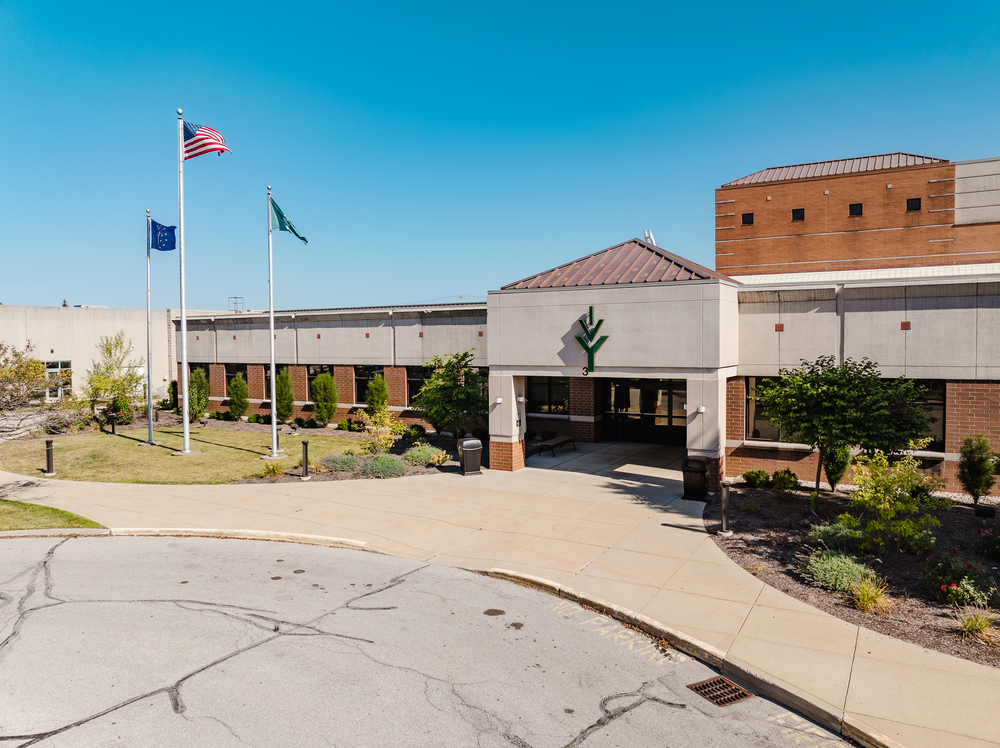
The Fort Wayne campus is the second largest hub, behind the Indianapolis campus, serving just shy of 20,000 students annually. Serving the AV needs of the Fort Wayne campus is Jon Youse, Director of Educational Technology Support and Operations, and his dedicated team of Educational Technologists. While the campus has digital signage, the marketing team handles it.
Meet the Team
Some may remember Jon from the Tech Manager Spotlight article about him in August 2025. We catch up again to discuss the Fort Wayne and Kosciusko County campuses and the environment he supports. His team consists of four LTE employees and no student workers; they support the Classroom and Event AV and the LMS (Canvas) on his campus. Separate IT and networking teams handle issues in those areas. The college utilizes ServiceNow for ticketing across multiple departments.
Scope of Campus Support
Jon’s responsibilities include the main campus and several off‑campus spaces, one nearly an hour away; the next closest campus is about an hour away as well. Despite sharing a budget with other campuses, each campus picks its own standards, creating varying designs throughout the state. This means neighboring campuses may have no similar designs to compare or learn from. Jon’s team supports around 180 classrooms, four event spaces, and 37 hybrid rooms with Samsung Flip boards.
Technology Philosophy and Budget Approach
Jon works in a tight‑budget environment, as most state and community colleges do. He searches for technology built to last, minimizing points of failure and keeping things simple. His budget isn’t aimed at big summer refreshes or yearly capital projects. New buildings occur occasionally, and some large‑scale refreshes coincide with renovations, but his main updates take place when malfunctioning hardware gets replaced, usually with like‑for‑like gear instead of newer models. For smaller projects the team does its own integrations. If the scope extends to a few rooms or more, they tap into a local integrator for assistance.
Classroom Technology Environment
The Fort Wayne campus emphasizes hardwiring, remote controls, and fewer but solid options. A typical classroom has a single lamp projector with a VGA connection to the computer. All but two rooms have PCs; the other two have Macs. They don’t support Bring Your Own Device (BYOD) as of yet, but hope to with room refreshes in the future. You turn on the projector with the remote at the desk.
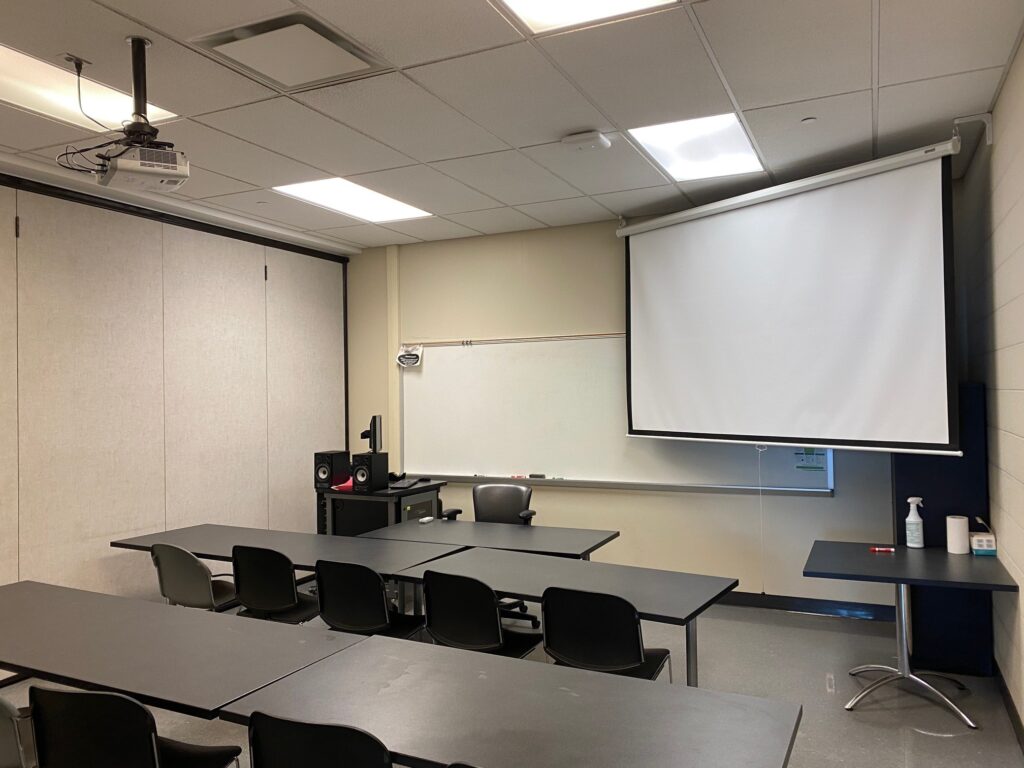
A few spaces have hanging Yeti mics and PCs with a USB mic option, but most standard rooms lack wired or wireless microphones. Rooms largely use a single monitor at the lectern and computer speakers for audio reinforcement. There are no complicated DSPs, AV control processors, or AV‑over‑IP routing to maintain.
Only a couple of special spaces have document cameras; other peripherals like Blu‑ray players or slide‑advancing clickers are rare. A couple of DVD players and even some VHS players still hide around. A single camera is standard, with either a long USB cable or transmit‑and‑receive units for distance. Whiteboards are standard.
Hybrid and Interactive Learning Spaces
As mentioned, there are some hybrid spaces updated during COVID. These spaces received Samsung smart boards, and they are starting to implement some LG CreateBoards. This is a big shift in direction, and they are deciding how far to expand this standard.
Event Spaces and Advanced AV
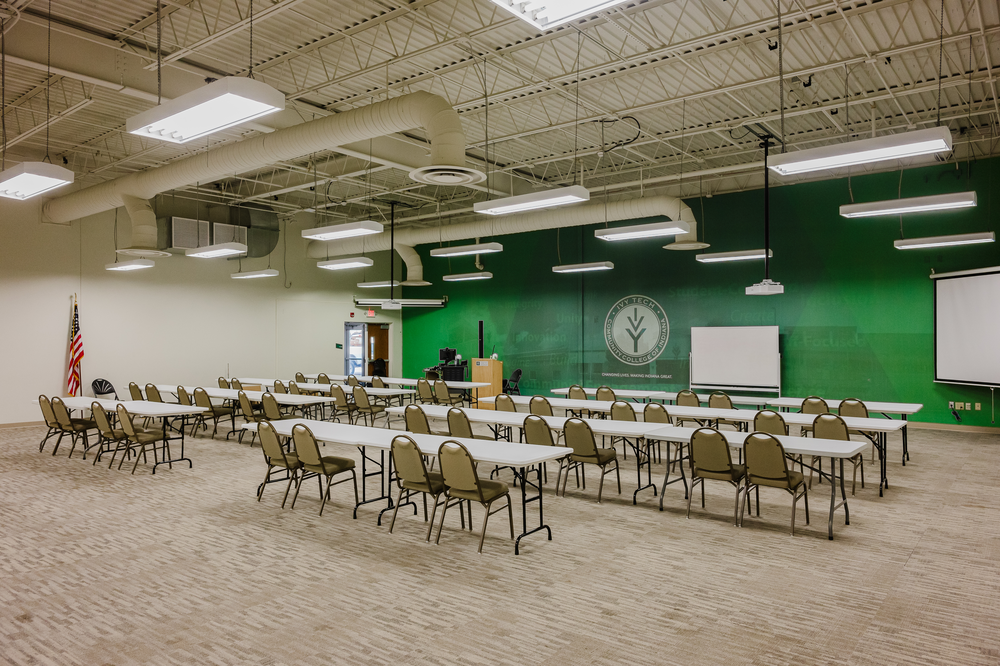
The event spaces switch things up a bit. In these four spaces there are QSC Q‑SYS systems with QSC Q‑SYS control. They utilize Shure SLX‑D handheld and lavalier microphones to allow for some wireless audio assistance. Two of these spaces have wireless Listen systems for accessibility.
Why This Campus Is in the Spotlight
The Fort Wayne campus stands out because it ensures stability, predictability, and supports teaching without adopting every new shiny classroom toy. Looking ahead, Jon hopes to install digital cabling and more interactive whiteboards instead of projectors.
Jon doesn’t have to worry about common woes like AV‑over‑IP routing, a bug in a controller, or an unexpected network outage. His rooms just work, and he’s reduced points of failure to nearly the minimum.
Jon doesn’t get to play with every fancy toy or design with the latest gear, but his faculty have a consistent experience. They know things will work and the room just does what it should.
A spotlight doesn’t have to pick the school with the flashiest tech; it can focus on a campus that works and lets faculty do what they need to do. That is why this campus is our Campus Spotlight of the month.