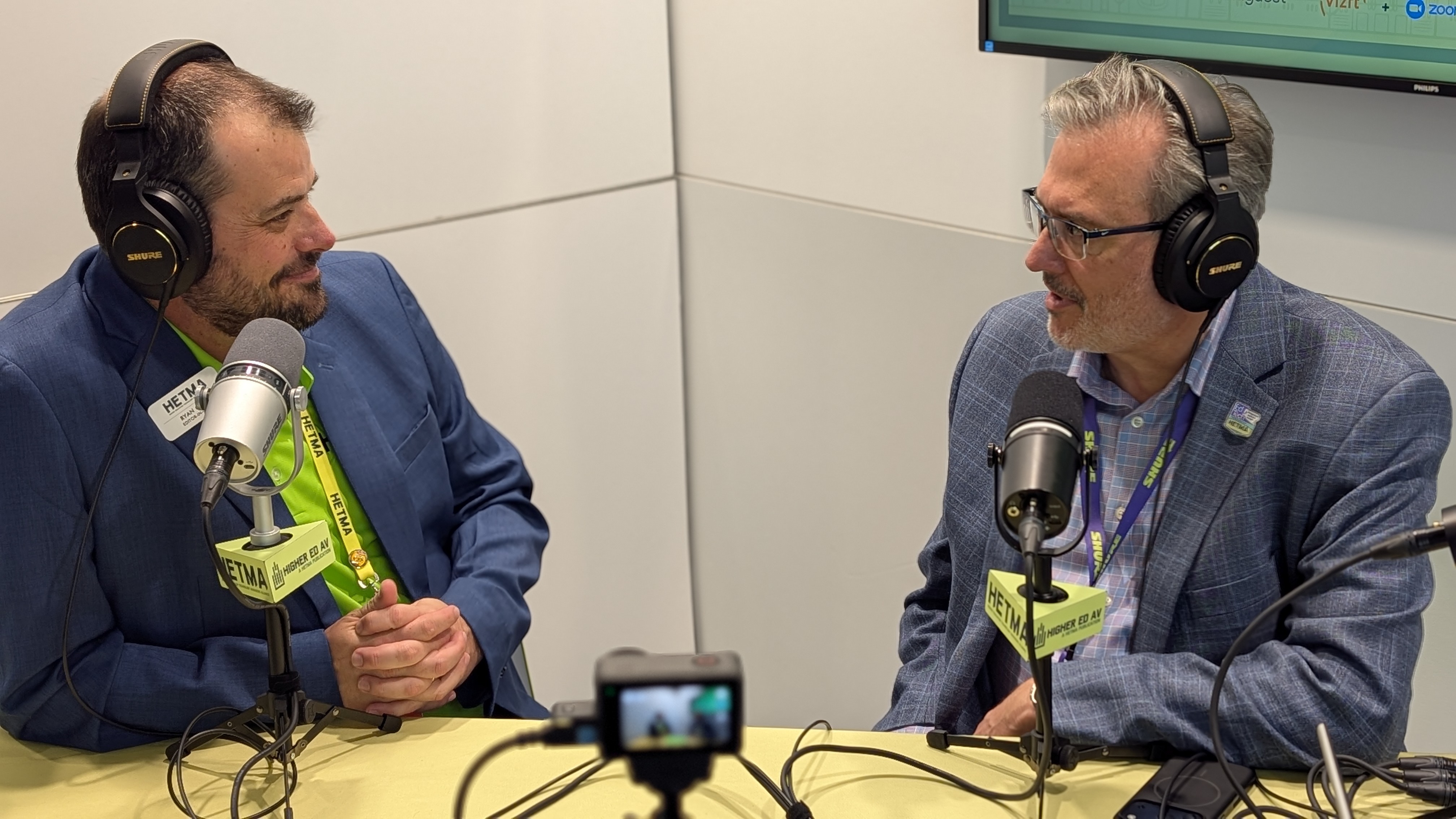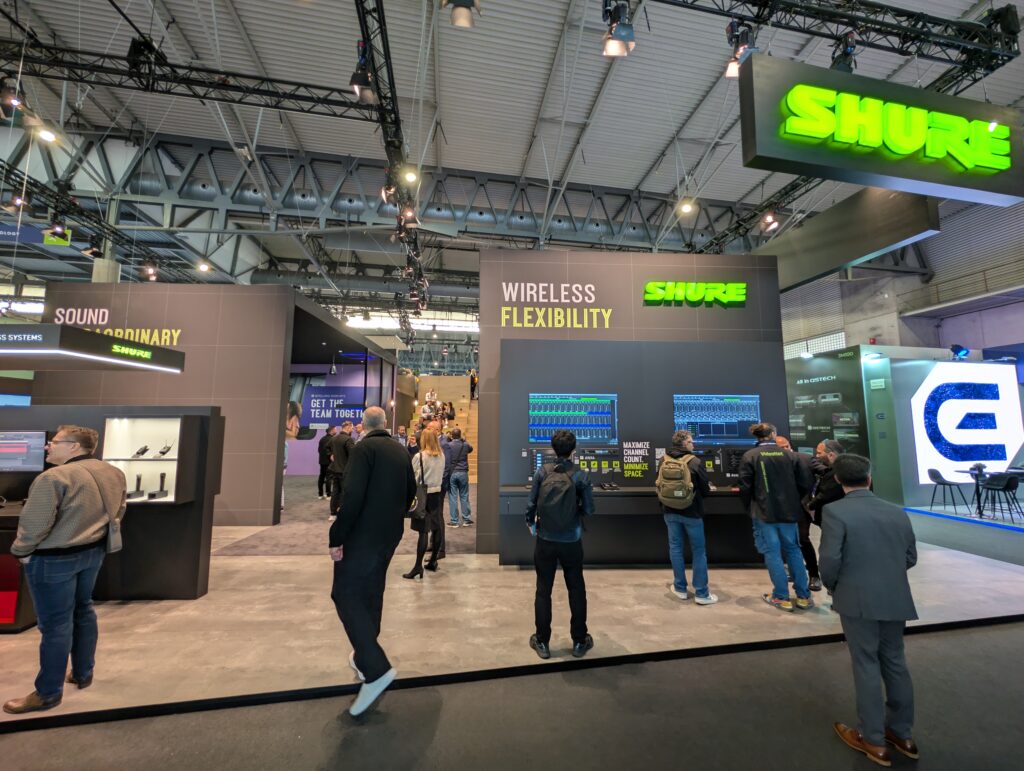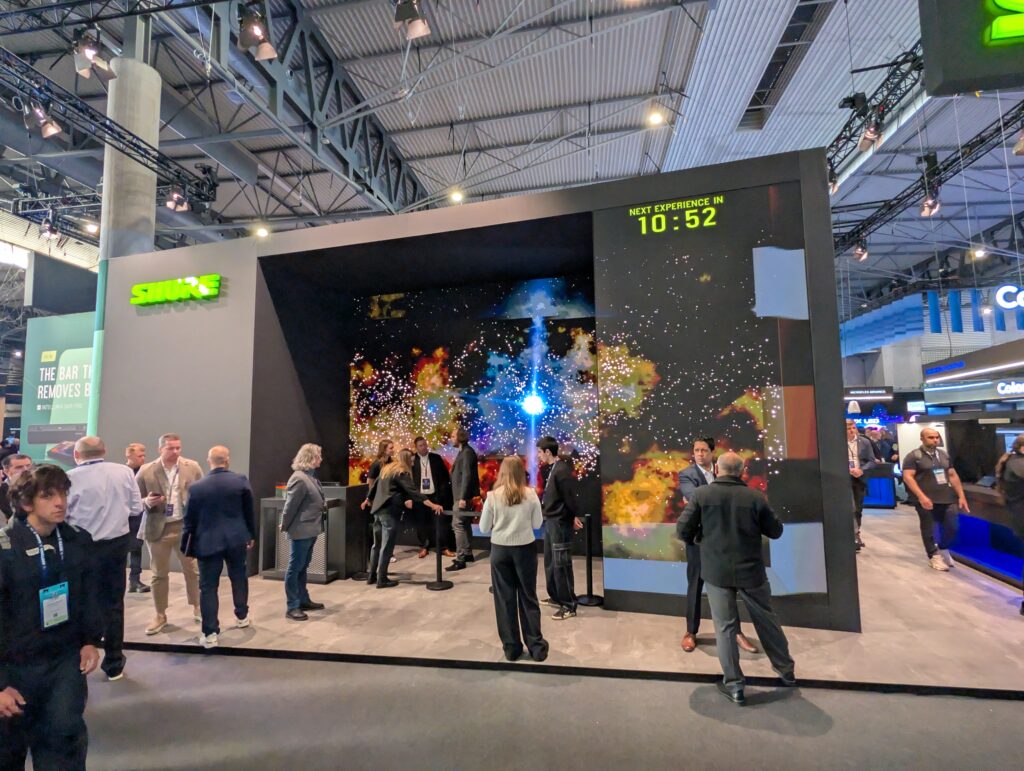
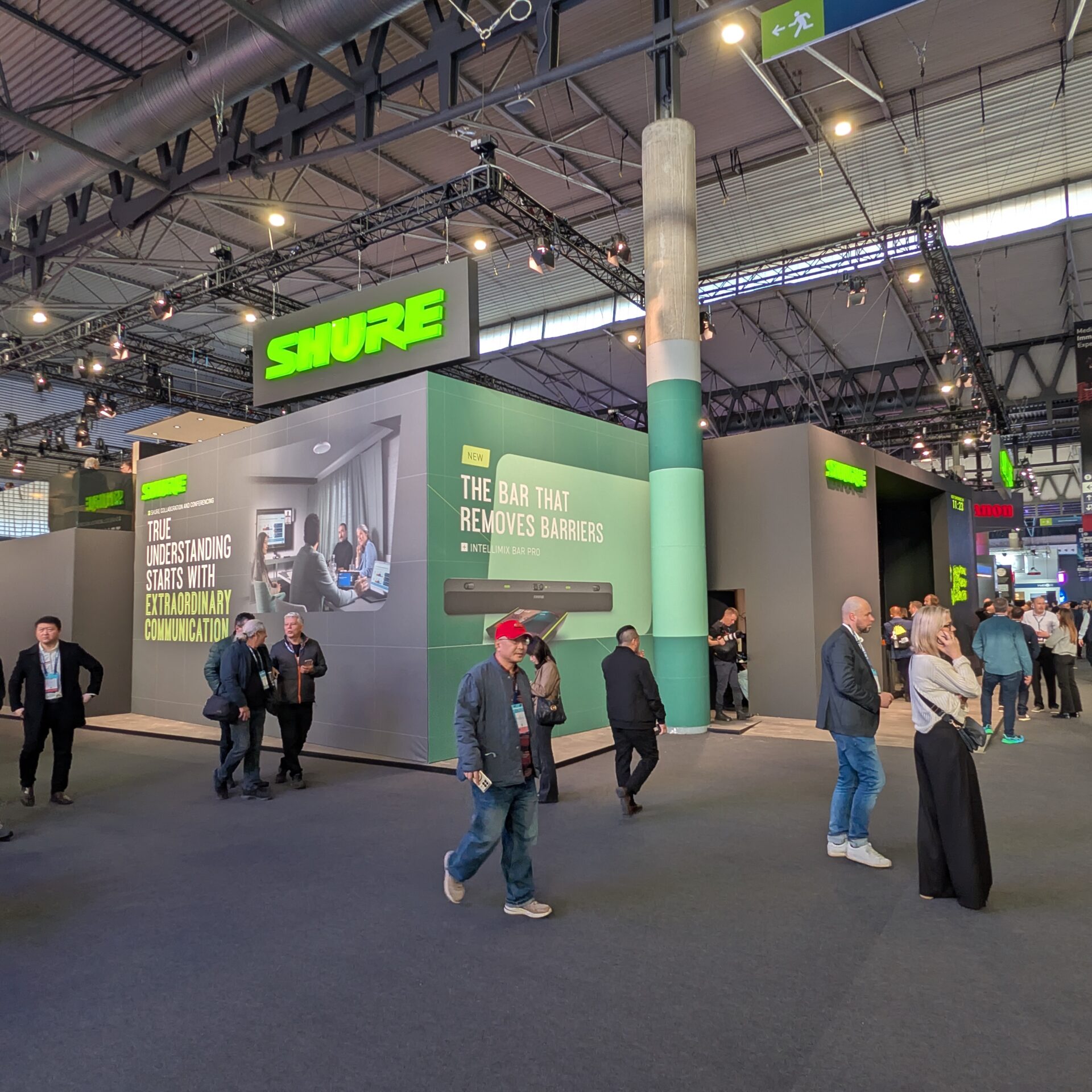







Shure is a company that spans the whole history of AV and they’re still writing the future. In this ISE 2026 conversation with Criss Neimann, the focus is what Shure has been building in the collaboration and classroom pillar, where the expectation is simple: the technology should disappear, and the experience should stay consistent.
“You want to have stuff out of the way, technology’s not seen, it just works, and so enter the array microphones.”
IntelliMix Bar Pro Kit: Shure makes the move to video
The biggest ISE headline is Shure’s move into the all-in-one video bar category with the IntelliMix Bar Pro Kit, built as an Android-based bar with integrated compute, premium Shure audio, and AI video framing. This is the kind of product that gets evaluated quickly by higher ed teams because it sits right in the “standard room build” zone. If it is easy to deploy, easy to monitor, and predictable for instructors, it becomes a candidate for scale.
Criss described the camera design as a key differentiator, with a multi-camera layout intended to improve framing across the full width of the room.
“There’s four across the front, two in the center, but two on the very extreme left and right that are angled.”
He also made a point that landed with the AV folks first: this is still a Shure device, so the audio side had to be built to the same standard. The bar pairs next-generation array mic technology with tuned loudspeakers designed as part of the system, not just attached as an afterthought.
One very practical design choice is a built-in four-port PoE+ switch on the back of the bar, aimed at real room deployment and expansion. Shure is planning an “auto-configuring” expansion path that supports adding peripherals without pulling out a laptop and reprogramming the room.
“On the back, there’s a four-port PoE plus switch.”
Shure expects the IntelliMix Bar Pro to ship as a Microsoft Teams-certified device and highlighted that it is built on Microsoft Device Ecosystem Platform (MDEP) for an enterprise-grade Android foundation, with an emphasis on manageability and updates at scale. For campuses, that is not just a checkbox, it is part of how you reduce support load when you start deploying rooms in volume.
Alongside the new bar, Shure is also highlighting IntelliMix Room Kits as part of the broader “make collaboration rooms repeatable” approach.
Microflex in classrooms: array mics that stay out of the way
Shure’s Microflex ecosystem remains a core part of how higher ed teams build classrooms that work for both in-room and remote participants. At ISE they are featuring Microflex Wireless neXt, plus upgrades across Microflex Advance array microphones. This aligns with what Criss described as the practical classroom requirement: keep microphones out of the way, keep pickup consistent, and keep the room easy to teach in.
Criss called out expansion thinking that ties directly to real deployments, including devices like the MXA901, a ceiling array microphone with an integrated loudspeaker that can be added as part of an ecosystem rather than as a one-off special build.
Innovation Lab: DCA901 and “action isolation” for athletics and beyond
Shure is also using ISE to show technology that stretches beyond classroom conferencing into production and sports capture. Criss highlighted the DCA901 digital array microphone for broadcast, describing its “action isolator” concept as a way to pull specific sounds out of noisy environments. That may be an athletics or venue story first, but it points to a broader campus reality: many institutions have programs and spaces where production audio is a core requirement, not a bonus.
ANX4: licensed channel density for scalable wireless
Finally, Criss spent time on a piece that is extremely practical for higher ed performing arts and large divisible spaces: ANX4, Shure’s scalable, license-based wireless receiver that supports high channel counts in 1U. In the transcript, they talked through the reason this matters: you can align channel capacity to actual needs, keep footprint small, and shift capacity between spaces as demand changes.
“You can have twenty-four channels of ULXD in one single rack space as a receiver, or up to sixteen with Axient.”
For campuses dealing with multipurpose rooms, event peaks, and shared wireless inventory, that kind of flexibility can be the difference between “we can support this program” and “we need another rack and another budget request.”
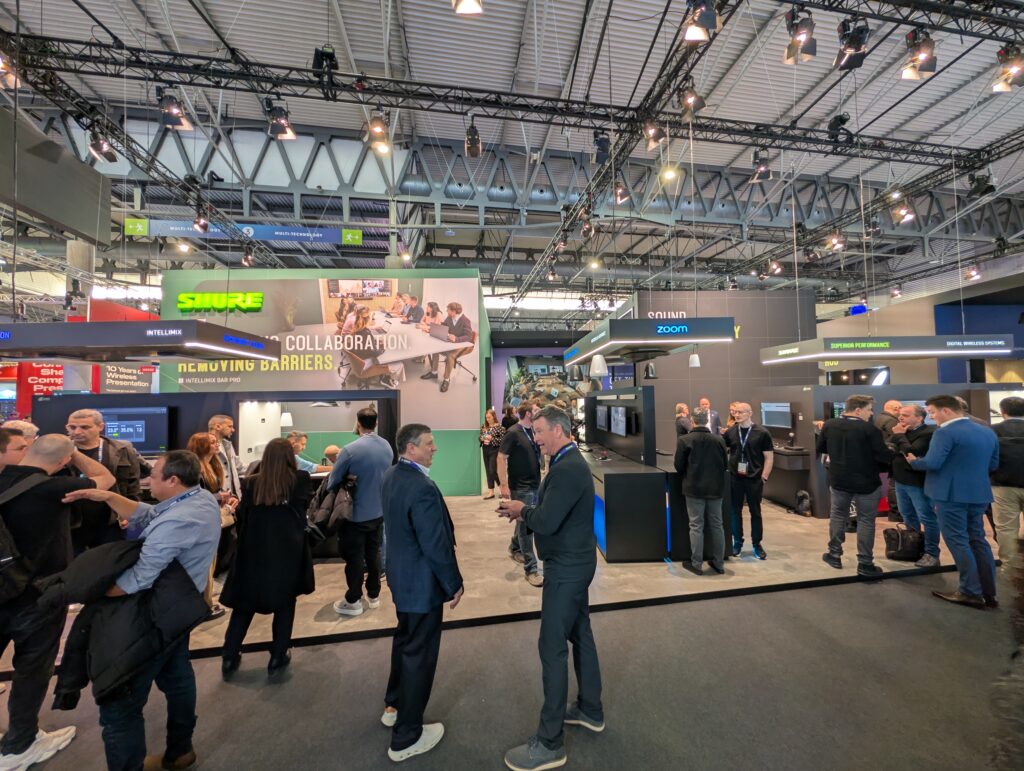
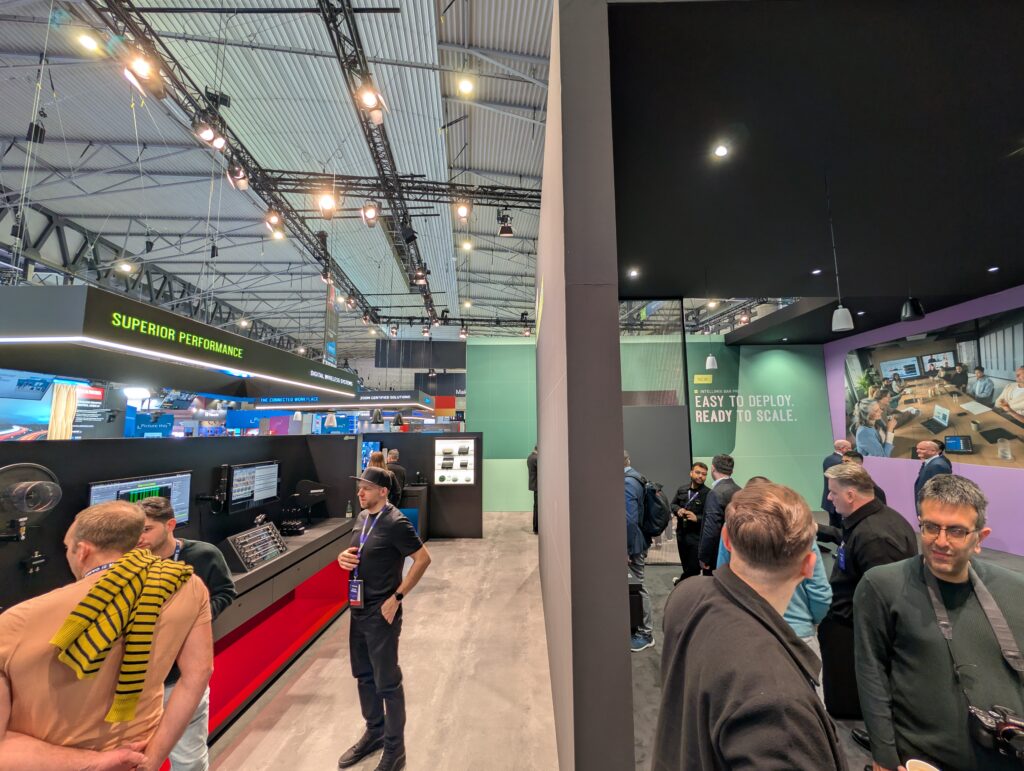
If you are at ISE 2026, Shure’s Stand 3M300 is worth time if you are thinking about standard room designs, mic strategies that stay out of sight, or higher channel-count wireless in limited rack space.
Make sure to check out all of this and more at their website and reach out to Criss at niemanc@shure.com.