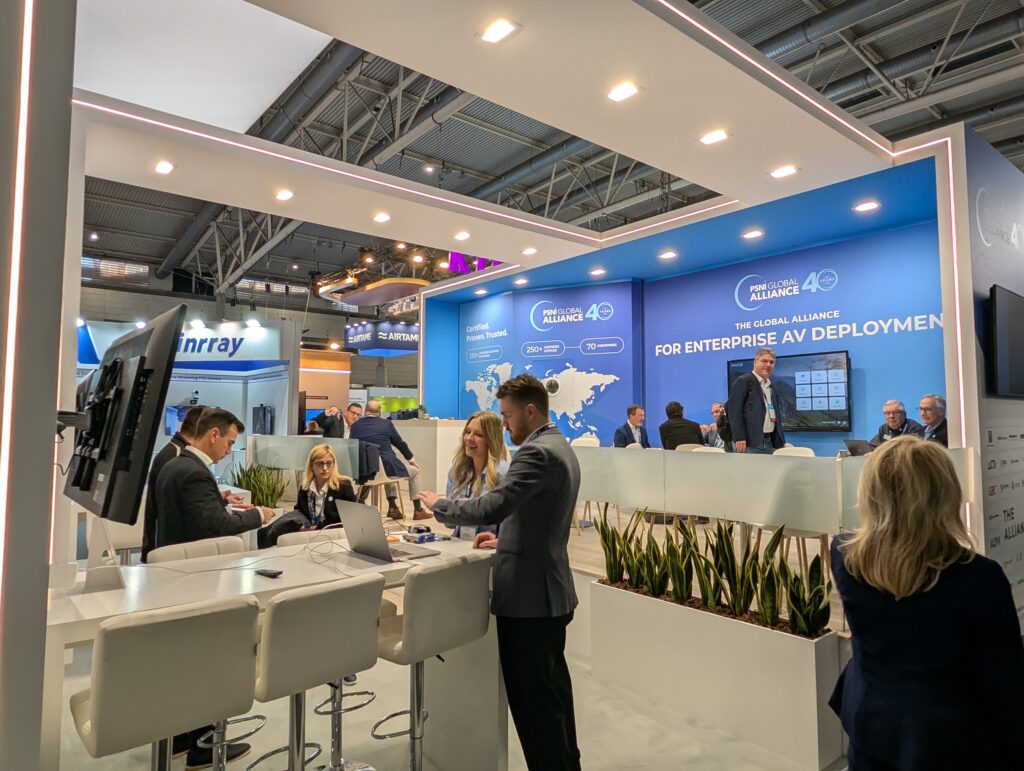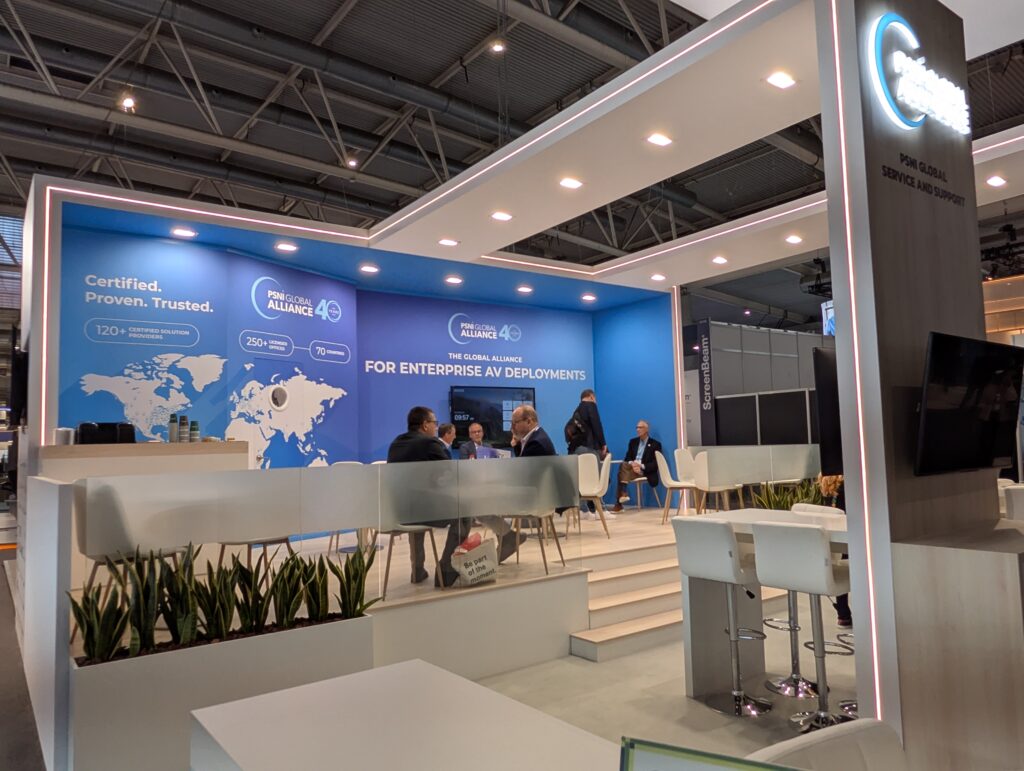
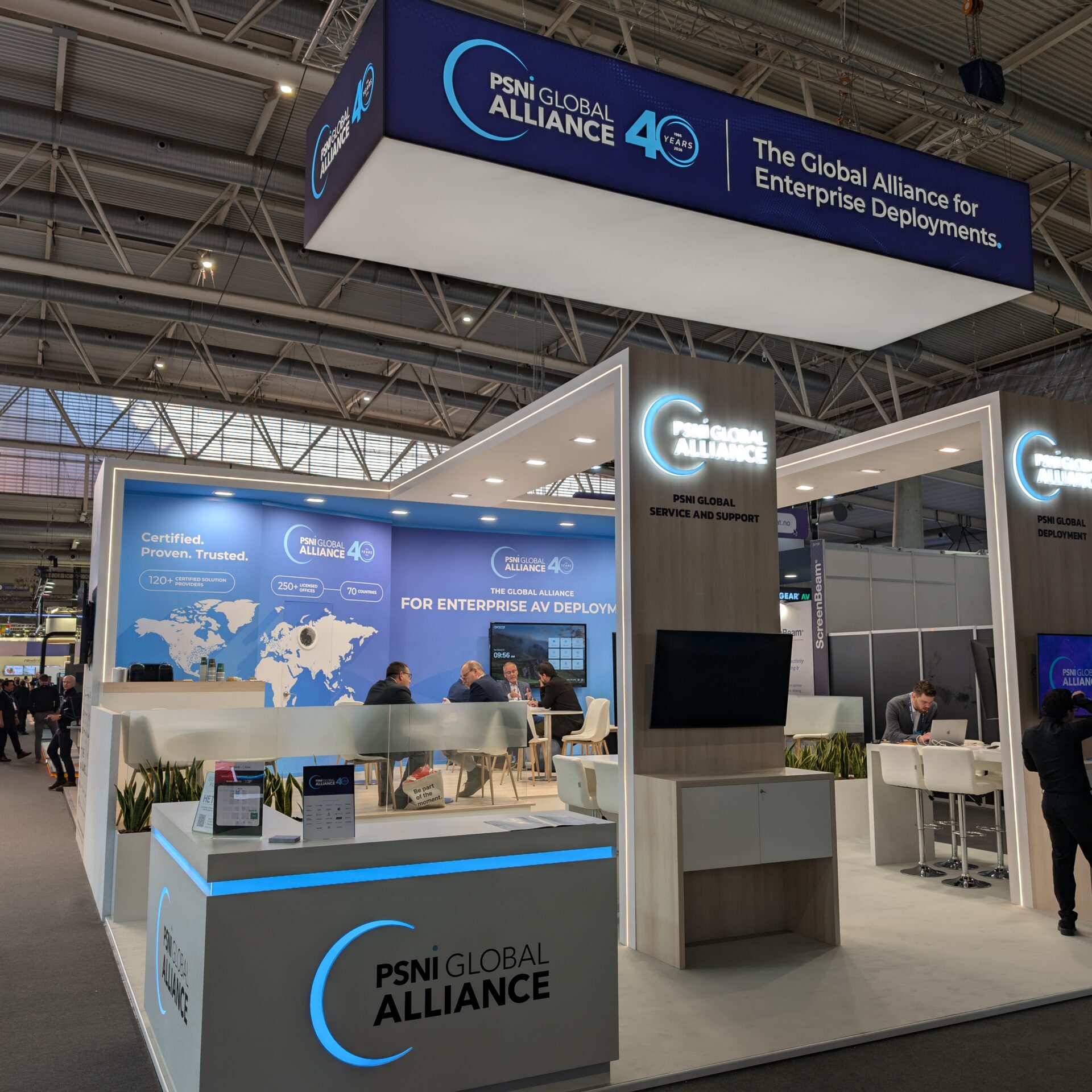







ISE can feel like a parade of products. New panels, new codecs, new cameras, new versions of the same promises. PSNI Global Alliance sits in a different lane, because this is not a booth built around hardware. It is built around how work gets delivered and supported when the expectation is consistency. For higher ed, that is the core problem. We are not trying to win a demo. We are trying to make rooms, systems, and services behave predictably for faculty, students, guests, and support teams across a campus that never really stops moving.
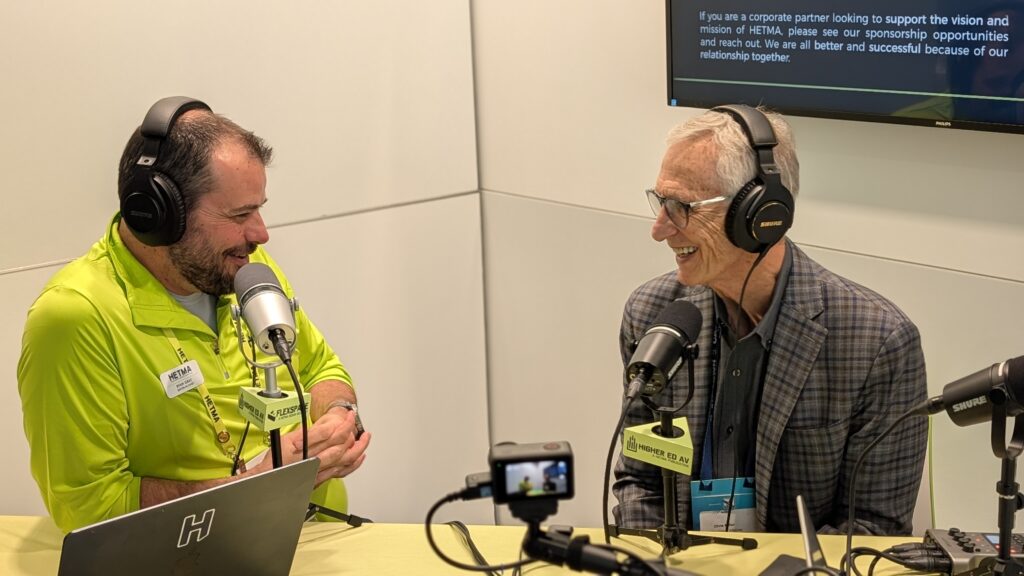
Chris Miller, Executive Director of PSNI Global Alliance, put the shift into plain language. The industry used to lead with the box. Now the work starts with outcomes and experiences, with software and AI changing what “good” looks like and how quickly expectations move. Hardware still matters, but it has to come up in the right order.
“When someone comes in and talks boxes today, they’re missing the point.”
That is a very higher ed statement. Campuses are judged by what people can do in the space, not the spec sheet of what got installed. A room that is technically impressive but inconsistent, fragile, or hard to support is a room that will get avoided. And once users avoid the room, the institution is not getting the outcome it paid for.
PSNI’s role is to make the delivery side of that equation stronger. PSNI Global Alliance is a global network of vetted AV and unified communications integrators and service providers that work together on projects, share standards, and raise the quality bar for execution. The alliance model is about trust, and Chris described that without any fluff. Companies come together because they know they can do it on their own, but they can do it better with shared intellectual capital, experience, and peer relationships.
“We see alliances as trust builders.”
The trust piece matters in higher ed because integrator selection is long-term impact, not a one-time purchase. You are not only buying an install. You are buying the quality of the handoff, the clarity of documentation, the support posture after go-live, and the vendor discipline that keeps systems stable through changes in staffing, building cycles, and technology refreshes. When you are trying to standardize across room types or scale across buildings, the weakest link is where the entire experience breaks.
Chris leaned into that idea directly. PSNI members do thousands of projects with each other every year across six continents. That only works if the bar is high and the bar keeps getting higher. He framed member selection as rigorous and deliberate, with a small acceptance rate compared to the number of applications PSNI receives globally.
“We accept applications, maybe three to four for every hundred that come in around the world.”
That is not just a membership statistic. It is a statement about how PSNI wants to be evaluated. Quality is not assumed, it is built through certifications, programs, and peer accountability. It is also reinforced by something Chris said later that will land with anyone who has ever defended a standards decision on campus. People do not want to lose what they spent years building in trust and relationships, so the expectation inside the alliance is to be “best of the best” anywhere worldwide.
The most useful way to translate this into higher ed terms is risk reduction. If you are managing a large project, dealing with complex stakeholder requirements, or trying to avoid the common “install is done but the experience still is not right” trap, you are looking for delivery partners that can execute to a consistent standard and support that standard over time. That is what PSNI is trying to represent on the show floor.
PSNI is at Booth 2W480 at ISE 2026.
If you stop by, the best conversation is not “tell me what you sell,” because they do not sell a product the way a manufacturer does. The better conversation is, “how do you build consistency when the work is distributed across regions, vendors, and local realities,” because Chris acknowledged the complexity here. Needs and applications vary worldwide. Even the idea of “education” varies by market. But institutions still want repeatable outcomes, and in his view the pathway to that is experience-first thinking, with technology serving as the enabler rather than the headline.
Chris described the target state as seamless, simple, and frictionless, with enough standardization to support consistent outcomes across a campus, a country, or a continent. The value is not standardization for its own sake. It is standardization that reduces touches. Less tapping. Less troubleshooting. Less “did the Wi-Fi work.” Less “did the camera come on.” Less “did it track.” Less “did the sound work.” The room should know the user well enough to get out of the way so teaching, learning, and collaboration can be the focus.
That framing also exposes a practical test higher ed teams can apply in any integrator conversation. Does the discussion start with outcomes and user experience, or does it start with the box? If it starts with the box, reset the conversation. If it starts with what people need to accomplish and how the organization will deliver that consistently across time and space, you are in the right place.
Chris also made a point that should not be glossed over: a meaningful portion of PSNI member business worldwide is education, and it is expanding in scope. He described education work as broader than traditional classrooms. It can be stadiums, collaboration spaces, digital signage in cafeterias, sound masking, and other environments that require different skill sets and different operational expectations. That is another place where higher ed teams get burned. The work is too specific to boil down to price only, because the outcomes are too visible and the cost of failure is too high.
This is where PSNI becomes actionable for technology managers. If you have had challenges with integrators, if you are trying to de-risk a major build, or if you are supporting a portfolio of spaces where consistency matters, PSNI membership can be a question you ask directly. Chris suggested making it part of RFP language or requirements, not as a branding exercise, but as a filter for partners who have passed a rigorous process and are accountable to a broader quality framework. Inside the alliance, he said, members trust each other with their best customers, and that is the incentive structure that keeps quality from becoming optional.
The show-floor moment that captured the entire posture was simple. It was less about a feature and more about order of operations. Put experience first. Put outcomes first. Then build the technology stack to support it. That is the conversation higher ed needs more of right now.
Make sure to check out all of this and more at their website www.psni.org.