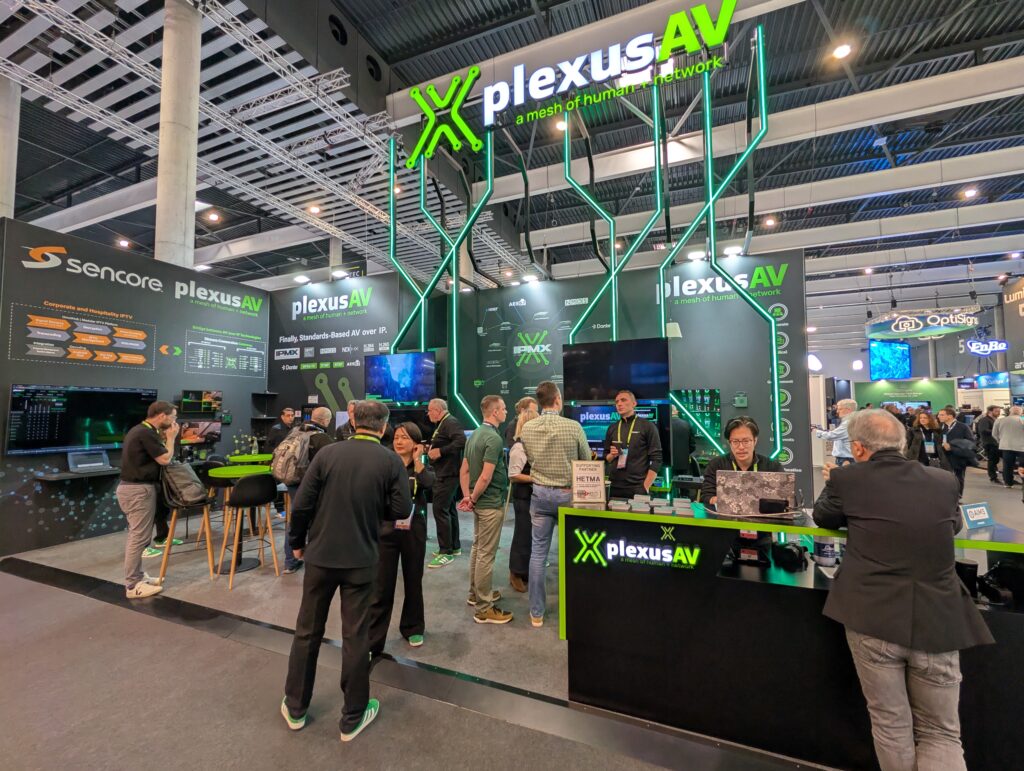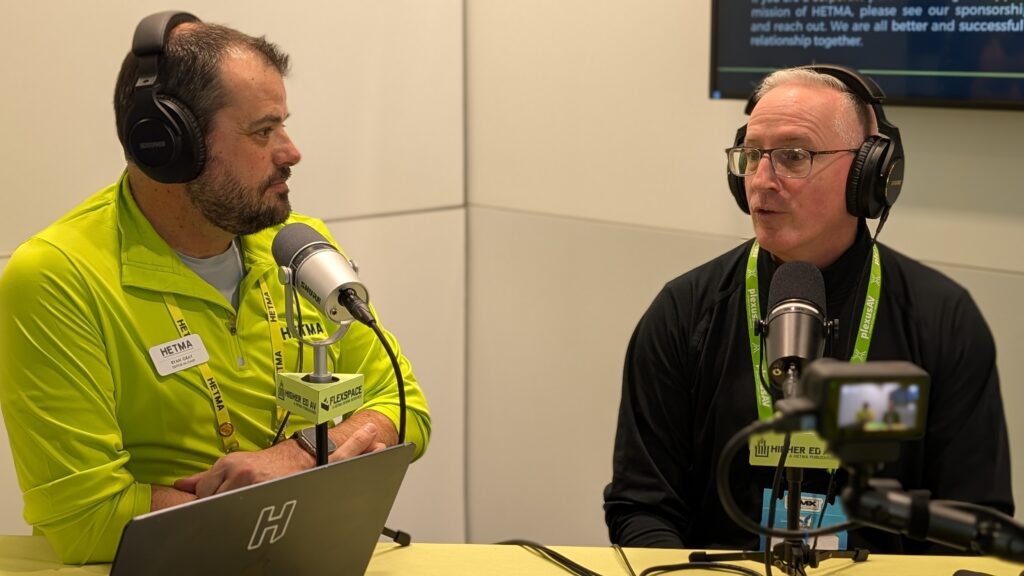
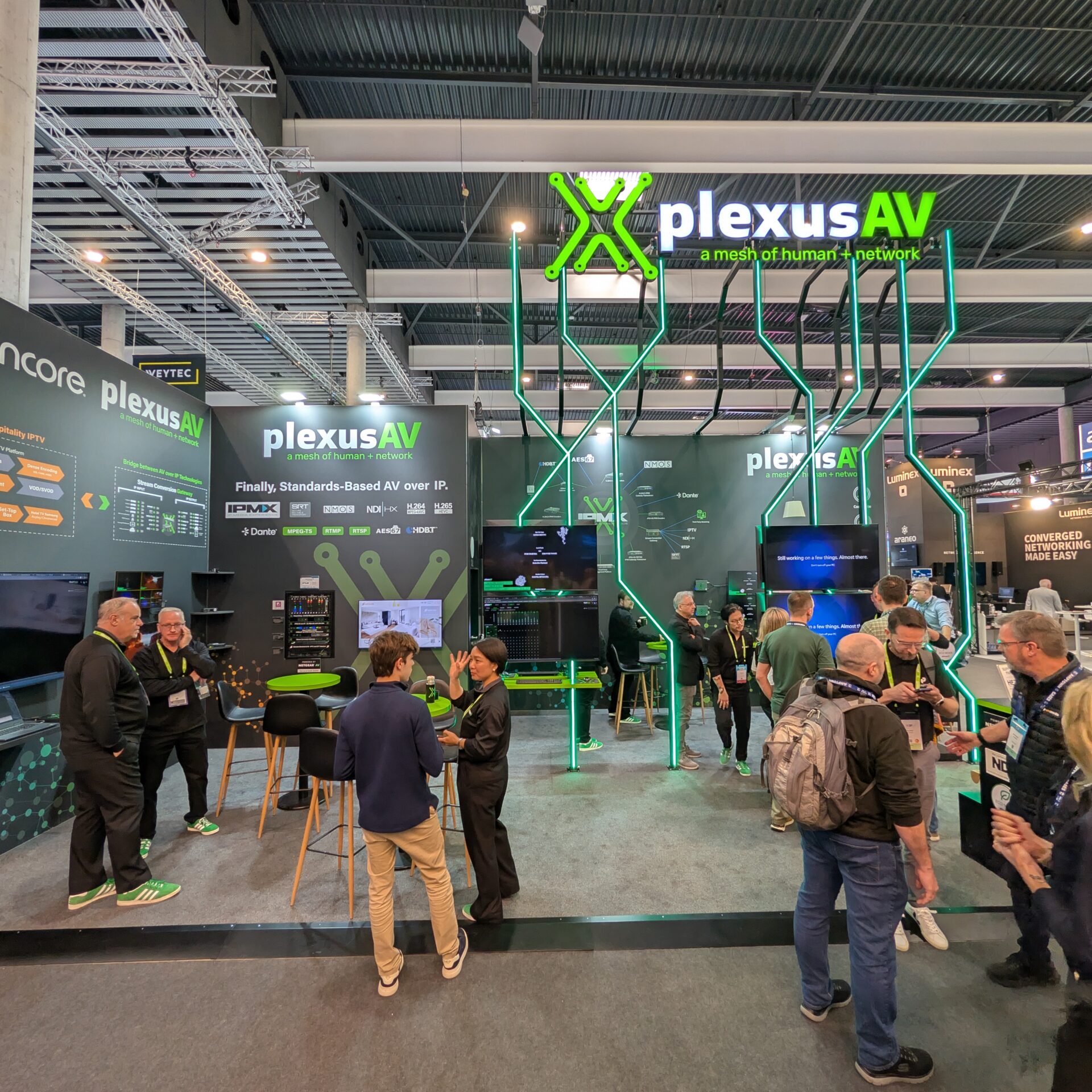







PlexusAV is having the kind of ISE where you can feel the momentum before you even get to the demo. Jim Reinhart, North American Sales Manager, described a booth that is packed. A lot of higher ed teams are past the point of asking whether AV over IP is real. The questions now are about lock-in, interoperability, and how you modernize without ripping out infrastructure you installed two or three years ago.
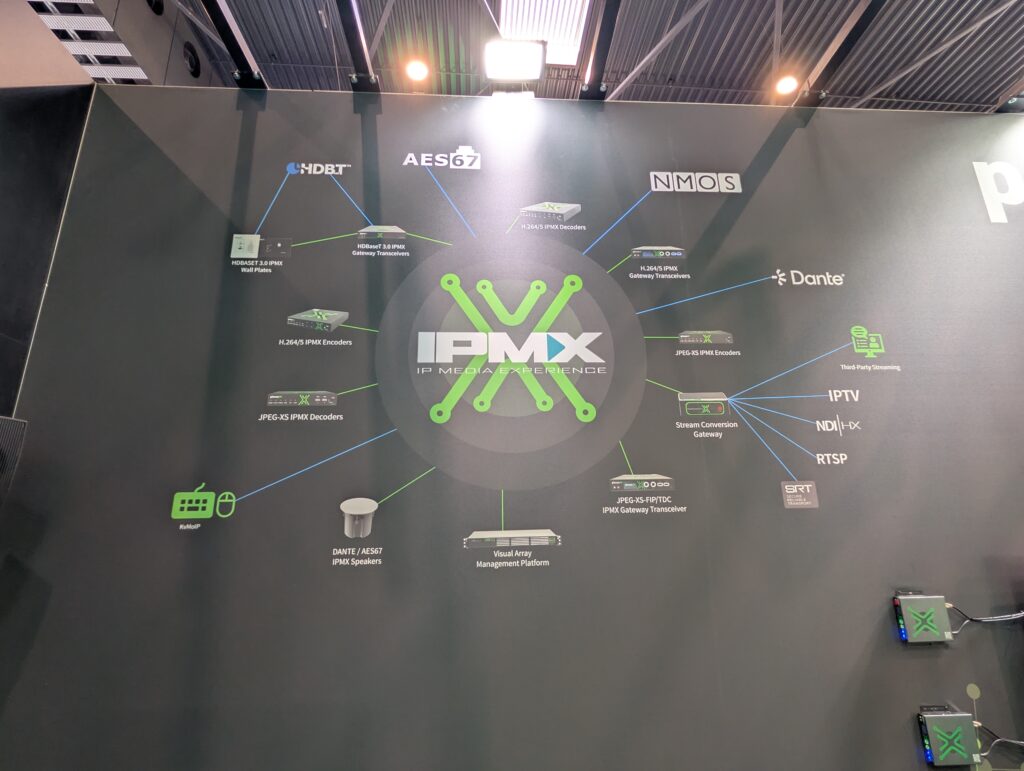
That is where PlexusAV has planted their flag. They are an AV over IP company, but Jim is blunt about what has not changed in the market. Audio has evolved. Control has evolved. Video over IP, in his view, has stayed too proprietary for too long, with vendors treating protocols and firmware as the secret sauce that keeps customers locked into a single ecosystem. PlexusAV is pushing a different approach: interoperable systems built on open standards, specifically IPMX as the transport layer for video, audio, and control.
“At Plexus, we’re approaching things differently. We’re interoperable, open standards, and we’re basing everything off of IPMX transport.”
This is not just a standards conversation for the sake of standards. It is a campus operations conversation. If you have ever inherited a room where the design decisions were made to match one vendor’s roadmap, you know how quickly it becomes painful when you need to expand, refresh, or integrate with something new. PlexusAV’s message is simple: IPMX lets you build around a shared transport so the ecosystem can stay flexible over time.
Jim tied that directly to recent industry progress. The AIMS Alliance has been pushing IPMX forward, and he referenced an interoperability event in Geneva where devices were tested together and certifications were awarded. The point was practical: show interoperability in the real world, including between competing brands, not just in marketing language.
One reason this resonates in higher ed is that “true interoperability” is not just a nice-to-have, it is increasingly written into specs. Jim said he is already seeing projects where consultants are specifying interoperability across an IPMX infrastructure. That is the kind of shift that changes how campuses can think about standards, because it moves the conversation from “trust us” to “prove it.”
Booth 5J700: bridging legacy and building the IPMX ecosystem
A lot of AV over IP conversations get stuck in an all-or-nothing place. Either you are fully IP, or you are not. PlexusAV is showing a more realistic path that fits how campuses actually refresh. HDMI is not going away. USB-C keeps growing, especially for BYOD and modern laptops that do not even carry HDMI ports anymore. And HDBaseT is already deployed everywhere, including rooms that are nowhere near end-of-life.
PlexusAV is leaning into that reality with an IPMX gateway approach that connects older room infrastructure to an IPMX network. Jim described a solution that takes legacy and newer-generation HDBaseT and converts it into IPMX for scalable distribution, and can also take IPMX and convert it back to HDBaseT to feed existing receivers and endpoints that are still doing their job.
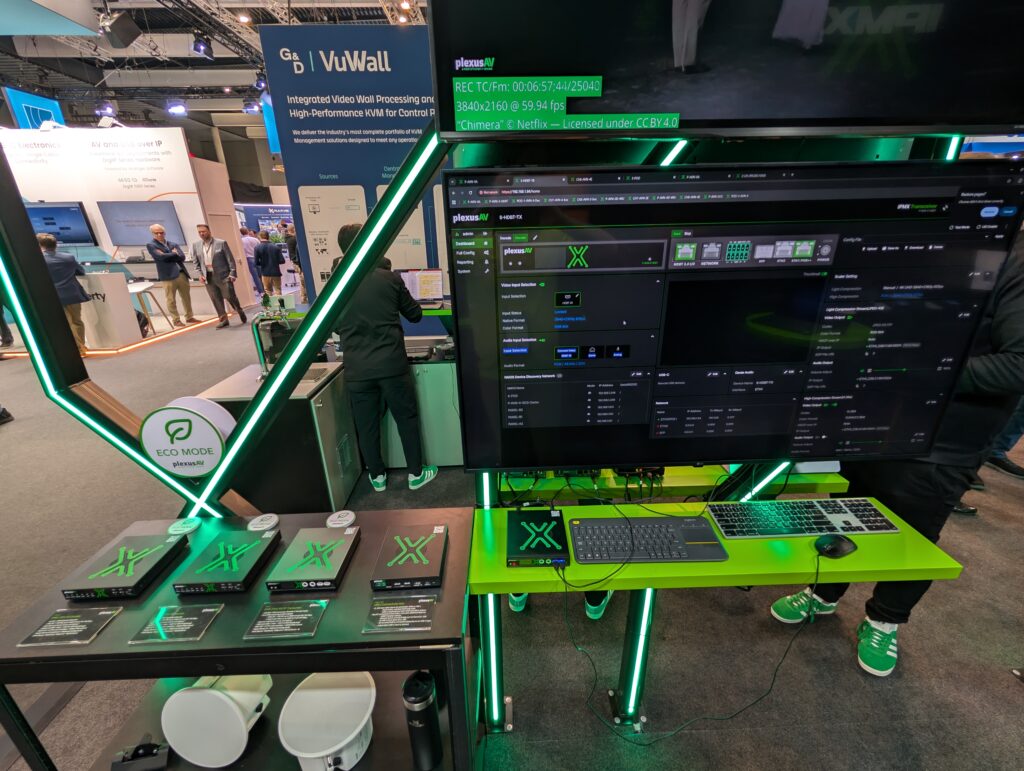
PlexusAV is also emphasizing their IPMX endpoint ecosystem with JPEG XS support for low-latency, visually lossless workflows, and a growing portfolio of encoders and decoders designed to keep that open-standards posture consistent across the signal chain. For higher ed, that matters most in two places: large-scale distribution where latency and quality both matter, and environments where you need predictable performance over campus networks that already carry a lot of other traffic.
A broadcast backbone, now pointed at ProAV and higher ed
If PlexusAV is new to you, their origin story helps explain the posture. Jim talked about the parent company, Sencore, as a long-established broadcast company with decades of experience in signal transport and reliability. PlexusAV was created as the ProAV brand, built from the ground up with R&D investment to compete in the AV over IP space and then expand outward into a broader ecosystem.
That shows up in the way the booth conversation feels. It is less “here is our one magic box,” and more “here is the transport, here is the proof of interoperability, and here are the pieces that let you build and scale without getting trapped.”
Audio that matches the “open” story
One of the most interesting moments in the interview was when Jim pivoted from video to audio. A lot of AV over IP messaging still treats audio as a separate networked world with its own licensing and ecosystem rules. PlexusAV is working to make audio part of the same open-standards story, and Jim described introducing networked speaker options that line up with IPMX discovery, management, and interoperability goals.
“We actually have the only IPMX speaker.”
Efficiency and scale, because campuses feel it
Jim also called out something that is not glamorous but matters on campus: energy. PlexusAV has added an eco mode that reduces power consumption without simply shutting systems off. He described a 25% reduction and the kind of lifecycle math that becomes meaningful when you replicate it across room counts, buildings, and years.
“We now have an eco mode on our systems. We can reduce power by twenty five percent.”
That is a very higher ed point. Everything multiplies at scale. Small savings become real savings. Small reliability improvements become major reductions in support noise, and standards decisions either reduce long-term friction or lock it in.
Make sure to check out all of this and more at their website and reach out to Jim at jim.reinhardt@plexusav.com.