
Leave it to a room full of AV people to spend two days talking about the future of the planet and still get excited about touring a classroom. I was at UCLA for the SAVe Global Conference, and that combination probably captures the experience better than anything else. Big ideas, practical conversations, good people, and the opportunity to see what another campus is actually doing. Add some great food, and you have my attention.
The keynote speakers were excellent, with Michael Blackman a particular highlight for me. His presentation on sustainability driving innovation gave us plenty to think about. In an industry that is always looking toward the next product, the next installation, and the next upgrade, there is real value in asking how sustainability can influence what comes next.
For me, that means asking better questions before we buy something. How long can we support it? What happens when our needs change? Where does it go when we are finished with it? Those questions belong in the planning process, alongside the technical requirements and the budget.
Dele Ogunseitan and Diran Apelian brought additional perspectives through their work on electronic waste and materials recovery. Having those voices alongside AV industry leadership helped connect our everyday equipment decisions to a much bigger conversation.
That connection matters. We spend a lot of time thinking about whether a system works. We should also spend time thinking about everything required to make it, keep it working, and eventually retire it.
Students Informing Campus Decisions
A panel of students from Joe Way’s environmental science class shared their research on improving sustainability in AV at UCLA. Joe and his team are using the students’ findings to guide their campus sustainability efforts.
What I particularly liked was the connection between the students’ work and actual campus decisions. They were researching systems being used around them, identifying opportunities, and providing data that the people responsible for those systems could put to work. That is a pretty compelling learning experience.
The AV cohort is part of UCLA’s broader Sustainability Action Research program, with other student teams tackling challenges across different areas of campus. That work has helped advance sustainability well beyond classroom technology. It also gave me something specific to bring home: I intend to explore whether we could do something similar at Northwestern. We have the students, the expertise, and plenty of questions worth researching. I want to see what it would take to bring those pieces together.
Working Together on Sustainability
The Sustainable Manufacturer Council and SAVe Certification workshops helped give those conversations somewhere to go. Manufacturers have an enormous role in what our industry can accomplish, and the council provides a place to work through that responsibility together. Certification gives organizations a structure for examining their own practices and developing a plan.
I appreciate that practical focus. Working in higher education, I need to be able to take a conversation home and figure out what it means for the rooms, equipment, people, and resources I actually have.
I was also honored to participate in panel discussions at the conference. The first brought me together with Michael Blackman and Stefan Lefebvre, with Steph Beckett moderating, to discuss SAVe’s partnerships with HETMA, ISE, and AVIXA. The second focused on bringing SAVe’s mission to universities, with Joe Way moderating. Joining me were Raj Singh and Karla Pinzón, an MBA in Sustainability candidate at Bard College and capstone consultant to Crestron Electronics.
The partnership conversation was especially meaningful from my perspective as HETMA vice chair. Our organizations bring different relationships, experiences, and opportunities to this work. Putting those resources together gives us more ways to reach people and help them participate.
For higher education, that participation has to account for the realities of campus life. We have purchasing processes, competing priorities, aging infrastructure, and budgets that rarely cover everything we would like to accomplish. We also have people across our institutions whose expertise can help us make better decisions. Bringing those people into the conversation is part of the work.
“Universities want to make sustainable choices, but they’re working within real limits on budget and performance,” Karla said. “That’s why the push toward circularity has to come from manufacturers. Designing for recovery and reuse isn’t just good for the planet. It protects companies from supply chain risk and opens up new horizons for R&D. When businesses lead that innovation, campuses can choose the sustainable option without having to trade off cost or functionality.”
That last point is especially important. We need sustainable choices that meet the needs of our classrooms and fit the budgets we actually have. Manufacturers’ design decisions help determine what those choices look like.
The SAVe: A Second Life panel I was scheduled to do with Tom Peters is still ahead of us, and I am looking forward to it. Finding another useful home for equipment is a topic that deserves our attention, especially in higher education, where one department’s retired equipment may still meet someone else’s needs.
Around the Table and Across Campus
Of course, some of the best parts of a conference happen around a table. The food served during the conference was great, and dinner at Emporium Thai deserves a mention of its own. Good food and time with colleagues are a pretty reliable combination. Those meals give you a chance to keep talking, get to know people beyond their job titles, and follow a conversation wherever it goes.
Then there was the campus tour. UCLA is a beautiful campus. Obviously, it is not as beautiful as Northwestern, but I am willing to acknowledge that they have done a respectable job.
The visit also meant getting to see two of my dearest HETMA friends, Chi Hang Lo and Ann Kelly, who led the teams that engineered UCLA’s classroom pilot program. Getting a behind-the-scenes look at their work was a highlight. There is something especially fun about seeing people you care about doing work they are excited to share.
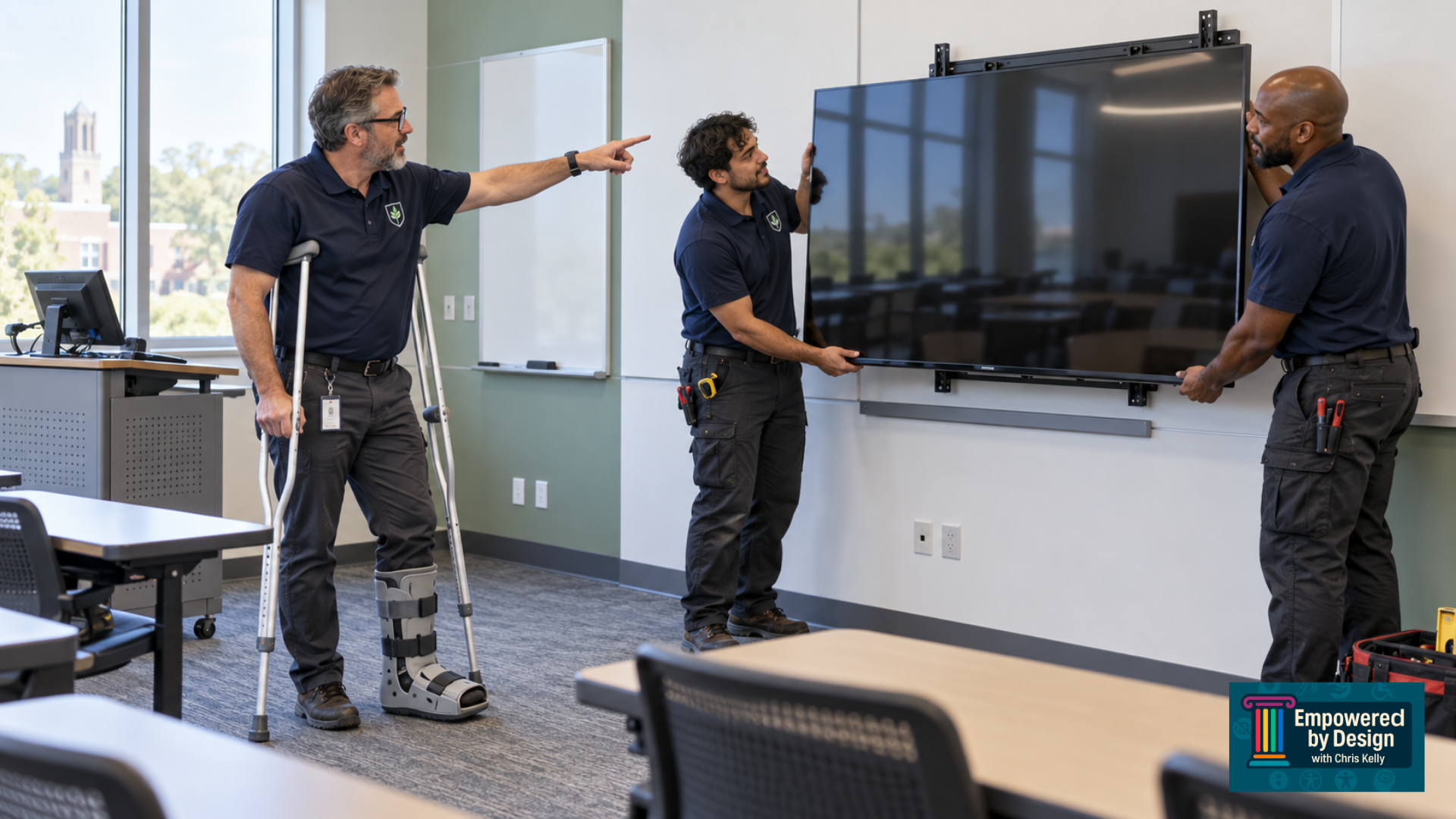
The classroom visits were particularly interesting because we saw both an older Extron system in a room that had not yet been upgraded and an upgraded system that is part of UCLA’s new pilot program. That is a campus tour I can appreciate. Show me the new system, absolutely. I want to see where you are going. But seeing the room still waiting for its turn tells me something, too.
Every campus has some version of that contrast. There is the room you are excited to show your peers, and there is the room you hope they do not ask about. Seeing both makes the conversation more useful. It gives us a chance to talk about the transition, the priorities, and the work required to get from one to the other.
That was what I appreciated most about the SAVe conference. There was room for ambitious ideas and honest conversations about implementing them. Industry leaders, manufacturers, higher education professionals, and students brought their perspectives to the same table.
That sense of community also came through in a conversation with Valeria Becerra Angulo, who recently completed her graduate studies in international affairs and environmental policy at UC San Diego. She was attending and volunteering at the conference for the first time.
“Meaningful change begins with believing we can make a positive impact and finding others who share those same values,” Valeria said. “Seeing pioneering women lead conversations about sustainability in a traditionally male-dominated industry reminded me of the power of representation, collaboration, and collective action.”
Her perspective stuck with me. An industry’s ability to bring new people into the conversation says something about its future. Valeria showed up ready to contribute and left feeling that she could make a difference. That is something worth building on.
I left with plenty to think about, people I want to keep talking with, and a panel with Tom still to come. Now comes the part where we take those conversations back to our campuses and do something with them.