

Arrival and First Impressions
A while back, my Extron representative, Anthony Del Toro, reached out with an invitation that is hard to ignore in higher ed AV. Extron was hosting a Spring Education Summit in Anaheim, California, and they were covering flights, lodging, and meals. The agenda was already compelling, but the opportunity was later extended to include a third-day Technical Advisory Council session under NDA. How could I say no?
Extron has been holding Education Summits with increasing regularity, aiming for twice a year. The attendees were primarily from higher education with some from K-12. The goals are straightforward but meaningful: connect peers from across the country, dig into real campus use cases, and openly discuss challenges that are not always easy to surface in other settings.
From a logistics standpoint, Extron handled everything. Flights, hotel, and shuttles were coordinated by their travel team. We stayed at the Embassy Suites near Angel Stadium the Honda Center. With games happening the night of arrival, the area was lively and set a good tone for the week. Waiting for us at check-in were welcome bags with an Extron shirt, snacks, and a mug, with a request to wear the shirt on the first day.
That first evening included an informal reception in the hotel lobby, and conversations started immediately. I spent time talking with Chi Hang Lo and Frank Alaimo about their work at USC, UCLA, and UNLV. A personal goal for this trip was to better understand how other campuses are handling Layer 2 traffic. Those conversations quickly went deep into clock leaders, QoS, and ACLs. It was a strong reminder that there is rarely a single right answer, only intentional design.
From these early interactions with people from Extron, I was immediately impressed by the number of employees with ten, twenty, or more years at the company. That longevity would come up again throughout the summit. Another persistent theme was doing everything in‑house, and the quality, consistency, and dependability that brings.
Welcome and Orientation
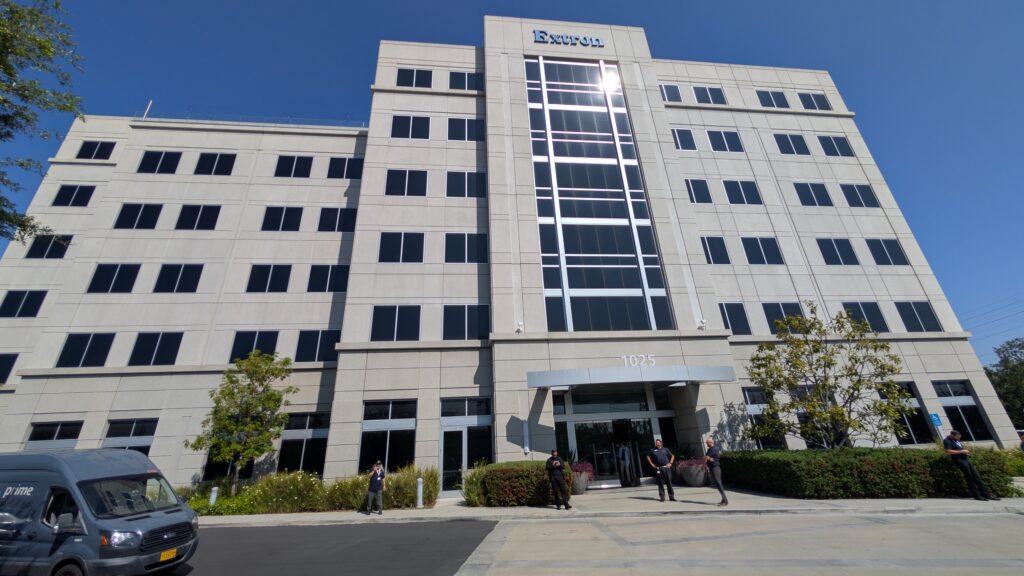
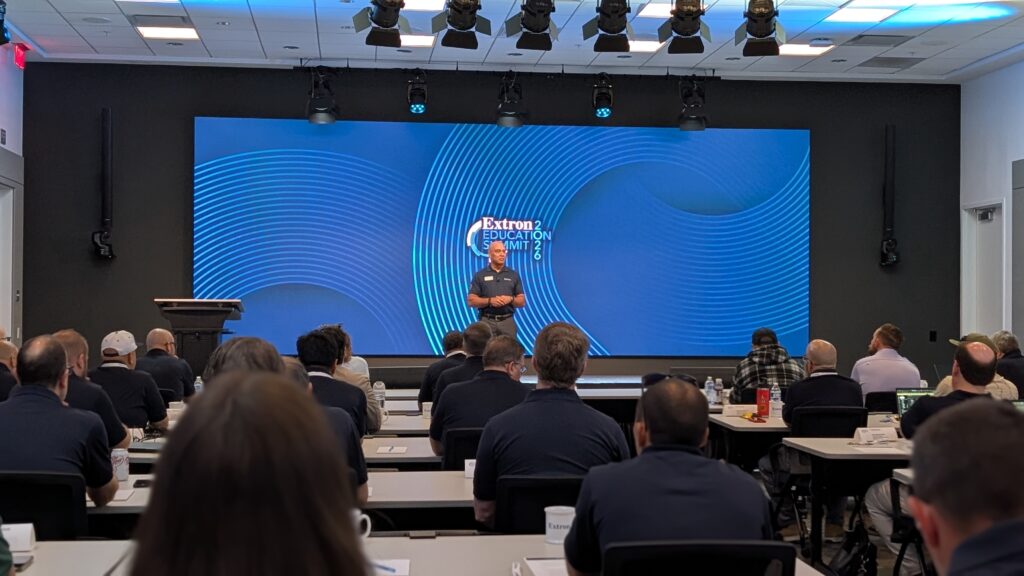
The first morning started early, with a bus arriving at the hotel around 7:30 a.m. Extron staff were already there greeting attendees, getting us signed in via a clipboard, and making sure everyone felt welcome. That tone carried through the entire day. After signing in for security, we boarded the bus and headed to Extron headquarters.
Arriving on site felt less like walking into a corporate facility and more like being welcomed into a community. Dozens of Extron employees were waiting to greet us, shake hands, and introduce themselves. Snacks and drinks were available throughout the days, and the atmosphere was intentionally relaxed.
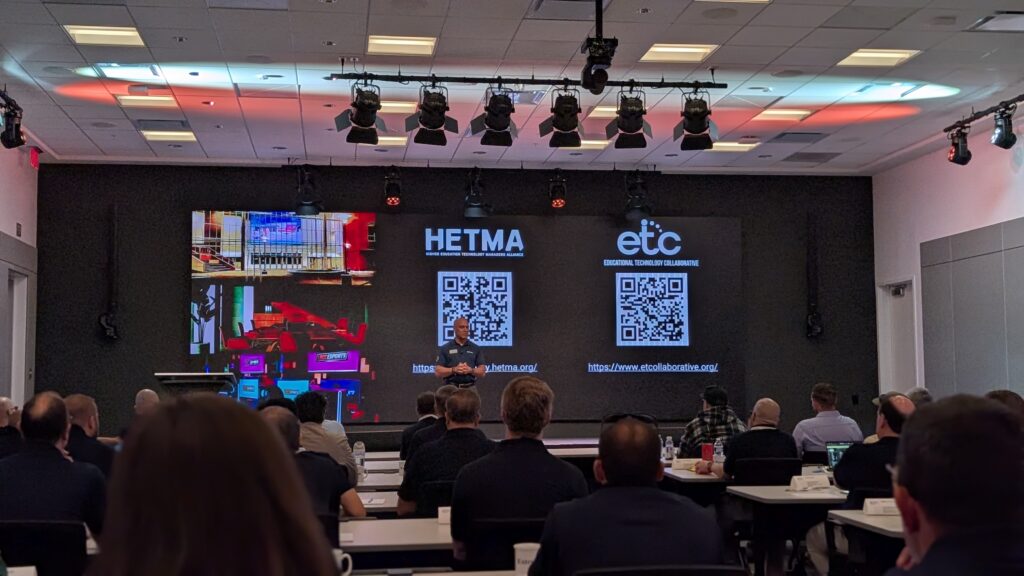
The opening session provided an overview of Extron, the purpose of the summit, and what to expect over the next two days. One moment that deserves special mention was the early and very public support for HETMA. Extron encouraged attendees to explore membership in both HETMA and ETC, complete with QR codes and links. That support was not a one-time mention. It continued throughout the summit and spoke volumes about their commitment to the higher ed AV community.
The Evolving Learning Space
The conversation quickly turned to how AV and IT have evolved in higher education. The traditional divide between the two continues to narrow, and in many places, it has effectively disappeared. We talked about the constant tension between feature-rich spaces and the demand for simplicity. Faculty want systems that just work, and many institutions have learned the hard way that complexity often gets in the way.
One example shared involved demoing classroom designs to faculty before deployment, with feedback falling into three categories: it works well, some things are confusing, or it is simply too complicated. That feedback loop has pushed designs toward simpler control surfaces, such as MediaLink controllers, and away from unnecessary features. There was also discussion around scalability, reliability, security, centralized management, and the ongoing desire to lock down systems just enough to prevent misuse without limiting legitimate needs.
Campus trends were familiar to many in the room: USB‑C everywhere, conferencing in nearly every space, wireless presentation, mobile-first expectations, accessibility, and BYOD. Success is increasingly measured through data, whether that is ticket volume or metrics pulled from GlobalViewer Enterprise. Looking ahead, topics like automation, built-in accessibility, AI, and immersive technologies continue to shape long-term planning. A recurring theme was the importance of bringing IT to the table early in any design process.
Design Approaches for Converged Network
This session focused on the ongoing debate between isolated and converged networks. The case for convergence was framed around efficiency, security, scalability, lifecycle management, and the ability to remotely monitor and manage devices. The question posed was simple but powerful: why do many default to assuming AV must be isolated?
Given how dependent AV systems are on the network, there was an emphasis on AV professionals having at least a working understanding of networking concepts. The evolution from unicast to broadcast to multicast was discussed, with a practical look at IGMP versions and what actually matters for AV deployments. Requirements such as non-blocking multicast processing, IGMP v2 or v3, proper queriers, snooping, fast leave support, and sufficient uplink capacity were clearly outlined. Wireless remains an area to watch, but current Wi‑Fi standards still struggle with the demands of AV over IP.
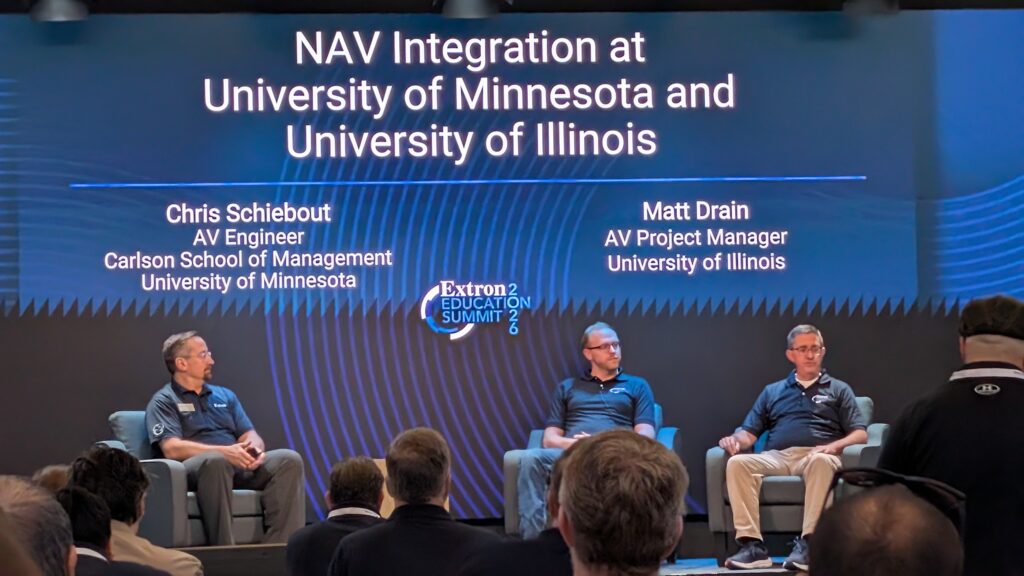
Case Study – University of Illinois and Carlson School of Management at University of Minnesota
A side-by-side case study compared packet-switched designs at Illinois and more isolated approaches at Minnesota. NAV was positioned as a way to move beyond the limitations of traditional matrix switchers, making it easier to distribute content, establish standards, and scale systems over time. A key takeaway was the importance of partnership with campus network teams. Without that collaboration, reaching long-term goals becomes much more difficult.
Leverage IT Infrastructure to Enhance Content Distribution on Campus
This session dug deeper into NAV, covering topics like preview windows, manual routing between encoders and decoders, and compression approaches ranging from lossy to lossless. Extron’s Pure3 codec and hardware design choices were discussed, along with considerations around bandwidth, latency, redundancy, encryption, and directory integration. The emphasis was not on raw specs, but on building systems that are resilient, flexible, and easier to support.
Time in Product Showcase
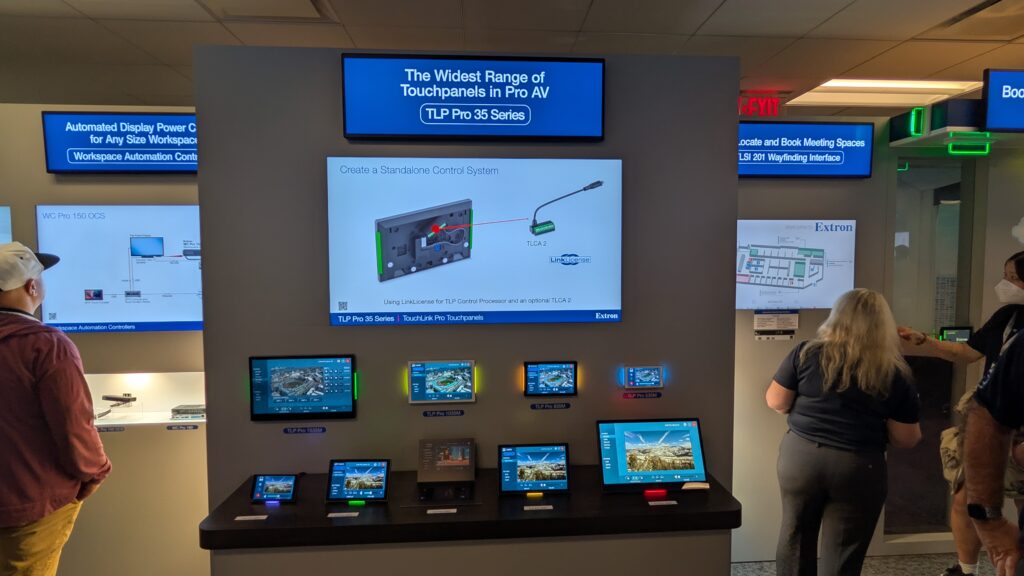
We had a good period of time up in the product showcase area to see actual working hardware set up and running. Many of the quintessential Extron devices and programs were on display including GlobalViewer Enterprise, speakers, touch panels, NAV solutions, and switchers. This was a chance to connect what had been discussed conceptually with physical products and workflows. They have similar spaces at all of their Extron campuses, and I encourage you to go out and get some exploration time in.
Extron Control Solutions for Modern Learning
Control system discussions centered on Extron’s touch panel refresh cycles, with updates typically landing around five-year intervals. Newer panels focus on improved displays, HTML 5‑based interfaces, and tighter integration with NAV, including preview capabilities. Programming workflows continue to evolve as well, with Visual Studio Code firmly established and AI beginning to play a role in assisting with code generation and standardization across buildings.
Virtual Control Appliances were another area of interest, particularly the move toward redundancy and scalability. They discussed the VCA 100, which comes with five virtual controllers and the ability to increase this, and new redundancy features set to release by Q3. These conversations felt grounded in real operational needs rather than future promises.
Innovative Speaker Technology Solving Acoustic Challenges
Audio remains a core focus for Extron, with manufacturing kept entirely in-house. The session highlighted their approach to driver design, enclosure construction, and mounting systems, including column arrays built for consistent performance and easier installation. The emphasis was on reliability, repeatability, and making products that installers and support teams can trust long-term.
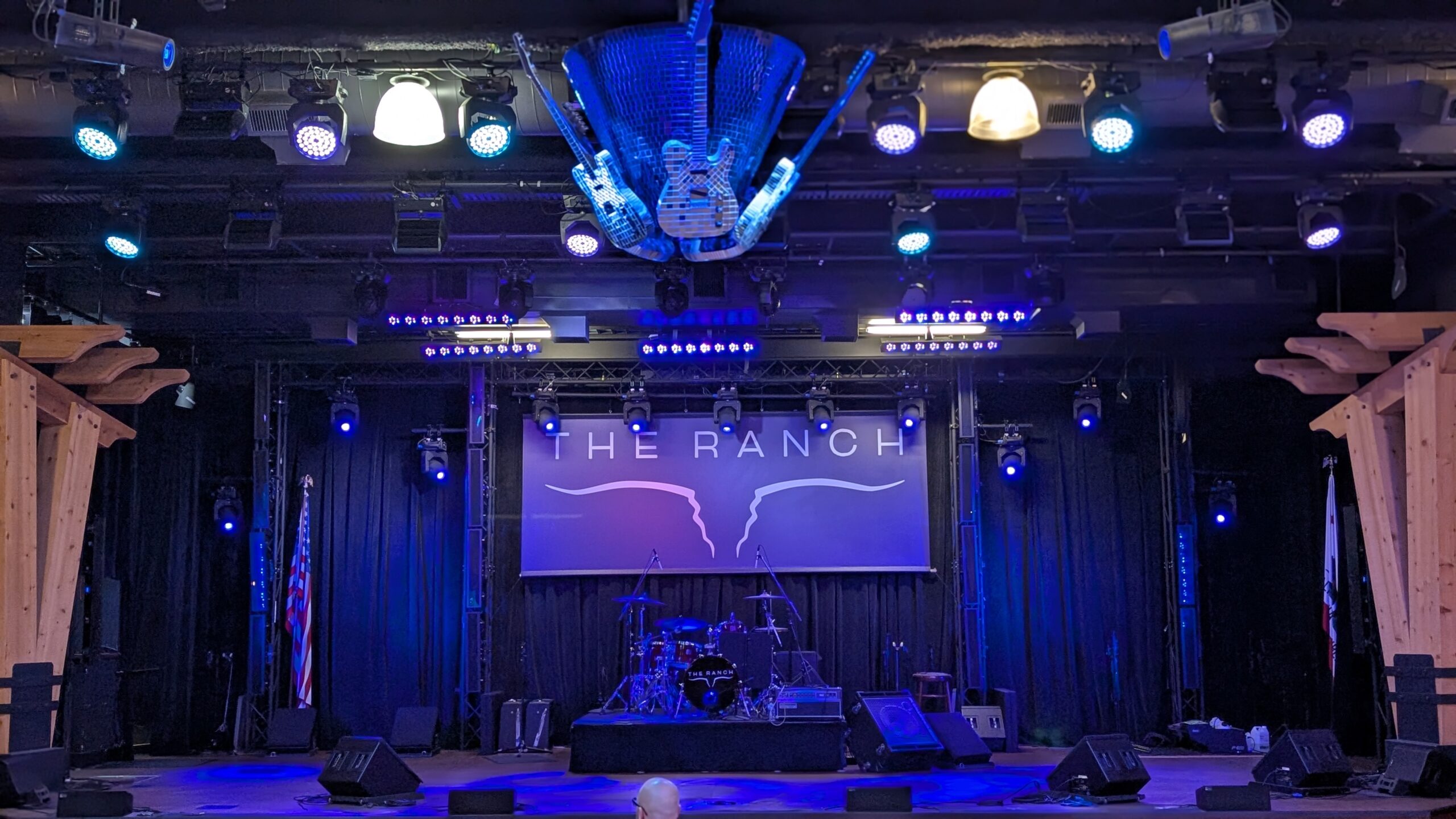
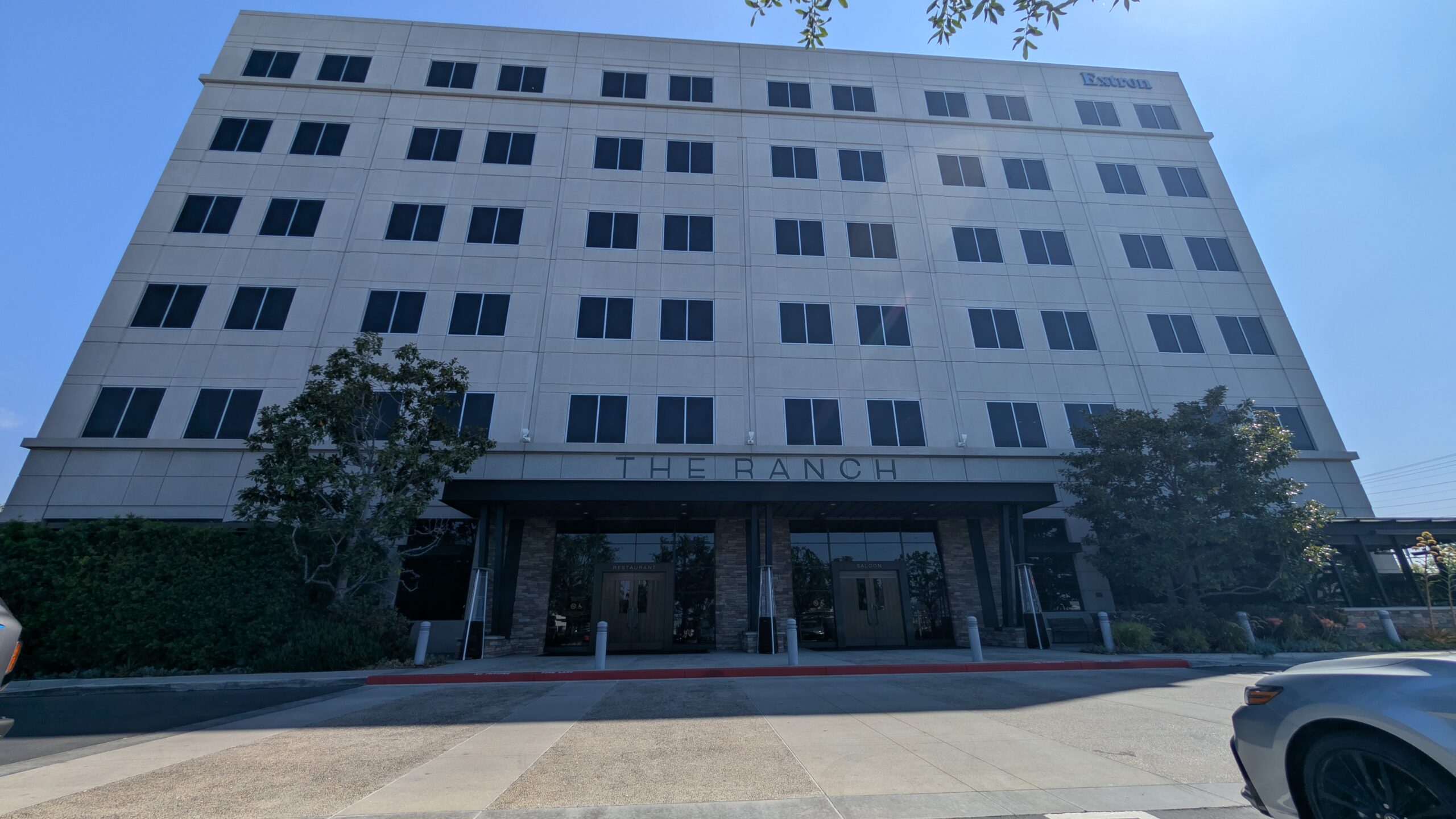
The Ranch
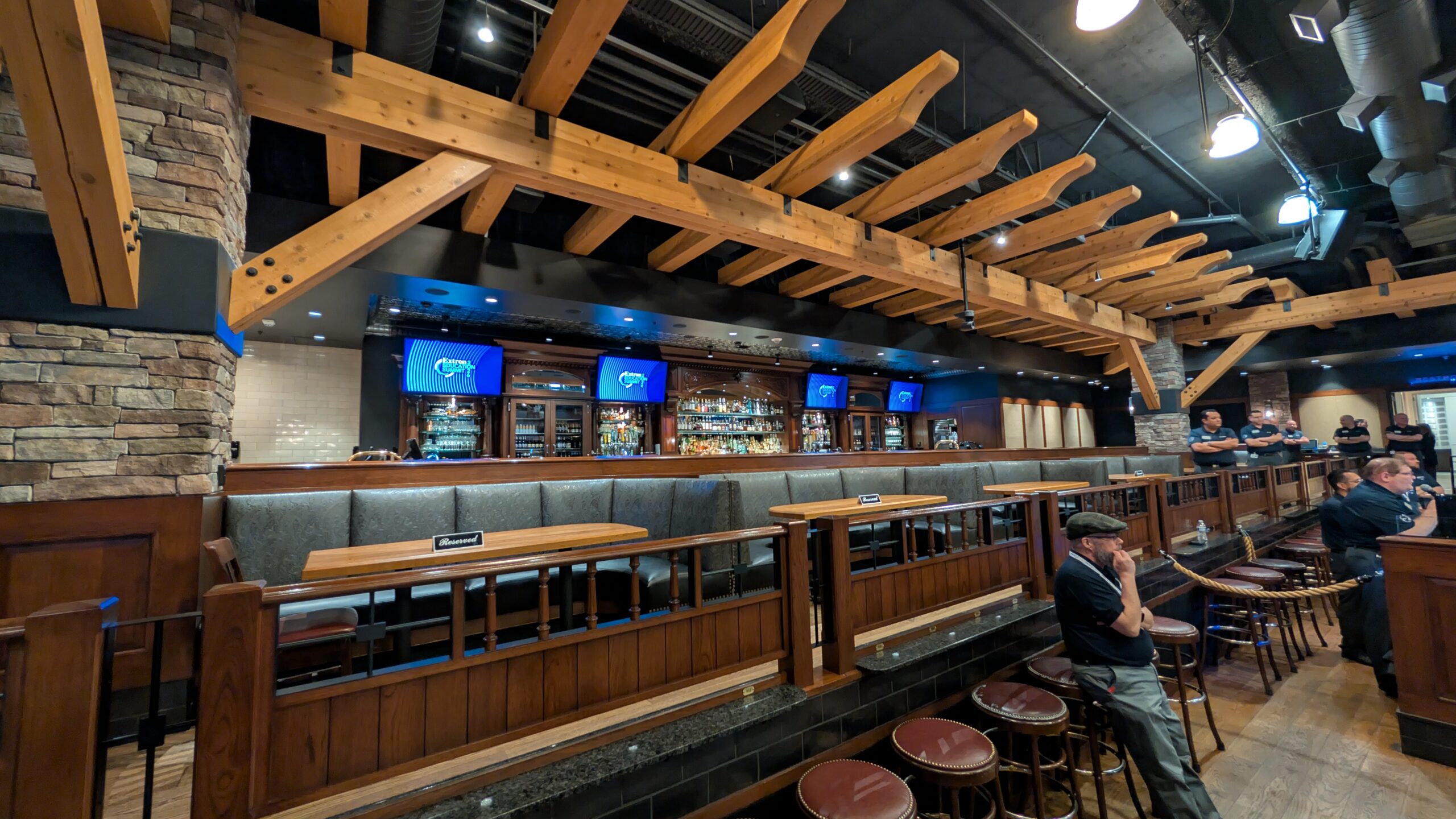
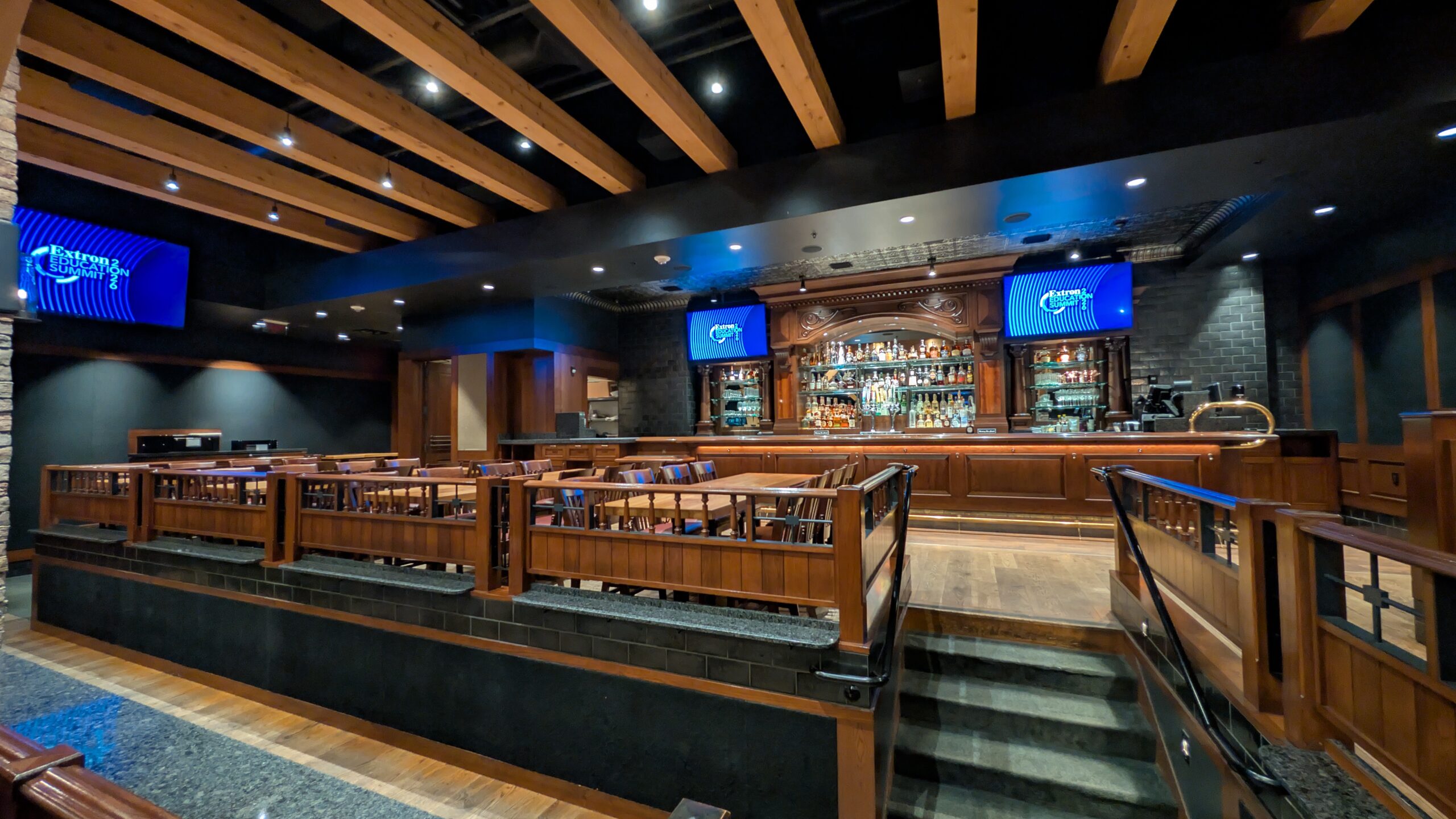
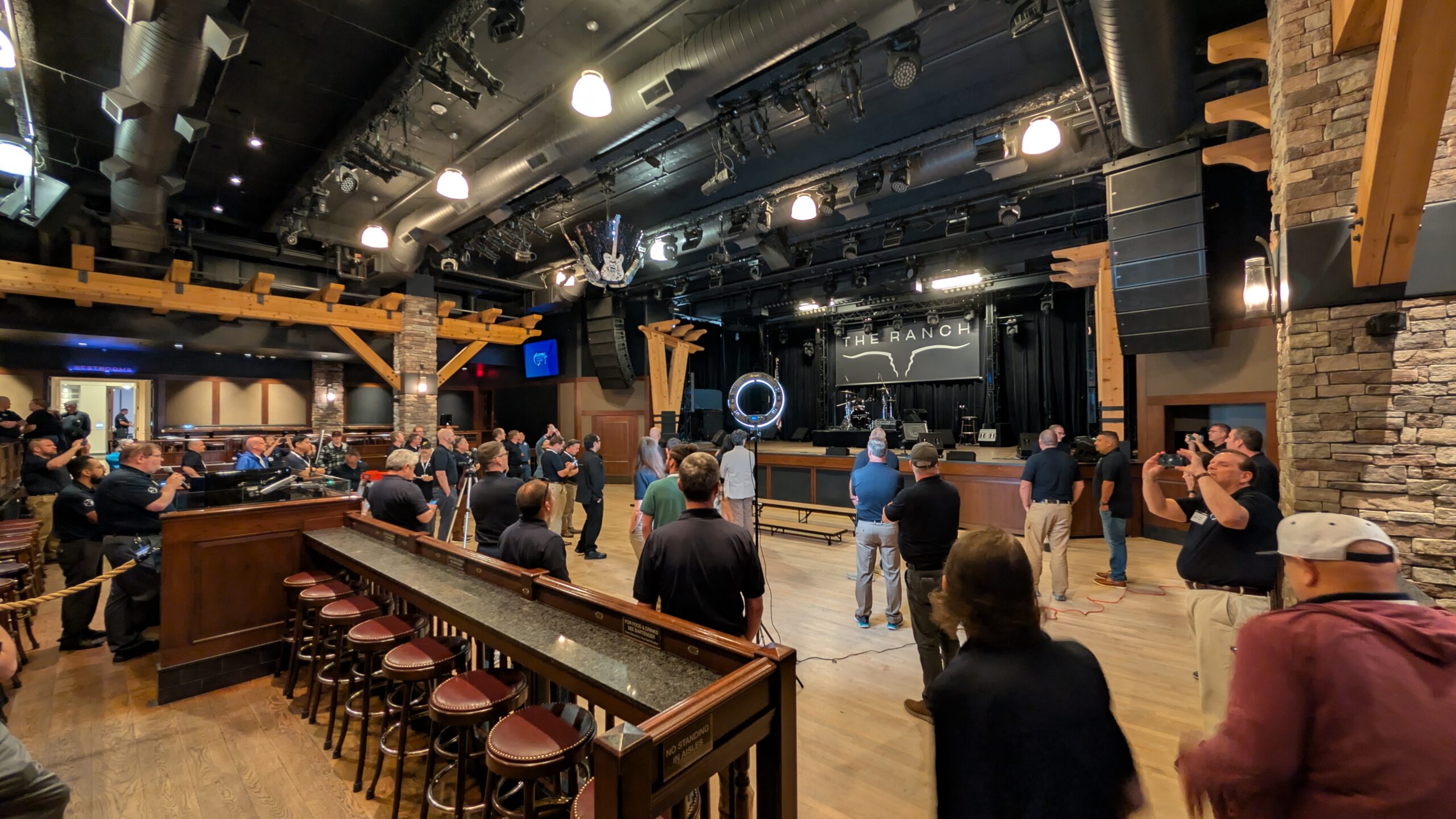
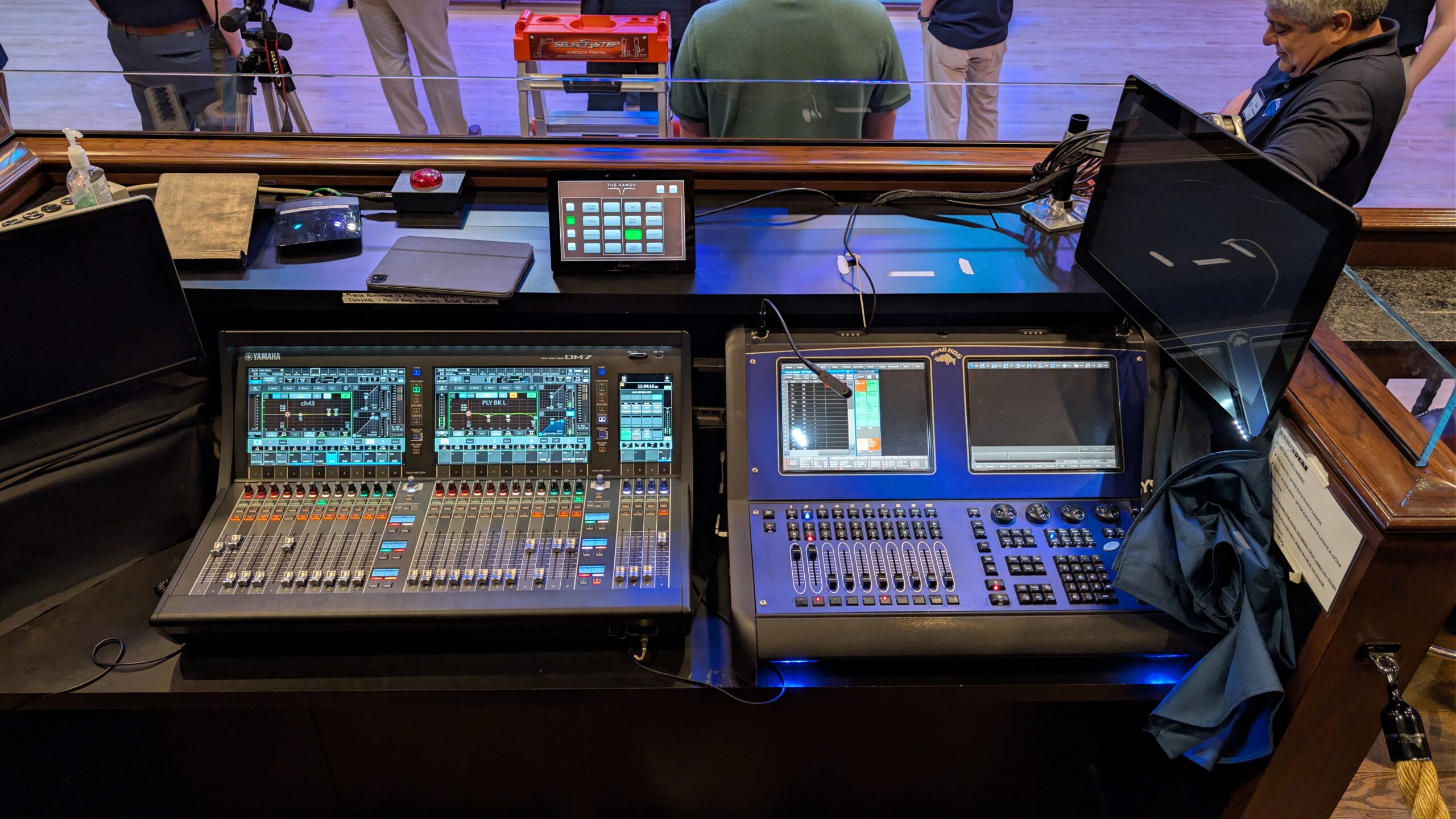
Virtual Manufacturing Tour
The day wrapped with a virtual tour of Extron’s manufacturing facilities, setting the stage for in-person tours on Day Two. Seeing real production floors, testing processes, and quality checks reinforced how much effort goes into consistency and longevity. From X‑ray inspections to post-release testing, quality control is not treated as a one-time step, but as an ongoing commitment.
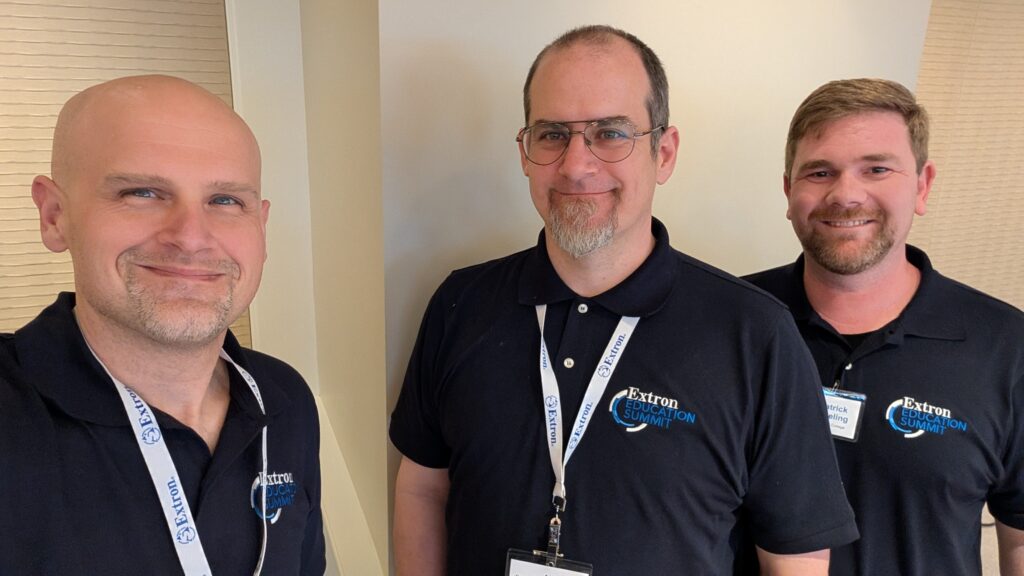
This article reflects observations and conversations from the night before and the first day of the Extron Spring Education Summit 2026. Impressions are based on what was witnessed and discussed during sessions and may not capture every detail of the presentations.