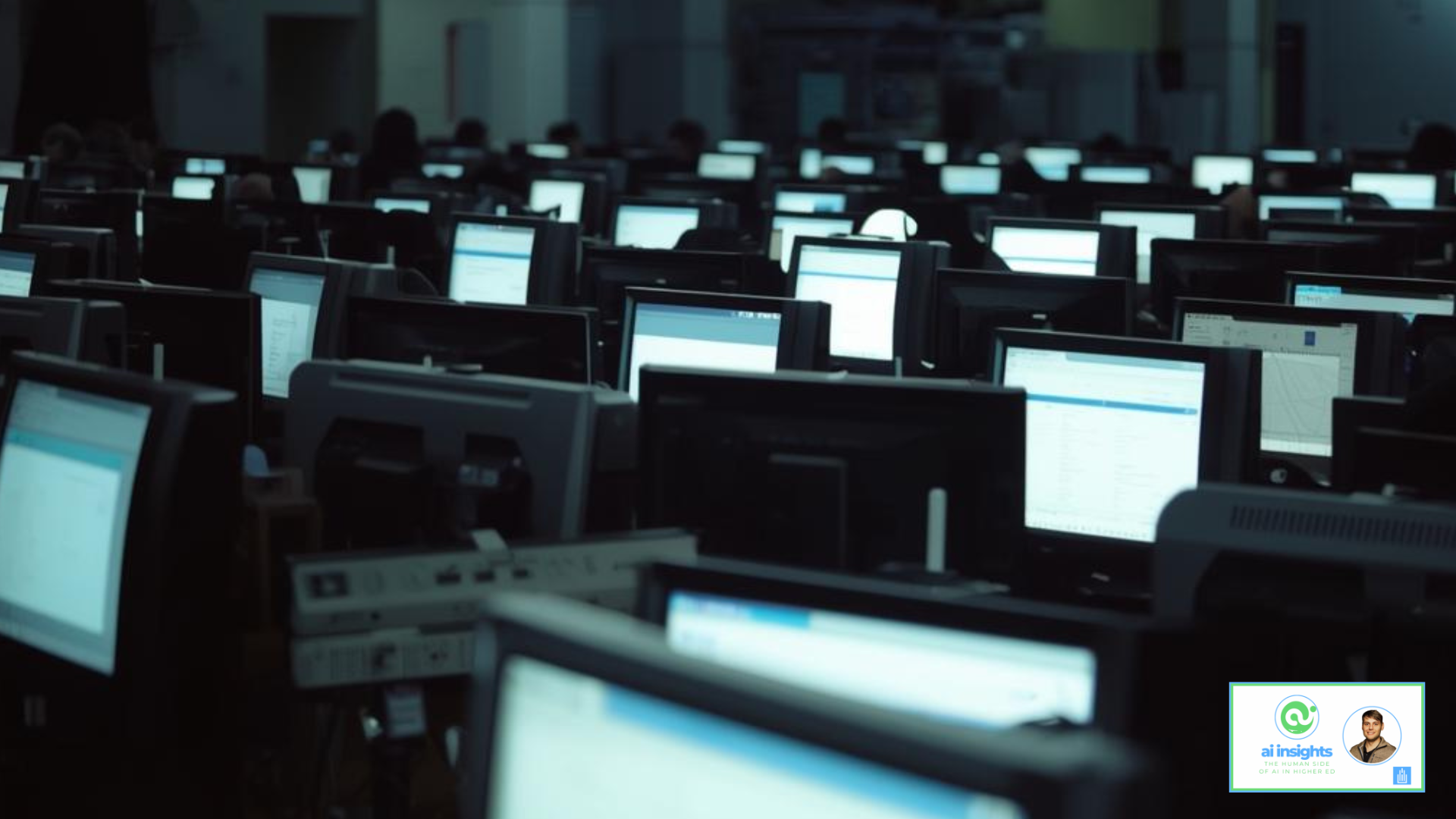

Computer labs are expected to benefit higher education users. With the BYOD and hybrid classes, campuses have implemented hot desks, but what about testing? Cheating has always been an issue, and AI has created more opportunities for students to cheat. The recent emergence of the Chinese-developed AI, Black Tom, has caused a stir on many campuses.
Students cheat for many reasons: opportunity, anxiety, or lack of motivation. Ways to reduce cheating combine both physical and pedagogical strategies.
A new approach by Craig Zilles blends the continuous feedback of formative assessment with the grading requirements of summative assessment. This holistic system addresses three persistent challenges in higher education: student well-being, academic integrity, and logistical scalability. Reduced stress mitigates the motive to cheat, while a redesigned testing environment eliminates the opportunity.
More Frequent Testing Can Actually Reduce Stress
Replace a single, massive final with a series of smaller, more frequent tests. By breaking a semester’s content into manageable pieces, the cognitive load for any single exam is reduced. This encourages more consistent, distributed studying throughout the term, leading to better long-term retention than last-minute cramming. The system is further supported by optional practice exam generators, which provide students with a powerful formative tool to gauge their own understanding and prepare for graded assessments.
“Just knowing it’s [my second exam] there makes me feel more relaxed” – Student
The reduction in pressure aims to improve student well-being while also mitigating opportunities for cheating.
A Blueprint for the Testing Center of the Future
The practical implementation of this model is a dedicated, non-shared Computer-Based Testing Facility (CBTF) that operates 12 hours a day, seven days a week. It is founded on four core principles that make secure, frequent testing scalable for even the largest classes.
- Sophisticated Computerized Problems: Utilizing advanced platforms like PrairieLearn, the system delivers complex, algorithmically generated questions that move far beyond simple multiple-choice.
- Automated Question Generation: Machine learning creates vast pools of unique exam questions, ensuring each student receives a different but academically equivalent test. This renders copying from a neighbor or sharing questions with later test-takers completely ineffective, while reinforcing students’ sense of fairness.
- Asynchronous Exams: Students are given a flexible 3- or 4-day window to take their exams at their convenience, a model that enables large classes to be tested efficiently using smaller computer labs.
- Centralized Proctoring: The facility professionalizes proctoring with dedicated staff. Faculty can be freed from the time-consuming administrative task of proctoring, allowing them to focus on their core mission of teaching and research.
Conclusion: Rethinking the Grade
By thoughtfully redesigning the how and when of assessment, this model creates a system that is fairer, less stressful, and more effective for student learning. Redesigning both physical spaces and pedagogical practices may allow campuses to reuse computer lab spaces in hybrid settings. Rethinking the labs transforms assessment from a single high-stakes event into a continuous cycle of learning and verification.