

Extron Brings the Classroom, AV-over-IP, USB-C, and
Esports Together at EDUCAUSE 2026
For higher education AV teams, the challenge is rarely finding technology that can perform a particular task. The harder part is building systems that can be deployed consistently, supported efficiently, and still remain simple for faculty and students to use.
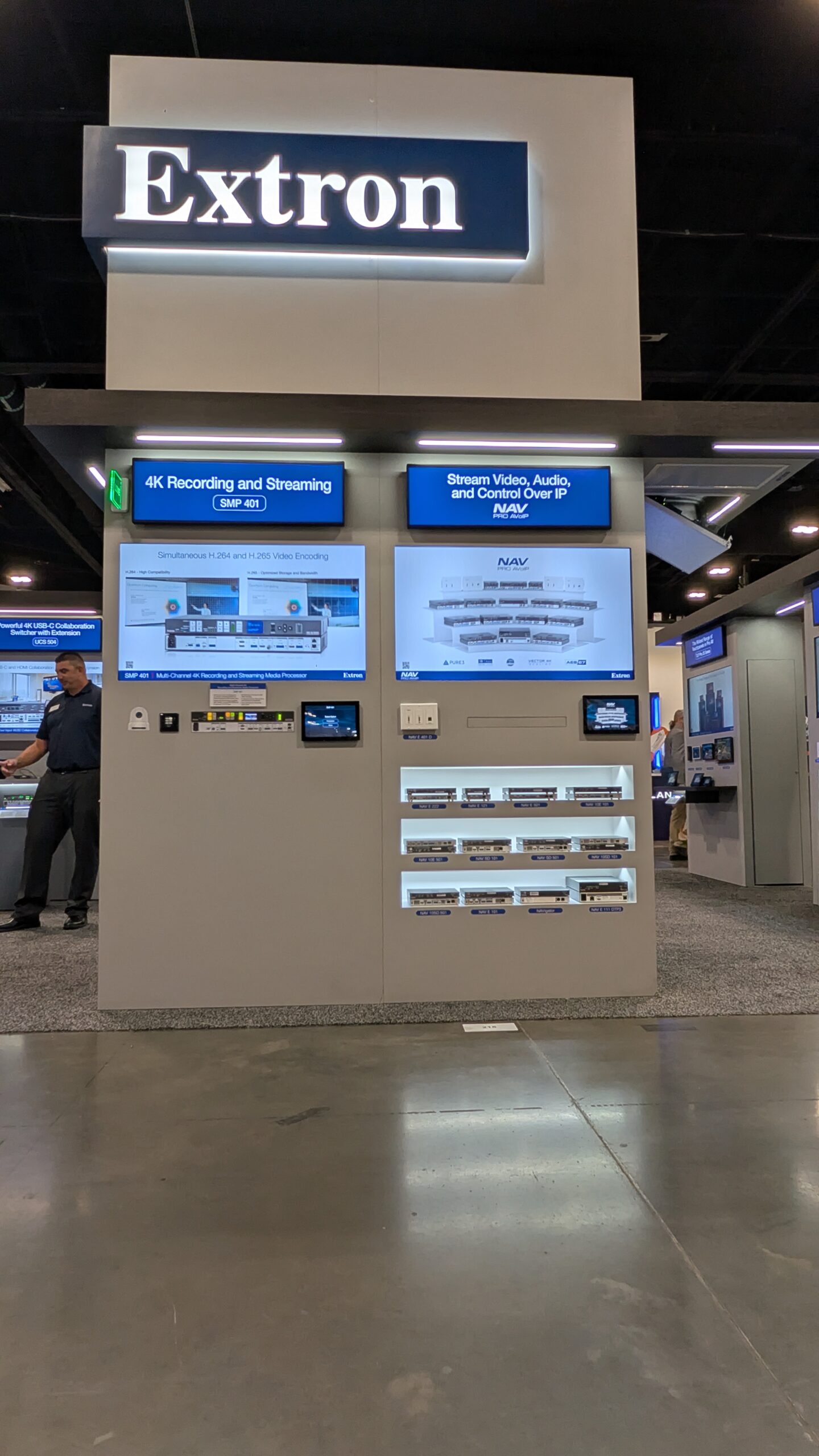
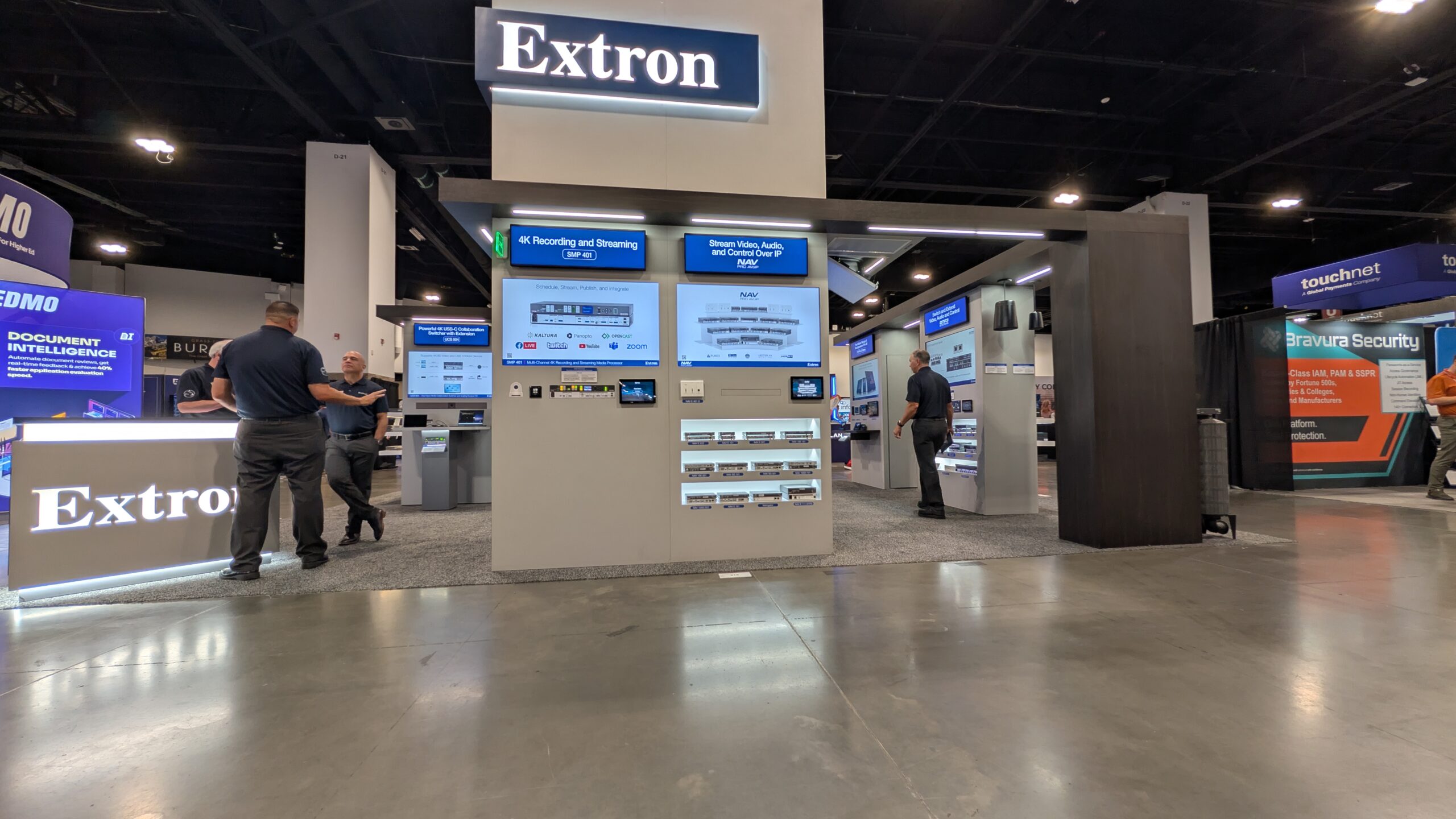
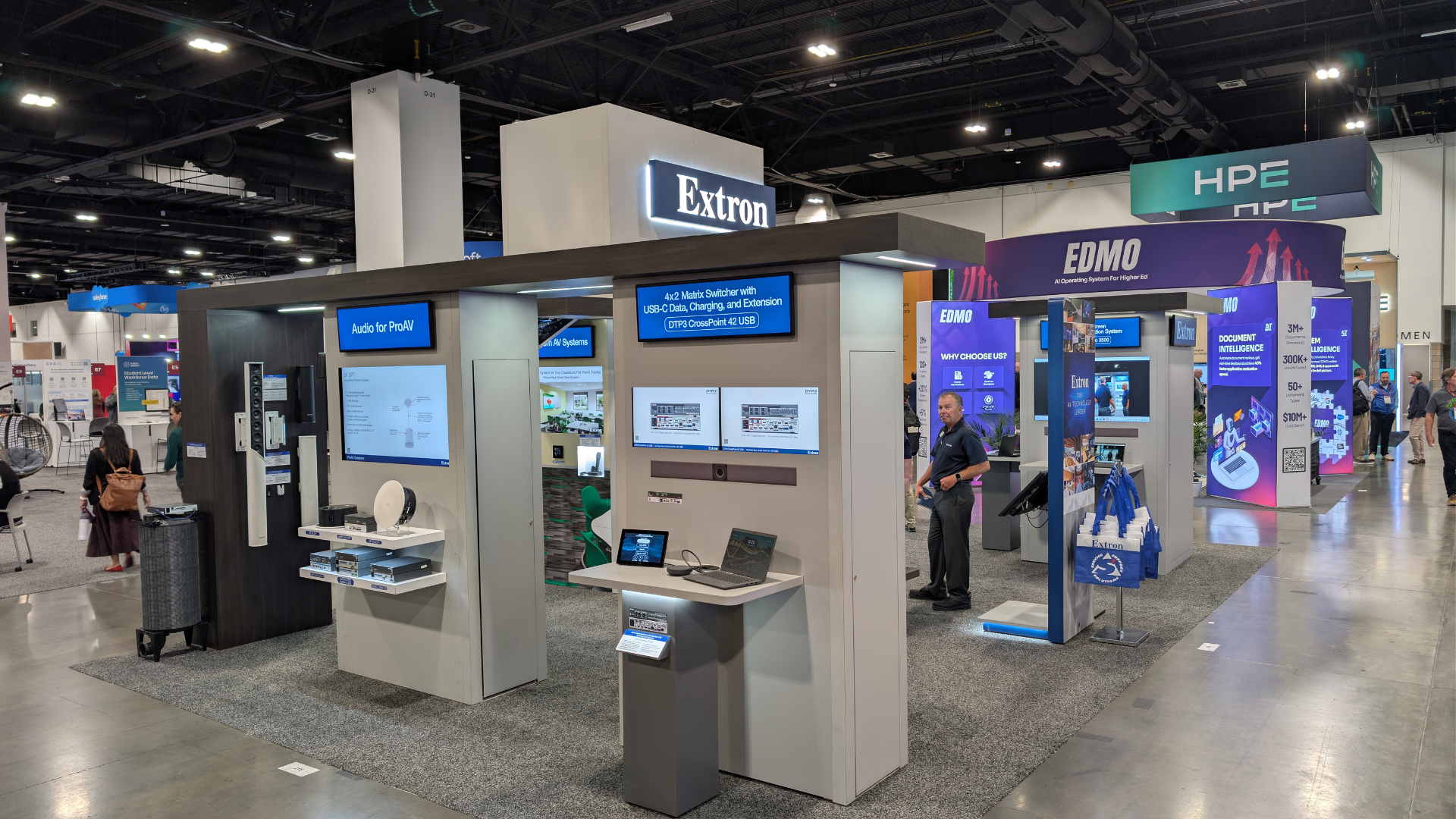
That was a theme running throughout the Extron booth at EDUCAUSE 2026. At Booth 215, Extron showed a broad cross-section of technologies aimed at classrooms, collaboration spaces, campus AV infrastructure, lecture capture, and even esports. Extron described its higher education focus around creating reliable, easy-to-use learning environments while helping campus AV and IT teams standardize technology and manage systems across campus.
USB-C and BYOM Take Center Stage
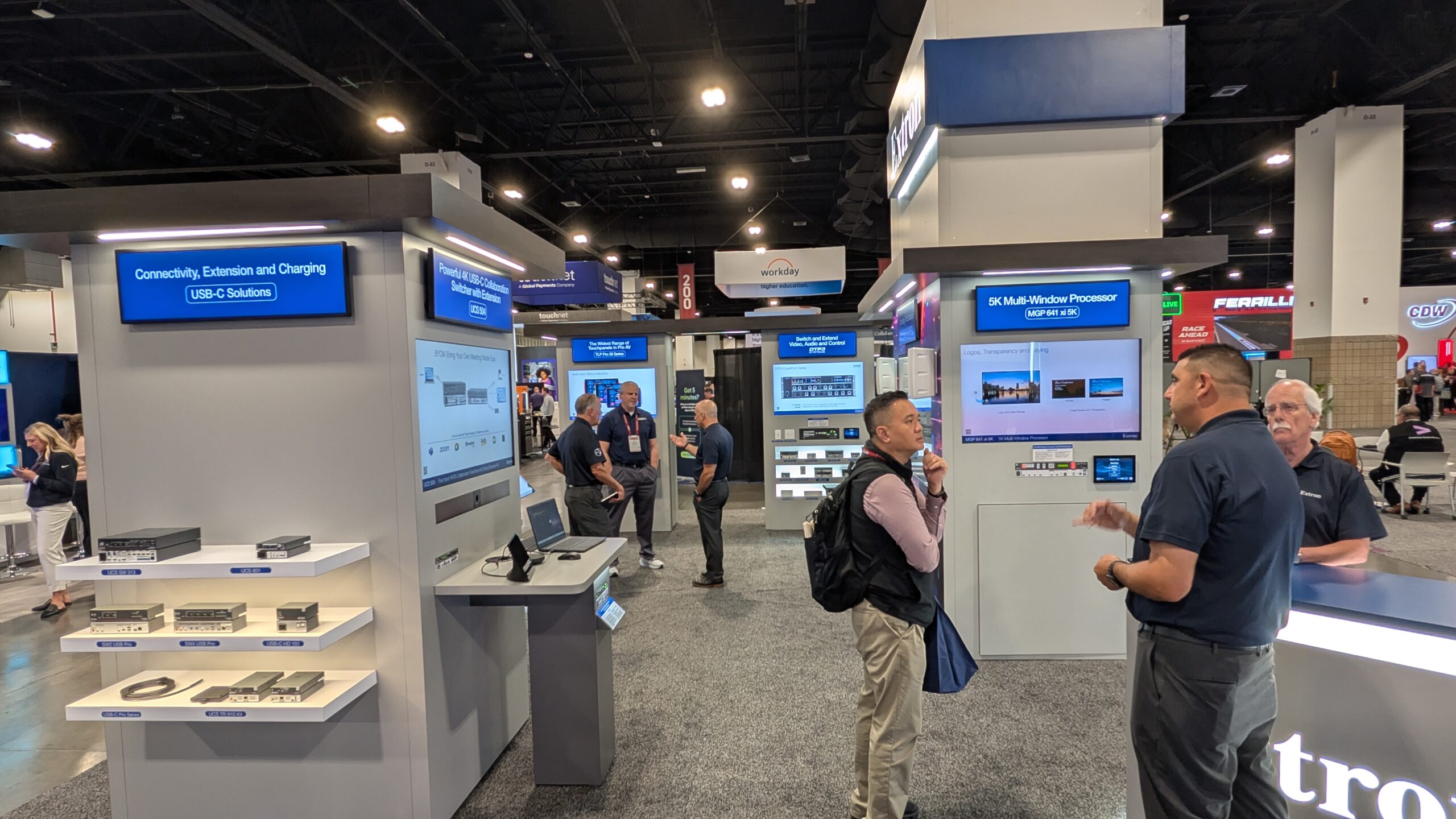
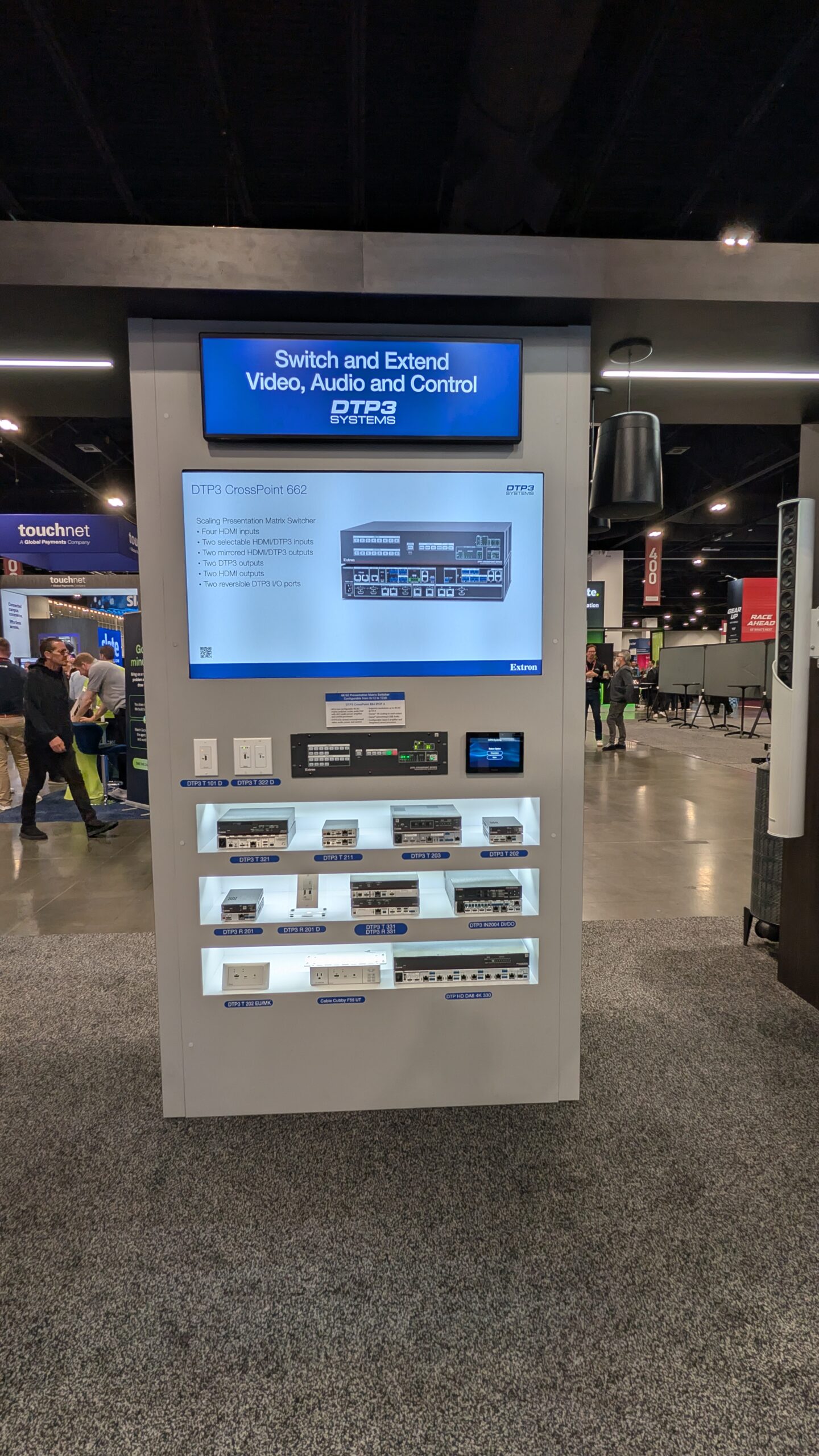
One of the more interesting stops for classroom and learning space teams was the DTP3 CrossPoint 42 USB, which Extron selected as a primary focus for EDUCAUSE.
The idea addresses a scenario that has become increasingly familiar on campus: a room has permanently installed cameras, microphones, displays, and other AV equipment, but users also expect to walk in with a laptop and use those resources for their own Teams, Zoom, or other collaboration session.
The DTP3 CrossPoint 42 USB brings USB switching together with traditional AV switching and extension, allowing the room to move between multiple laptops or computer sources while also providing access to USB-connected equipment. For higher ed, the interesting part is less about any individual specification and more about what that integration could mean in a classroom. Rather than treating BYOM, USB peripherals, AV switching, and extension as separate pieces of the room, the system is designed to bring those functions together.
More Than One Classroom Solution
Walking through the booth made it clear that Extron wasn’t presenting a single approach to campus AV.
The displays included NAV Pro AV over IP, giving attendees a look at an architecture for distributing video, audio, and control across the network. For institutions looking beyond individual classrooms toward larger deployments, that moves the conversation toward how AV can live on and be managed across the campus network.
Elsewhere, Extron demonstrated SMP 401 4K recording and streaming, USB-C connectivity and extension, audio solutions, control, multi-window processing, and other pieces of the classroom AV ecosystem. The booth also provided an opportunity to see both DTP3 and NAV approaches within the same space rather than viewing each technology in isolation.
That variety matters for higher education because campuses rarely have just one type of room. A standard classroom, divisible space, active learning classroom, auditorium, conference room, and specialty space can have very different requirements even when the institution is trying to maintain some level of standardization.
From the Classroom to Esports
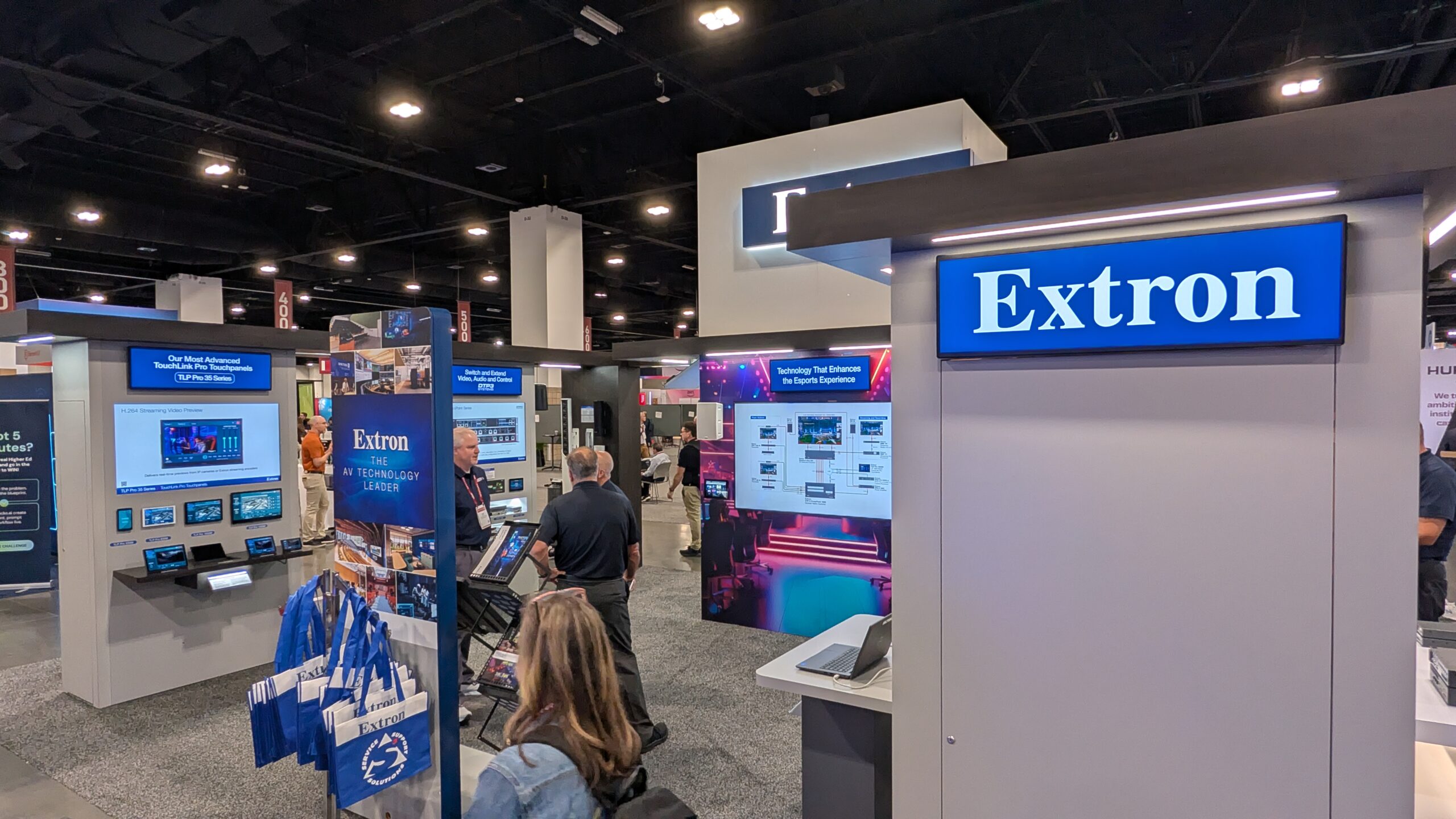
One of the more visually distinctive parts of the booth stepped outside the traditional classroom entirely.
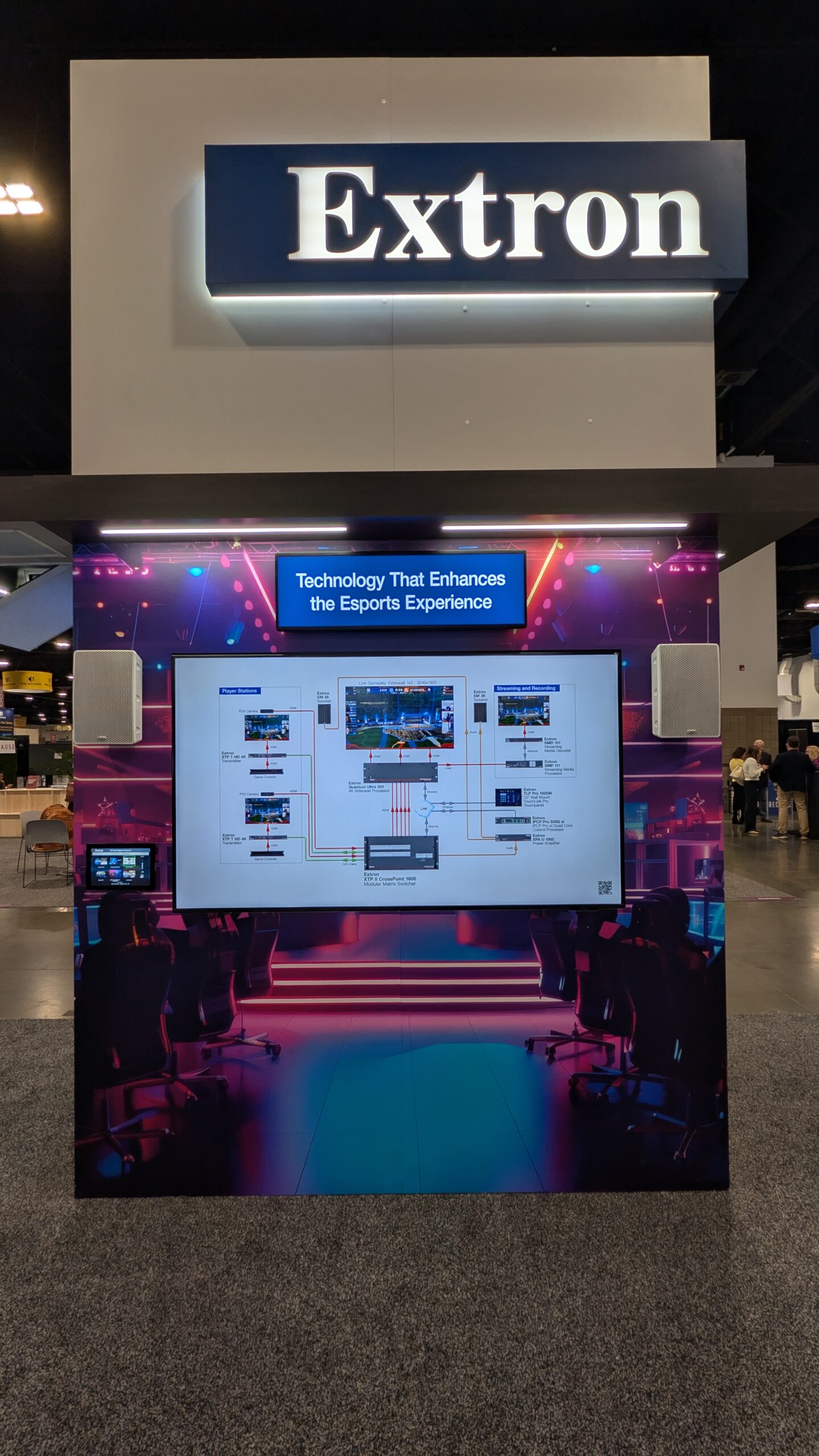
Extron devoted a demonstration to esports, showing how AV infrastructure can support player stations, game content, production, streaming, and recording. Extron also pointed to esports as an area where institutions can use technology to create new experiences for students and potentially support recruitment and retention efforts.
It was a useful reminder of just how much the definition of “campus AV” continues to expand. The same teams responsible for classrooms may increasingly find themselves supporting streaming, production, esports, collaboration, and other environments that blur traditional boundaries between AV and IT.
Bringing It Back to Campus Operations
Perhaps the larger takeaway from Extron’s EDUCAUSE presence was the emphasis on connecting individual room technology to campus-wide operations.
Extron highlighted tools that can give IT teams visibility into rooms across campus for remote management, support, and analytics. That fits alongside classroom standardization and centralized AV management as institutions look for ways to support faculty while helping AV and IT teams manage increasingly large technology environments.
That is ultimately where many of the conversations at EDUCAUSE become especially relevant to higher ed AV professionals. USB-C, AV-over-IP, recording, control, and switching are all technologies we work with every day. The bigger question is how those pieces fit together in systems that can be repeated across dozens, hundreds, or even thousands of spaces without making those environments harder for people to use or for campus teams to support.
At EDUCAUSE 2026, Extron offered several different looks at that challenge, from the individual USB-C connection in a room all the way up to networked AV and campus-wide management.