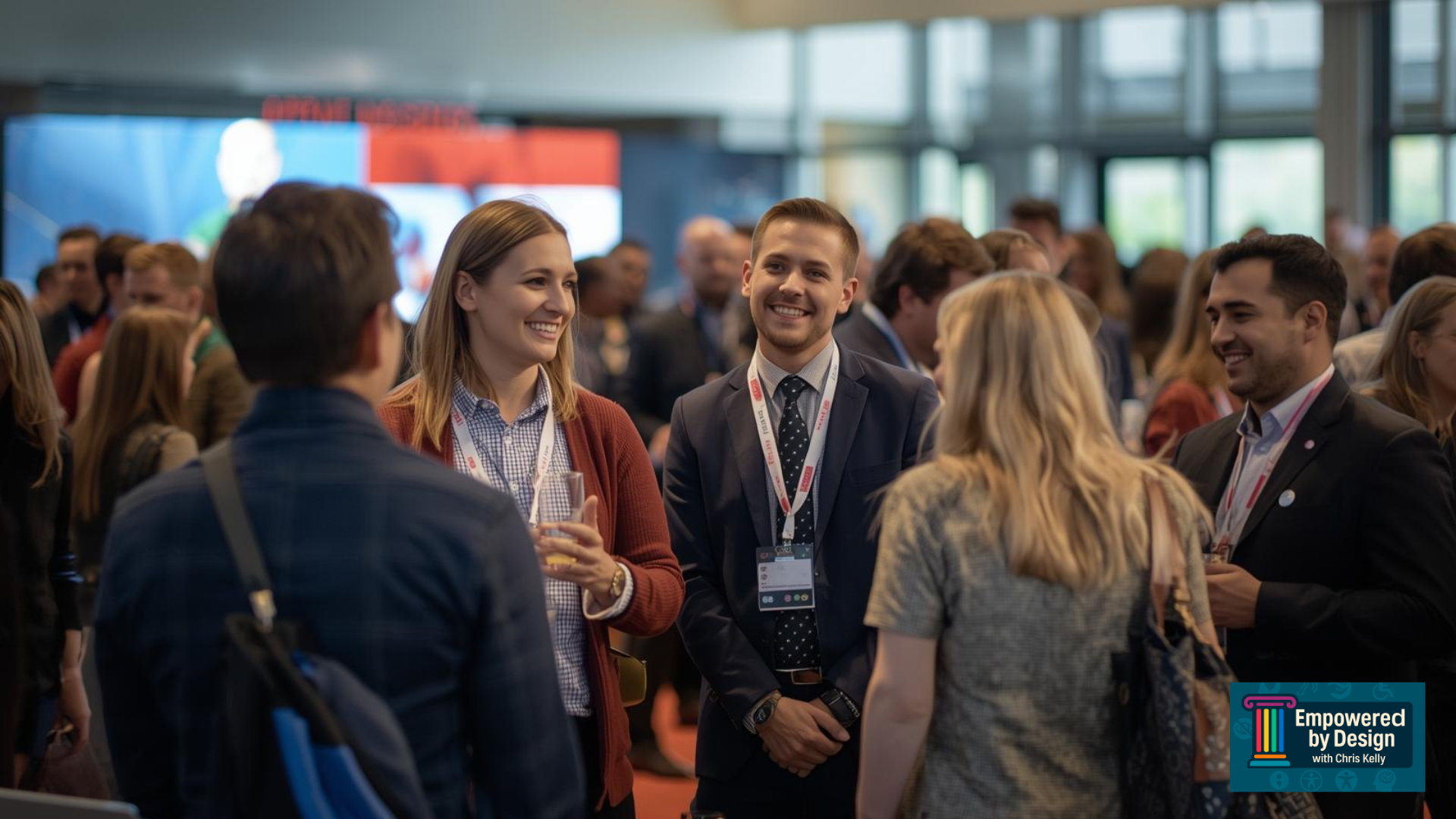
Midwest Colleges and Universities AV (MCUAV) group is a regional organization serving higher education AV professionals across the Midwest. The 2026 Annual Conference took place March 10 and 11, with Minnesota State University, Mankato serving as the primary host campus. Along with educational sessions and vendor engagement, the conference included campus tours at Gustavus Adolphus College, Bethany Lutheran College, and Minnesota State University, Mankato.
While there were many amazing sessions throughout the conference, Troy Powers and I had the opportunity to lead a session focused on finding your people in higher ed AV. The idea came from a simple reality that many of us experience but do not always name. AV work, particularly in higher education, can be isolating. There are countless campuses where a single person, or a very small team, is responsible for everything from classrooms and events to troubleshooting, planning, and long‑term strategy. In those environments, it is easy to feel like you are solving problems alone.
Conferences like MCUAV, and organizations like it, often become critical connection points for people in those situations. MCUAV itself has just over 200 members, and the conference saw slightly more than 100 registrations. In many parts of the country, events like this may be the only higher ed AV‑focused gathering someone attends all year. While some professionals have access to larger events such as InfoComm, ISE, or EDUCAUSE, smaller regional conferences often serve as a lifeline for others.
That should not be read as a limitation. In fact, I made some extremely meaningful connections at this year’s MCUAV conference. I had thoughtful conversations, toured multiple campuses, and walked away with practical insights I could bring directly back to my own institution. That level of relevance and immediacy is not guaranteed at every large conference, and it is something regional events do especially well.
I live in the Omaha metro area. It is not small, but it is also not a major hub like Los Angeles or New York. There are opportunities here, but many of them would be invisible without existing connections. That is what concerns me most. Many people do not know where to start looking for support or community. No one knows what they do not know, and without some kind of entry point, it can be difficult to even begin building connections.
I am also still relatively new to this field. I have worked in higher education and AV for less than three years. I do not have decades of experience or an established professional network built over time. I rely heavily on the connections I do have, and I am constantly learning about new events, people, and organizations. I know I will never discover all of them, but I have learned that each connection tends to lead to another.
During our session, we spent time talking through the different types of professional groups that exist within higher ed AV and the roles they tend to serve. While not perfect divisions, we tended to feel groups fell into roughly four categories:
- Regional Peer Networks
- National / International Associations
- Global Industry & Advocacy Organizations
- Training & Credential Bodies
Regional peer networks often provide the most immediate and practical value. These are the spaces where people can compare notes, talk candidly about what is working or not working, and learn from campuses that operate under similar constraints.
Larger national and international organizations tend to focus more on strategy, policy, and longer‑term trends. These groups are often well positioned to lead conversations around accessibility, governance, and learning space frameworks.
Industry organizations and training bodies serve different but equally important purposes, supporting standards development, vendor engagement, certifications, and professional growth. Each type of group brings real strengths, but each also leaves gaps when relied on alone.
HETMA came up as an organization that intentionally spans many of these needs. Rather than fitting neatly into a single category, it functions as a connector between community, strategy, advocacy, and professional development. HETMA is not meant to replace other organizations, nor is it an end‑all solution. Instead, it often serves as a starting point, helping people identify where to engage next and how to build a more layered professional ecosystem.
That ecosystem does not need to be limited to formal organizations. Looking locally can open unexpected doors. Churches, theaters, athletic events, and community productions often involve people working with audio, lighting, and control systems that overlap with our own skill sets.
Within our institutions, colleagues in networking, instructional design, or facilities may not do the same work we do, but they share many of the same challenges and can become invaluable partners.
Even groups like Toastmasters or local IT meetups, while not AV‑specific, can help build communication skills, professional confidence, and broader connections that support the work we do.
The most important takeaway is not about choosing the right organization. It is about not allowing yourself to feel like an island. No one’s role is truly unique, even when it feels that way day to day. Our work is complex, demanding, and often high pressure. It becomes far more sustainable when we are connected to others who understand the challenges and are willing to share their experiences. If you are unsure where to start, reach out. HETMA, and the people within it, exist precisely because none of us should have to do this work alone.