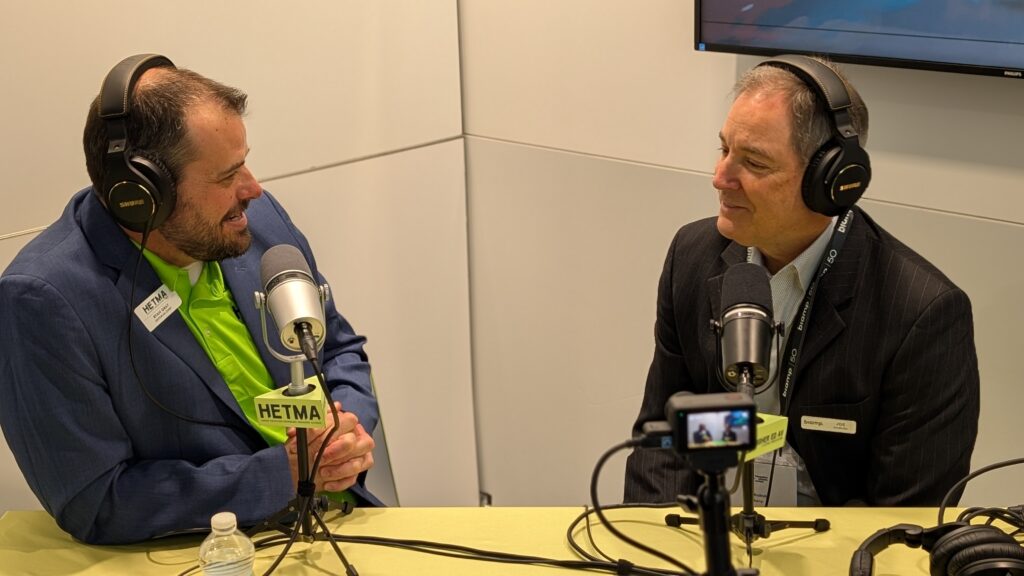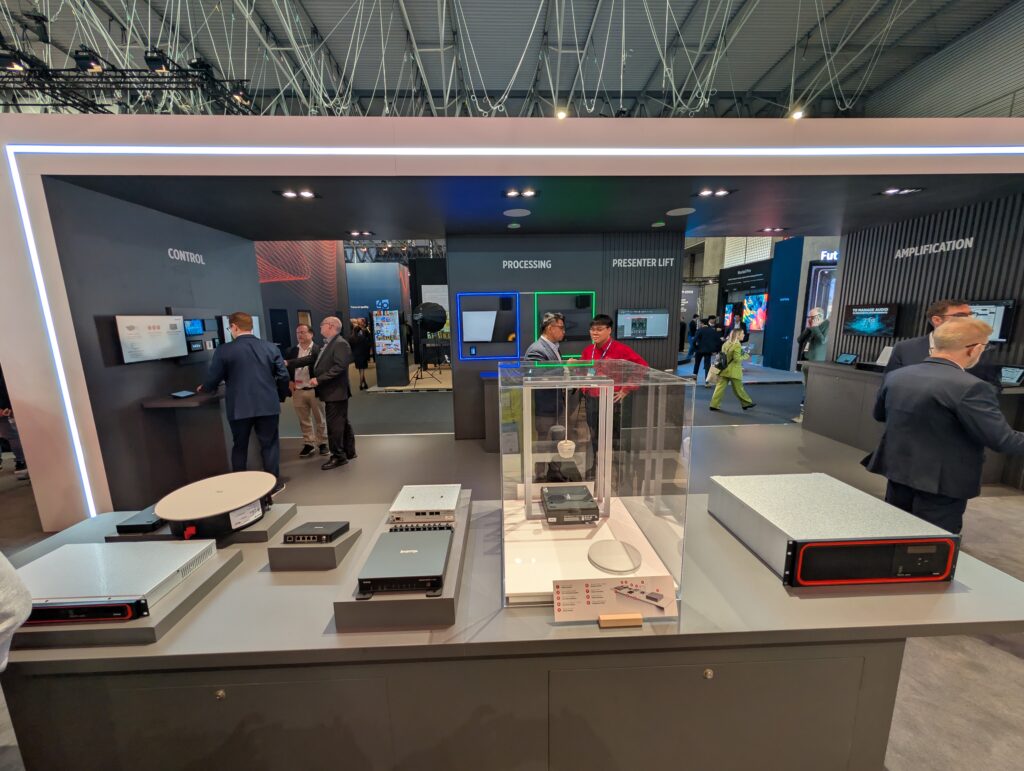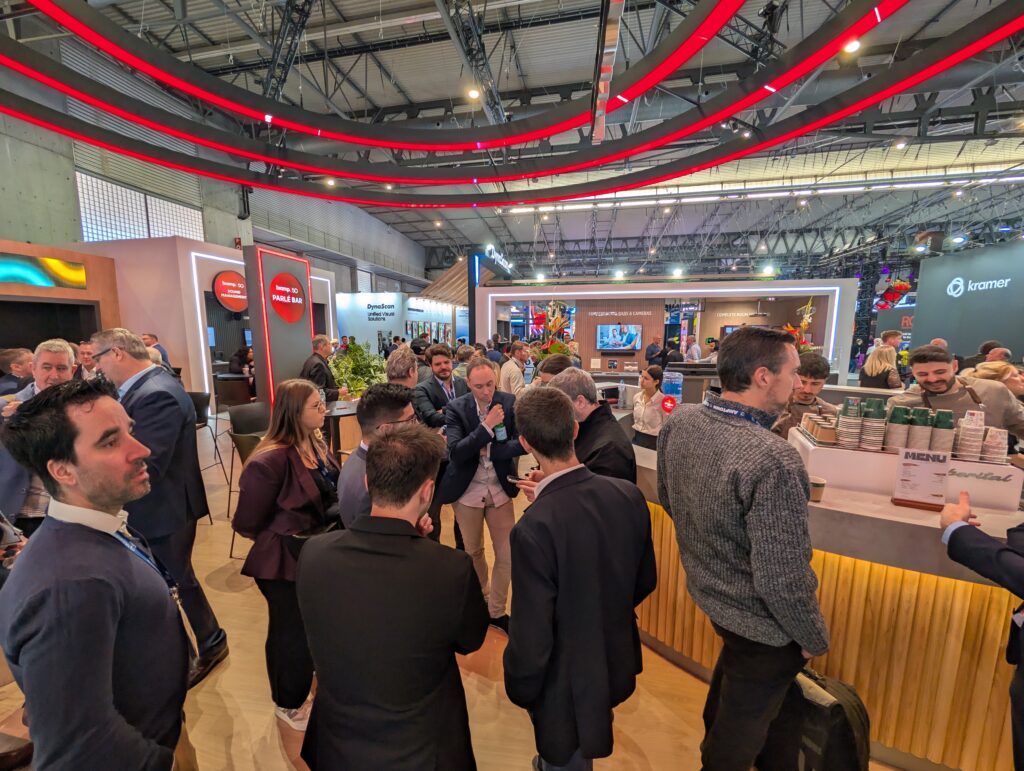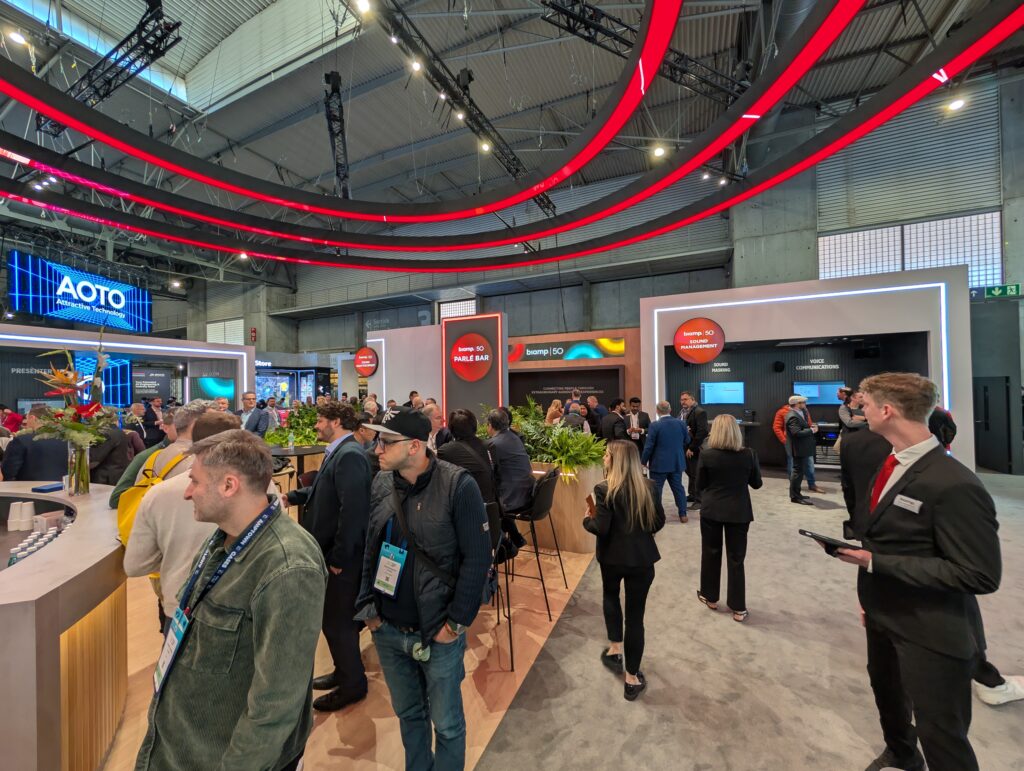
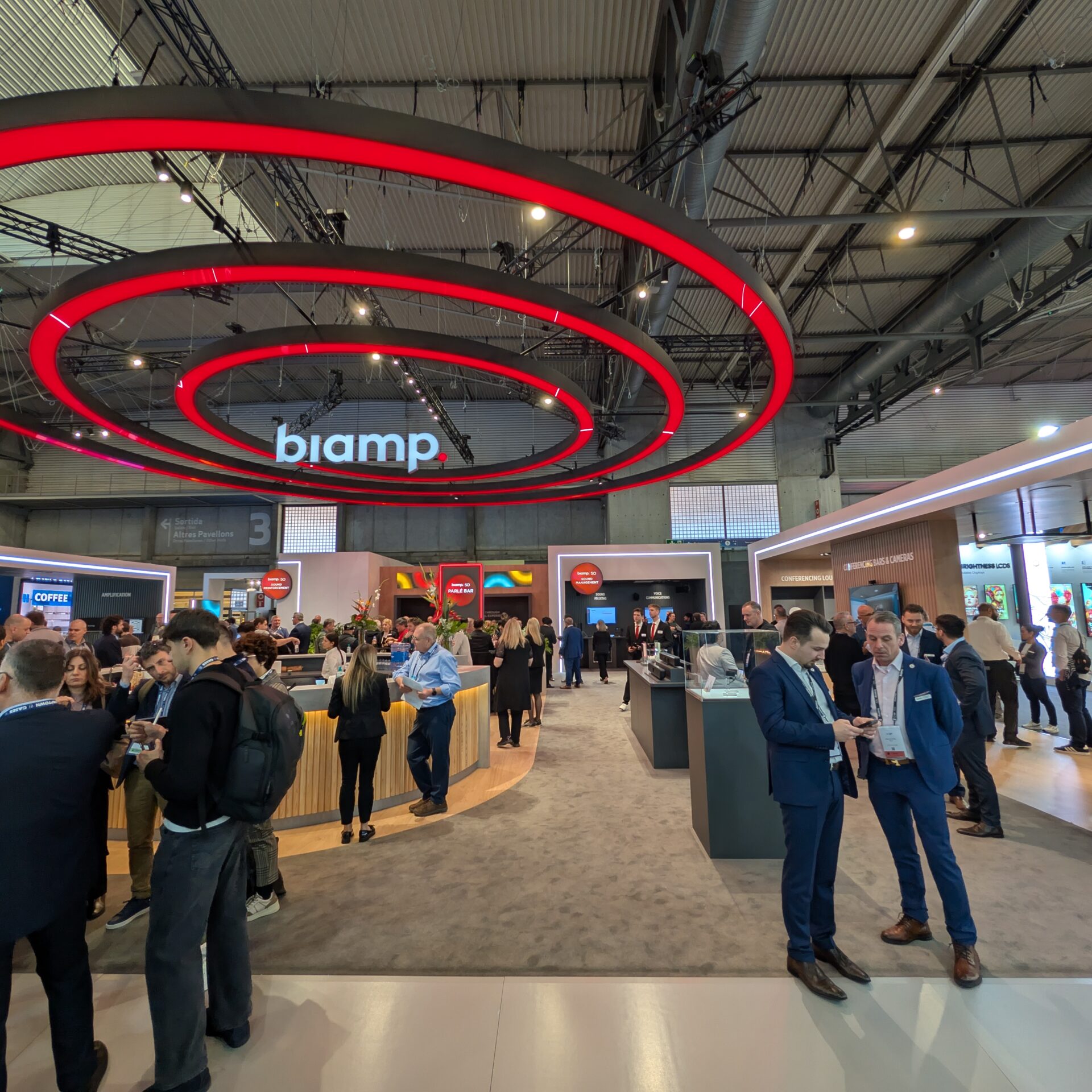






Biamp came to ISE 2026 with a clear higher ed focus: larger spaces. That means classrooms, auditoriums, and multipurpose rooms where the experience can fall apart fast when audio is inconsistent or video content is hard to see. Joe Andrulis, Executive Vice President of Corporate Development at Biamp, framed it around the idea that education is fundamentally about connection, and the technology should support that without becoming a new set of steps for instructors to manage.
A lot of the conversation stayed grounded in something campus teams have been saying for years. The more complex the room gets, the more important it becomes that the tech disappears for the person teaching. Instructors should be able to walk in, do what they came to do, and trust that everyone can hear and see, whether they are in the room or joining remotely.
“We’ve been focusing very much on the larger spaces, which fits very neatly into classrooms and auditoriums and other spaces in higher education.”
Parlé Presenter Lift: stop asking instructors to manage microphones
One of the most higher-ed-forward things Biamp is showing is Parlé Presenter Lift. The concept is simple: take microphone management out of the instructor’s hands. Instead of relying on a handheld mic, a lav, batteries, and the endless failure points that come with “did they clip it right,” the room uses ceiling microphones and defined pickup zones. The presenter stands in the zone, and the system does the work. The goal is a natural reinforcement that feels conversational, with fewer chances to get it wrong.
“Imagine that you could just install these solutions where you put microphones, say, in the ceiling, and then you’re able to go in and then lock in audio pickup zones.”
Joe also called out the classic classroom moment we have all seen: the instructor who believes they are loud enough, and the room quietly disagrees. Presenter Lift is built for that moment. It supports the people who made the effort to be in the room, not only the people on the far end of a call.
Meeting equity that includes the people who showed up in person
A strong thread in this conversation was meeting equity, and not in the way it is usually discussed. Joe pointed out that a lot of the technology progress in recent years has benefited the people outside the room. Better pickup, better transcription, better remote experiences. Meanwhile, the people physically in the room sometimes get the short end of the stick, especially in large spaces where voice reinforcement is inconsistent or where students cannot hear each other well.
Biamp’s approach here is to bring the in-room experience back into focus, and to do it in a way that does not add day-to-day support burden. A system can be amazing on day one, but if it requires constant tweaking, the campus loses. The real win is a solution that is easy for the installer, easy for the buyer, and reliable for the person teaching at 9:00 a.m. on a Tuesday when nobody has time to troubleshoot.
“What we’re really looking at is now complementing it with the capability to say, ‘no, no, no, you’re going to be as well supported and have this even better experience by coming to that space as the ones remote.’”
That is a practical higher ed goal. Remove points of failure. Reduce the number of things instructors can do “wrong.” Keep the room predictable.
MAX Connect Auditorium Mode: content sharing that reaches everyone
On the video side, Biamp is also leaning into a real large-room problem: visibility. In big classrooms and auditoriums, even good projection does not solve every scenario. People sit at odd angles. They have vision needs. They are taking notes on devices anyway so why not bring the content to their screen?
Biamp is showing MAX Connect with Auditorium Mode as a simple, low-friction path for that. Joe described it as a wireless reflection of content back to personal devices, plus distribution to additional support displays, including outside a classroom. The promise is straightforward: connect your content, and the system sets up the distribution without turning the instructor into an AV operator.
“It’s a video distribution platform that is hallmarked by its simplicity and low cost.”
The supporting layer: lifecycle management, room bundles, and the unglamorous essentials
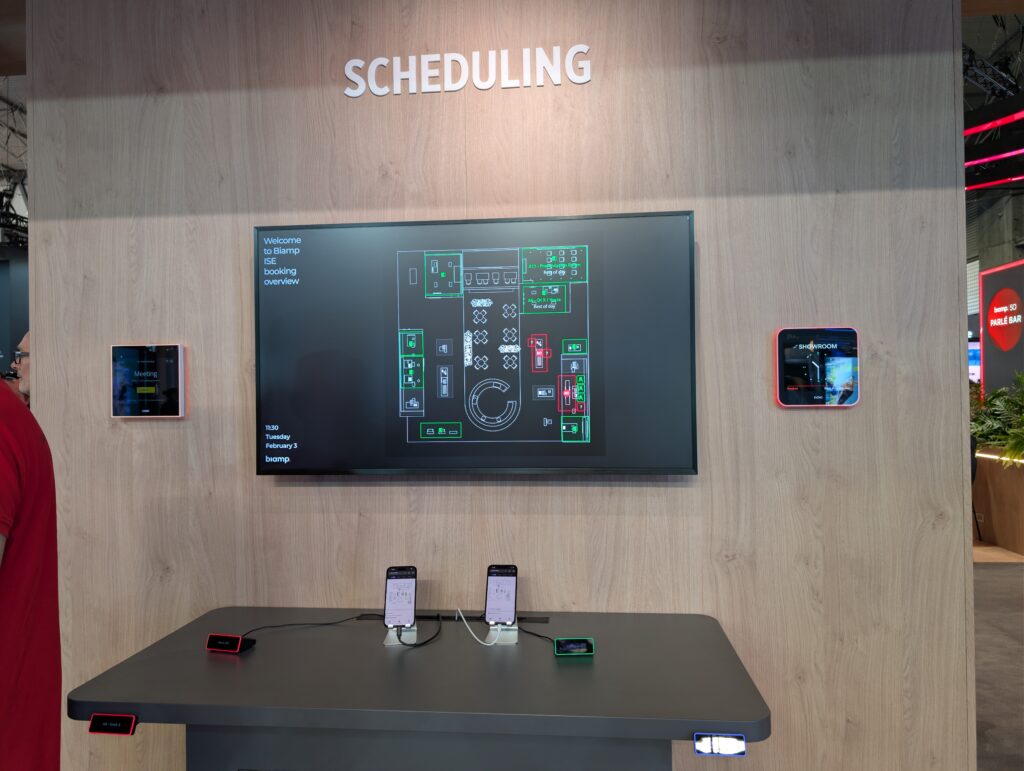
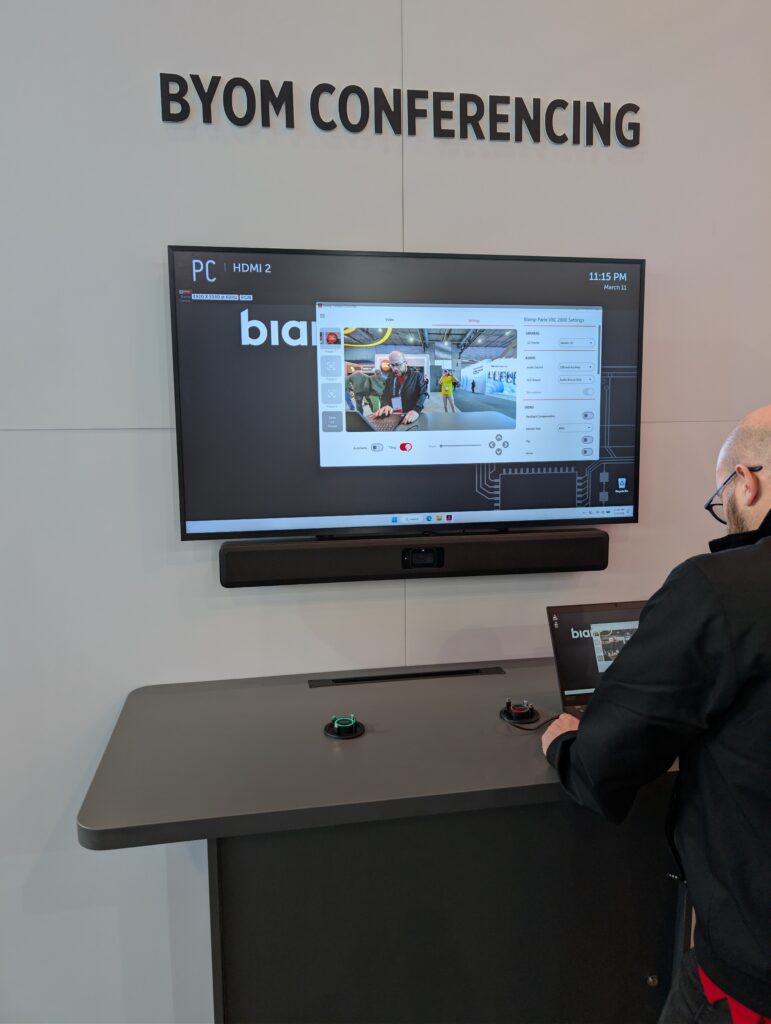
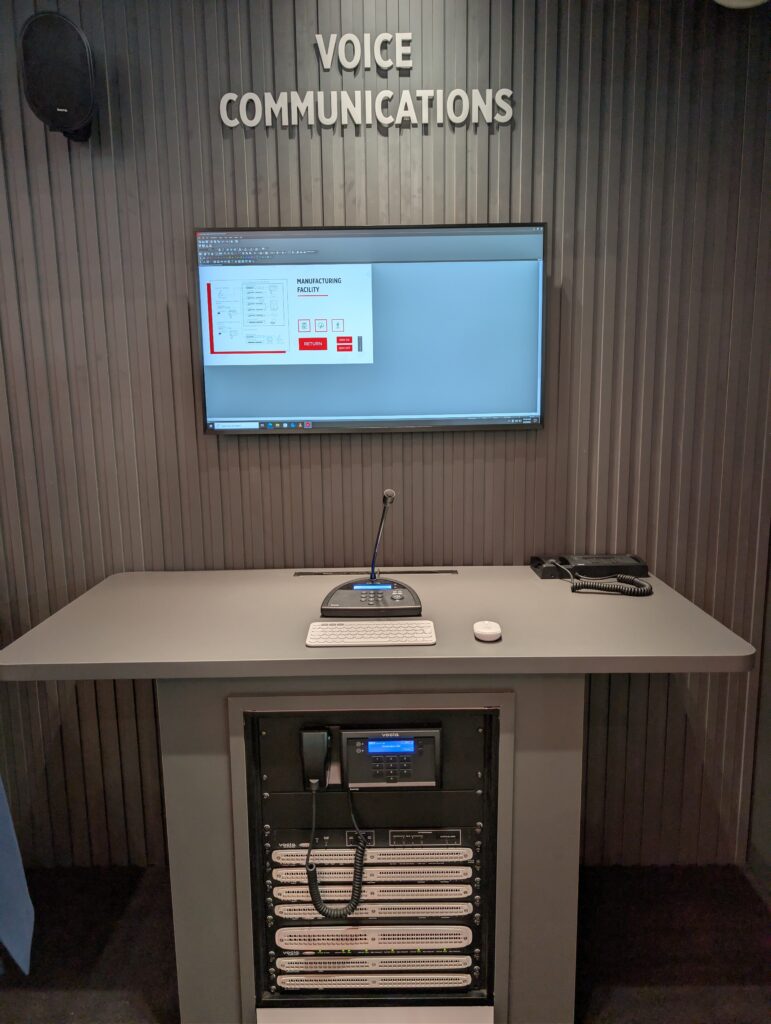
Biamp’s booth story is not only the big headline features. Don’t overlook Biamp Workplace for cloud-based lifecycle management, room bundles for Zoom Rooms and Teams Rooms, sound masking, paging, speakers, and control features for divide and combine room scenarios.
Higher ed environments are rarely uniform. One campus can have classrooms, collaboration spaces, event venues, and student-facing spaces that all need different mixes of AV, UC, audio, and control. A vendor’s ability to support that range, with tools that reduce commissioning time and reduce day-to-day maintenance, is part of what makes a standard possible.
The thread that ties it together is the same one Joe returned to multiple times: keep the technology from becoming the hindrance. Make it natural. Make it reliable. Remove the failure points so the room gets used the way it was intended to be used.
Make sure to check out all of this and more at their website.