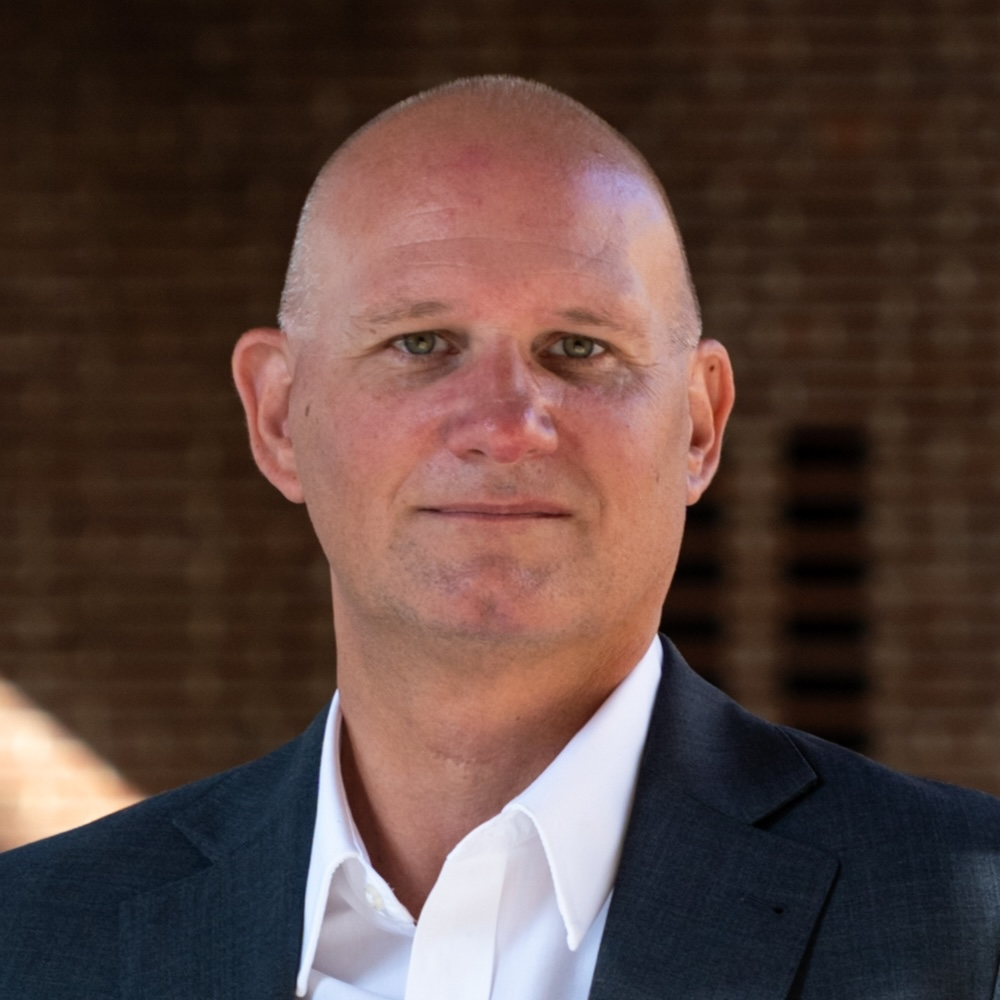



I was sitting down recently with Calvin Thorbourne III from Emory University for the Higher Ed AV Podcast this last week. We were supposed to be talking about AV, and his career trajectory, and of course we did. We talked about classrooms, live sound, control systems, signal flow, and all the normal things that happen when two AV people start talking shop. But somewhere along the way, the conversation became about something completely different, and honestly, that was the part that’s stayed with me since I stopped the recording.
Calvin was telling me about his day-to-day work at the Candler School of Theology. Some days he is supporting classrooms, helping faculty get through whatever technology issue happens to pop up, and other days he is running chapel services, dealing with microphones, music, streaming, and everything that comes with live production. I could relate to almost all of it because so much of my own career came through live events and house of worship before higher ed, and there is a certain rhythm to that kind of work that you never really forget. He brought back some memories for sure.
As he was talking, I started thinking about how different those worlds can feel even though we use a lot of the same technology. In a classroom, sometimes the problem can wait a minute while you troubleshoot it (not saying it should, but often it can because there are temp workarounds quite often), but during a live event, the event does not care that you need another five minutes. The microphone has to work now, the stream has to work now, and the person standing on the stage is already talking while everybody is looking at you if something goes wrong.
That took us into a conversation about troubleshooting, which made both of us laugh because we came from the same old-school way of thinking. I want to see the signal flow, like A directly to B to C. Give me the microphone, show me the cable, let me follow it into the console, and I will figure out where it stops. But now, with modern commercial AV, suddenly everything disappears into a control processor or a network switch, and now where did it go?!? LOL. I remember going through that transition in technological mindset myself because I wanted my XLR cable. I wanted to physically follow the thing from one end to the other because that made sense to me. Now I am the guy talking about cloud platforms and putting everything on the network, which is probably proof that all of us can change if we are forced to long enough.
But, here’s the thing, though, while our tools and methods might change, the reason and purpose behind why we are there doesn’t. Calvin said something that shifted where my mind was going. He was talking about troubleshooting technology, but then about the people involved… the faculty member standing in front of the room when something does not work, the students sitting there waiting, and the person leading the service who has something important they are trying to communicate. At that point, it’s not really about troubleshooting anymore. We were talking about what it feels like to be the person on the other side of the problem.
I have said for years that you have not solved the problem until you have solved the person. I do not mean that in some complicated leadership-theory kind of way. I mean that if you walk into a classroom, fix the laptop in thirty seconds, and leave the faculty member feeling like an idiot, you did not do a good job. The picture might be back on the screen, but you left another problem behind, and that one may last a lot longer than the technology issue ever did.
We forget sometimes what that moment feels like for the person asking us for help. To us, maybe they just selected the wrong input, and we have seen that problem a thousand times so it seems simple. To them, thirty students are staring at them while the clock keeps moving and the lesson they spent hours preparing is sitting on a laptop that suddenly will not show up on the screen. Then we walk into the room, and whether we realize it or not, we get to decide whether that moment gets better or worse.
That is a small moment for us, but it may not be a small moment for them. We can act annoyed that they called us, or we can make them feel like this is exactly why we are there. Calvin told me he likes people, and it sounds almost too simple when you say it that way, but it stayed with me because I think that might be one of the most important qualifications for doing this work well. He likes helping people, and the technology is simply one of the ways he gets to do that.
Later in the conversation, he told me about a chapel service where something went wrong with the stream. The sound in the room was good, but the audio was not getting to the online feed the way it was supposed to, and he knew it was not right. Like any of us who have done live production, it bothered him. You can have ninety-nine things working perfectly, but you are going to spend the rest of the day thinking about the one thing that did not, because nobody has to tell you it went wrong. You already know, and you are probably being harder on yourself than anyone else ever could.
Calvin went to the person responsible for the service and explained what had happened. He was expecting frustration, especially because her husband had been the speaker that day, but instead her response was basically, “Calvin, I know you’ll fix it.” I loved that because she was not saying the failure did not matter. She was saying she trusted him, and somewhere through all the interactions that came before that moment, he had built enough credibility that when something finally went wrong, she already knew what kind of person was standing in front of her.
That kind of trust does not come from a perfect technical record. None of us have one of those anyway. It comes from showing up, caring, taking responsibility, and treating people well over and over again. Eventually they stop seeing you only as the person responsible for the equipment and start seeing you as someone who is on their side. That is a very different relationship, and it gives you room to work through problems without every failure becoming a crisis of confidence.
We kept talking, and Calvin came back several times to this idea of excellence. He wants things to be right. He gets there early, checks the rooms, tests the equipment, and prepares before people arrive because he does not want to work in panic mode if he can avoid it. That made complete sense to me because it is how many of us who came through live production learned to operate. You prepare because once the room fills up, you are live, and you find the problem before the problem finds you.
Of course, something will still eventually break, and that is the part I think a lot of us struggle with. We work around technology every day, so intellectually we know that equipment fails. We know software does strange things, networks go down, cables die, and perfectly good devices occasionally wake up and decide today is the day they are going to ruin your morning. Somehow, though, when it happens on our watch, we still take it personally, and I know I have done that more times than I can count.
Toward the end of the episode, I asked Calvin the same question I ask every guest. I give them a minute and tell them they have their own show, and they can talk about anything they want. There are no real rules and no AV requirement. I just want to know what is on their mind, and Calvin chose to talk about grace.
He talked about giving other people grace because we have no idea what they may be dealing with. He talked about the person who cuts us off in traffic and how quickly we decide what kind of person they must be, even though we know nothing about what is happening in their life. Then he turned it around and talked about giving ourselves the same grace, and that was the part that really landed with me because the people who care the most about their work are often the hardest on themselves.
There is a strange thing about people who care deeply about what they do. The same thing that makes us good at our jobs can also make us absolutely brutal toward ourselves when we fall short. We want excellence, which is good, but somewhere along the way we can start treating perfection like it was the expectation. It was not, and pretending it was only makes us less honest about what it means to work with technology, with people, and with ourselves.
I do not think grace means lowering the bar. I do not think it means accepting mediocre work or shrugging when something goes wrong. I think it means recognizing that we are human beings working with other human beings, and every one of us is going to get something wrong eventually. We should fix it, learn from it, apologize when we need to, and make sure we do better the next time, but at some point we also have to let ourselves move on.
I went into that conversation expecting to talk about higher ed AV, and technically that is exactly what we did. But the part I have kept thinking about had almost nothing to do with AV equipment. It was about what happens around the equipment, between the people who use it and the people responsible for supporting it. That is where most of the real work happens, even if it is harder to see on a system diagram.
Maybe that is what the human side of AV really is. We show up, we know our craft, we prepare, and we try to make things work the way they are supposed to work. Then, when the inevitable problem happens, we remember there is a person standing on the other side of it. We take care of them, we take care of the problem, and maybe we give ourselves a little grace along the way too.
Check out the entire Higher Ed AV Podcast episode with Calvin here: https://higheredav.com/367-grace-upon-grace-with-calvin-thorbourne-iii-higher-ed-av-podcast-with-joe-way/.