




Draper at InfoComm 2026: The Support Structure Behind the Screen
Some InfoComm conversations are useful because they stay close to the physical reality of the room. Draper is one of those conversations.
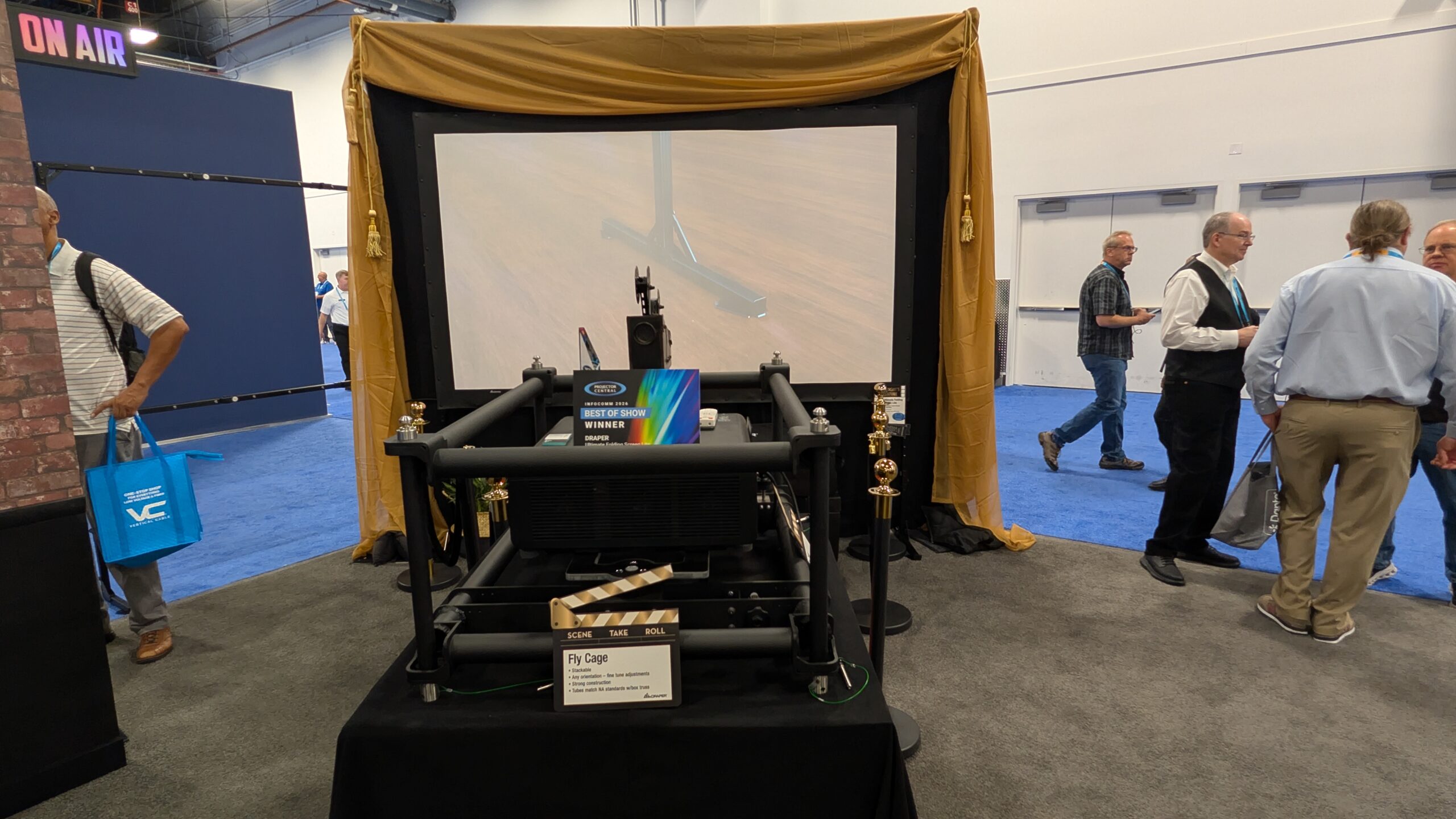
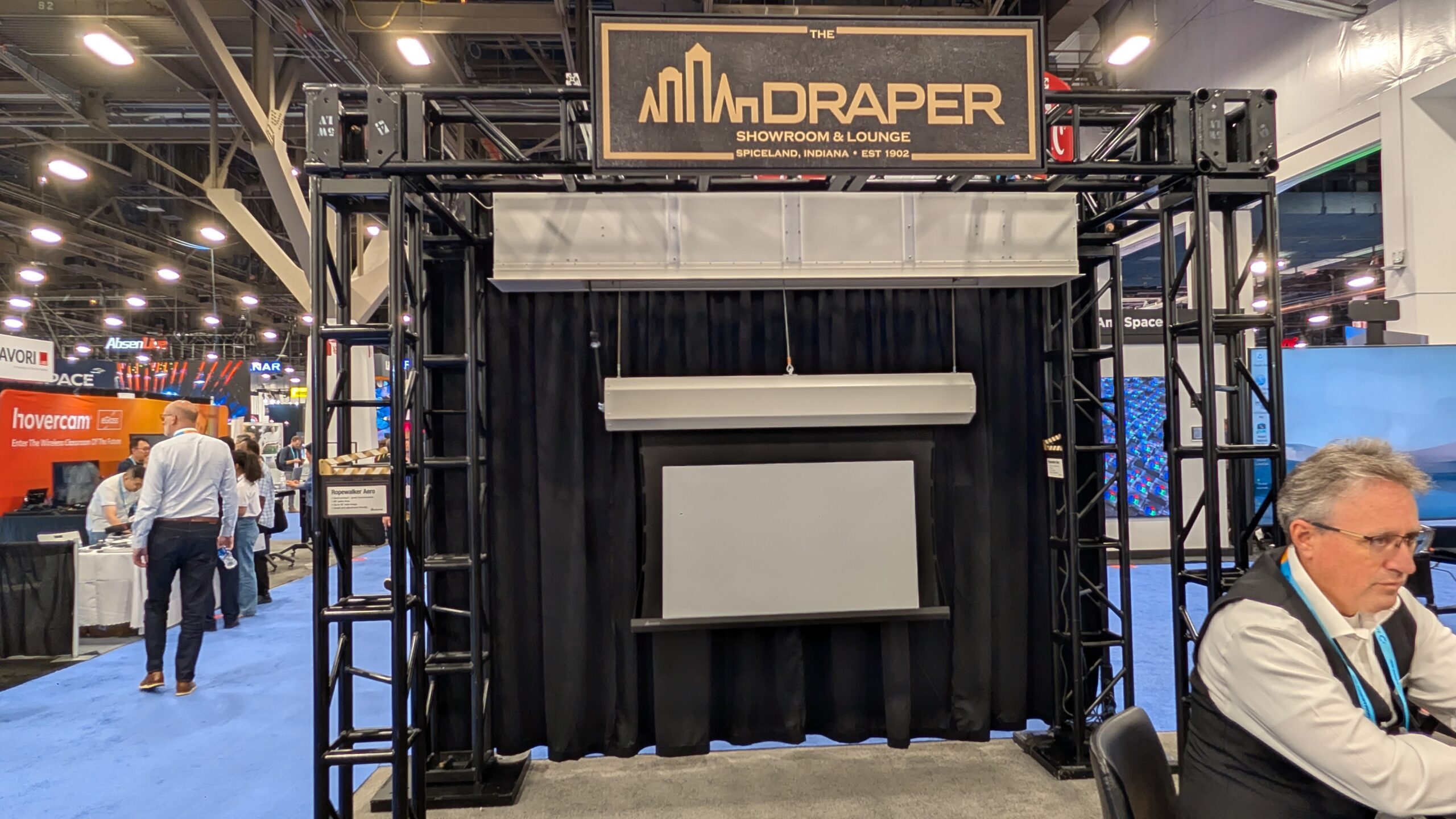
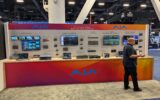
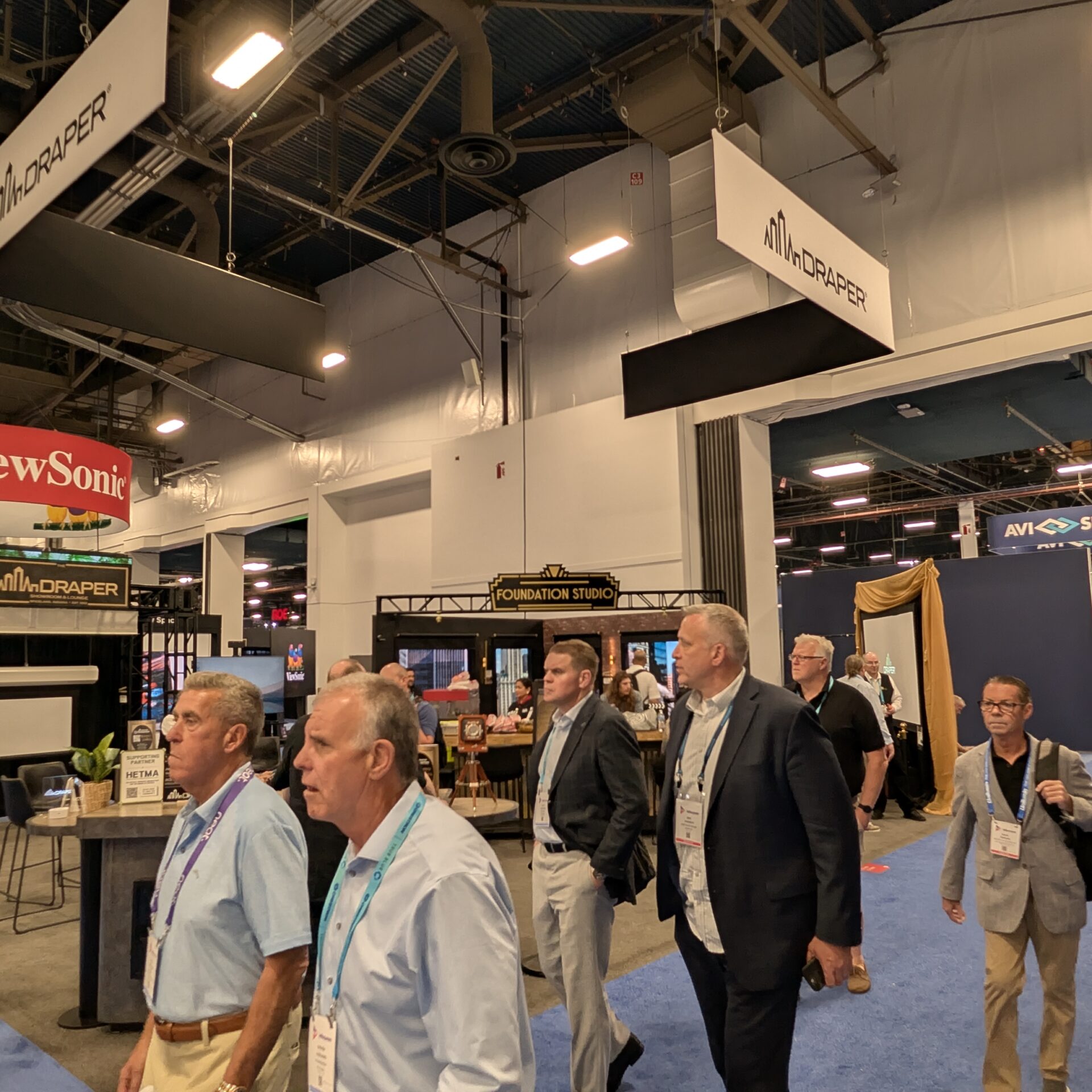
At Booth C7000, Draper is showing solutions that sit behind, around, and sometimes above the visible AV experience: UFS Lite portable folding screens, Foundation One universal mounting for DVLED products, Foundation custom structure solutions for DVLED video walls, Foundation Studio, and a new Rope Walker Arrow prototype for large projection screen drops in high-ceiling spaces.
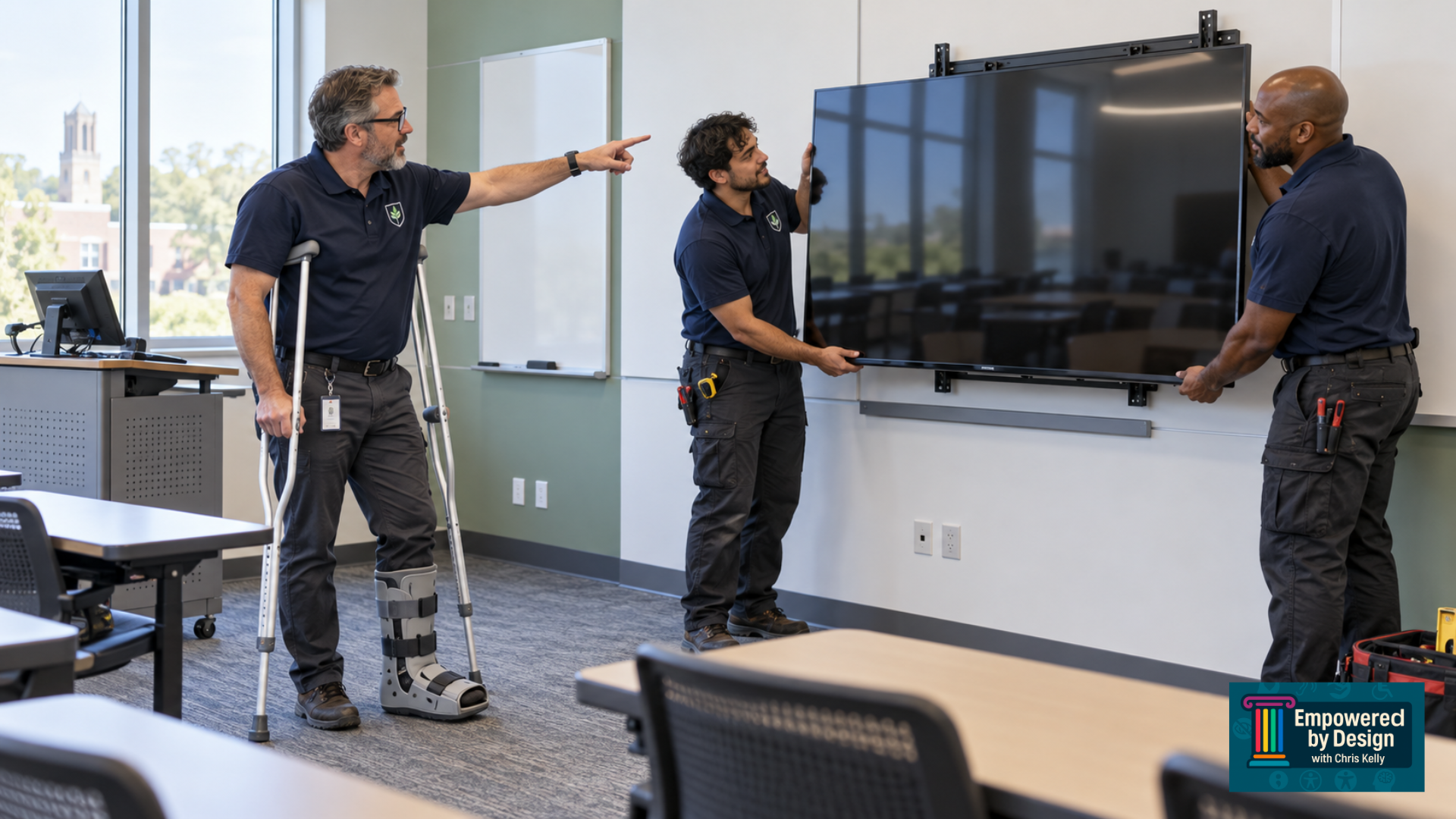
That may not sound as flashy as a new display, camera, or collaboration device, but higher ed AV/IT teams know how much of the room depends on things being physically right. Screens need to deploy cleanly. Portable systems need to survive event support. DVLED walls need structure, alignment, access, serviceability, and planning. The mounting solution is not just hardware. It is part of whether the finished room looks right and stays supportable.
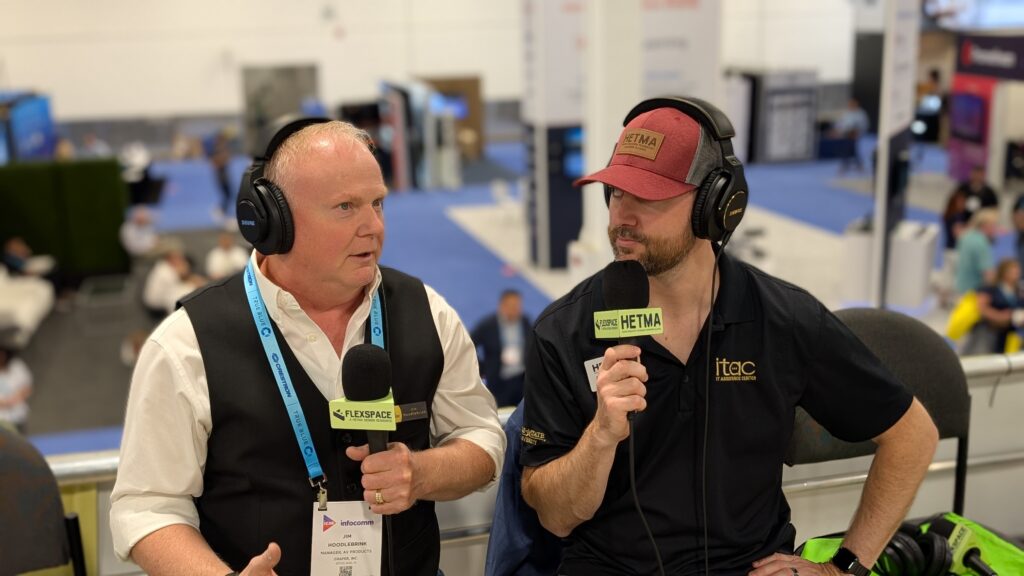
Jim Hoodlebrink framed Draper’s role around solving real market problems.
“we’re always involved in talking to our dealers, our end users, and making sure we can help them with their problems.”
That is the useful higher-ed lens. Campuses are not short on unusual rooms. High ceilings, gyms, student centers, multipurpose spaces, old buildings, new construction, seismic requirements, temporary event spaces, and DVLED projects all create physical design problems that cannot be solved by choosing the display alone.
Booth C7000
Draper is exhibiting at Booth C7000 with a mix of traditional AV products and custom structural solutions. The company is still very much in the projection screen world, but the booth also reflects where campus AV has been moving: portable support, large format displays, direct view LED, and tools that help teams make better decisions before a project becomes expensive to change.
Jim described his current role as working with design engineers and marketers to decide what products need to be introduced for people with specific problems in the market. That is a good way to read Draper’s booth this year. The products are less about adding features for their own sake and more about addressing room conditions that higher ed teams actually run into.
Rope Walker Arrow and the High-Ceiling Problem
One of the new items at the booth is the Rope Walker Arrow, a prototype product for applications where a screen needs to drop a long distance from cables. Jim described it as a solution for spaces where the screen needs to be hidden high in the structure and lowered into position when needed.
“it’s going to drop up to twenty eight feet down.”
That immediately points to a familiar campus category: stages, gyms, auditoriums, multipurpose rooms, and other spaces with high rafters or unusual mounting conditions. These are the rooms where standard assumptions break quickly. The screen may need to disappear when not in use. It may need to clear other systems. It may need to drop from a height that makes a normal installation impractical.
Jim also noted that the Rope Walker Arrow can go up to eighteen feet wide and can be tab tensioned or non-tensioned to help ensure flatness. For higher ed, that matters because these spaces often support many uses. A gym may become an event space. A stage may host instruction, performances, guest speakers, or community programming. The AV solution has to serve the schedule without permanently changing the room.
UFS Lite and Portable Event Support
Draper is also showing the UFS Lite portable folding screen. It is a smaller, faster, friendlier portable screen for setup and tear-down applications, with integrated legs and a design that can be handled by one person.
Jim connected the need to the shift away from traditional tripod screens in some use cases. Ultra short throw projectors sit close to the image, and a wavy tripod screen can create problems. A portable folding screen that stretches onto a frame can provide a flatter surface while still supporting temporary event needs.
The higher-ed use case is straightforward. Student centers, rental spaces, overflow rooms, temporary setups, campus events, and backup scenarios all need portable AV. The equipment has to move, set up quickly, fit through doors, avoid damage, and work without turning every event into a major production.
Jim noted that the portable folding screen is lighter than a traditional tripod screen and can go up to nine feet wide. That is not a small operational detail. Anyone who has moved portable screens through hallways, elevators, storage rooms, and doorways understands that size, weight, case design, and setup time matter.
DVLED Needs More Than the Wall
Direct view LED is everywhere at InfoComm, and Draper is showing products aimed at the structural side of that shift. Foundation One is a universal mounting solution for DVLED panels measuring 600 to 610 mm, with adjustment across X, Y, and Z axes to help installers maintain alignment. Draper is also showing Foundation custom structure solutions for DVLED video walls.
That is important because DVLED projects can look simple from the front and complicated from every other angle. Alignment matters. Power matters. Access matters. Wall conditions matter. Structural support matters. Seismic requirements may matter. Serviceability will matter later.
Jim made the point that DVLED is versatile, but not without complications. That is known well by campus teams planning larger displays. DVLED can be the right answer, but it changes the mounting conversation. The wall may not be enough. A manufacturer-provided mount may not have the adjustment needed. The installation may need to be floor-supported. It may need to be curved. It may need seismic engineering. It may need custom metal work.
Draper’s Foundation custom structures are aimed at that middle ground where standard mounting is not enough, but the campus still needs a clear path to a buildable, supportable solution.
Alignment Is Not Cosmetic
Foundation One’s adjustment range is not just an installer convenience. With DVLED, alignment is part of image quality. If the mount cannot support precise adjustment, seams and panel lines can become visible in ways that distract from the content.
Draper’s response points to X, Y, and Z-axis adjustment so installers do not run out of alignment capability during installation. That matters because higher ed spaces are rarely perfect lab conditions. Walls can be uneven. Project timelines can be compressed. The room may need to open for classes, events, or donors. A mount that provides more adjustment can reduce the amount of improvisation required onsite.
For campus AV/IT teams, the question is not only which LED product to buy. It is how the display will be mounted, serviced, aligned, and supported over time.
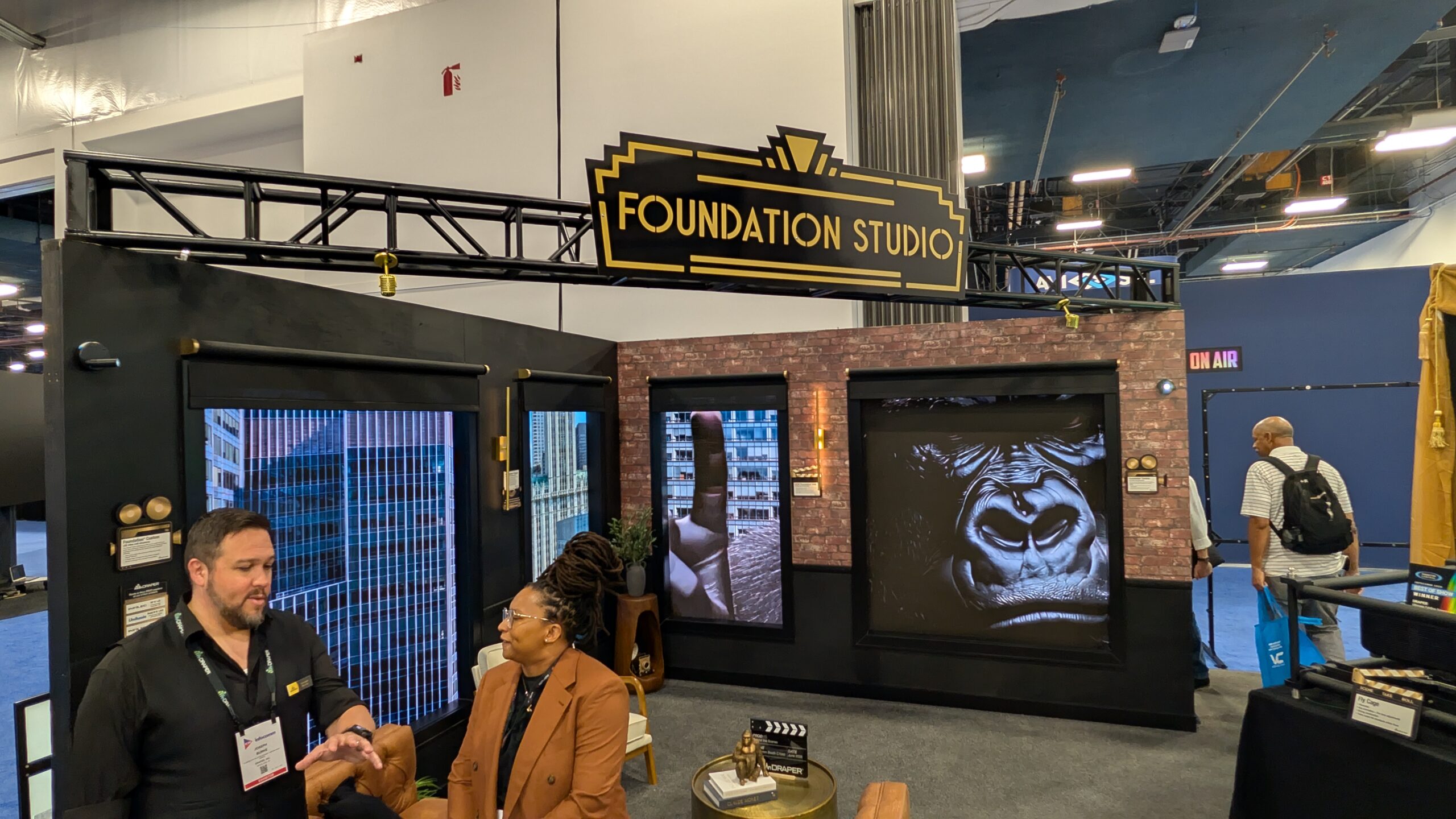
Foundation Studio and Early Project Planning
Foundation Studio may be one of the most practical Draper booth items for higher ed technology managers. The tool lets users enter information about a DVLED project, including panel size and video wall size, then produces a quick rendering. Signed-in Draper accounts can also access MSRP and drawings.
Jim described the use case as part of the research process.
“do I do projection or LED?”
That is a real campus planning question. Projection still has a place. DVLED may be the right answer in some rooms. LCD video walls may be right in others. But once DVLED enters the conversation, the AV team needs to understand not only the image but the size, structure, panel layout, mounting approach, and budget implications.
Foundation Studio gives teams a starting point before the project becomes formal. That can help internal planning, stakeholder conversations, early budgeting, and coordination with design teams. It can also help a technology manager who is not a structural engineer begin to understand what the installation may require.
Atkins Fleming summarized the practical value well in the interview. It is a self-help tool where teams can enter information and potentially come out with drawings.
The Higher Ed Takeaway
Draper at InfoComm 2026 is not only about screens. It is about the physical layer that makes displays, projection, portable systems, and DVLED installations actually work in campus spaces.
At Booth C7000, Draper is showing the UFS Lite portable folding screen, Foundation One universal DVLED mounting, Foundation custom structure solutions, Foundation Studio, and the Rope Walker Arrow prototype. For campus AV/IT teams, the value is in solving the room conditions that often sit underneath the visible technology: high ceilings, temporary setups, flatness, alignment, custom structures, seismic requirements, power planning, and early design decisions.
Draper is also a long-standing privately owned U.S.-based manufacturer celebrating 124 years, with AV product lines that include projection screens, projector lifts, and custom AV solutions focused heavily on DVLED video wall structure products.
The classroom screen may be the obvious product. The more important conversation is structure, support, and planning. In higher ed, the thing holding the display matters too.
Make sure to check out Draper at Booth C7000 at InfoComm 2026, or visit www.draperinc.com to learn more.