





Biamp at InfoComm 2026: Control, UC, and the Next Layer of Classroom Support
Some InfoComm booth conversations are useful because they show where a company is trying to stretch beyond the category people already know them for. Biamp has long been a familiar name in higher ed audio, DSP, ceiling microphones, loudspeakers, and room systems. At InfoComm 2026, the more interesting conversation is how Biamp is tying those pieces into a broader room workflow that includes control, UC compute, network management, and faster support.
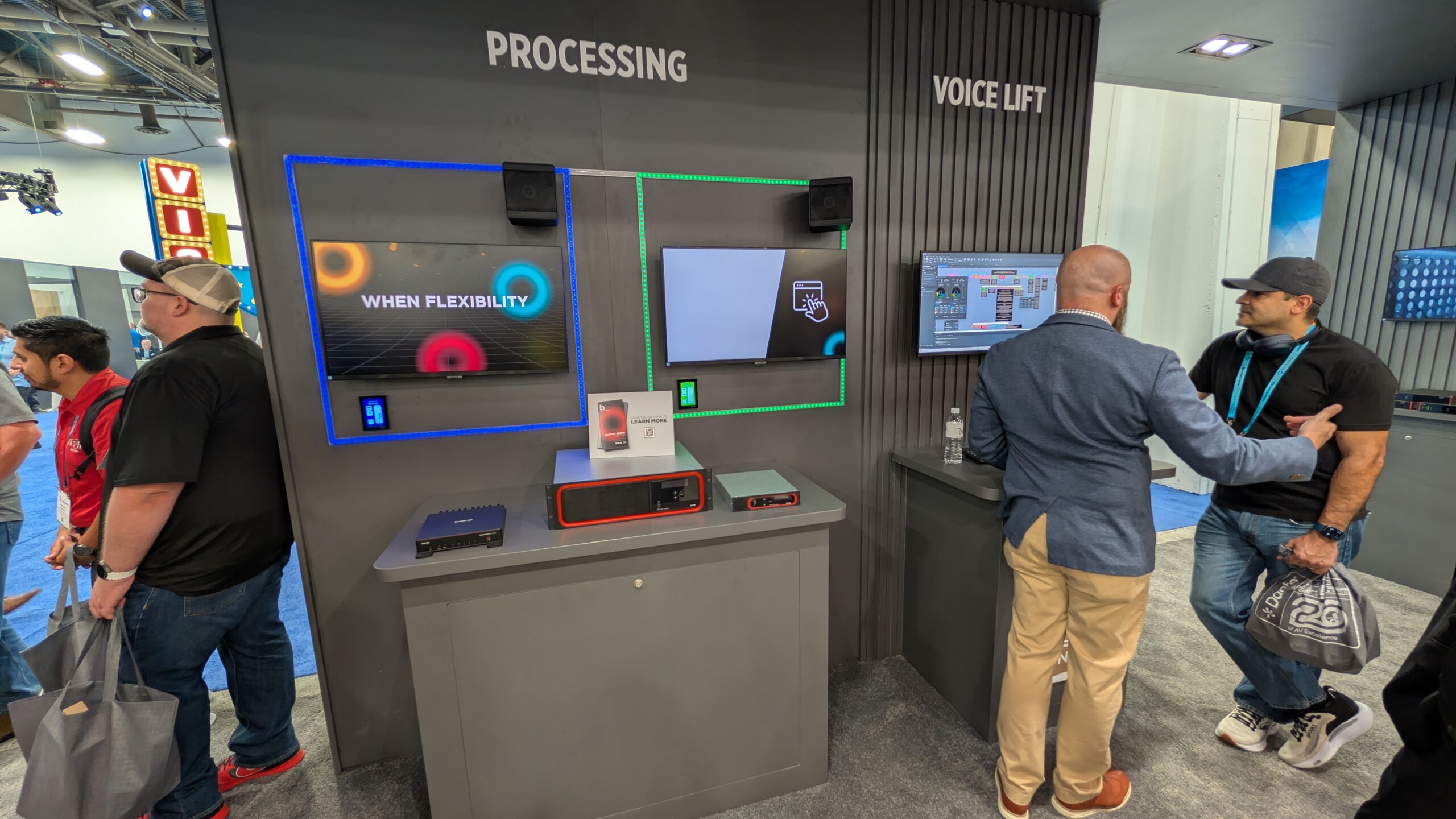
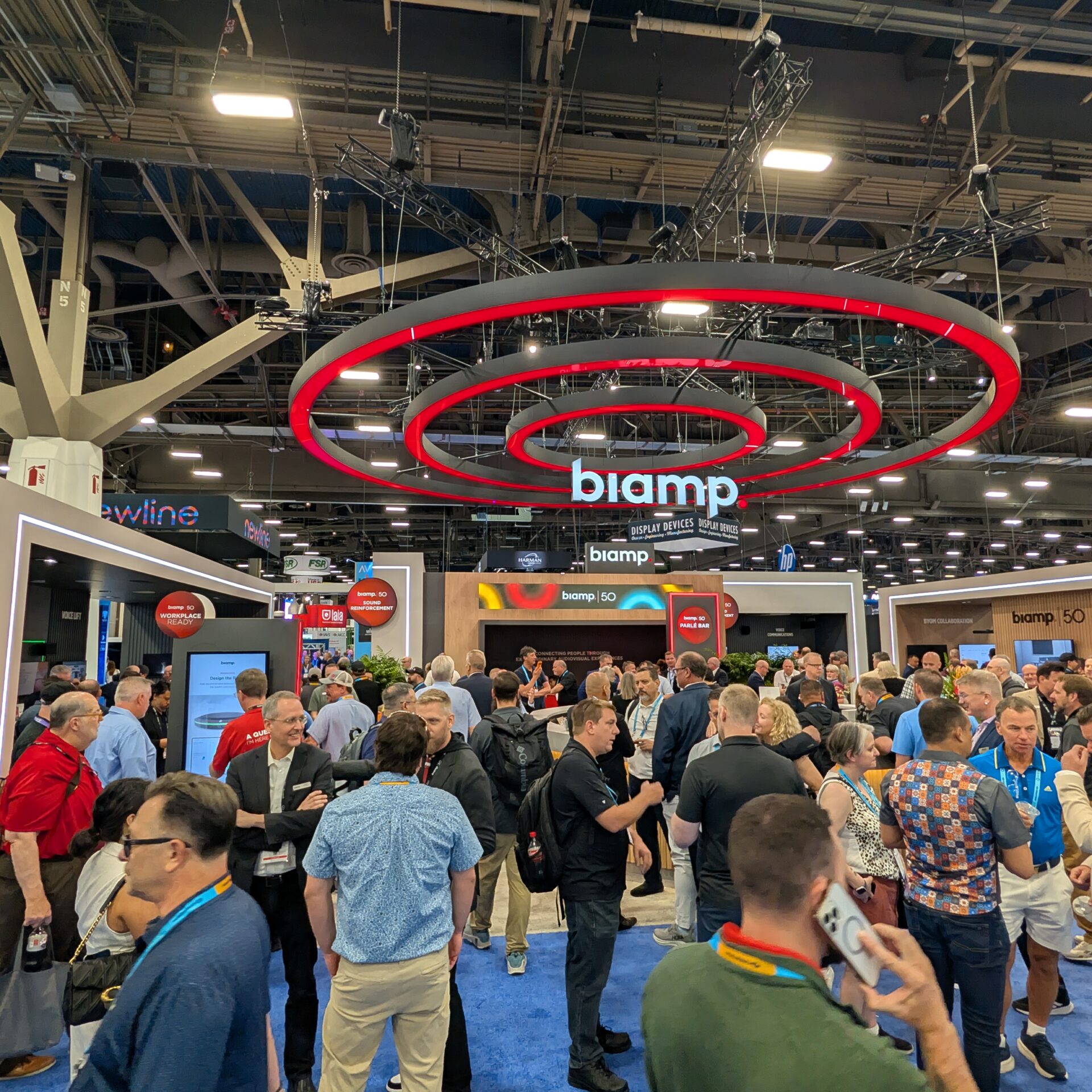
At Booth C7822, Biamp is showing education-focused room solutions built around scale, ease of use, network management, and newer products including Biamp Control, Devio UCX, the BMA360D array microphone, Biamp Launch, and Biamp Workplace. The higher-ed thread running through those pieces is familiar: rooms need to sound good, connect cleanly, start quickly, and give support teams fewer systems to chase when something goes wrong.
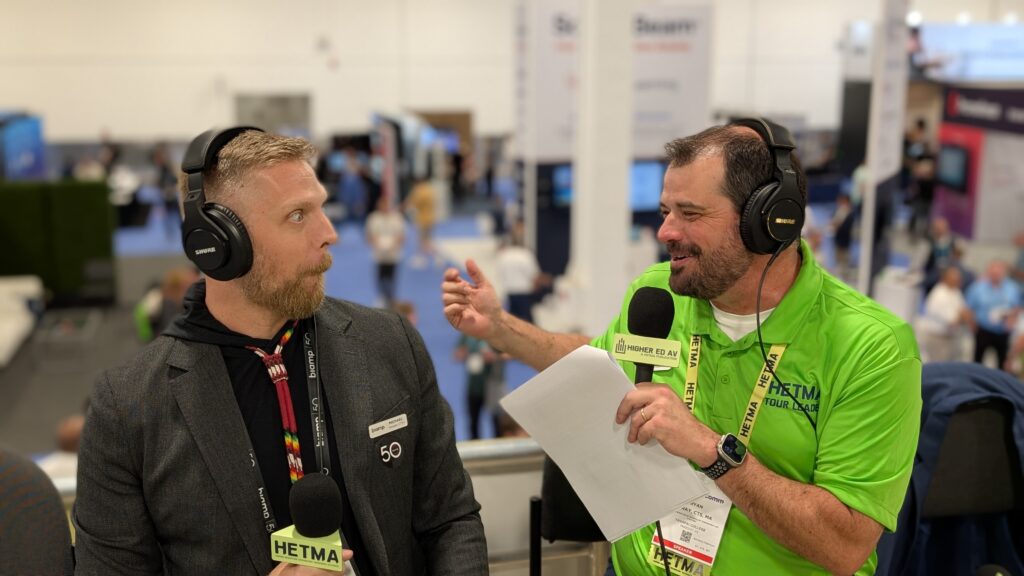
In the interview, Michael Hooper did not start with the broad product category. He went straight to the item he wanted higher ed people to see.
“Come see Biamp Control.”
That was the clearest signal from the conversation. Biamp wants campus teams to look at control differently this year.
Central Hall, Booth C7822
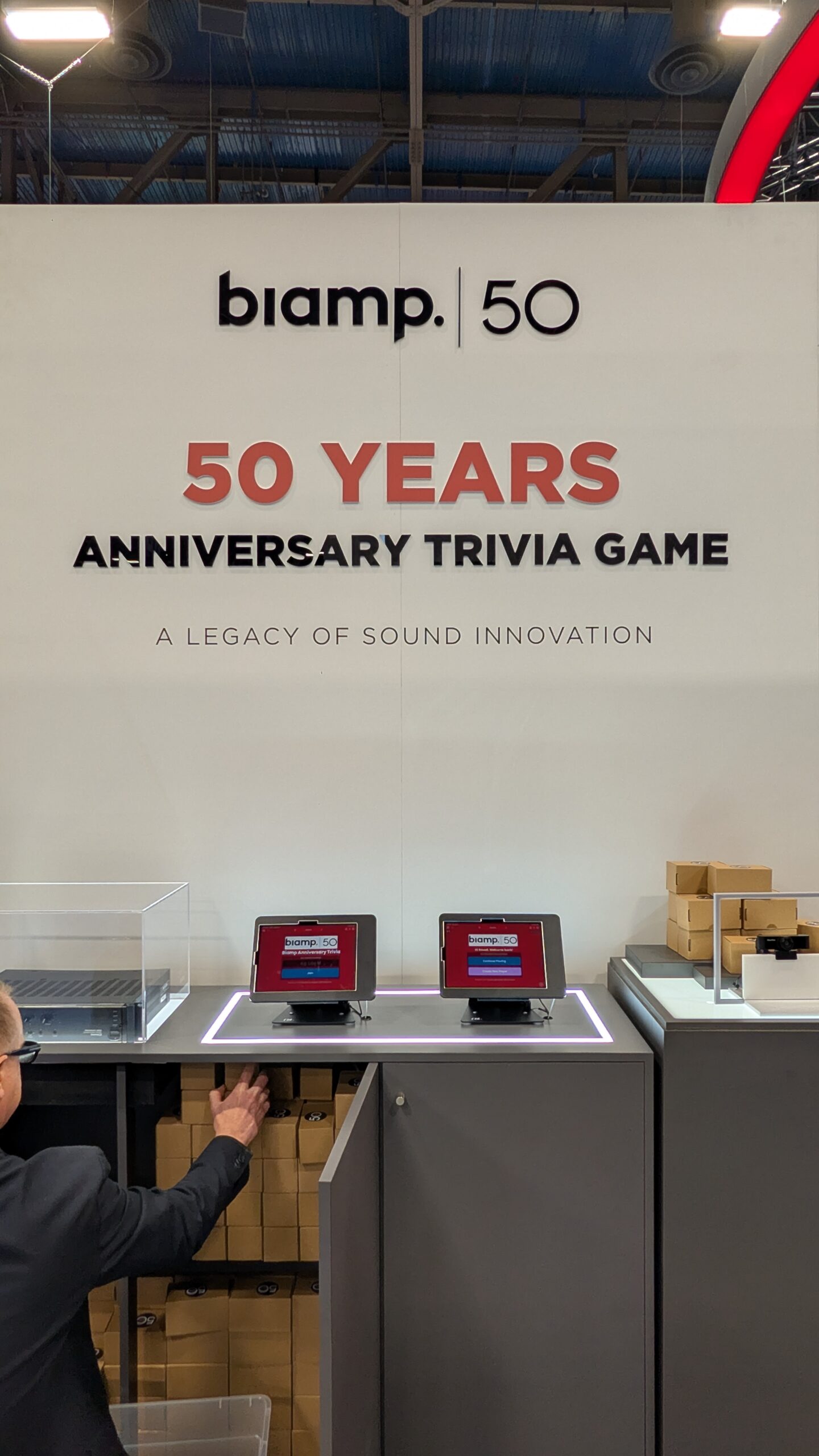
Biamp is exhibiting at Booth C7822 in Central Hall. The booth is also close to one of the familiar gravity points of the show floor, and Hooper was clear about the practical draw: the coffee bar is there again.
That part may sound like show-floor color, but it fits the Biamp presence. The booth is open, conversational, and built around showing a broader ecosystem rather than a single isolated product. The company is still bringing the audio credibility people expect, but the real InfoComm story is the move toward room systems that can be configured, managed, and supported as part of a larger campus standard.
Hooper’s first recommendation was Biamp Control. His second was Devio UCX. Together, those two products point to where the booth conversation is heading: fewer disconnected layers in the room and more capability inside the Biamp environment itself.
Biamp Control Moves Into the Enterprise Conversation
Hooper made the Biamp Control message direct.
“It is not the Biamp Control that you have known in the past.”
That is a useful distinction for higher ed AV/IT teams because control carries a lot of baggage on campus. Control systems can be powerful, but they can also become one of the most fragile parts of a room standard when programming, support ownership, licensing, device compatibility, and long-term maintenance are not aligned.
Hooper described the new Biamp Control as an enterprise-grade solution.
“Biamp Control now is an enterprise-grade solution.”
The word enterprise matters here. Higher ed does not need a clever control demo in one room. It needs systems that can be deployed consistently, updated predictably, and supported across many spaces by the people responsible for keeping rooms online during a semester. If control becomes part of the same ecosystem as the audio and room infrastructure already in place, the campus support model changes.
The interview framed that shift clearly: do not think of Biamp only as DSP. That matters because many campuses already trust Biamp for audio. The question now is whether that trust can extend into the room control layer without adding another disconnected platform to manage.
For AV/IT teams, the evaluation question is not whether Biamp Control can replace every specialized control need on campus. It is whether it can reduce complexity in the kinds of rooms that make up the bulk of the teaching estate: classrooms, seminar rooms, huddle spaces, conference rooms, and hybrid learning spaces where the use case is common but the support load is high.
Devio UCX and the UC Room Middle Ground
The second product Hooper called out was Devio UCX.
“My second favorite new product at our booth is Devio UCX.”
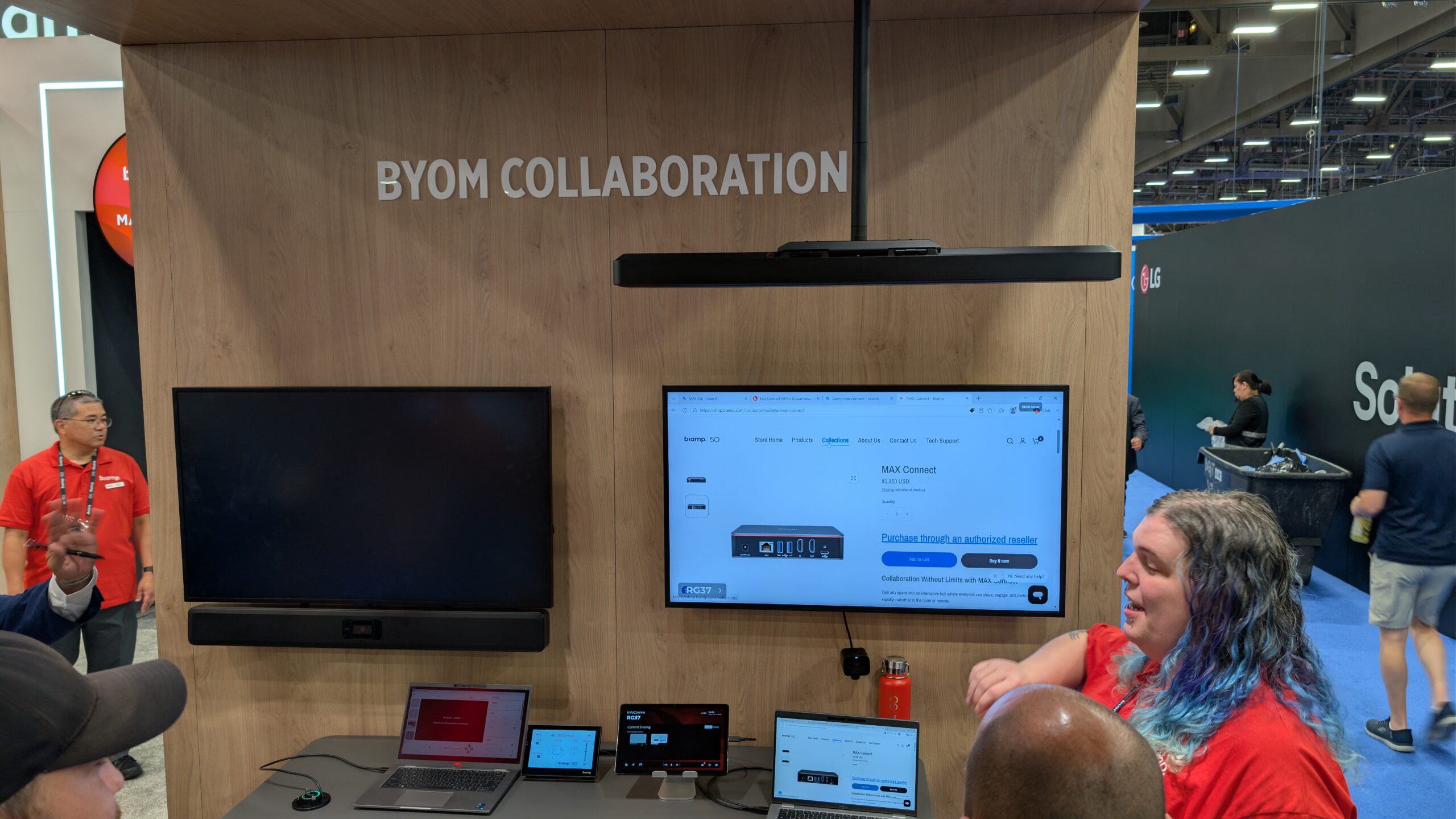
The point from the interview is clear: Biamp is bringing back the Devio name with a UC compute device built in-house, packaged in a compact form factor, and positioned for Zoom, Teams, or other UC needs.
Hooper described it as a way to add better room audio around a UC setup.
“If you’ve got a video bar and you want to add a table microphone or add ceiling microphones or add ceiling speakers to your all-in-one solution, this is the way that you do it with Devio UCX.”
That is a very higher-ed use case. Many campuses have rooms where a video bar gets the space part of the way there, but not all the way. The camera may be adequate. The compute may be simple. But the audio may still need help, especially as rooms get larger, furniture changes, student voices matter, or faculty need more natural pickup.
Devio UCX appears aimed at that middle ground: not a full custom room rebuild, but also not accepting the limits of a basic all-in-one device when the room needs better microphones, ceiling speakers, or a more complete audio path.
That can matter in spaces like seminar rooms, smaller HyFlex classrooms, department conference rooms, and flexible collaboration rooms. These are often the rooms where campus teams are trying to find a repeatable standard that does not overbuild the space but also does not leave faculty and remote participants struggling through weak audio.
The Crossover Is the Point
One of the better moments in the interview came when the conversation turned to how categories are blending. UC, DSP, control, microphones, speakers, compute, and conferencing endpoints are no longer cleanly separated in many room designs.
Hooper’s response was simple.
“Trying to make your life easier, buddy.”
That line works because it lands on the actual campus pressure. The more separate systems a room depends on, the more places there are for configuration, support, firmware, cabling, ownership, and user experience to drift apart. A room can be powerful and still be frustrating if the systems do not behave like one room.
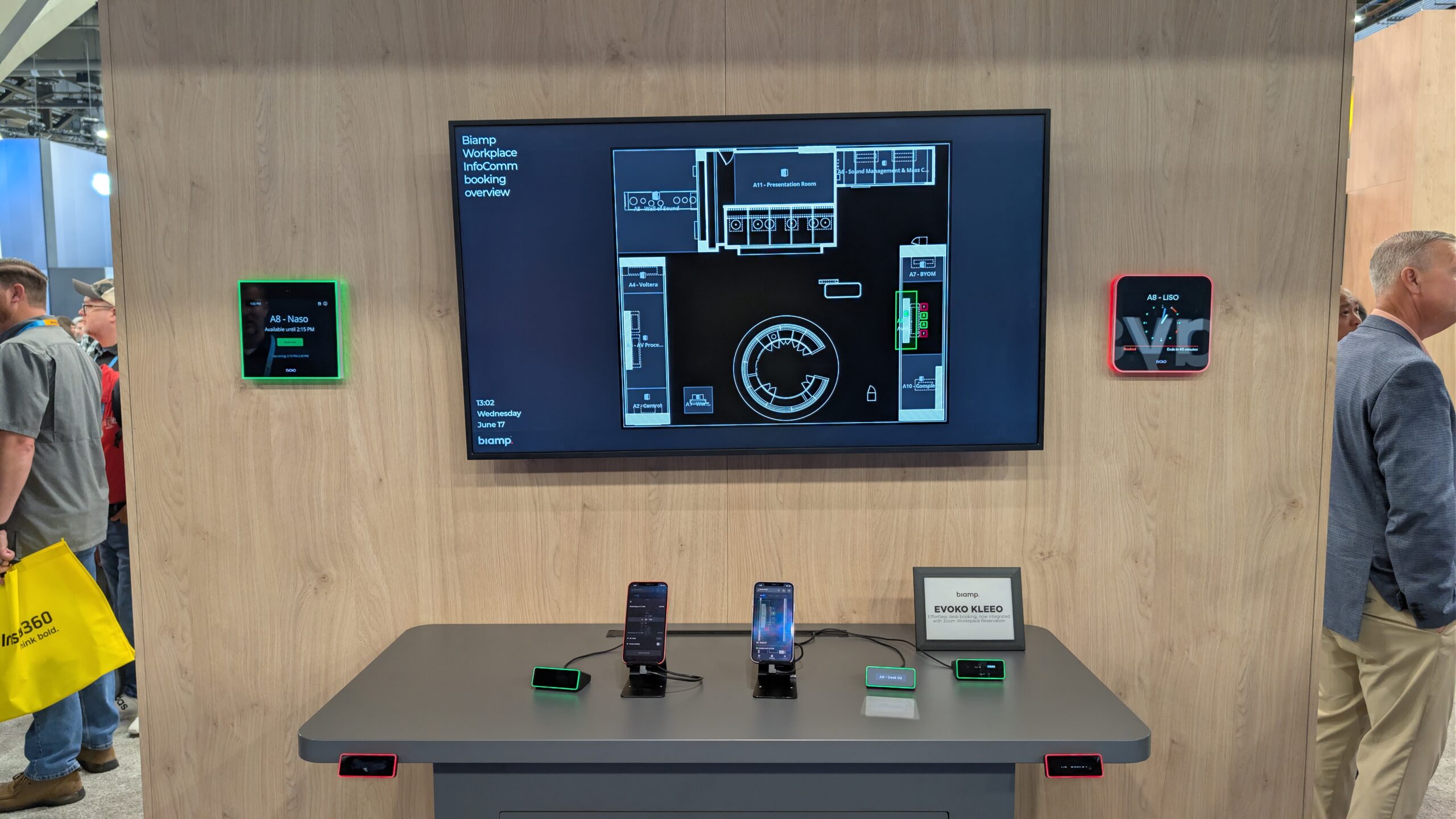
Biamp’s booth story is about reducing that friction. Biamp Control brings control closer to the Biamp ecosystem. Devio UCX brings UC compute and audio processing closer together. Biamp Launch continues the company’s push around faster room tuning. Biamp Workplace points toward network-based management. The BMA360D array microphone keeps the audio layer moving forward.
That does not mean every campus should collapse every system into one vendor. Higher ed teams are too experienced for that kind of oversimplified answer. The better question is where consolidation reduces support load without reducing flexibility. Biamp is making the case that some of those layers can be brought together in a way that helps rooms start faster, behave more predictably, and require less specialized intervention.
Audio Still Has to Work First
Even with the control and UC story, Biamp is still Biamp. The booth conversation did not abandon audio. It built from it.
That matters because classroom audio is still one of the first things remote students notice and one of the last things faculty want to think about. Instructors do not want to troubleshoot echo, pickup, gain, mute states, or room coverage. Students joining remotely need to hear more than the instructor’s voice at the front of the room. AV/IT teams need systems that can be tuned, monitored, and corrected without turning every room issue into a full investigation.
Biamp Launch remains part of that story. The company describes it as a one-button solution for fine tuning audio in a space in a matter of minutes, with continued development and support through Biamp Workplace. For campuses with many similar rooms, that kind of capability matters because the room count is often the problem. It is not just whether one room can be tuned well. It is whether dozens or hundreds of rooms can be deployed and maintained in a repeatable way.
The BMA360D array microphone also belongs in that discussion. Higher ed rooms continue to need ceiling microphone options that can support different teaching styles, group discussion, and remote participation. When paired with the larger Biamp ecosystem, the microphone story becomes less about a single ceiling device and more about how pickup, processing, tuning, monitoring, and support all connect.
The Higher Ed Takeaway
Biamp’s InfoComm 2026 presence is about more than audio. Audio is still the foundation, but the booth conversation points toward a larger room ecosystem: control, UC compute, microphones, speakers, audio processing, automated tuning, and network management working together in ways that reduce support friction.
The most important thing Hooper said may not have been a product specification. It was this:
“it’s all built together.”
For higher ed AV/IT teams, that is the question to bring to Booth C7822. What happens when the control layer, UC layer, and audio layer are designed to work together? Where does that simplify room standards? Where does it reduce user confusion? Where does it make support easier? And where does it fit into the campus systems already in place?
Biamp is making the case that its education focus is not only about delivering better room audio. It is about helping campuses build rooms that are easier to start, easier to tune, easier to manage, and easier for faculty and students to use without thinking about the technology first.
Make sure to check out Biamp at Booth C7822 at InfoComm 2026, or visit www.biamp.com to learn more.