
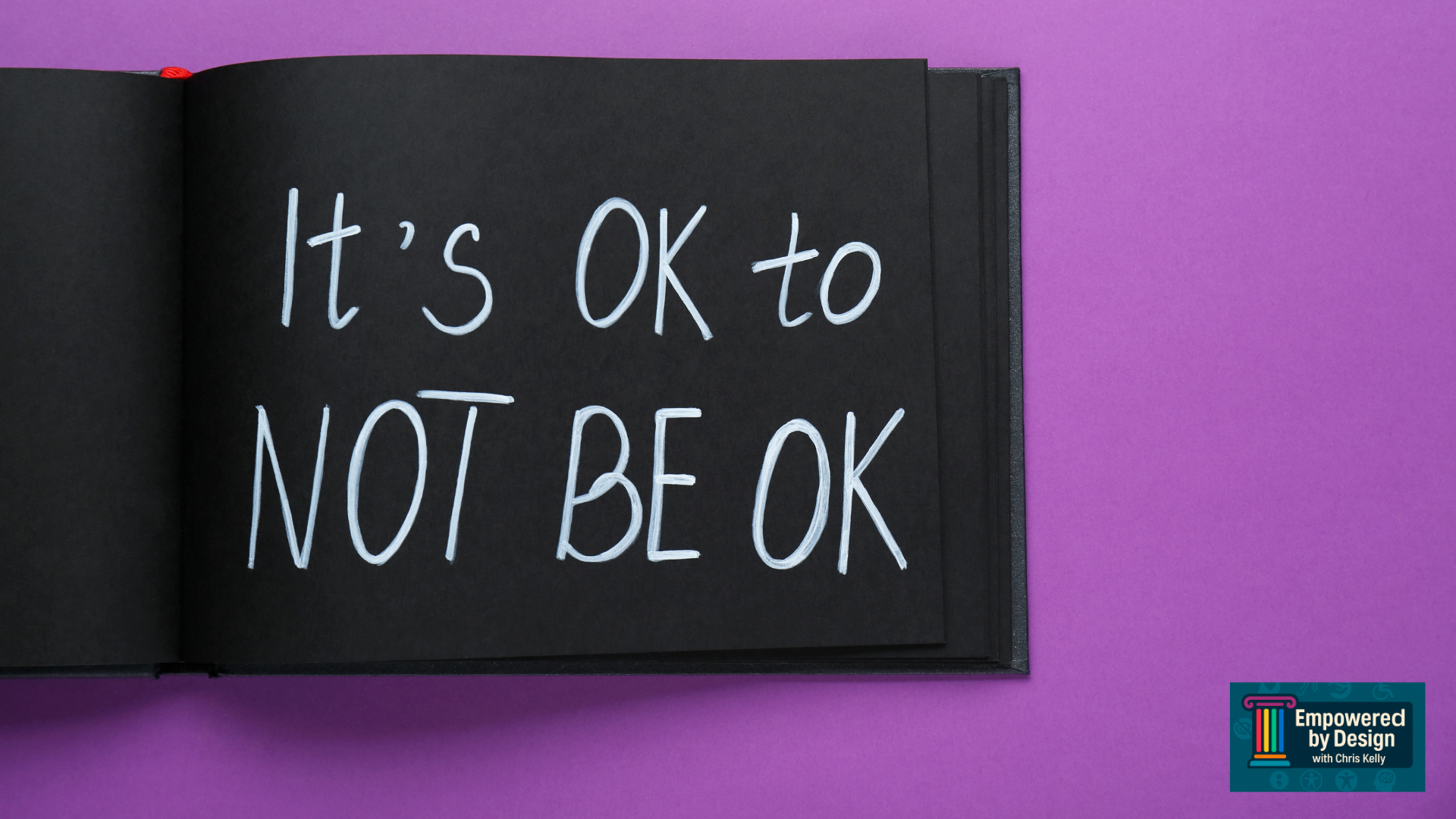
Are you OK, really? No, ask yourself how you are doing and really answer it. A quick Google search shows that people in IT and higher education have higher rates of mental health distress and diagnoses than the general population. Most of these statistics came before the most recent difficulties with federal and education funding. I would say most professionals in higher education can name at least one person who has lost their job in the last year. We are in some difficult times, and people need to take care of themselves.
Just for liability and safety’s sake: while I have my Master’s in Counseling with a School Specialization, I am not a currently licensed therapist. Nothing I say here should be treated as medical advice. If you feel like harming yourself or others, please seek adequate professional assistance immediately. My goal here is just to encourage awareness and motivation to help you take care of yourselves and others.
For those of you who aren’t aware, we are coming into winter in America, and December is Seasonal Affective Disorder (SAD) Awareness Month. I mention this as an estimated 5% of Americans suffer from SAD, though the actual number is likely much higher. This isn’t just being bummed about a turn in the weather, but an actual mental health condition affecting millions of people. This is obviously on top of folks dealing with abnormal stressors and other mental health concerns.
What should you do if you are feeling overwhelmed, struggling to find joy in life, or generally feeling like something just isn’t right? Fortunately, many of our jobs have Employee Assistance Programs (EAPs) that allow for a certain number of free therapy sessions. This can be terrifying, and you can likely think of countless reasons not to do it. I have been on both sides of counseling; it is a requirement in most counseling programs. Most counselors are amazing people who aren’t paid nearly enough to help people feel better. They aren’t there to find your deepest, darkest secrets. Therapists are largely there to give you an unbiased perspective, challenge you, help you think outside the box, and just listen. So rarely do we get someone to actively listen to what we say without secretly being on the edge of their seat, waiting to jump in and say their piece. If you have a program that allows you to get some counseling sessions for free, I encourage everyone to try it. There is no risk, and you don’t need to be sick to feel better. The worst thing that happens is you lose some time.
Unfortunately, there is a lot of stigma around anything that makes a person’s brain work ‘differently.’ As discussed in previous articles, there are many presumptions about the varieties of neurodiversity. There are also countless preconceptions about mental health concerns, whether it is depression, bipolar disorder, schizophrenia, or myriad other conditions. Mental health conditions are more common than many people realize. You probably interact with individuals experiencing these conditions, many of them undiagnosed, every day without knowing it. The fear of a diagnosis is pervasive in our culture, and societal norms often foster negative impressions about mental health conditions. Many Americans and people from other cultures are raised on ‘sucking it up,’ ‘getting over it,’ and ‘smile, someone else has it worse.’ These mindsets are toxic, and they can destroy the people around you.
As a gentle reminder, please be mindful of the language you use. Even small comments or phrases can have a big impact over time. These are often called microaggressions—subtle, often unintentional remarks or actions that can negatively affect someone based on aspects of their identity. While they may seem inconsequential in the moment, repeated microaggressions can gradually wear people down and create an unwelcoming environment.
Far too often, we casually use terms like ‘crazy’ or refer to someone as ‘bipolar.’ A mental health condition or symptom should never be used as shorthand for something negative. Doing so constitutes othering—the act of treating someone as fundamentally different or alien, often in a way that excludes them from a perceived ‘normal’ group.
There are so many better words we can choose to express the same ideas without alienating people or their conditions. We are better than this, and our language should reflect that.
As someone who has lived with anxiety and depression for most of my life, I can tell you there’s no such thing as ‘just getting over it.’ For me, managing my mental health includes taking psychotropic medication daily—and likely for the rest of my life. This isn’t something to feel ashamed of or hide; it’s no different than someone taking medication for diabetes, high blood pressure, or any other chronic condition.
Reaching this level of acceptance took time, and many people aren’t there yet. My hope is that we can create a culture where there’s not only no shame in having a mental health diagnosis, but where people feel truly supported in seeking help, getting checked out, taking care of themselves, and feeling comfortable talking openly with others about their mental health.